Swedish Match AB Stock Falls Below 50-day Moving Average

Business by 2FIRSTS.ai
Jan.03.2024
Swedish Match AB Stock Falls Below 50-day Moving Average
Swedish Match AB's stock drops below 50-day moving average, reaching $10.57 with a trading volume of 200 shares.

According to a report by Dailypolitical today (January 3, 2024), shares of Swedish Match AB dropped below the 50-day moving average line in Tuesday's (January 2) trading. The stock price reached a low of $10.57 at one point, and its latest trading price also stands at $10.57, with a trading volume of 200 shares.


According to estimates, the market value of the Swedish match company is $16.12 billion, with a price-earnings ratio of 24.02 and a beta coefficient of 0.41. Both the 50-day moving average and the 200-day moving average stand at $10.57.


We welcome news tips, article submissions, interview requests, or comments on this piece.

Please contact us at info@2firsts.com, or reach out to Alan Zhao, CEO of 2Firsts, on LinkedIn


Notice

1.  This article is intended solely for professional research purposes related to industry, technology, and policy. Any references to brands or products are made purely for objective description and do not constitute any form of endorsement, recommendation, or promotion by 2Firsts.

2.  The use of nicotine-containing products — including, but not limited to, cigarettes, e-cigarettes, nicotine pouchand heated tobacco products — carries significant health risks. Users are responsible for complying with all applicable laws and regulations in their respective jurisdictions.

3.  This article is not intended to serve as the basis for any investment decisions or financial advice. 2Firsts assumes no direct or indirect liability for any inaccuracies or errors in the content.

4.  Access to this article is strictly prohibited for individuals below the legal age in their jurisdiction.


Copyright


This article is either an original work created by 2Firsts or a reproduction from third-party sources with proper attribution. All copyrights and usage rights belong to 2Firsts or the original content provider. Unauthorized reproduction, distribution, or any other form of unauthorized use by any individual or organization is strictly prohibited. Violators will be held legally accountable.

For copyright-related inquiries, please contact: info@2firsts.com


AI Assistance Disclaimer


This article may have been enhanced using AI tools to improve translation and editorial efficiency. However, due to technical limitations, inaccuracies may occur. Readers are encouraged to refer to the cited sources for the most accurate information.

We welcome any corrections or feedback. Please contact us at: info@2firsts.com

Special Report|Japan Tobacco Buys CLEW: Can Its 160,000-Store Cigarette Network Help It Vie for U.S. Nicotine Pouch Share Against PMI and BAT?
Japan Tobacco Inc. (JT) announced on November 12, 2026, that it had acquired the U.S. assets of nicotine pouch brand CLEW from Nevcore Innovations Inc., including trademarks, intellectual property, product formulations and a Premarket Tobacco Product Application (PMTA). CLEW, currently distributed through selected outlets in 13 U.S. states, will immediately join the JTI LIGGETT portfolio. The transaction follows JT's approximately $2.4 billion acquisition of U.S. cigarette maker Vector Group in 2024. JTI LIGGETT says its existing cigarette brands reach more than 160,000 U.S. retail stores. During the 2026 NACS Show in October, JTI LIGGETT booth staff told 2Firsts that the company had not yet launched nicotine pouches in the United States. Although Nevcore previously announced FDA acceptance of CLEW's PMTA, the brand is absent from the agency's current list of authorized nicotine pouch products. JT has not disclosed a retail expansion plan for CLEW.
Business
Nov.12
Special Report|CrossBar's High-Puff Vapes Draw Attention on Pennsylvania's 163-Product Directory as Link Between Earlier 1.3mL PMTA Filings and New 13mL Products Remains Unclear
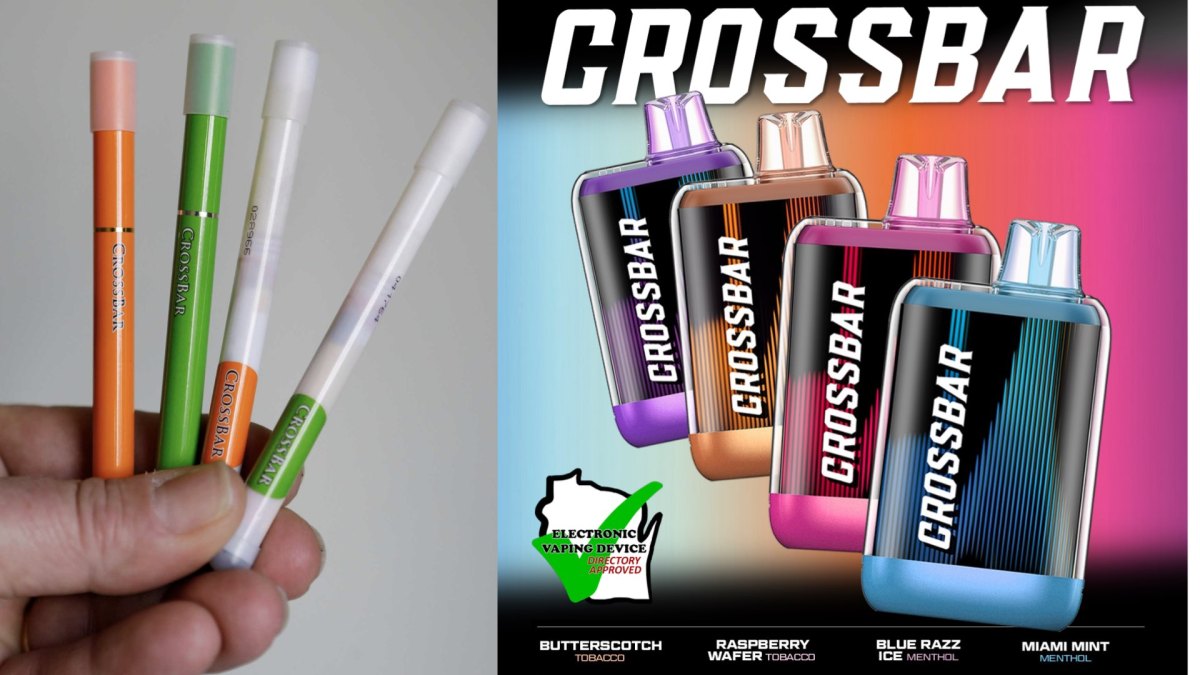
Pennsylvania began enforcing its electronic nicotine delivery system directory restrictions on October 19, 2026. Among 163 product listings recorded before enforcement, four CrossBar 20K disposables stood out with 13mL capacity, advertised puff counts of up to 20,000 and a flattened design distinct from conventional pod systems and compact disposables. Historical records identify earlier 1.3mL CrossBar products associated with Romo LLC, while newer 13mL products appeared in several state directories beginning in 2025 under entities including Blue Nine LLC. PMTA compliance expert Mr. K identified amendments and application ownership transfers as possible regulatory mechanisms, although neither has been confirmed in this case. Separately, Reynolds' $7.5 million acquisition of 16 PACHA products and related assets illustrates the commercial value of products linked to historic PMTA submissions.
Special Report
Oct.22
Why Does JPMorgan Favor BAT Over Philip Morris Despite Forecasting Slower Growth of 3.9% Versus 6.2%?
JPMorgan resumed equity research coverage of British American Tobacco (BAT), Philip Morris International (PMI) and Imperial Brands in November 2026, assigning BAT an Overweight rating and the other two companies Neutral ratings. The bank forecasts like-for-like sales growth of 3.9% for BAT and 6.2% for PMI in 2027, but estimates the two companies will trade at approximately 11 times and 21 times 2027 earnings, respectively. JPMorgan cited BAT's improving position in US nicotine pouches and vaping products as a driver of its investment outlook. BAT reported a 220% constant-currency increase in US modern oral nicotine revenue in the first half of 2026, while PMI's ZYN US shipments returned to growth in the third quarter. Imperial expects NGPs to represent 4% to 5% of sales and has expanded its oral portfolio through acquisitions.
Capital Markets
Nov.12
Reynolds Showcases Vuse Pro Flavors and VELO Nicotine Pouches at NACS Show 2026
Reynolds American, a BAT subsidiary, showcased four Vuse Pro flavored e-cigarette pods and its VELO nicotine pouch portfolio at NACS Show 2026. Booth staff confirmed to 2Firsts that the Vuse Pro flavors are sold in the U.S., although they have not received FDA marketing authorization. BAT outlined plans to expand Vuse retail distribution and reported that VELO held a 30.5% year-to-date volume share of the U.S. modern oral nicotine category through August 2026. The booth also featured the newly launched VELO MAX range and merchandising displays combining cigarettes, vaping products and oral nicotine brands.
EXPO
Oct.09
2Firsts On-Site | CTIHK Showcases Nicotine Pouches, Heated Tobacco and Chinese Cigars at InterTabac 2026
At InterTabac 2026 in Dortmund, China Tobacco International (HK) Company Limited (CTIHK) is exhibiting across two separate booths in Hall 5 and Hall 4. Products observed by 2Firsts include heated tobacco products, nicotine pouches, Chinese cigars and tobacco leaf. Nicotine pouch products on display include TOOP, Shuangxi and Ashima.
Market
Sep.16
Special Report | Vape bans and tougher rules: the South Caucasus takes different paths
Azerbaijan's sweeping e-cigarette ban has raised concerns over enforcement errors and the emergence of illicit sales, while neighboring Armenia is tightening technical rules and preparing higher excise taxes. Georgia, meanwhile, has resisted calls for broader vape restrictions and introduced preferential taxes for some domestically produced cigarettes. The divergent approaches across the South Caucasus highlight a regional policy dilemma: how to curb nicotine use and protect public health without encouraging black markets or creating unintended economic consequences for businesses and consumers.
Nov.03