Key Points
- JPMorgan resumed coverage of BAT, PMI and Imperial with Overweight, Neutral and Neutral ratings and price targets of £53, $200 and £32, respectively.
- The bank forecasts 2027 like-for-like sales growth of 3.9% for BAT and 6.2% for PMI, with estimated earnings multiples of approximately 11 times and 21 times.
- BAT reported 220% constant-currency growth in US modern oral nicotine revenue, 188% volume growth and a 29.8% US category volume share in the first half.
- PMI reported third-quarter US ZYN shipments of 3.2 billion pouches, up 4.2%. The FDA made new marketing authorization decisions for selected ZYN and Velo products in 2026.
- Imperial acquired Black Buffalo and Helwit in 2026 and announced a £1.5 billion share buyback for fiscal 2027.
2Firsts | November 12, 2026
JPMorgan resumed equity research coverage of three multinational tobacco companies, assigning an Overweight rating to British American Tobacco (BAT) and Neutral ratings to Philip Morris International (PMI) and Imperial Brands.
The investment bank set price targets of £53 for BAT, $200 for PMI and £32 for Imperial. JPMorgan forecasts like-for-like sales growth of 6.2% for PMI in 2027, compared with 3.9% for BAT, but estimates the companies will trade at approximately 21 times and 11 times 2027 earnings, respectively.
JPMorgan cited BAT's gains in US nicotine pouches and vaping products, cash-flow prospects and valuation as factors behind its more favorable investment view. It also highlighted competition in US nicotine pouches and risks associated with PMI's Russian business.
BAT Gets Higher Rating With 3.9% Growth Forecast and Lower Valuation
JPMorgan expects BAT to return to annual constant-currency sales growth of 3% to 5%. It forecasts 2027 like-for-like sales growth of 3.9% and adjusted earnings per share of 389 pence, approximately 1% above consensus expectations.
PMI's projected 2027 like-for-like sales growth is 6.2%, slightly below the consensus estimate of 6.5% but higher than BAT's forecast.
JPMorgan estimates BAT's 2027 price-to-earnings ratio at approximately 11 times, compared with 21 times for PMI and eight times for Imperial. The bank also estimates BAT's free cash flow yield at roughly 9%, with potential total returns of at least 14%.
JPMorgan expects BAT's net debt-to-EBITDA ratio to fall to approximately 2.4 times by the end of 2026, within the company's target range of two to 2.5 times. It forecasts share buybacks rising from £1.3 billion in 2026 toward approximately £2 billion in 2030.
For PMI, the bank expects leverage to decline to about two times by the end of 2026, potentially creating room for the company to resume share repurchases.
Imperial's projected growth is lower. JPMorgan estimates 2027 constant-currency tobacco and NGP sales growth of approximately 1.9%, a metric with a different reporting scope from the like-for-like forecasts for BAT and PMI.
JPMorgan's ratings and price targets reflect its equity research assessment rather than realized operating performance.
BAT's US Oral Nicotine Revenue Surges 220% as Velo Share Approaches 30%
The US modern oral nicotine market is central to JPMorgan's positive assessment of BAT.
According to BAT's July 30, 2026 half-year report, group modern oral nicotine revenue increased 65.9% at constant exchange rates in the first half, with volume growth of 57.5%.
In the US, modern oral revenue rose 220% at constant exchange rates, or 209% at reported rates, while volumes increased 188%. BAT attributed the increase to growth in Velo Plus and Grizzly Modern Oral.
BAT's US modern oral nicotine category volume share reached 29.8%, up 11.6 percentage points from the end of 2025.
JPMorgan estimated that BAT's Velo brand holds approximately 30% of the US nicotine pouch market.
In vaping, BAT's US Vuse revenue rose 19.8% at constant exchange rates in the first half, while volume increased 14.9%. Its value share in tracked US vapor channels reached 55.9%, up 4.1 percentage points from the end of 2025.
BAT's global New Categories revenue increased 18.0% on a comparable basis, with US New Categories revenue up 58.1%. Its New Categories contribution margin increased by 3.3 percentage points to 13.8%, while smokeless products accounted for 19.8% of group revenue.
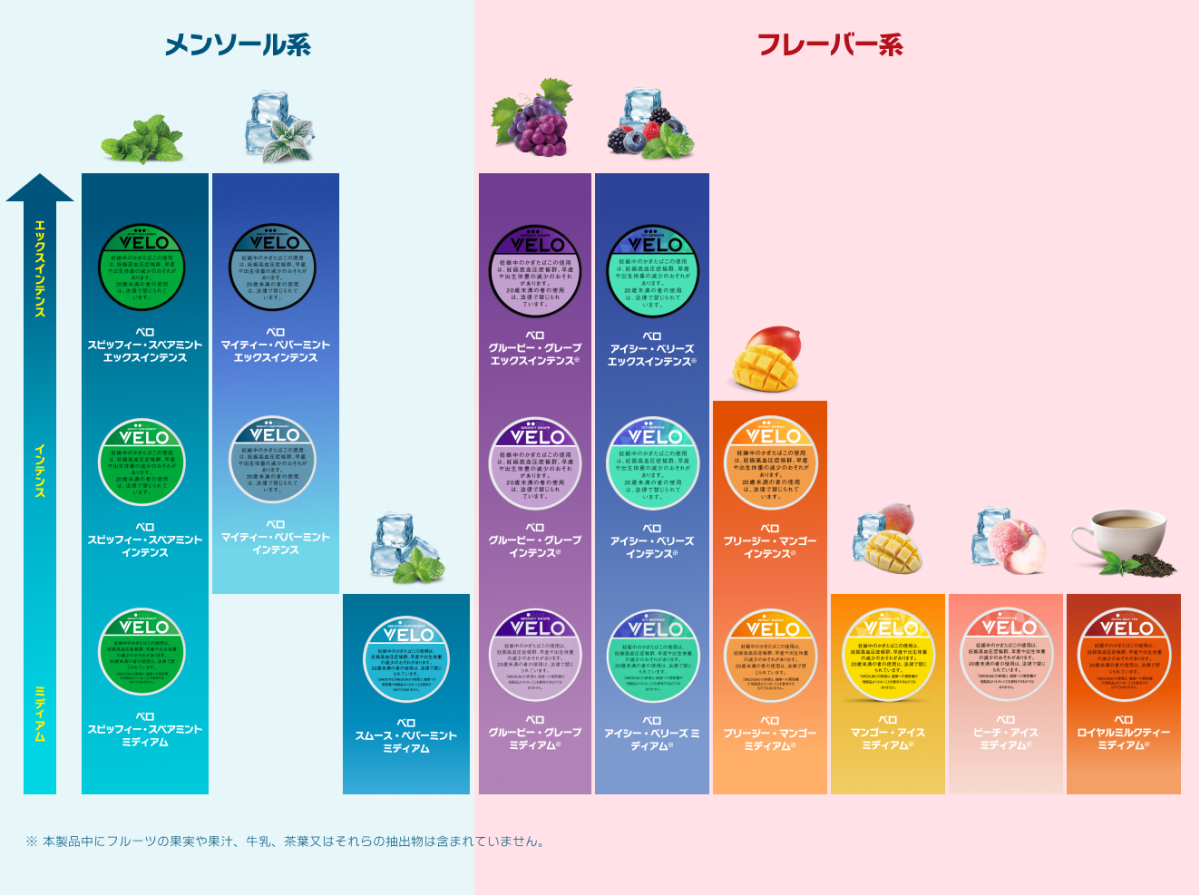
BAT has continued expanding its US oral nicotine portfolio, including the introduction of Velo Max in the second half of 2026 to broaden retail coverage across nicotine strengths.
On October 30, 2026, the US Food and Drug Administration granted marketing authorization to 24 Velo nicotine pouch products manufactured by BAT subsidiary Modoral Brands.
The authorizations cover different flavor and packaging configurations of Velo Mini Pouch and Velo Mini Pouch 2, each labeled as containing 4 mg of nicotine per pouch. They do not extend to the entire Velo portfolio or establish marketing authorization for Velo Max.
BAT's heated tobacco business has faced greater pressure. The company previously forecast a decline in heated-product revenue in 2026, citing competition in selected markets and inventory movements in Japan.
US modern oral nicotine and vapor have been major contributors to the recovery in BAT's New Categories revenue.
PMI Forecast to Grow 6.2% as ZYN Recovers and Investment Spending Rises
JPMorgan assigned PMI a Neutral rating and a $200 price target.
The bank recognized PMI's established heated tobacco business and earnings growth prospects but cited US nicotine pouch competition, valuation and exposure to Russia as concerns.
PMI's October 21, 2026 third-quarter earnings report showed US ZYN shipments of 3.2 billion pouches, up 4.2% year over year.
According to PMI, Nielsen data indicated that ZYN regained more than one percentage point of US nicotine pouch category share between June and September 2026.
For the first nine months of 2026, however, US ZYN shipments totaled approximately 8.4 billion pouches, down about 6% from the prior year.
PMI has been broadening its ZYN portfolio through additional ZYN ULTRA distribution, new flagship flavors and nicotine strengths. The company also plans to transition most of its US flagship ZYN range from 15-pouch to 20-pouch cans.
PMI said the packaging transition and associated retail support programs would affect fourth-quarter revenue per pouch, while increased marketing spending would add near-term costs.
Net revenues in PMI's US segment rose 22.7% in the third quarter and gross profit increased 24.2%, while operating companies income declined 3.3%. The company attributed part of the earnings pressure to increased commercial investment supporting the ZYN portfolio.
Regulatory developments have also affected competition between nicotine pouch manufacturers.
On August 21, 2026, the FDA granted marketing authorization to 11 ZYN ULTRA products. PMI said that 31 ZYN variants had received FDA marketing authorization as of its third-quarter results.
Separately, on June 30, the FDA granted modified risk tobacco product (MRTP) orders for 20 previously authorized ZYN products, permitting the use of a specific FDA-reviewed reduced-risk marketing claim. Those orders concern modified-risk claims and are distinct from PMTA marketing authorizations for market entry.
PMI's smoke-free portfolio, including IQOS heated tobacco, ZYN nicotine pouches and VEEV e-vapor products, accounted for more than 40% of group net revenues in the third quarter and approximately 42% in the first nine months of 2026.
PMI also reported a 61.6% year-over-year increase in VEEV e-vapor shipments in the third quarter.
JPMorgan separately estimated that Russia accounts for approximately 7% of PMI's group sales and identified political and legal developments affecting the market as potential valuation risks.
Imperial's NGP Share Remains at 4%-5% as £1.5 Billion Buyback Is Announced
JPMorgan resumed coverage of Imperial Brands with a Neutral rating and a £32 price target.
The bank forecasts 2027 constant-currency sales growth of approximately 1.9% for Imperial's tobacco and next-generation products and expects NGPs to represent 4% to 5% of group sales.
Imperial's NGP operations remain smaller than those of BAT and PMI, but the company expanded its modern oral nicotine portfolio through acquisitions in 2026.
In May, Imperial announced the acquisition of US oral products company Black Buffalo for an initial consideration of $150 million, with additional contingent payments. Black Buffalo makes tobacco-leaf-free oral products using plant-derived material and added nicotine, targeting adult consumers of traditional moist smokeless tobacco. The products complement Imperial's existing Zone nicotine pouch range.
In September, Imperial acquired Sweden's Yoik Group AB, owner of the Helwit nicotine pouch brand, for an initial SEK 515 million, or approximately £39.8 million, with further performance-linked payments over two years. Imperial said Helwit held approximately 3.4% of Sweden's modern oral nicotine market and that the acquisition more than doubled its existing share in the country.
Imperial also competes in vaping through blu, in heated tobacco through Pulze and in modern oral nicotine through brands including Zone.
In its October 8, 2026 pre-close trading update, Imperial forecast double-digit full-year NGP net revenue growth. It also expected constant-currency adjusted operating profit growth of 3% to 5% and free cash flow exceeding £2.2 billion.
The company confirmed completion of its £1.45 billion share repurchase program for fiscal 2026 and announced a further £1.5 billion buyback for fiscal 2027, scheduled for completion by October 29, 2027.
JPMorgan estimates Imperial trades at approximately eight times 2027 earnings. Its research also highlighted planned German tobacco excise tax increases from 2027 to 2030 as a potential operating headwind.
The bank estimates the global nicotine industry generates approximately $150 billion to $200 billion in annual revenue and grows at around 4% a year.
Among the three companies, PMI has the faster projected sales growth, BAT has reported strong recent gains in US modern oral nicotine and vaping, while Imperial is expanding its NGP portfolio through acquisitions. JPMorgan assigned BAT the higher rating while incorporating valuation, cash flow and market-share gains into its investment assessment.
Follow 2Firsts for coverage of global tobacco companies, nicotine pouches, vaping, heated tobacco and capital markets.
Cover Image generated by AI