Risk of E-Cigarettes: Impact on Teen Asthma

Regulations by 2FIRSTS.ai
Dec.25.2023
Risk of E-Cigarettes: Impact on Teen Asthma
E-cigarette use among teenagers increases asthma risk and worsens symptoms, warns Turkish immunologist Demet Can.

According to a report by Medimagazin, Dr. Demet Can, Vice President of the Turkish National Allergy and Clinical Immunology Society, emphasized that e-cigarettes, whose age restrictions have been gradually lowered, pose a threat to teenagers as they double the risk of asthma and may worsen existing asthma conditions.


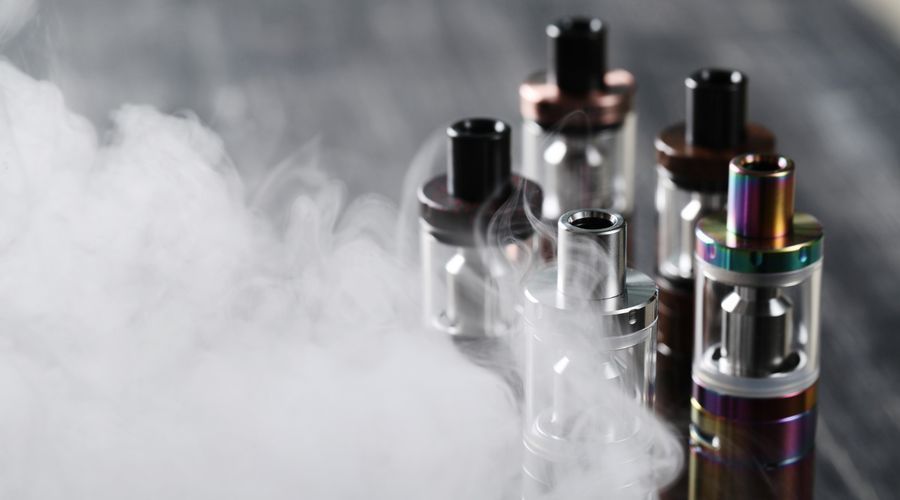
Professor Dmitry Zhan points out that e-cigarettes are electronic devices that rely on power sources to produce tobacco aerosols without burning tobacco. These devices include sensors, batteries, nicotine reservoirs, heating elements, glass fiber chips containing nicotine solutions, and reservoirs. Due to their convenience, e-cigarette use has significantly increased globally in recent years. He also states that the usage rate of e-cigarettes among adults is 6.5% in Spain and 8.5% in the United States.


Despite being marketed as less harmful than traditional tobacco, Professor Demet Jan states that e-cigarettes are often used as aids for quitting smoking or as smokeless tobacco alternatives. Recent research indicates that e-cigarette aerosol contains toxic substances such as tobacco-specific nitrosamines, formaldehyde, and acetaldehyde.


Professor Demet Jan pointed out that inhaling nicotine solution in e-cigarettes can cause an increase in inflammatory cells in the airways, including eosinophils, which worsens asthma symptoms. This has been proven in animal experiments. At the same time, when inhaling e-cigarette vapor, it is possible to inhale glass fiber particles and nicotine, which may eventually result in exposure to glass fiber particles in the respiratory system. He also discovered that this process, combined with smoking, can lead to the production of toxic reactive oxygen species and SOD (an enzyme) by glass fiber particles, triggering asthma.


Lastly, Professor Demet Jan stated, "In a recent study, it was found that nanoparticles of tin, chromium, and nickel in e-cigarette vapor cause inflammatory reactions in the respiratory tract and lungs, potentially playing a significant role in the onset of asthma.


We welcome news tips, article submissions, interview requests, or comments on this piece.

Please contact us at info@2firsts.com, or reach out to Alan Zhao, CEO of 2Firsts, on LinkedIn


Notice

1.  This article is intended solely for professional research purposes related to industry, technology, and policy. Any references to brands or products are made purely for objective description and do not constitute any form of endorsement, recommendation, or promotion by 2Firsts.

2.  The use of nicotine-containing products — including, but not limited to, cigarettes, e-cigarettes, nicotine pouchand heated tobacco products — carries significant health risks. Users are responsible for complying with all applicable laws and regulations in their respective jurisdictions.

3.  This article is not intended to serve as the basis for any investment decisions or financial advice. 2Firsts assumes no direct or indirect liability for any inaccuracies or errors in the content.

4.  Access to this article is strictly prohibited for individuals below the legal age in their jurisdiction.


Copyright


This article is either an original work created by 2Firsts or a reproduction from third-party sources with proper attribution. All copyrights and usage rights belong to 2Firsts or the original content provider. Unauthorized reproduction, distribution, or any other form of unauthorized use by any individual or organization is strictly prohibited. Violators will be held legally accountable.

For copyright-related inquiries, please contact: info@2firsts.com


AI Assistance Disclaimer


This article may have been enhanced using AI tools to improve translation and editorial efficiency. However, due to technical limitations, inaccuracies may occur. Readers are encouraged to refer to the cited sources for the most accurate information.

We welcome any corrections or feedback. Please contact us at: info@2firsts.com

Bringing Tax and Insurance Into Nicotine Regulation: Insights From a Tobacco Harm-Reduction Report
A smoke-free nicotine policy report argues that tobacco harm reduction should move beyond product bans and health warnings into tax policy, insurance pricing and risk-based regulation. While some projections remain open to debate, the report highlights a wider challenge: nicotine products, technologies and consumer behavior have changed sharply over the past decade, and regulatory systems may need new tools to better align tobacco control with harm-reduction goals.
Jun.08
U.S. House Defense Bill Includes Pilot Review of Vapes, Nicotine Pouches and Heated Tobacco for Military Smokers
On July 23, 2026, the U.S. House of Representatives passed its version of the Fiscal Year 2027 National Defense Authorization Act (NDAA), which includes Section 707 provisions requiring the Department of Defense to evaluate tobacco use and nicotine alternatives among military personnel. The pilot program would examine products including vapes, nicotine pouches and heated tobacco products, primarily among active-duty service members who continue using combustible tobacco. The provision is a policy evaluation effort, not an authorization for military vaping promotion or a ban on vape products.
Jul.28
Indonesia’s BNN Pushes Total Vape Ban as Health Ministry Tightens Tobacco Packaging Rules, Putting $40 Billion Industry at Risk
Indonesia is entering a new phase of debate over vape and tobacco regulation. The National Narcotics Agency (BNN) has proposed a total vape ban, with some lawmakers supporting stronger restrictions. At the same time, the Health Ministry is advancing tobacco and nicotine regulations under Government Regulation No. 28/2024, including measures such as plain packaging and product controls. Tobacco and vape industries have warned that tighter rules could affect a sector worth around $40 billion, supporting about 6 million jobs and contributing significant tax revenue.
Jul.27
BofA: U.S. Nicotine Market Splits as Vapor Sales Fall 17.2% and Oral Tobacco Rises 5.8%
According to Investing.com citing Bank of America scanner data for the four weeks ending May 30, U.S. nicotine category performance was mixed, with cigarette, vapor and cigar sales declining while oral tobacco sales rose 5.8%.
Jun.10
Canadian Court Allows Juul and Altria Vape Class Action to Move Forward Over Youth Marketing Claims
A Quebec Superior Court has allowed a class action lawsuit against Juul Labs and Altria Group related to vaping products to proceed, involving allegations concerning marketing practices, youth exposure and corporate responsibility. The ruling only allows the case to move forward and does not represent a finding that Juul or Altria are legally liable. The case highlights continued legal risks facing vape companies regarding product marketing, youth protection and corporate accountability.
Jul.28
2Firsts Data | China’s Vape Exports Rise 3.1% in H1 2026 as 6-Methyl Nicotine-Related Products Surge 65.2%
China’s vape exports showed resilience in the first half of 2026 after a short-term shock from China’s export rebate adjustment. But customs data points to more than a simple recovery: the structure of growth is changing. Vaping devices and atomization hardware emerged as the strongest growth driver, while nicotine-containing vaping products remained broadly stable. Meanwhile, nicotine substitute-related products represented by 6-methyl nicotine expanded rapidly, becoming a new category to watch for both industry and regulators. After the U.S. market went through a cycle of shortages, replenishment and inventory rebuilding in 2025, China’s vape supply chain is entering a new phase of reallocation.
Special Report
Jul.20