Turning Point Brands Canada Becomes Exclusive Distributor for VPRB's HoneyStick in Canada

Business by 2FIRSTS.ai
Jan.09.2024
Turning Point Brands Canada Becomes Exclusive Distributor for VPRB's HoneyStick in Canada
VPR Brands announces Turning Point Brands Canada as the exclusive distributor of its HoneyStick products in Canada.

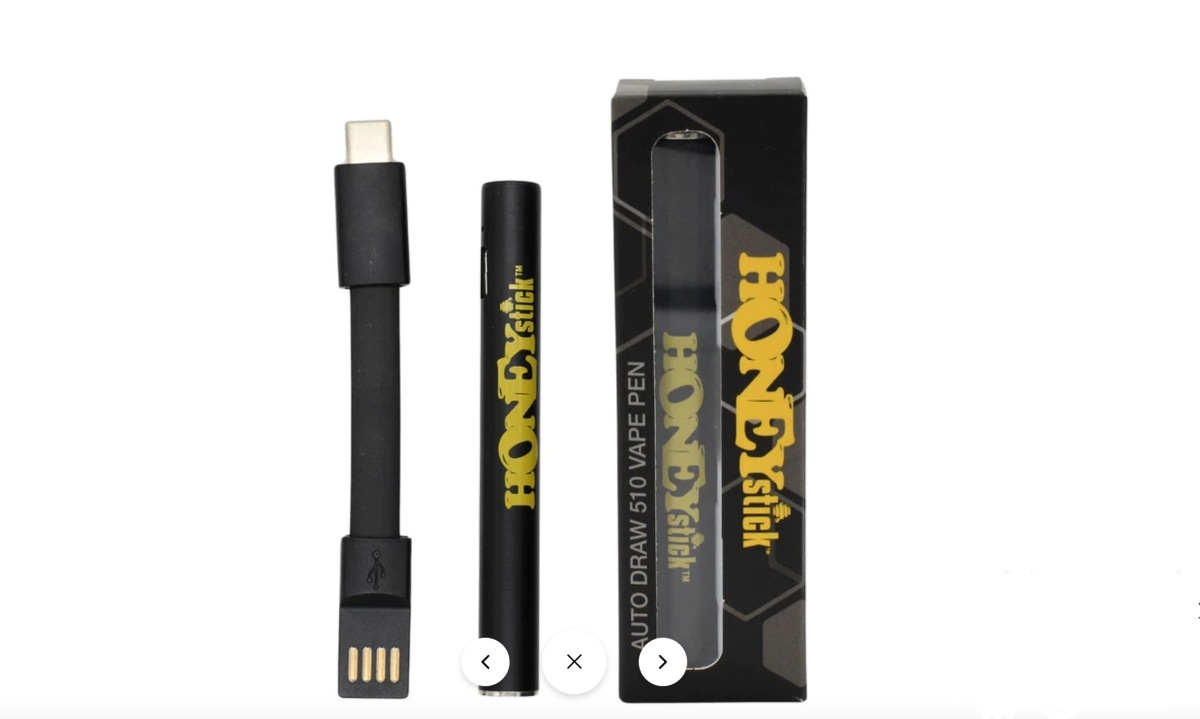
VPR Brands (OTC: VPRB) recently announced that Turning Point Brands Canada (TPB) will serve as the exclusive distributor for its HoneyStick products in Canada.


VPR Brands (VPRB) is an e-cigarette manufacturer dedicated to introducing innovative products.


TPB is a Canadian marketing and distribution company in the field of tobacco, e-cigarettes, and alternative products.


HoneyStick is set to join TPB Canada's portfolio of leading global brand management, alongside iconic brands such as Zig-Zag, Clipper, Choice Leaf, HMP, Rebound, and Evolve, to enter the Canadian market.


In the future, TPB Canada will streamline the retail process by centralizing ordering, logistics, and warehousing in one location. This will ensure a steady supply of HoneyStick products and reduce delivery times, enabling faster product delivery across Canada.


Currently, HoneyStick has launched on the Canadian e-commerce platform tpbmarketplace. However, it is either marked as "sold out" or yet to be available on several other Canadian e-commerce platforms.


Mikail Fancy, Chief Operating Officer of Turning Point Brands Canada, expressed enthusiasm over the partnership with VPR Brands to bring HoneyStick to a wider audience in Canada. Fancy highlighted the combination of their expertise in marketing, sales, distribution, and logistics, along with the quality and innovation of HoneyStick products, as a perfect match. He emphasized their commitment to providing excellent service and support for retailers and consumers.


Daniel Hoff, Chief Operating Officer of VPR Brands, has stated that the collaboration with Turning Point Brands Canada is a significant milestone for HoneyStick in Canada. Their strong distribution network and successful experience in marketing, sales, and customer service make them an ideal partner to enhance our brand's presence and accessibility nationwide.


VPR is currently involved in a significant case regarding a legal dispute with IMiracle (Heaven Gifts). The main point of contention revolves around the usage rights of the term "Elf" on e-cigarette products.


VPR filed a lawsuit in October 2022 against the distributor Shenzhen Weibo Li Technology Co., Ltd and the manufacturer iMiracle (HK) Limited, alleging infringement of VPR's trademark rights on ELF during the sales of Elfbar. Elfbar is the most popular disposable e-cigarette brand among young users.


In response, Judge Cannon in the United States issued a temporary injunction on Chinese companies in February 2023, prohibiting them from selling any e-cigarette products bearing the name ELFBAR. Judge Cannon stated that there is currently "no dispute" that these companies intentionally infringed upon VPR's trademark rights.


Shenzhen V-Perfect and iMiracle have submitted their first document claiming that they can prove V-Perfect is not the original user of the ELF trademark. According to the documents submitted by these two companies on April 24th, they have discovered the true owner of the ELF trademark, another Chinese company called GD Sigelei Electronic Tech. This company first used the "ELF" to sell e-cigarette products in April 2016, almost a year and a half earlier than V-Perfect's first batch of ELF products.


In March of this year, two Chinese companies signed a trademark transfer agreement, claiming to have transferred the rights to the Elf trademark to iMiracle. Based on this, they have requested Judge Cannon to revoke the temporary injunction.


Another important document claims that VPR has utilized a court order prohibiting them from manufacturing ELFBAR in order to seek market share. According to the document from May, VPR has launched a "blatantly imitated" ELFBAR disposable e-cigarette, clearly copying iMiracle's product. Both of these Chinese companies argue that these inferior counterfeit products will confuse consumers, ultimately leading to ELFBAR losing market share and reputation.


Although both parties have informed the mediators that Judge Cannon's decision on these two motions will "guide their positions for settlement," the case remains at a standstill, waiting for the Chinese companies to appeal to the Federal Circuit in an attempt to overturn the injunction. These two Chinese companies are dissatisfied with the temporary ban and stated in their submission to the Federal Circuit that the injunction is erroneous and has resulted in them losing millions of dollars.


We welcome news tips, article submissions, interview requests, or comments on this piece.

Please contact us at info@2firsts.com, or reach out to Alan Zhao, CEO of 2Firsts, on LinkedIn


Notice

1.  This article is intended solely for professional research purposes related to industry, technology, and policy. Any references to brands or products are made purely for objective description and do not constitute any form of endorsement, recommendation, or promotion by 2Firsts.

2.  The use of nicotine-containing products — including, but not limited to, cigarettes, e-cigarettes, nicotine pouchand heated tobacco products — carries significant health risks. Users are responsible for complying with all applicable laws and regulations in their respective jurisdictions.

3.  This article is not intended to serve as the basis for any investment decisions or financial advice. 2Firsts assumes no direct or indirect liability for any inaccuracies or errors in the content.

4.  Access to this article is strictly prohibited for individuals below the legal age in their jurisdiction.


Copyright


This article is either an original work created by 2Firsts or a reproduction from third-party sources with proper attribution. All copyrights and usage rights belong to 2Firsts or the original content provider. Unauthorized reproduction, distribution, or any other form of unauthorized use by any individual or organization is strictly prohibited. Violators will be held legally accountable.

For copyright-related inquiries, please contact: info@2firsts.com


AI Assistance Disclaimer


This article may have been enhanced using AI tools to improve translation and editorial efficiency. However, due to technical limitations, inaccuracies may occur. Readers are encouraged to refer to the cited sources for the most accurate information.

We welcome any corrections or feedback. Please contact us at: info@2firsts.com

Japan Survey Finds 49.5% Would Cut Tobacco Use if Prices Rise, 64.6% Show Interest in Nicotine-Free Alternatives
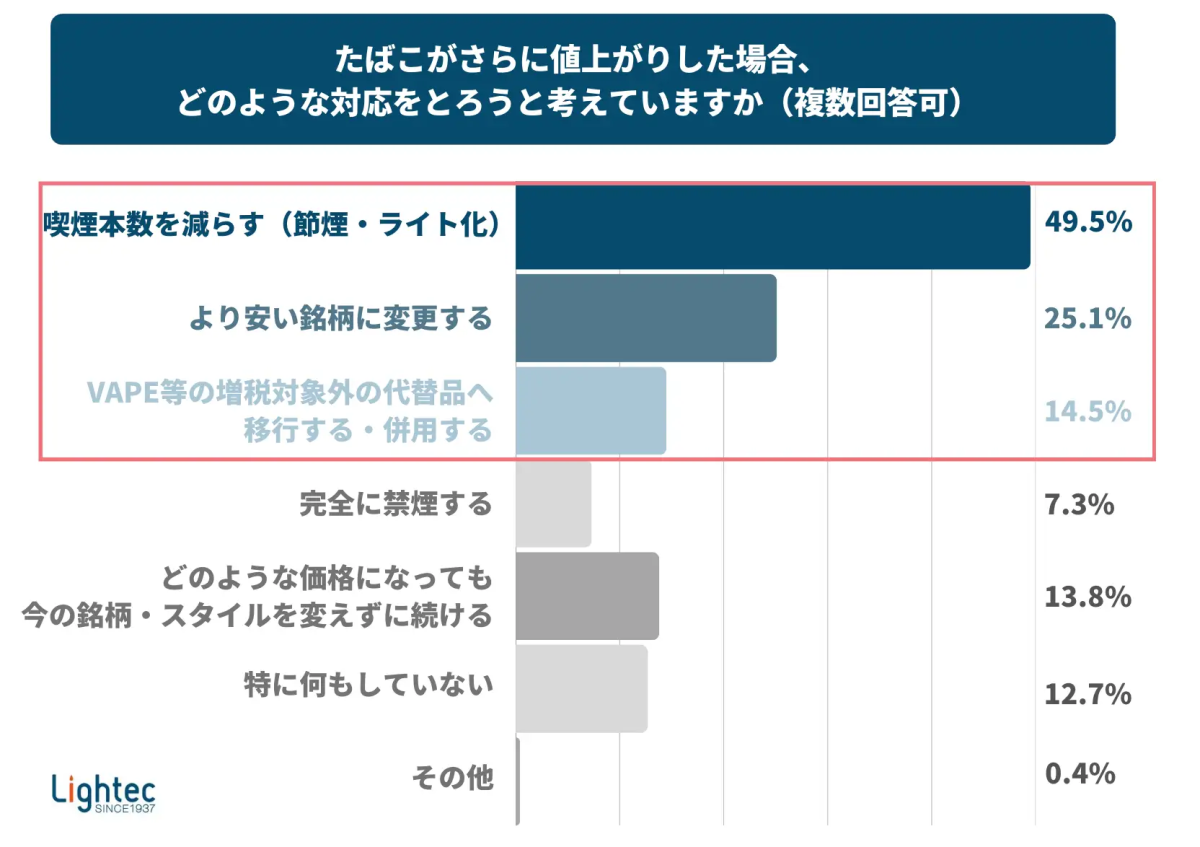
A September online survey commissioned by Japanese smoking-accessories company Lightec found that 49.5% of respondents would consider reducing tobacco use if prices rose further, while 25.1% would consider switching to cheaper brands and 14.5% would consider using or combining alternatives such as vapes and nicotine-free herbal sticks. Another 64.6% expressed some level of interest in such alternatives. The survey covered 1,088 respondents aged 20 to 70 and was conducted by a company that sells NICOLESS nicotine-free vaping and herbal-stick products, meaning its findings should not be treated as representative of Japan's smoking population.
DATA
Oct.12
Special report|Indonesia's Vape Industry Has 200 Manufacturers and $1.7 Billion in Investment. Could a Regulatory Divide Derail Its Rise as the World's No. 2 Manufacturing Hub After Shenzhen?
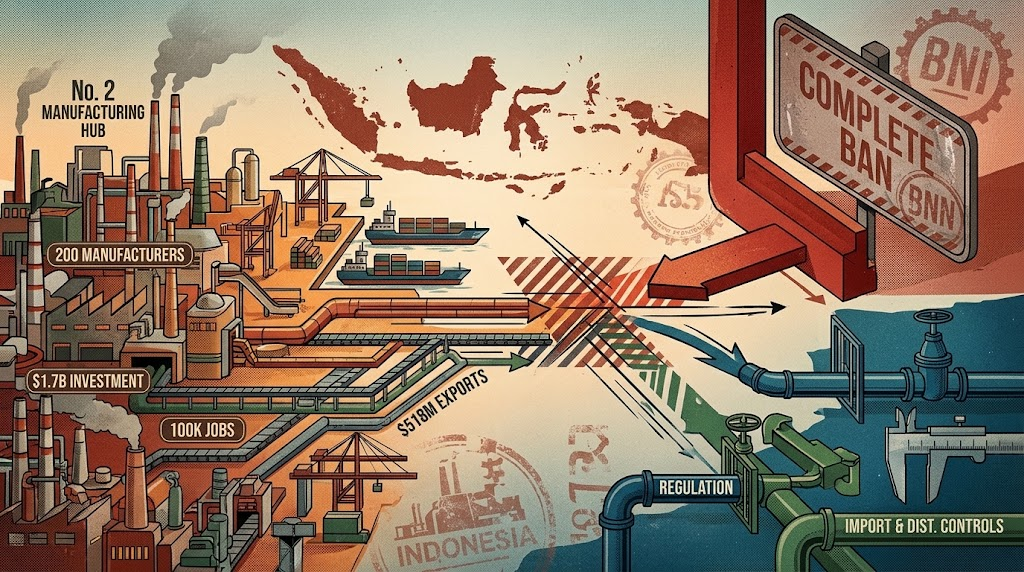
Indonesia's Ministry of Industry said at a November 3, 2026, policy forum that the country has about 200 electronic cigarette companies, Rp31 trillion (approximately $1.71 billion) in cumulative industry investment and around 100,000 jobs across the supply chain. The National Narcotics Agency is seeking a comprehensive ban on vape use and circulation, while the industry ministry favors tighter import, product-standard and distribution controls. Indonesia exported approximately $518 million in vaping products in 2025, and Chinese manufacturers including Smoore, GEEKVAPE and Jinjia Group have established local operations. An international logistics specialist interviewed by 2Firsts said more Chinese vape companies began production in Indonesia from the second half of 2025, accompanied by increased shipments of manufacturing equipment and investment in logistics facilities. The regulatory debate comes as Indonesia expands its role in international vaping manufacturing.
Special Report
Nov.05
Special Report | How Capital Is Reassessing the Global Tobacco and Modern Nicotine Industry: Lessons from a New York Forum
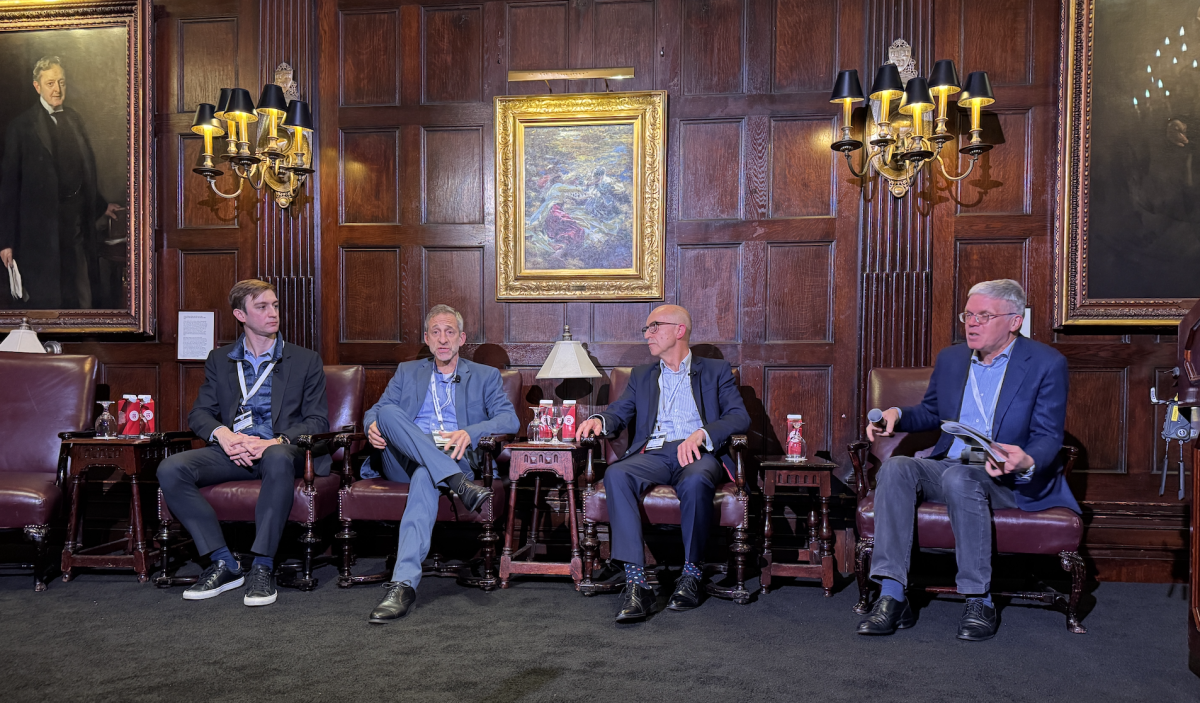
Capital is reassessing the global tobacco and modern nicotine industry as heated tobacco, vaping and nicotine pouches reshape demand, profitability and regulation. At the 2026 New Approaches Summit in New York, investors and analysts examined whether smoke-free growth can sustain earnings, how regulation shapes startup value, and whether shareholder engagement can be more effective than divestment. The debate points to a broader shift: tobacco transition is increasingly becoming a capital-allocation, governance and valuation question.
Capital Markets
Oct.05
Canada Health Minister Says She Is Not Considering Looser Nicotine Pouch Retail Rules as PMI-Linked Group Pushes for Wider Access
Canadian Health Minister Marjorie Michel says she is not considering loosening retail restrictions on nicotine pouches. Canada regulates pouches containing 4 mg or less of nicotine per unit as non-prescription nicotine replacement therapy and requires newer NRT formats such as pouches to be sold from behind pharmacy counters. Meanwhile, Unsmoke Canada, linked to Philip Morris International's Canadian business, is pushing to allow pouches in convenience stores and other general retail outlets. Health Canada also acknowledges continued unauthorized sales, while recent research shows rising pouch use among Canadian youth aged 16 to 19.
Sep.24
South Korea's Tobacco Plan Excludes 6-Methyl Nicotine as Customs Tightens Import Controls and Analog Liquid Imports Fall 83%
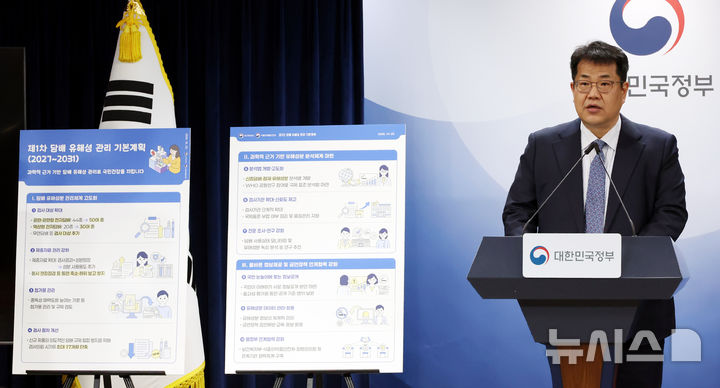
South Korea's government unveiled its first Tobacco Harm Management Basic Plan for 2027–2031 on October 29, 2026, proposing broader testing of vaping and heated tobacco products while excluding nicotine analogs such as 6-methyl nicotine. Synthetic nicotine came under tobacco regulation on April 24, and a June investigation found 6-methyl nicotine in 12 liquid inhalation products marketed as nicotine-free. Customs data released in September showed that imports of nicotine analog solutions fell 83.3%, from 12 metric tons in January–April to 2 metric tons in May–August. By September 20, imports had reached approximately 15 metric tons for the year, with 99.99% originating from China. Customs authorities have tightened pre-clearance testing and supply-chain documentation requirements, while the MFDS expects to complete its assessment of nicotine analog hazards by the end of 2026.
Regulations
Nov.04
Imperial Brands Plans to Cut Nearly 18% of Workforce as German Plant Closure and Polish Outsourcing Drive Restructuring
Imperial Brands disclosed on November 17, 2026, that its global manufacturing and organisational restructuring is expected to reduce between 4,200 and 4,600 roles by the end of 2030, equivalent to approximately 16%–18% of its workforce at the end of 2025. The first phase covers 2,100 roles with departures confirmed or subject to consultation, while a further 2,100–2,500 positions are expected to be eliminated by 2030. The company is proceeding with the closure of its Langenhagen factory in Germany, has sold its manufacturing facility in Taiwan, and has transferred selected finance, procurement and supply-chain operations in Poland to Capgemini. The restructuring programme is expected to cost approximately £740 million, with Imperial targeting at least £320 million in annual cost savings by 2030.
company
Nov.18