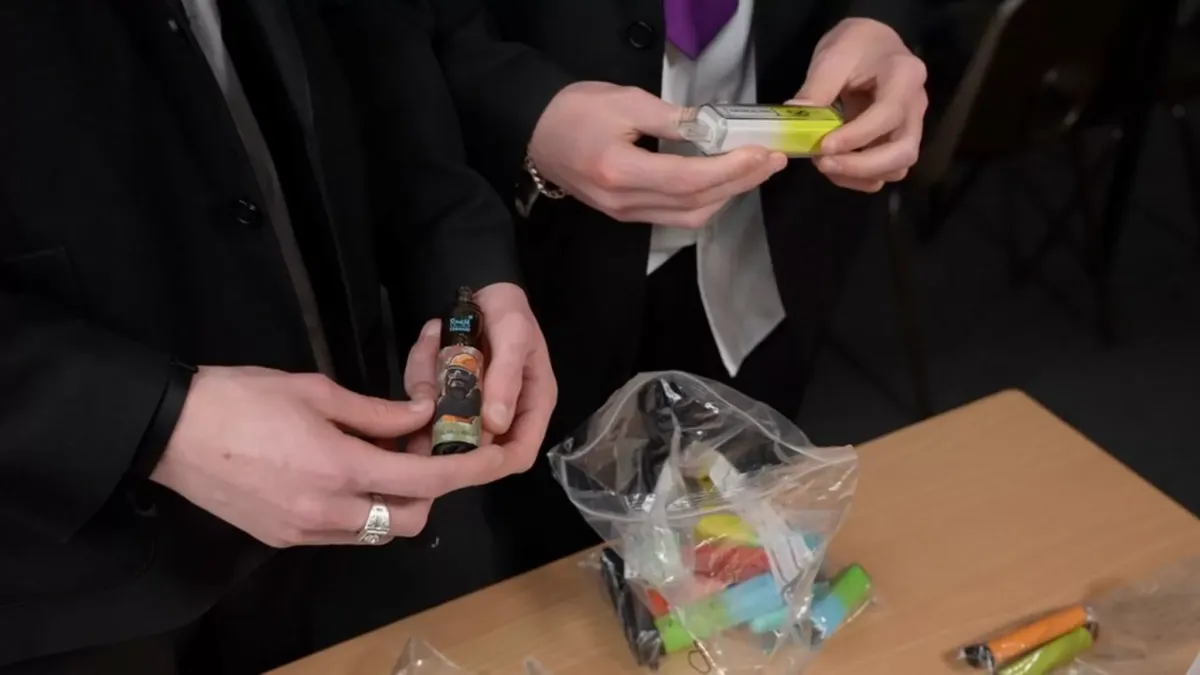
On May 30th, according to reports from the British Broadcasting Corporation, the UK government is set to ban retailers from providing free electronic cigarette samples to minors as a means of curbing underage usage. The government also plans to implement measures aimed at tackling illicit e-cigarette retailers and transactions.
Combating "unacceptable" behavior.
Although UK law prohibits the provision of e-cigarettes to individuals under 18 years of age free of charge, nicotine products such as e-cigarettes are currently not included in the law. This has led some businesses to exploit this loophole by providing free samples of e-cigarettes to minors.
Data from the UK Department of Health indicates that the number of underage users of vaping products is on the rise, with cheap and brightly-colored disposable e-cigarettes appealing to children. According to figures, in 2021, 9% of children aged 11-15 have tried e-cigarettes, which is higher than the 6% recorded in 2018.
British Prime Minister Rishi Sunak has stated that targeting children for e-cigarette marketing and participating in the illegal sale of electronic cigarettes is a completely unacceptable behavior.
Sunak has previously expressed his concerns about young people using e-cigarettes in two interviews with the media.
During an interview with Sky News, he criticized e-cigarette companies for their excessive advertising targeted towards children and stated that the government has taken action to combat illegal e-cigarette sales. In a separate interview with ITV, he expressed concern over the possibility of his own daughter being tempted by illegal e-cigarette products.
He stated that this time:
Promoting and illegally selling electronic cigarettes to children is completely unacceptable, and I will do everything in my power to put an end to this practice permanently.
He himself was deeply shocked by the recent discovery of illegal e-cigarettes with excessive heavy metals detected by independent laboratory testing.
I am shocked by the news that illegal electronic cigarettes containing excessive levels of lead have ended up in the hands of schoolchildren.
Additional measures to be implemented for further crackdown
The UK government has announced plans to implement a series of measures aimed at tackling the marketing of e-cigarettes to minors in order to protect them from the potential harm caused by vaping.
The UK government is reviewing regulations on the sale of "nicotine-free" products to children under the age of 18; penalties for stores selling illegal e-cigarettes; and local trade standards are issuing on-the-spot fines and fixed fines to shops selling e-cigarettes to minors. Earlier this month, the government established an e-cigarette enforcement team to strengthen education on the dangers of e-cigarettes in schools and appointed a school police liaison officer to eliminate e-cigarettes.
Various sectors of society have reacted.
The heads of various institutions in the United Kingdom have expressed their opinions on Prime Minister Surnac's statement.
Neil O'Brien, the Health Minister and member of the Sunak cabinet, has stated that any attempt to market e-cigarettes to children is "disgraceful.
The authorized trade association responsible for monitoring British trade standards has welcomed the government's announcement and stated that these measures are necessary.
Individuals in the electronic cigarette industry state that more bold taxation methods are necessary to make electronic cigarettes more affordable and prevent minors from being able to afford them. They also suggest continuing to promote electronic cigarettes as a choice for adult smokers looking to quit.
Deborah Arnott, the CEO of Action on Smoking and Health (ASH), has stated that while her organization welcomes the government's actions, Sunak's proposal is only a "small step" in addressing the issue.
According to data from ASH, in 2022, around 20,000 children in the UK were given free electronic cigarettes.
She believes that higher consumption taxes should be levied on electronic cigarette products.
An easily implementable fiscal bill can be submitted to the parliament to levy 5 pounds on every use of electronic cigarettes, which would make it difficult for price-sensitive children to afford.
Reference:
The government is planning a crackdown on underage vaping.
Disclaimer
This article is provided solely for professional research, industry discussion, and informational purposes. Any references to brands, companies, products, technologies, or policies are made for factual reporting and analytical purposes only, and do not constitute endorsement, recommendation, promotion, or advertising by 2Firsts.
Nicotine-containing products, including but not limited to cigarettes, e-cigarettes, heated tobacco products, and nicotine pouches, carry significant health risks. Readers are responsible for complying with all applicable laws and regulations in their respective jurisdictions, including age restrictions and access limitations.
The information contained in this article should not be regarded as investment, legal, medical, regulatory, or commercial advice. While 2Firsts strives to ensure the accuracy and reliability of its content, it does not assume liability for any direct or indirect loss arising from errors, omissions, inaccuracies, or reliance on the information contained herein.
This article is not intended for individuals below the legal age for accessing tobacco or nicotine-related information in their jurisdiction.
Copyright Notice
This article is either original content produced by 2Firsts or content reproduced, translated, summarized, or adapted from third-party sources with attribution where applicable. The intellectual property rights of the original content remain with 2Firsts or the respective original rights holders.
No individual or organization may copy, reproduce, distribute, republish, modify, translate, or otherwise use this content without prior authorization. Any unauthorized use may result in legal action.
For copyright-related inquiries, corrections, or removal requests, please contact: info@2firsts.com.
AI-Assisted Translation and Editing Notice
Portions of this article may have been translated, edited, or reviewed with the assistance of artificial intelligence tools to improve efficiency and readability. Due to the limitations of AI-assisted translation and editing, discrepancies, omissions, or inaccuracies may exist when compared with the original source.
Where applicable, readers are advised to refer to the original source for the most complete and accurate information. If you identify any errors or believe that any content infringes upon your rights, please contact us at info@2firsts.com, and we will review and address the matter promptly.