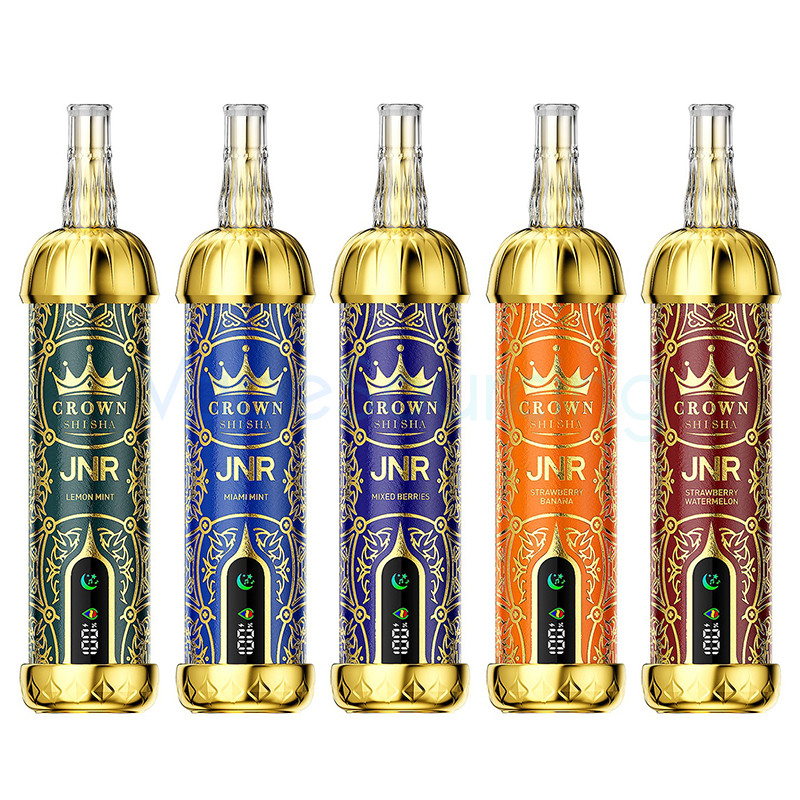
On April 16th, The Guardian reported that certain brands of electronic cigarettes sold in shops in England and Wales have been found to violate legal regulations based on testing conducted by independent third-party lab Inter scientific. The report states that 73% of electronic cigarette brands sold in stores exceeded the legal limit of 2ml of capacity, and over 40% of the products tested contained 5ml or more of e-liquid. Additionally, eight so-called nicotine-free electronic cigarettes were found to contain nearly 20mg/ml of nicotine. In response to these findings, 2FIRSTS London News conducted an interview with Inter scientific lab to gather further information about the product testing.
Testing funded by British law enforcement agencies.
According to their statement, Inter Scientific is a laboratory that has been granted ISO 17025 certification by an accredited UK certification service. Their team of experts in analysis and regulation is dedicated to testing and ensuring compliance of electronic cigarette products.
Inter Scientific stated:
Recently, we were hired by several trade standard bureaus (enforcement agencies in the UK) to test electronic cigarette products that are suspected of being illegally sold or have been discontinued in the UK market.
According to a report in The Guardian, a total of 52 electronic cigarette products underwent testing by Inter scientific.
When asked for a specific list by 2FIRSTS, Inter Scientific refused to disclose the specific information but revealed several specific brand names that participated in the testing, including the popular disposable e-cigarette brand ELUX in the UK, Dr. Gorilla King, and R and M.
The inter-scientific organization, 2FIRSTS, has stated that "these tests were funded by UK law enforcement agencies, who purchased suspicious illegal products from shops across the UK." However, laboratory regulations prohibit the direct sharing of client data without clear written consent.
The product did not appear on the MHRA's list of legal products for testing.
According to Inter scientific, the amount of nicotine present is not a major concern. They found that one product exceeded the UK's limit of 20mg/mL, but this does not pose a direct health risk.
The key issue is that all products tested have not appeared on the legitimate product list published by the UK's MHRA. According to UK regulations on e-cigarettes, all nicotine-containing e-cigarette products must be registered with MHRA prior to sale. The registration process allows for a review of the safety of the components and emissions of electronic cigarettes.
As a result, these tested e-cigarette products have not undergone regulatory scrutiny.
Inter scientific has expressed its concern about this finding.
The most concerning issue is that some products labeled as 0% nicotine have been found to contain 20 milligrams per milliliter of nicotine (2%), which is the maximum amount allowed in the UK.
According to the statement, products marked as 0% nicotine are both misleading to consumers and not in compliance with regulatory requirements under the 2016 TRPR and CLP/REACH.
The UK government has established an "Illegal e-cigarette Enforcement Team.
According to 2FIRSTS, the UK's Public Health Minister Neil O'Brien has announced plans to set up a new task force to crack down on illegal e-cigarettes. The government will provide £3 million in funding for this initiative, and the newly established "Illegal E-cigarette Enforcement Team" will share information and intelligence between local governments and online networks.
The group will conduct specific projects, such as test purchases in convenience stores and e-cigarette shops. Additionally, the group will develop guidelines to assist in establishing a compliant regulatory system and will have the authority to seize illegal products at stores and borders.
2FIRSTS will continue to track and report on further developments. Stay tuned for updates.
Read in English:
A government agency in the United Kingdom is financing research into the effects of electronic cigarettes, also known as vapes.
Further reading:
The Guardian reports that 73% of e-cigarette liquids in the UK contain excessive amounts of nicotine. Eight nicotine-free products were found to contain nicotine during testing.
The UK plans to crack down on illegal electronic cigarettes, and the industry association says it will provide necessary resources and support.
The UK government is set to allocate £3 million to establish a law enforcement group tasked with shutting down shops that sell e-cigarettes to minors.
Reference:
Illegal tobacco and vape products were confiscated in Staffordshire.
Disclaimer
This article is provided solely for professional research, industry discussion, and informational purposes. Any references to brands, companies, products, technologies, or policies are made for factual reporting and analytical purposes only, and do not constitute endorsement, recommendation, promotion, or advertising by 2Firsts.
Nicotine-containing products, including but not limited to cigarettes, e-cigarettes, heated tobacco products, and nicotine pouches, carry significant health risks. Readers are responsible for complying with all applicable laws and regulations in their respective jurisdictions, including age restrictions and access limitations.
The information contained in this article should not be regarded as investment, legal, medical, regulatory, or commercial advice. While 2Firsts strives to ensure the accuracy and reliability of its content, it does not assume liability for any direct or indirect loss arising from errors, omissions, inaccuracies, or reliance on the information contained herein.
This article is not intended for individuals below the legal age for accessing tobacco or nicotine-related information in their jurisdiction.
Copyright Notice
This article is either original content produced by 2Firsts or content reproduced, translated, summarized, or adapted from third-party sources with attribution where applicable. The intellectual property rights of the original content remain with 2Firsts or the respective original rights holders.
No individual or organization may copy, reproduce, distribute, republish, modify, translate, or otherwise use this content without prior authorization. Any unauthorized use may result in legal action.
For copyright-related inquiries, corrections, or removal requests, please contact: info@2firsts.com.
AI-Assisted Translation and Editing Notice
Portions of this article may have been translated, edited, or reviewed with the assistance of artificial intelligence tools to improve efficiency and readability. Due to the limitations of AI-assisted translation and editing, discrepancies, omissions, or inaccuracies may exist when compared with the original source.
Where applicable, readers are advised to refer to the original source for the most complete and accurate information. If you identify any errors or believe that any content infringes upon your rights, please contact us at info@2firsts.com, and we will review and address the matter promptly.