Ukraine Military Voices Concern Over Potential Vape and Pouch Ban

Nov.10.2025
Ukraine Military Voices Concern Over Potential Vape and Pouch Ban
Verkhovna Rada is reviewing six bills to regulate new nicotine products such as pouches and vapes. The main bill, No.14110, proposes a total ban on production, import, and sale, while alternative proposals seek regulation instead of prohibition.

Key Point

  • Six draft laws address nicotine pouches, sachets, and vapes.
  • Main bill No.14110 calls for a full ban on production and sales.
  • Military and experts oppose the ban, citing use among soldiers.
  • Alternative bills propose regulation, registration, and labeling.
  • Bill No.14110-4 also seeks to ban e-cigarettes and refill containers.


2Firsts, Nov. 10, 2025 — According to Vox Ukraine, the Verkhovna Rada is considering six draft laws to establish rules for new nicotine products — including pouches, sachets, and other smoke-free items containing nicotine but not tobacco.


The main bill, No.14110, defines “nicotine products for oral use” as those consumed through the mouth’s mucous membrane, such as pouches or sachets, and proposes a complete ban on their production, import, sale, and circulation within Ukraine.


Several military personnel and public health experts have voiced opposition to the total ban, noting that nicotine pouches are widely used among Ukrainian soldiers. They do not require fire, do not reveal positions at night, and are convenient in the field. 


The state also collects significant tax revenue from these products — around UAH 1 billion expected in 2025. Opponents warn that a full ban could drive the market underground, as happened with flavored vapes, 93% of which are now illicit, and cause budget losses.


Alternative bills, however, aim to regulate rather than prohibit nicotine pouches and tobacco-free products by setting unified rules for their circulation. 


Most require manufacturers to notify the Ministry of Health before market entry — three months (Bills Nos.14110-2, -4, -5) or six months (Bill No.14110-1) — and to submit detailed information on composition, nicotine content, toxicological data, and production processes.


The proposed nicotine strength limits vary: 20 mg per portion in most bills, or 17 mg under Bill No.14110-3. All versions prohibit advertising, sponsorship, sales to minors, and any state support for production. 


Packaging would need to display product details — including composition, dosage, and production date — along with a mandatory health warning. For example, Bill No.14110-3 requires the warning to cover at least 30% of the package, while Bill No.14110-5 mandates the label: “This product contains nicotine and causes addiction.”


Bill No.14110-4 separately proposes a full ban on the production, import, sale, and advertising of e-cigarettes, vape liquids, and refill containers.


Lawmakers are now debating how to balance public health goals with economic interests and existing use among the military.

Image source: Vox Ukraine


We welcome news tips, article submissions, interview requests, or comments on this piece.

Please contact us at info@2firsts.com, or reach out to Alan Zhao, CEO of 2Firsts, on LinkedIn


Notice

1.  This article is intended solely for professional research purposes related to industry, technology, and policy. Any references to brands or products are made purely for objective description and do not constitute any form of endorsement, recommendation, or promotion by 2Firsts.

2.  The use of nicotine-containing products — including, but not limited to, cigarettes, e-cigarettes, nicotine pouchand heated tobacco products — carries significant health risks. Users are responsible for complying with all applicable laws and regulations in their respective jurisdictions.

3.  This article is not intended to serve as the basis for any investment decisions or financial advice. 2Firsts assumes no direct or indirect liability for any inaccuracies or errors in the content.

4.  Access to this article is strictly prohibited for individuals below the legal age in their jurisdiction.


Copyright


This article is either an original work created by 2Firsts or a reproduction from third-party sources with proper attribution. All copyrights and usage rights belong to 2Firsts or the original content provider. Unauthorized reproduction, distribution, or any other form of unauthorized use by any individual or organization is strictly prohibited. Violators will be held legally accountable.

For copyright-related inquiries, please contact: info@2firsts.com


AI Assistance Disclaimer


This article may have been enhanced using AI tools to improve translation and editorial efficiency. However, due to technical limitations, inaccuracies may occur. Readers are encouraged to refer to the cited sources for the most accurate information.

We welcome any corrections or feedback. Please contact us at: info@2firsts.com

How Investors Are Repricing the Global Tobacco Industry as Nicotine Markets Shift
How are investors reassessing the global tobacco industry as nicotine markets evolve? In an interview with 2Firsts, Charlie Chen, Head of Research at CCB International Securities, forecasts annual growth of 30–50% for nicotine pouches, outpacing vaping and heated tobacco. He examines how regulatory enforcement, shifting market shares and new business models are influencing company valuations. The report also explores differences between multinational tobacco groups and Chinese companies, drawing on insights from the New Approaches Summit on profitability, investment strategies and industry consolidation.
Nov.11
2Firsts Interview | Cigarette Sales Fall as Smokeless Alternatives Gain in U.S. Convenience Stores, NACS Says
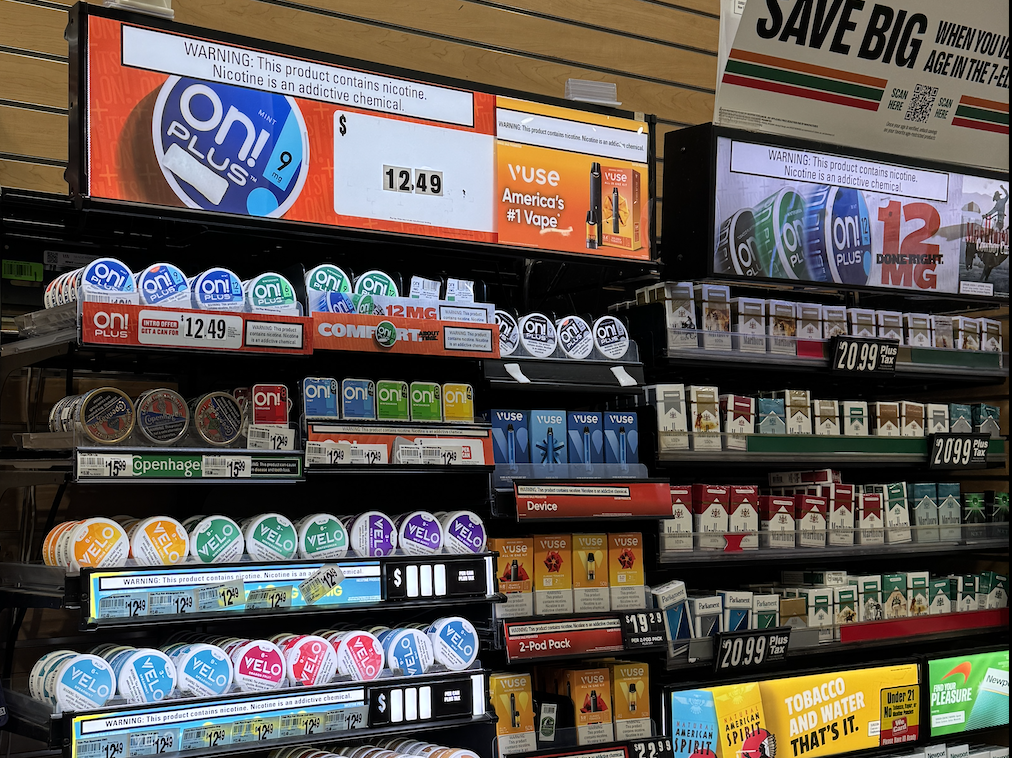
Ahead of the 2026 NACS Show, 2Firsts interviewed Chris Rapanick, NACS managing director of research, on changes reshaping the U.S. convenience-store tobacco and nicotine market. NACS data show cigarette sales declining while smokeless alternatives, including nicotine pouches, continue to grow. The interview also examines higher OTP margins, shifting backbar space, weaker store traffic, regulatory uncertainty and NACS’ outlook for 2027, offering a retailer-side view of one of the world’s largest nicotine markets.
Interview
Oct.03
Product | SMOORE's VAPORESSO Introduces VAST Refillable Vape With Three Resistances in One Pod
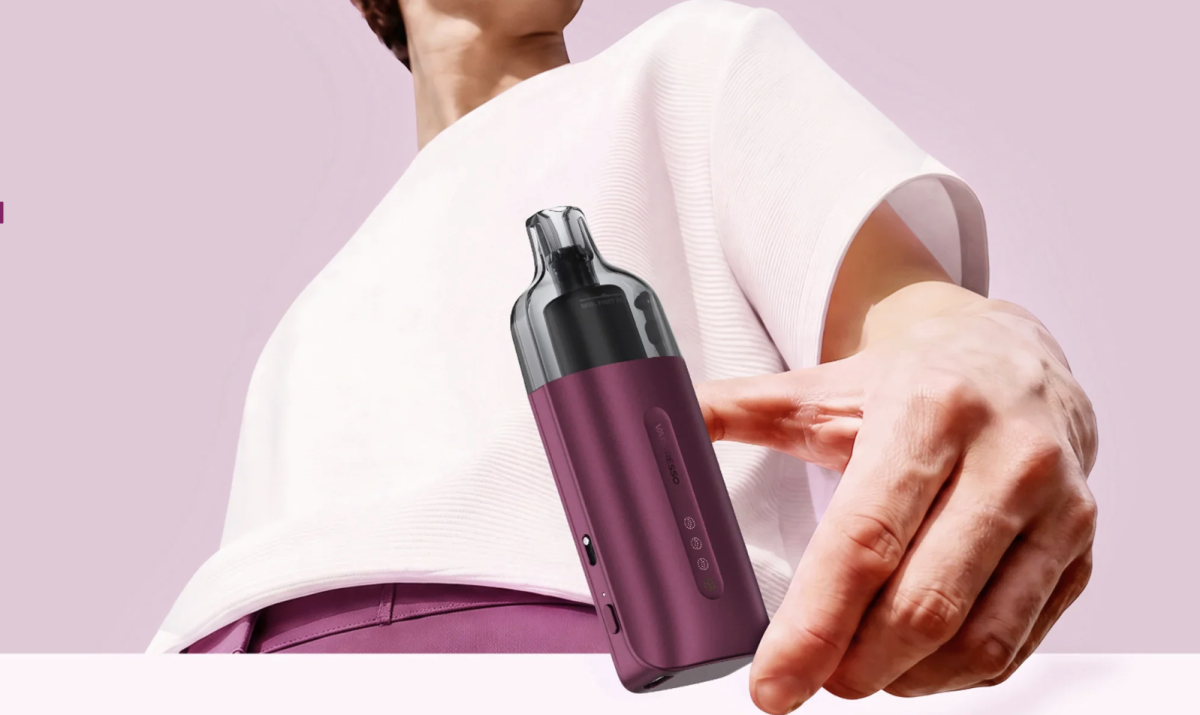
SMOORE-owned vaping brand VAPORESSO introduced the VAST refillable open-system vape in October 2026, featuring Tri-Core Mesh technology that integrates three resistance configurations—0.8Ω, 0.6Ω and 0.4Ω—within a single pod. The device supports different operating modes and e-liquid types. The standard version features a 10mL pod, while a TPD-labelled configuration combines a 2mL pod with an 8mL refill container. The device has a 1,600mAh battery and a maximum output of 30W. VAPORESSO claims up to six pod refills and a tested coil lifespan of up to 150,000 puffs. The UK's MHRA published a related device notification on October 12. The official MSRP is $25.90, compared with a $35.90 listing on VAPORESSO's direct store.
product
Oct.30
DATA|UK Retail Research Group IGD Says Convenience Tobacco and Vape Sales Fell 10.6%, With 15.4% Market Share Versus Alcohol's 15.1%; Top Rank at Risk in 2027
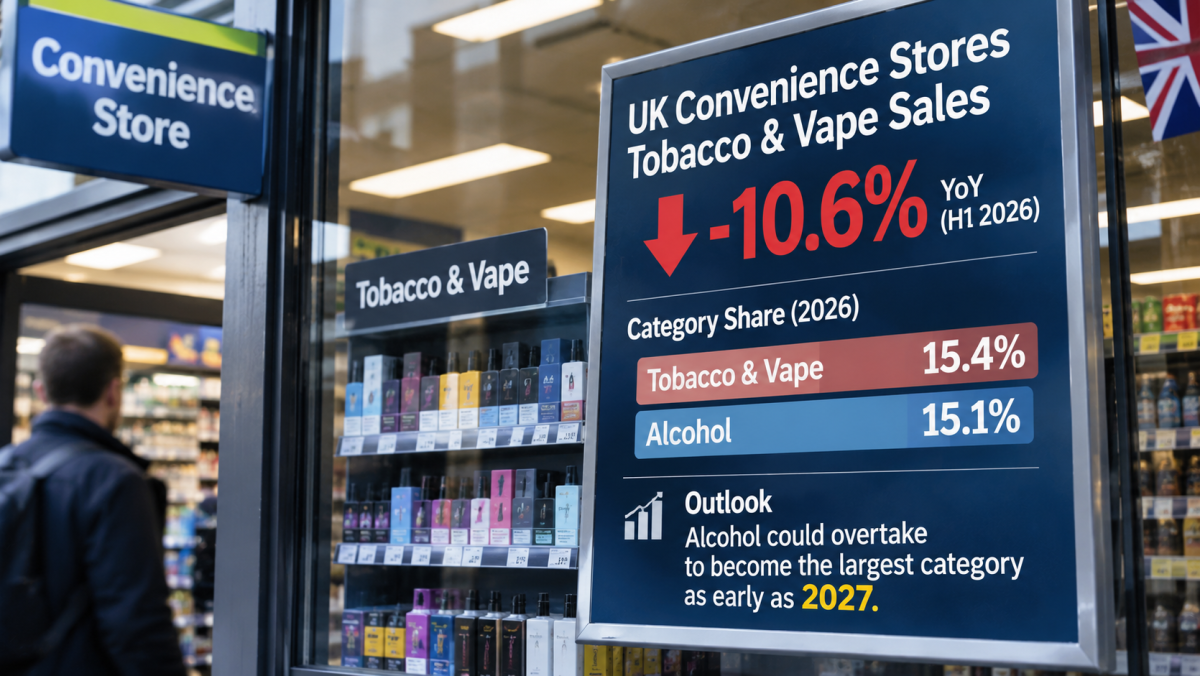
Combined tobacco and vaping sales in UK convenience stores fell 10.6% year over year in the first half of 2026, making the category a major drag on channel performance, according to retail research organization IGD. Total convenience sales declined 1.2%, while sales excluding tobacco and vaping increased 0.7%. IGD's 2026 category-share figures show tobacco and vaping accounting for 15.4% of convenience sales, compared with 15.1% for alcohol. The organization forecasts alcohol could overtake tobacco and vaping as the largest category by sales value as early as 2027 if current trends continue. IGD expects the convenience market to increase from £48.6 billion in 2026 to £54.9 billion in 2031, a 2.5% compound annual growth rate, or 3.4% excluding tobacco and vaping.
DATA
Nov.11
EU Tobacco Tax Reform Stalls as Malta Withholds Support Despite Backing From 26 States
EU finance ministers failed to reach agreement on tobacco excise reform at the November 9, 2026 Economic and Financial Affairs Council (ECOFIN) meeting in Brussels. The Irish Council presidency's compromise secured support from 26 of the EU's 27 member states, but Malta withheld consent, preventing the Council from reaching a general approach requiring unanimity. The reform would raise minimum taxes on conventional tobacco and bring e-cigarette liquids, heated tobacco and nicotine pouches into a common EU minimum excise framework. Finland and Estonia accepted further concessions during the meeting, while the presidency proposed separating the inclusion of nicotine pouches in the framework from setting their precise minimum tax rates. Another compromise would allow ten qualifying member states until 2036 to meet certain tobacco excise requirements. Ireland intends to continue negotiations in December.
Regulations
Nov.11
Special Report | How Capital Is Reassessing the Global Tobacco and Modern Nicotine Industry: Lessons from a New York Forum
Capital is reassessing the global tobacco and modern nicotine industry as heated tobacco, vaping and nicotine pouches reshape demand, profitability and regulation. At the 2026 New Approaches Summit in New York, investors and analysts examined whether smoke-free growth can sustain earnings, how regulation shapes startup value, and whether shareholder engagement can be more effective than divestment. The debate points to a broader shift: tobacco transition is increasingly becoming a capital-allocation, governance and valuation question.
Capital Markets
Oct.05