Key Points at a Glance
- Fiscal impact: If the black market persists at its current scale, Ukraine’s consolidated budgets could lose about UAH 7.5 billion (~US$180 million) in 2025, including roughly UAH 5.0 billion in excise tax, UAH 2.0 billion in VAT, and UAH 0.5 billion in local retail excise.
- Black-market share & makeup: The illicit e-cigarette market accounts for about 93% of total sales; sources are roughly 40% smuggled e-liquids (including pre-filled devices) + 60% domestically produced counterfeits/“DIY blends.”
- Enforcement roadmap & international comparison: Calls for greater resourcing and coordinated enforcement by customs, border guards, the Economic Security Bureau, tax authorities, and local agencies. In the FY2026 U.S. budget, US$200 million is earmarked for combating illicit e-cigarettes—suggesting increased fiscal investment is a common policy path.
2Firsts, October 16, 2025 — According to RBC-Ukraine (РБК-Україна), Mykola Pasichnyi, Professor in the Department of Finance at the Kyiv National University of Trade and Economics and an expert at the Growford Institute, stated on the “Espreso TV” program that the continuing expansion of the illicit e-cigarette market could reduce Ukraine’s combined state and local budget revenues by about UAH 7.5 billion (~US$180 million) in 2025. The projected shortfall includes approximately UAH 5.0 billion (~US$120 million) in excise tax, UAH 2.0 billion (~US$48 million) in VAT, and UAH 0.5 billion (~US$12 million) in local retail excise.
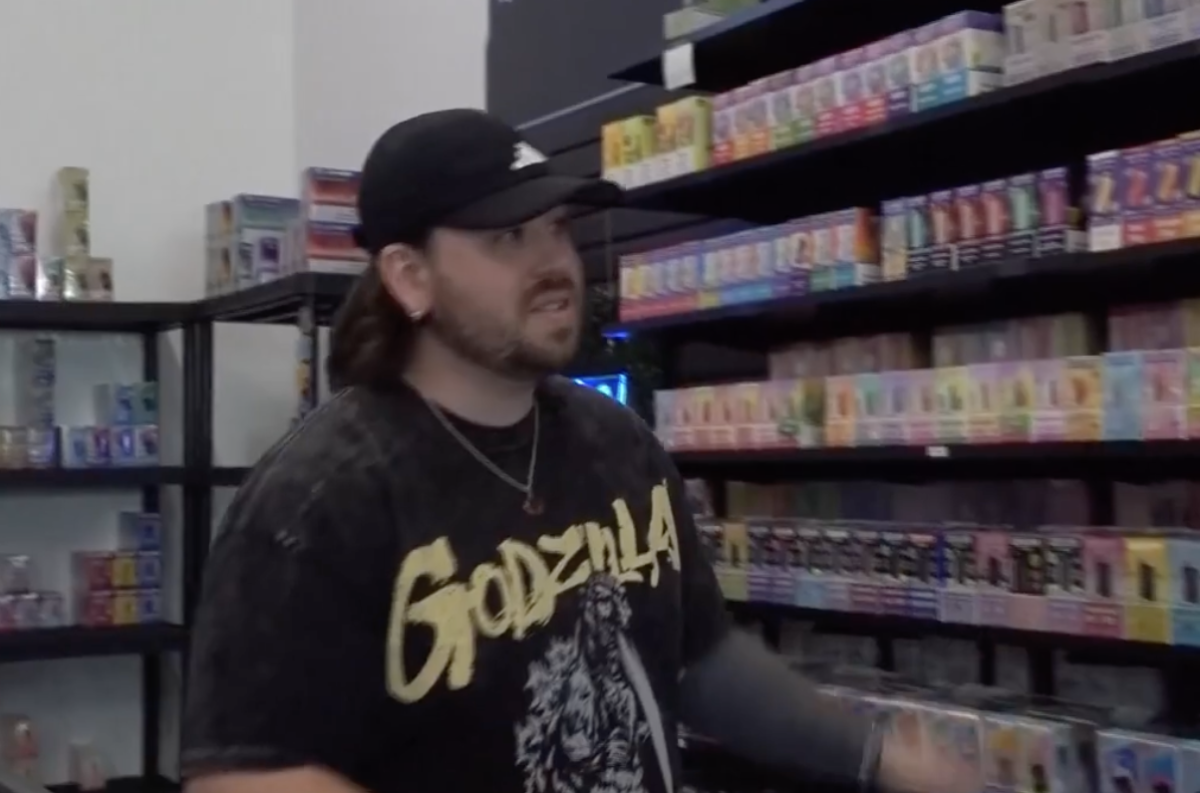
Pasichnyi said Ukraine’s e-cigarette market is “almost entirely in the gray zone.” Data from the Growford Institute indicate the black market accounts for about 93% of the total market. Roughly 40% of e-liquid is smuggled into Ukraine (either in various container sizes or pre-filled in devices), while the remaining 60% consists of counterfeit products manufactured domestically and sold either as “DIY blends” (e-liquid mixed through informal channels) or as finished goods.
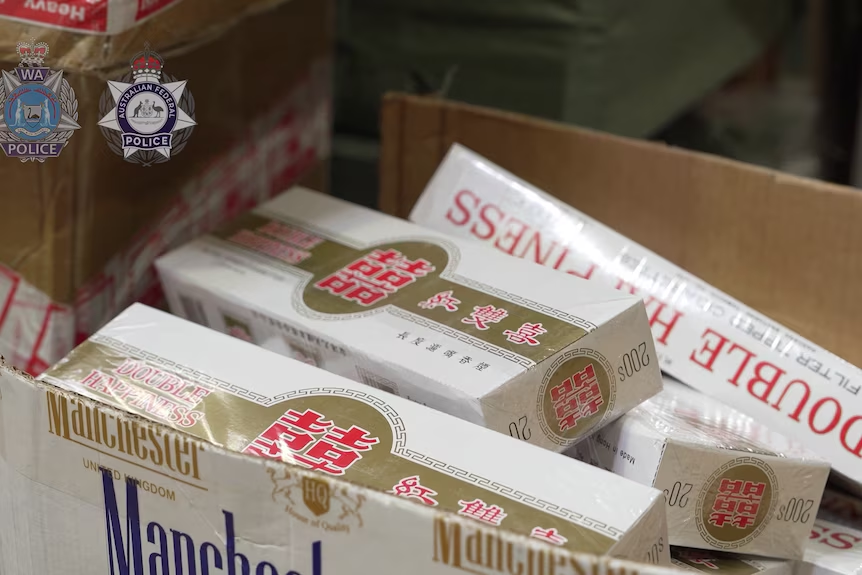
As an example, he noted that in July 2025, Ukrainian law enforcement uncovered an illicit e-cigarette case with seized goods valued at around UAH 100 million (~US$2.4 million). Drawing on practices in advanced economies, Pasichnyi recommended that enforcement be underpinned by increased resources and tighter coordination among customs, border guards, the Economic Security Bureau, tax authorities, and local bodies.
The report also cites his observation that the United States, in its FY2026 budget, for the first time allocated US$200 million to combat illicit e-cigarettes—suggesting that ramping up fiscal investment is one of the common approaches countries take to govern such black markets.
Cover image credit: RBC
We welcome news tips, article submissions, interview requests, or comments on this piece.
Please contact us at info@2firsts.com, or reach out to Alan Zhao, CEO of 2Firsts, on LinkedIn
Notice
1. This article is intended solely for professional research purposes related to industry, technology, and policy. Any references to brands or products are made purely for objective description and do not constitute any form of endorsement, recommendation, or promotion by 2Firsts.
2. The use of nicotine-containing products — including, but not limited to, cigarettes, e-cigarettes, nicotine pouchand heated tobacco products — carries significant health risks. Users are responsible for complying with all applicable laws and regulations in their respective jurisdictions.
3. This article is not intended to serve as the basis for any investment decisions or financial advice. 2Firsts assumes no direct or indirect liability for any inaccuracies or errors in the content.
4. Access to this article is strictly prohibited for individuals below the legal age in their jurisdiction.
Copyright
This article is either an original work created by 2Firsts or a reproduction from third-party sources with proper attribution. All copyrights and usage rights belong to 2Firsts or the original content provider. Unauthorized reproduction, distribution, or any other form of unauthorized use by any individual or organization is strictly prohibited. Violators will be held legally accountable.
For copyright-related inquiries, please contact: info@2firsts.com
AI Assistance Disclaimer
This article may have been enhanced using AI tools to improve translation and editorial efficiency. However, due to technical limitations, inaccuracies may occur. Readers are encouraged to refer to the cited sources for the most accurate information.
We welcome any corrections or feedback. Please contact us at: info@2firsts.com