Fifth Circuit Upholds FDA’s 2021 PMTA Rule, Citing Statutory Health-Study Requirements

Feb.27
Fifth Circuit Upholds FDA’s 2021 PMTA Rule, Citing Statutory Health-Study Requirements
A Fifth Circuit panel upheld the U.S. Food and Drug Administration’s 2021 final rule requiring companies seeking premarket authorization for new tobacco products to include information on health-risk investigations. In a published opinion, the court found FDA satisfied the Regulatory Flexibility Act’s procedural requirements and reasonably relied on the economic analysis from the 2016 “deeming rule” as a factual basis to certify limited impact on small businesses.

Key Takeaways


  • The Fifth Circuit upheld FDA’s 2021 PMTA rule on Feb. 26, 2026.
  • The court said FDA made a reasonable, good-faith effort to meet the RFA’s procedural requirements.
  • The panel found the 2016 “deeming rule” cost assessment supported FDA’s certification on small-entity impact.
  • The court said PMTA disclosure of health-risk investigation information is mandated by the Tobacco Control Act.
  • The case is Kealani Distribution LLC et al. v. Food & Drug Administration et al., No. 25-40135.


2Firsts, February 27, 2026


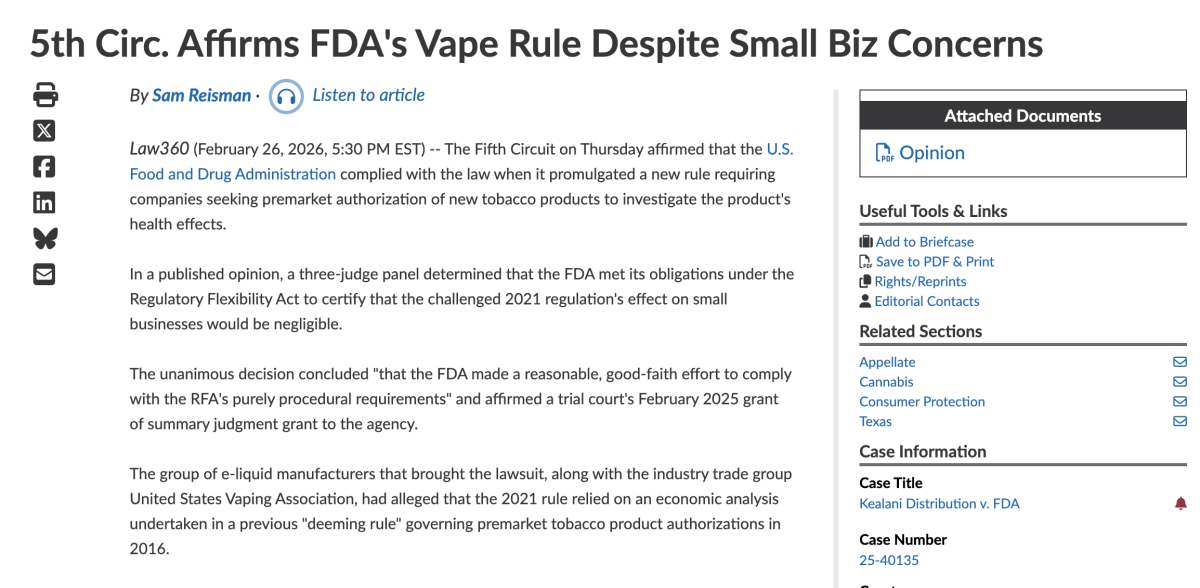
According to Law360, the U.S. Court of Appeals for the Fifth Circuit affirmed that the U.S. Food and Drug Administration complied with the law when it issued a 2021 rule requiring companies seeking premarket authorization of new tobacco products to investigate and disclose information about the product’s health effects.


In a published opinion, the three-judge panel held that FDA met its obligations under the Regulatory Flexibility Act (RFA) to certify that the 2021 final regulation would not have a significant economic impact on a substantial number of small entities. The unanimous decision concluded that FDA made a reasonable, good-faith effort to comply with the RFA’s procedural requirements and affirmed a trial court’s February 2025 grant of summary judgment to the agency.


The plaintiffs — a group of e-liquid manufacturers and the trade group United States Vaping Association — argued that the 2021 rule improperly relied on an economic analysis conducted for a prior 2016 “deeming rule” governing premarket tobacco product authorizations. The court found the 2016 cost assessment provided an adequate factual basis for FDA’s certification regarding the 2021 final PMTA rule.


The plaintiffs also contended FDA failed to consider less onerous requirements. The Fifth Circuit rejected that argument, finding that several requirements described as burdensome — including the obligation that applicants submit information about the potential dangers and benefits of their products — were mandated by the Tobacco Control Act. The court held that the requirement for an applicant to include all known information concerning health-risk investigations in a PMTA is imposed by statute, and FDA cannot dispense with a congressional mandate through regulation.


The lawsuit, filed in October 2022, alleged that many in the industry spent significant money attempting to comply with what they called FDA’s burdensome requirements, only to have applications rejected. The court’s decision left intact the challenged rule.


The case is Kealani Distribution LLC et al. v. Food & Drug Administration et al., case number 25-40135, in the U.S. Court of Appeals for the Fifth Circuit.


Image Source: Law360


We welcome news tips, article submissions, interview requests, or comments on this piece.

Please contact us at info@2firsts.com, or reach out to Alan Zhao, CEO of 2Firsts, on LinkedIn


Notice

1.  This article is intended solely for professional research purposes related to industry, technology, and policy. Any references to brands or products are made purely for objective description and do not constitute any form of endorsement, recommendation, or promotion by 2Firsts.

2.  The use of nicotine-containing products — including, but not limited to, cigarettes, e-cigarettes, nicotine pouchand heated tobacco products — carries significant health risks. Users are responsible for complying with all applicable laws and regulations in their respective jurisdictions.

3.  This article is not intended to serve as the basis for any investment decisions or financial advice. 2Firsts assumes no direct or indirect liability for any inaccuracies or errors in the content.

4.  Access to this article is strictly prohibited for individuals below the legal age in their jurisdiction.


Copyright


This article is either an original work created by 2Firsts or a reproduction from third-party sources with proper attribution. All copyrights and usage rights belong to 2Firsts or the original content provider. Unauthorized reproduction, distribution, or any other form of unauthorized use by any individual or organization is strictly prohibited. Violators will be held legally accountable.

For copyright-related inquiries, please contact: info@2firsts.com


AI Assistance Disclaimer


This article may have been enhanced using AI tools to improve translation and editorial efficiency. However, due to technical limitations, inaccuracies may occur. Readers are encouraged to refer to the cited sources for the most accurate information.

We welcome any corrections or feedback. Please contact us at: info@2firsts.com

Arizona Turns to a 50% Retail Vape Tax as Tobacco Tax Revenue Falls 47% From 2008
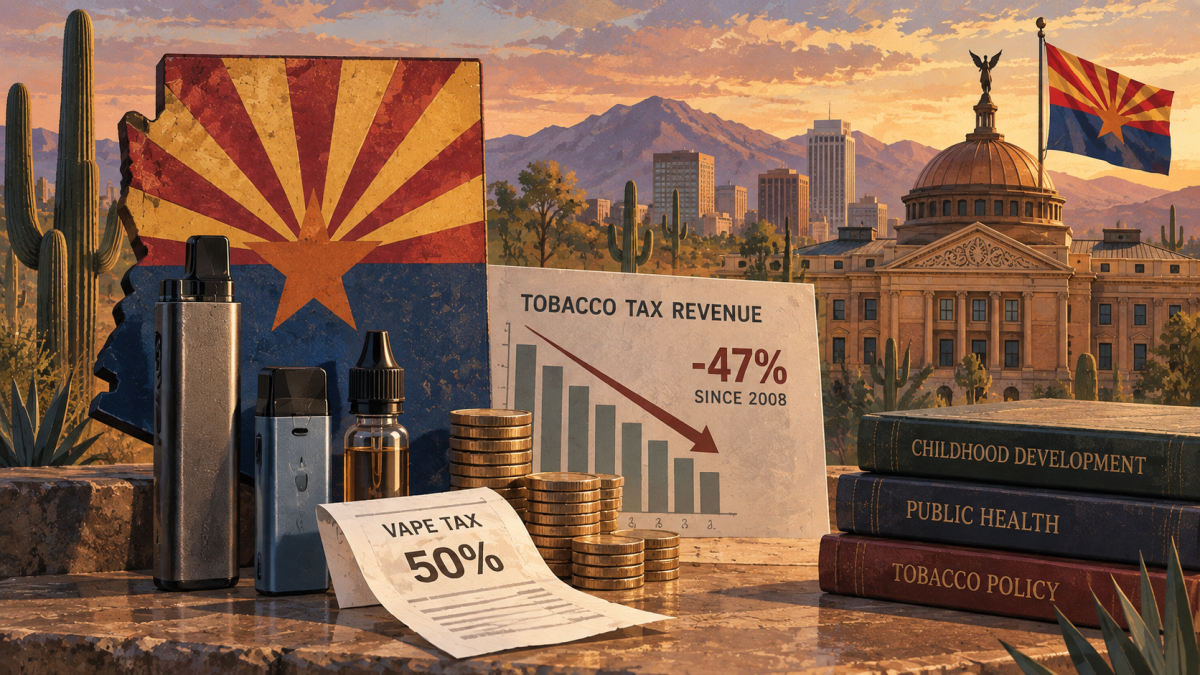
Arizona's First Things First is pushing for an excise tax equal to 50% of the retail price of vaping products, estimating that the measure could generate about $100 million annually. The agency says its tobacco-tax revenue has fallen 47% from 2008 levels. Arizona has attempted to broaden its nicotine tax base in each of the past two years: a 2025 bill proposed a 50% wholesale-price tax, while a 2026 measure shifted to a 50% retail-price tax covering alternative nicotine products and vapor products. Separately, the state enacted HB 4001 this year to establish a new licensing and sales framework for alternative nicotine products.
Sep.21
Philippines Mandates Safety Certification for Nicotine Pouches, Gives Industry 12 Months to Comply
The Philippines Department of Trade and Industry has placed nicotine pouches under mandatory product certification through Department Administrative Order No. 26-07, Series of 2026. Nicotine pouches must obtain a Philippine Standard, or PS, license before they can be manufactured, imported, packed, distributed or sold in the country. The regime requires testing for nicotine content, pH and water activity, while packaging must disclose nicotine strength, ingredients, allergens, batch information, the PS certification mark and prescribed health warnings. Existing market participants have a 12-month transition period to comply.
Regulations
Oct.12
Special Report | Altria Subsidiaries Sue FDA to Vacate 2021 PMTA Rule as Agency Moves to Speed Reviews
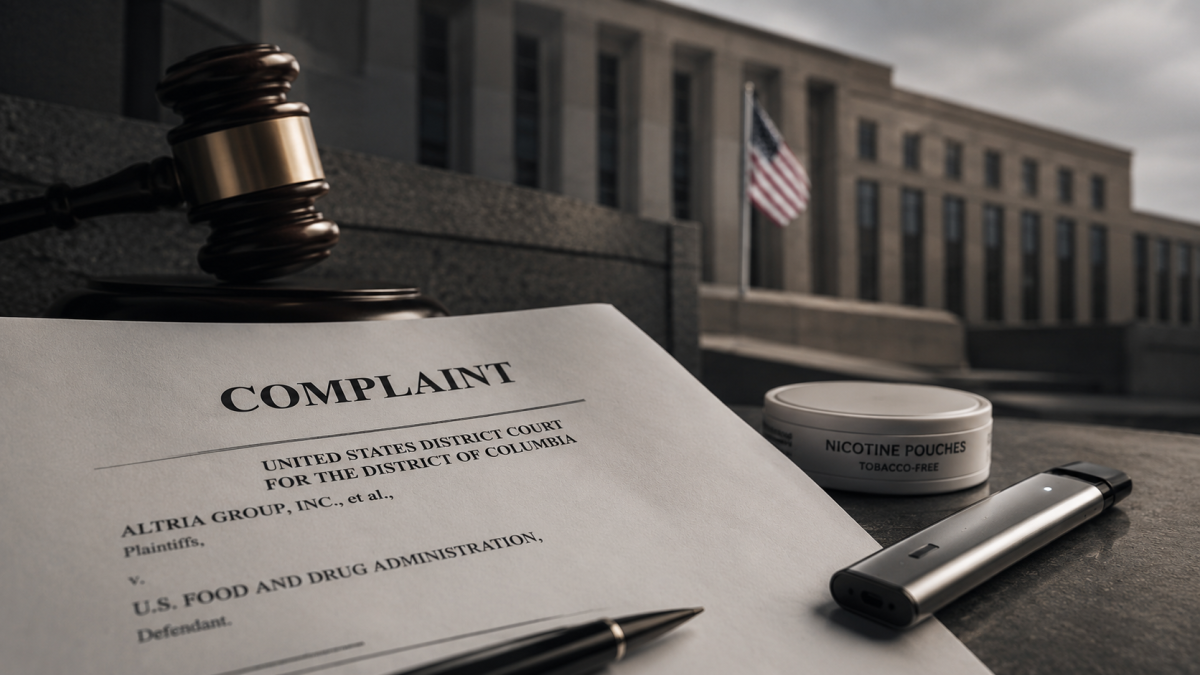
2Firsts reviewed the original federal court complaint filed by Altria subsidiaries Helix Innovations and NJOY on Sept. 2 challenging FDA’s 2021 PMTA rule. The lawsuit questions whether FDA’s review process complies with the Tobacco Control Act’s 180-day timeline, even as the agency moves to accelerate PMTA reviews and issues more marketing orders. Drawing on the complaint, FDA records, government audits and recent court rulings, 2Firsts examines the legal arguments, supporting evidence and potential implications for the U.S. tobacco review system.
Regulations
Sep.03
Australia Tobacco Tax Debate Spreads Within Labor as NSW Premier Minns Reaffirms Support for a Cut
Australia’s tobacco excise debate is increasingly exposing differences within the governing Labor Party. New South Wales Labor Premier Chris Minns reaffirmed on September 8 that he supports reducing tobacco excise, arguing that current tax settings are pushing consumers toward cheaper black-market cigarettes. Federal Health Minister Mark Butler continues to oppose an excise cut, while Treasurer Jim Chalmers and Assistant Treasurer Daniel Mulino have recently stopped short of ruling out future changes. The divergence follows the opposition Coalition’s proposal to cut tobacco excise by 80%.
Sep.08
Product | SnowPlus Launches Nicotine-Free DASH in South Korea, Localising an Established Disposable Platform
SnowPlus has introduced a nicotine-free version of DASH in South Korea, adapting an existing overseas disposable platform for the local market. The Korean version retains the series’ flat duckbill-style mouthpiece, ceramic heating architecture and disposable form factor while reducing nicotine content to 0%. By comparison, the overseas DASH 4000 platform typically features 7.5ml of prefilled e-liquid, up to 4,000 puffs and a 530mAh rechargeable battery, with nicotine-containing variants available in some markets. The product update centers on formulation localisation rather than a new hardware generation.
Aug.31
U.S. Military Could Test Nicotine Pouches and Vapes for Smoking Cessation as Washington Examiner Cites ZYN and Potential $4 Billion Reduction in Related Defense Costs
The House-passed FY2027 National Defense Authorization Act includes a provision authorizing the defense secretary to conduct a one-year smoking-cessation pilot for active-duty service members. Section 707 lists counseling, nicotine gum and patches alongside what the bill calls "electric nicotine delivery systems," nicotine pouches and heat-not-burn products. A recent Washington Examiner op-ed cited ZYN as an example in arguing for the provision, but the legislation does not name any commercial brand or supplier. ZYN is made by PMI-owned Swedish Match USA, with specified products holding FDA marketing authorizations and modified risk orders.
Sep.20