Key Points
- Congressional Letter: U.S. Representative Mike Carey and 70 other Republican lawmakers sent a March 4 letter to Treasury Secretary Scott Bessent and U.S. Trade Representative Jamieson Greer urging that illicit vape enforcement be elevated within the U.S.–China trade agenda.
- Risk Concerns: The letter highlights potential risks associated with illicit vape products, including national security, cybersecurity and data privacy, youth exposure and links to organized crime.
- Congressional Support: The 71 signatories represent about one-third of the House Republican Conference (roughly 32%) and around 16% of the full House membership.
- Policy Signal: The initiative indicates that illicit vape trade may increasingly be discussed not only within domestic regulatory frameworks but also in broader international trade policy discussions.
- Alan Zhao’s Note: In an editor’s note, 2Firsts Co-Founder Alan Zhao calls for stronger international cooperation to combat illicit vape trade and cautions against over-politicizing the issue, which could undermine effective international cooperation.
2Firsts
March 10, 2026
A group of 71 Republican members of the U.S. House of Representatives, led by Representative Mike Carey of Ohio, has urged the U.S. government to elevate the issue of illicit electronic cigarettes entering the American market to the level of U.S.–China trade negotiations.
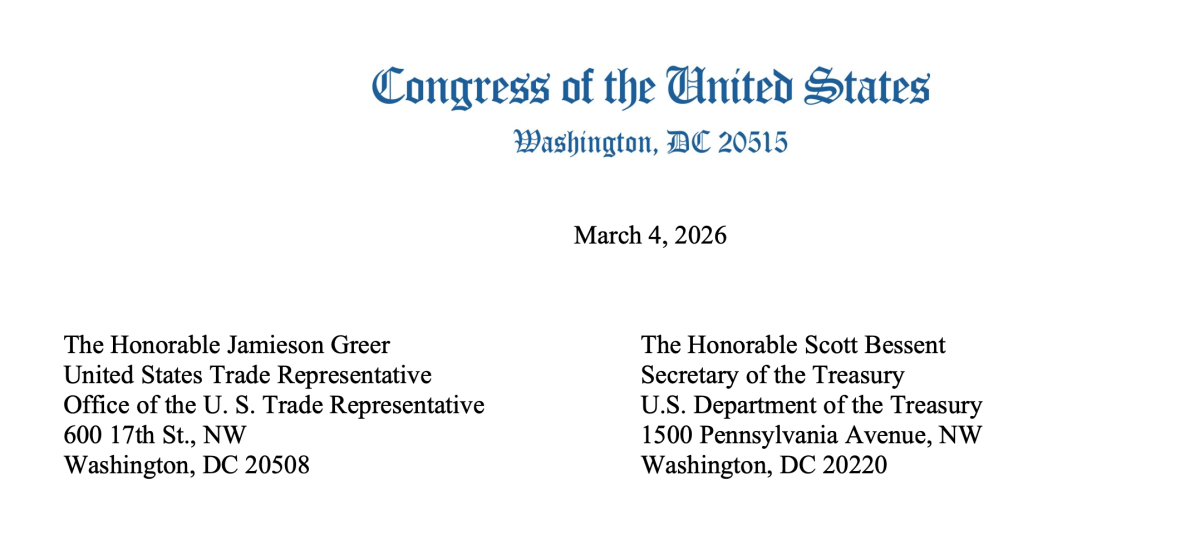
In a letter dated March 4, 2026, the lawmakers called on Treasury Secretary Scott Bessent and U.S. Trade Representative Jamieson Greer to address the flow of unauthorized vape products into the United States as part of broader trade discussions with China.
The letter argues that the illicit vape trade has evolved beyond a domestic regulatory challenge and now intersects with national security, public health and international commerce.
Congressional Letter Highlights Illicit Vape Concerns
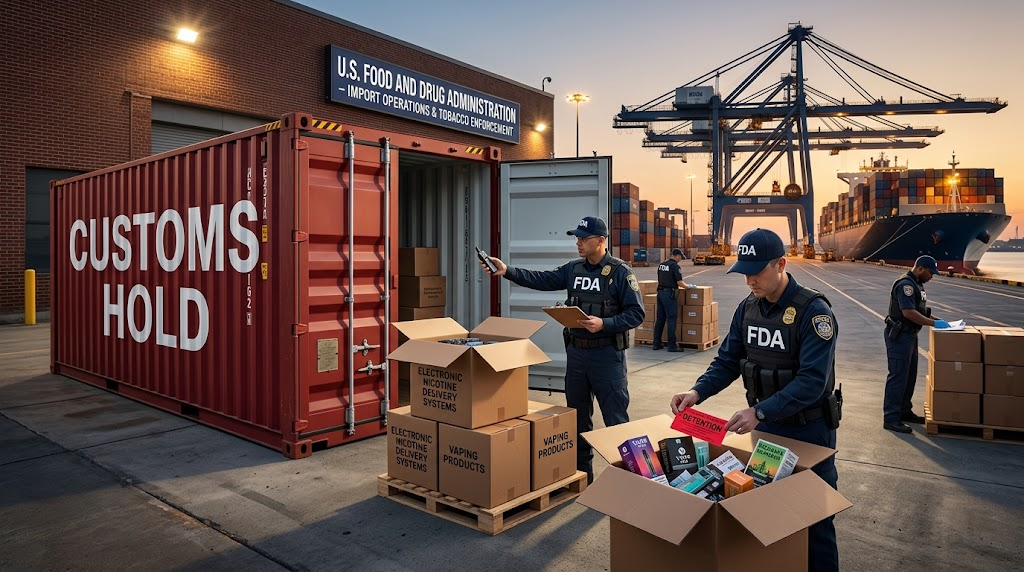
In the letter, the lawmakers warned that large volumes of unauthorized electronic nicotine delivery systems continue to enter the United States despite existing regulatory restrictions.
According to the lawmakers, many of these products bypass the U.S. Food and Drug Administration’s premarket tobacco product authorization system and are distributed through informal supply chains.
The signatories urged federal agencies to incorporate the issue into ongoing and future trade discussions with China, including seeking commitments aimed at curbing the export and distribution of illicit products destined for the U.S. market.
The lawmakers described the illicit vape trade as a growing policy concern with implications extending beyond regulatory compliance.
Four Categories of Risks Cited in the Letter
The letter outlined several areas in which lawmakers believe illicit electronic cigarette products may pose risks to the United States.
National security concerns.
Lawmakers wrote that unauthorized vape products are often trafficked and sold near U.S. military installations, which they said could create potential risks for service members.
Cybersecurity and data privacy risks.
The letter also raised concerns about so-called “smart vapes,” internet-connected devices that can interact with smartphones. Lawmakers said such devices could present cybersecurity risks if they allow unauthorized access to personal data or connected systems.
Youth protection and public health.
Lawmakers argued that illicit vape products are frequently marketed using candy-like flavors, youth-oriented designs and social media promotion, which they said could increase the likelihood of youth exposure.
Organized crime and financial risks.
The letter further suggested that illicit vape distribution networks may be linked to broader illicit trade activities, including trade-based money laundering and organized criminal operations. Lawmakers also noted concerns that the illicit vape market has become a profitable revenue stream for Mexican drug cartels, which they said could further expand criminal networks operating in the United States.
The lawmakers said these risks underscore the need for stronger enforcement and international coordination.
Broad Congressional Participation

The initiative, signed exclusively by Republicans, includes 71 members of the U.S. House of Representatives, making it one of the larger congressional letters on tobacco-related policy issues in recent years.
According to 2Firsts’ analysis, the signatories represent roughly one-third of the House Republican Conference. The U.S. House of Representatives has 435 members in total, of which 220 are Republicans, meaning the signatories account for about 32% of the Republican caucus and roughly 16% of the full House membership.
Based on a review of the signatory list, the coalition spans at least 28 states, indicating that the issue is not confined to a small regional bloc but has drawn support across a broad geographic range.
According to background information accompanying the initiative, the lawmakers involved come from several key congressional committees with direct relevance to trade, regulation and enforcement. These include:
- Ways and Means Committee, which oversees tariffs, trade policy and customs matters;
- Energy and Commerce Committee, which has jurisdiction over FDA-related public-health regulation;
- Oversight and Accountability Committee, which is responsible for congressional oversight of executive agencies;
- Appropriations Committee, which controls federal funding, including resources tied to enforcement.
The broader signatory group also includes members from committees such as Financial Services, Armed Services, Judiciary, Homeland Security and Foreign Affairs, reinforcing the cross-cutting nature of the issue across trade, public health, law enforcement and national security.
Congressional letters of this kind do not carry legal force, but they can increase political pressure on federal agencies and often prompt formal responses from the executive branch. When signed by a coalition of this size — particularly one that includes members from committees overseeing trade, regulation, investigations and federal spending — such a letter can also signal the possibility of continued oversight, hearings, funding pressure or follow-up legislative action.
The size and composition of the coalition suggest the issue has gained significant traction among House Republicans and may remain under continued congressional scrutiny.
Industry and Trade Implications
The letter signals that illicit vape trade could increasingly be discussed not only within the framework of domestic regulation but also in the context of international economic policy.
If incorporated into trade negotiations, the issue could become part of a broader dialogue between the United States and China on cross-border supply chains, product compliance, customs enforcement and market access.
For the global nicotine industry, the development highlights the growing intersection between regulatory enforcement, trade policy and illicit market dynamics. It also suggests that future debate over unauthorized vape products may no longer be limited to FDA enforcement or domestic retail controls, but could increasingly involve trade tools and bilateral policy channels.
2Firsts will continue to follow developments in the U.S. electronic cigarette market and related regulatory policies.
Cover image: A March 4, 2026 letter from 71 Republican members of the U.S. House of Representatives addressed to Treasury Secretary Scott Bessent and U.S. Trade Representative Jamieson Greer regarding illicit vape products entering the U.S. market. | Source: Screenshot of congressional letter; compiled by 2Firsts.
Editor’s Note
By Alan Zhao, Co-Founder & CEO of 2Firsts
Mike Carey and 70 other members of the U.S. Congress recently signed a joint letter that represents a significant development in the United States’ response to illicit vape products. The initiative suggests that the issue is increasingly being pushed onto the agenda of U.S.–China trade discussions—an area of complex policy coordination between two of the world’s most influential economies.
Over the past year, as co-founder of 2Firsts, I have closely followed the efforts made across the United States to address illicit vape products. From the U.S. Food and Drug Administration—including initiatives such as the industry roundtable held on February 10, 2026 regarding PMTA submissions for ENDS products—to government officials, members of Congress, companies and media organizations, multiple stakeholders have been advancing regulatory measures aimed at protecting consumer health, particularly the protection of minors.
At the same time, I have also observed that Chinese regulators have continued strengthening enforcement against illicit vape activities. In late 2025, China launched a State Council–level campaign targeting tobacco-related illegal activities. From this perspective, addressing illicit vape trade aligns with the shared interests of both China and the United States, and there is no inherent need for confrontation on this issue.
For this reason, I would also like to emphasize in my personal capacity that over-politicizing the vape issue and elevating it into a point of confrontation will not fundamentally solve the problem. On the contrary, it may hinder international cooperation that could otherwise move forward and may even allow underground markets to expand further, exposing consumers to greater risks from unregulated products.
If stakeholders can approach the issue with mutual respect and pursue regulatory cooperation in a more rational and constructive manner—including product traceability systems, regulatory information sharing, and cross-border enforcement coordination—such efforts could help curb illicit trade, improve market order, and provide adult consumers with safer, lower-risk alternatives while strengthening protections for minors.
As an industry media outlet dedicated to covering the global tobacco and nicotine sector, 2Firsts will continue to provide objective and balanced reporting on these developments.
Related articles