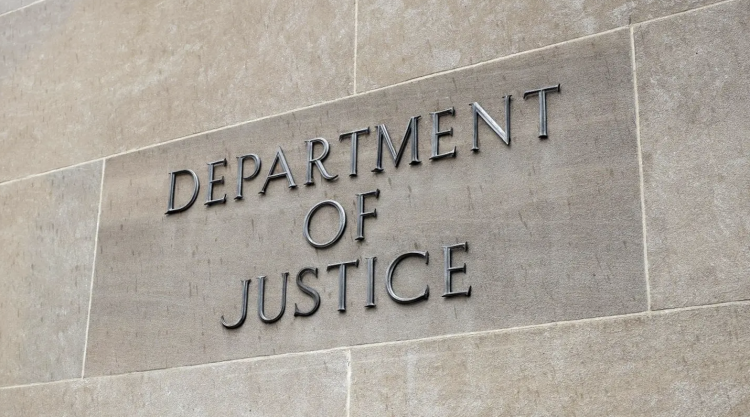
A US court has ordered tobacco companies to display health warning labels related to smoking in retail stores. On December 6, the US Department of Justice announced a court order requiring tobacco companies to display health warning labels in retail stores and to issue corrective statements regarding the health risks and addictive properties of cigarettes.
In a press release on Tuesday, the Department of Justice stated that the court order "resolved the government's long-standing civil extortion lawsuit against the largest tobacco company in the United States.
In 1999, a lawsuit was filed in the United States. The trial took place in the District Court of Washington D.C. between 2004 and 2005, with the court ruling that these companies had misled consumers regarding the health risks of smoking.
Since 2019, tobacco use among teenagers has decreased from 6 million to 3 million.
The court order applies to four cigarette brands owned by Altria, Philip Morris USA Inc., R.J.Reynolds Tobacco Company and ITG Brands LLC.
A new study from San Diego State University predicts that "heat-not-burn" tobacco products could soon dominate the US market.
The Deputy Attorney General, Vanita Gupta, stated that lawyers at the Department of Justice have been working tirelessly for over 20 years to hold tobacco companies accountable for deceiving consumers about the health risks of smoking. The resolution enforces the remedies of the lawsuit to ensure consumers are aware of the hazards of purchasing tobacco products.
It is estimated that out of the 300,000 retail stores selling cigarettes in the United States, 200,000 have entered into agreements with tobacco companies to display health warning labels on their tobacco products in the stores.
According to an order released on December 6th, companies are required to modify their agreements with retail stores and display correction statements in stores. These statements will be marked with colorful logos and designed to catch attention, while also highlighting information such as the negative health effects of smoking, the addictive nature of nicotine, and the harmful effects of secondhand smoke.
This directive will come into effect on July 1, 2023, and these companies will have a three-month window to make necessary changes. After that, retailers will be required to display signs in both English and Spanish for a period of 21 months.
William Klein, Deputy Director of the "Behavioral Research" project at the National Cancer Institute, called this a momentous occasion in the history of cancer control in the United States. Smoking accounts for approximately 30% of all cancer deaths in the country. Therefore, the corrective statements ordered by the court to be displayed at tobacco sales points will help support our mission of reducing the burden of cancer. We are grateful to our colleagues in the Department of Justice for completing this important work.
2FIRSTS will continue to report on this issue and future updates will be available on the "2FIRSTSAPP." Scan the QR code below to download the app.
Disclaimer
This article is provided solely for professional research, industry discussion, and informational purposes. Any references to brands, companies, products, technologies, or policies are made for factual reporting and analytical purposes only, and do not constitute endorsement, recommendation, promotion, or advertising by 2Firsts.
Nicotine-containing products, including but not limited to cigarettes, e-cigarettes, heated tobacco products, and nicotine pouches, carry significant health risks. Readers are responsible for complying with all applicable laws and regulations in their respective jurisdictions, including age restrictions and access limitations.
The information contained in this article should not be regarded as investment, legal, medical, regulatory, or commercial advice. While 2Firsts strives to ensure the accuracy and reliability of its content, it does not assume liability for any direct or indirect loss arising from errors, omissions, inaccuracies, or reliance on the information contained herein.
This article is not intended for individuals below the legal age for accessing tobacco or nicotine-related information in their jurisdiction.
Copyright Notice
This article is either original content produced by 2Firsts or content reproduced, translated, summarized, or adapted from third-party sources with attribution where applicable. The intellectual property rights of the original content remain with 2Firsts or the respective original rights holders.
No individual or organization may copy, reproduce, distribute, republish, modify, translate, or otherwise use this content without prior authorization. Any unauthorized use may result in legal action.
For copyright-related inquiries, corrections, or removal requests, please contact: info@2firsts.com.
AI-Assisted Translation and Editing Notice
Portions of this article may have been translated, edited, or reviewed with the assistance of artificial intelligence tools to improve efficiency and readability. Due to the limitations of AI-assisted translation and editing, discrepancies, omissions, or inaccuracies may exist when compared with the original source.
Where applicable, readers are advised to refer to the original source for the most complete and accurate information. If you identify any errors or believe that any content infringes upon your rights, please contact us at info@2firsts.com, and we will review and address the matter promptly.