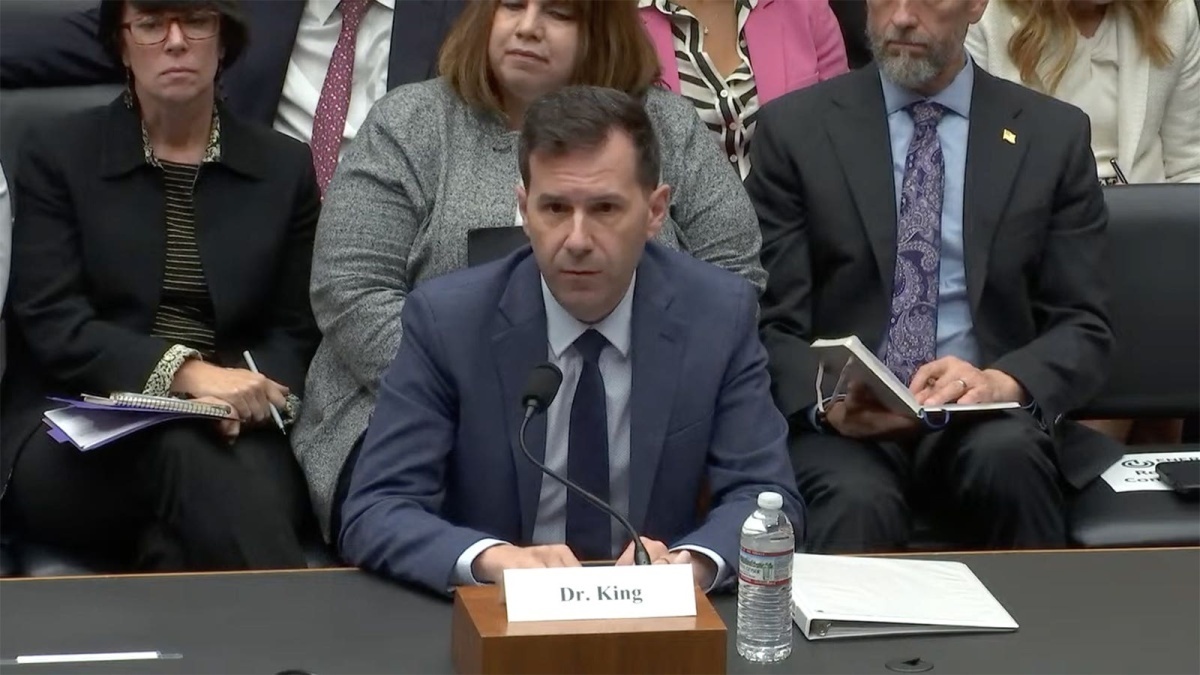
According to a report by MedPage Today on September 10th, the U.S. House Energy and Commerce Subcommittee on Health questioned the Food and Drug Administration's (FDA) regulatory strategy and resource allocation for the e-cigarette industry at a hearing on Tuesday. They called for the agency to focus its enforcement efforts on large e-cigarette manufacturers rather than small retailers. The head of the FDA's Center for Tobacco Products stated that resources are limited, making comprehensive enforcement difficult.
Congressman Brett Guthrie (R-Ky.) pointed out during a hearing that the FDA seems to be more inclined to enforce regulations on small e-cigarette shops rather than holding large e-cigarette manufacturers accountable. He emphasized that while e-cigarette shops should not sell illegal products, the main manufacturers are the ones that should be the focus of enforcement efforts. Republican Congressman Troy Balderson (R-Ohio) also questioned the FDA's enforcement priorities, noting that some penalized e-cigarette shops are actually being classified as manufacturers.
Brian King, PhD, Director of the FDA Center for Tobacco Products, responded:
The FDA has taken action throughout the entire supply chain and is enforcing against all unauthorized entities, regardless of their size. However, the FDA's resources for enforcing e-cigarette regulations are limited, as the agency does not collect any fees for e-cigarette use, and 90% of enforcement funds are used for e-cigarette regulation.
Members of the committee have expressed skepticism towards the FDA's request for increased funding. Cathy McMorris Rodgers, chair of the Energy and Commerce Committee, noted that despite the FDA already receiving substantial funds for food and tobacco regulation, the agency is seeking additional budget without providing details on how current resources are being utilized. The hope is for the FDA to improve regulatory efficiency by better utilizing existing resources and authority.
We welcome news tips, article submissions, interview requests, or comments on this piece.
Please contact us at info@2firsts.com, or reach out to Alan Zhao, CEO of 2Firsts, on LinkedIn
Notice
1. This article is intended solely for professional research purposes related to industry, technology, and policy. Any references to brands or products are made purely for objective description and do not constitute any form of endorsement, recommendation, or promotion by 2Firsts.
2. The use of nicotine-containing products — including, but not limited to, cigarettes, e-cigarettes, nicotine pouchand heated tobacco products — carries significant health risks. Users are responsible for complying with all applicable laws and regulations in their respective jurisdictions.
3. This article is not intended to serve as the basis for any investment decisions or financial advice. 2Firsts assumes no direct or indirect liability for any inaccuracies or errors in the content.
4. Access to this article is strictly prohibited for individuals below the legal age in their jurisdiction.
Copyright
This article is either an original work created by 2Firsts or a reproduction from third-party sources with proper attribution. All copyrights and usage rights belong to 2Firsts or the original content provider. Unauthorized reproduction, distribution, or any other form of unauthorized use by any individual or organization is strictly prohibited. Violators will be held legally accountable.
For copyright-related inquiries, please contact: info@2firsts.com
AI Assistance Disclaimer
This article may have been enhanced using AI tools to improve translation and editorial efficiency. However, due to technical limitations, inaccuracies may occur. Readers are encouraged to refer to the cited sources for the most accurate information.
We welcome any corrections or feedback. Please contact us at: info@2firsts.com