USA-IT Urges Congress to Combat Illegal Trade

Dec.04.2022
USA-IT Urges Congress to Combat Illegal Trade
The USA-IT alliance calls for policies to combat illegal trading, including counterfeits, smuggling, and human trafficking.

A press release issued by the USA Illegal Trade Alliance (USA-IT) following their second annual national summit calls on Congress to implement new policies to combat illegal trade, including counterfeiting, smuggling, organized retail theft, drug trafficking, and human trafficking.


During the summit's opening ceremony, US Congressman Bennie Thompson stated that "illegal trade not only harms our business and economy, but also poses health and safety risks to consumers and even undermines our security. When the government and private sector work together, we can be more effective in combating illegal trade. This is to protect all of America.


Kristin Reif, Director of Government Relations at PMI International, spoke at the summit, stating, "After over a decade of fighting against these organizations, I have witnessed firsthand the severe consequences of seemingly harmless illegal tobacco and nicotine products such as cigarettes and e-cigarettes. But criminals not only traffic one commodity, they traffic anything that can earn them a dollar, whether it be luxury wallets or drugs, even human trafficking. This is why USA-IT exists. It brings together many stakeholders so that we can bring this pervasive issue to the attention of legislators and better address the threat of illicit trade.


The summit comprises five panel discussions involving representatives from corporations, law enforcement agencies, academia, and policy experts.


USA-IT was established in June 2021 and is now operating in 15 states facing issues related to illegal trade. The organization provides information and training programs for local officials and law enforcement agencies, while also raising public awareness about issues related to illegal trade.


2FIRSTS will continue to provide updates on this topic, with further information available on the '2FIRSTS APP'. Scan the QR code below to download the app.


Disclaimer

This article is provided solely for professional research, industry discussion, and informational purposes. Any references to brands, companies, products, technologies, or policies are made for factual reporting and analytical purposes only, and do not constitute endorsement, recommendation, promotion, or advertising by 2Firsts.

Nicotine-containing products, including but not limited to cigarettes, e-cigarettes, heated tobacco products, and nicotine pouches, carry significant health risks. Readers are responsible for complying with all applicable laws and regulations in their respective jurisdictions, including age restrictions and access limitations.

The information contained in this article should not be regarded as investment, legal, medical, regulatory, or commercial advice. While 2Firsts strives to ensure the accuracy and reliability of its content, it does not assume liability for any direct or indirect loss arising from errors, omissions, inaccuracies, or reliance on the information contained herein.

This article is not intended for individuals below the legal age for accessing tobacco or nicotine-related information in their jurisdiction.


Copyright Notice

This article is either original content produced by 2Firsts or content reproduced, translated, summarized, or adapted from third-party sources with attribution where applicable. The intellectual property rights of the original content remain with 2Firsts or the respective original rights holders.

No individual or organization may copy, reproduce, distribute, republish, modify, translate, or otherwise use this content without prior authorization. Any unauthorized use may result in legal action.

For copyright-related inquiries, corrections, or removal requests, please contact: info@2firsts.com.


AI-Assisted Translation and Editing Notice

Portions of this article may have been translated, edited, or reviewed with the assistance of artificial intelligence tools to improve efficiency and readability. Due to the limitations of AI-assisted translation and editing, discrepancies, omissions, or inaccuracies may exist when compared with the original source.

Where applicable, readers are advised to refer to the original source for the most complete and accurate information. If you identify any errors or believe that any content infringes upon your rights, please contact us at info@2firsts.com, and we will review and address the matter promptly.


Russia's Vape Ban Decisions Reach 17 Regions With 39 More Considering Laws, Putting Over 3,000 St. Petersburg Retail Outlets in Focus
Russia's regional vape retail restrictions are expanding. State Duma Speaker Vyacheslav Volodin said on November 7 that 17 regions had adopted decisions to ban vape sales, while another 39 were preparing or considering similar legislation. On November 12, lawmakers in Leningrad Oblast and the Republic of Karelia adopted bans scheduled to begin on March 1, 2027. A day earlier, St. Petersburg unanimously approved a five-year ban proposal in its first reading. The city has 615 specialist vape shops and more than 2,400 other retail outlets selling vaping products alongside other goods. Under Federal Law No. 186-FZ, enacted in June 2026, Russian regions may prohibit retail sales of electronic nicotine delivery systems and related liquids between March 2027 and March 2032. The legislation also restricts licensed suppliers from delivering covered products to retail premises in regions where bans apply.
Regulations
Nov.13
Arizona Turns to a 50% Retail Vape Tax as Tobacco Tax Revenue Falls 47% From 2008
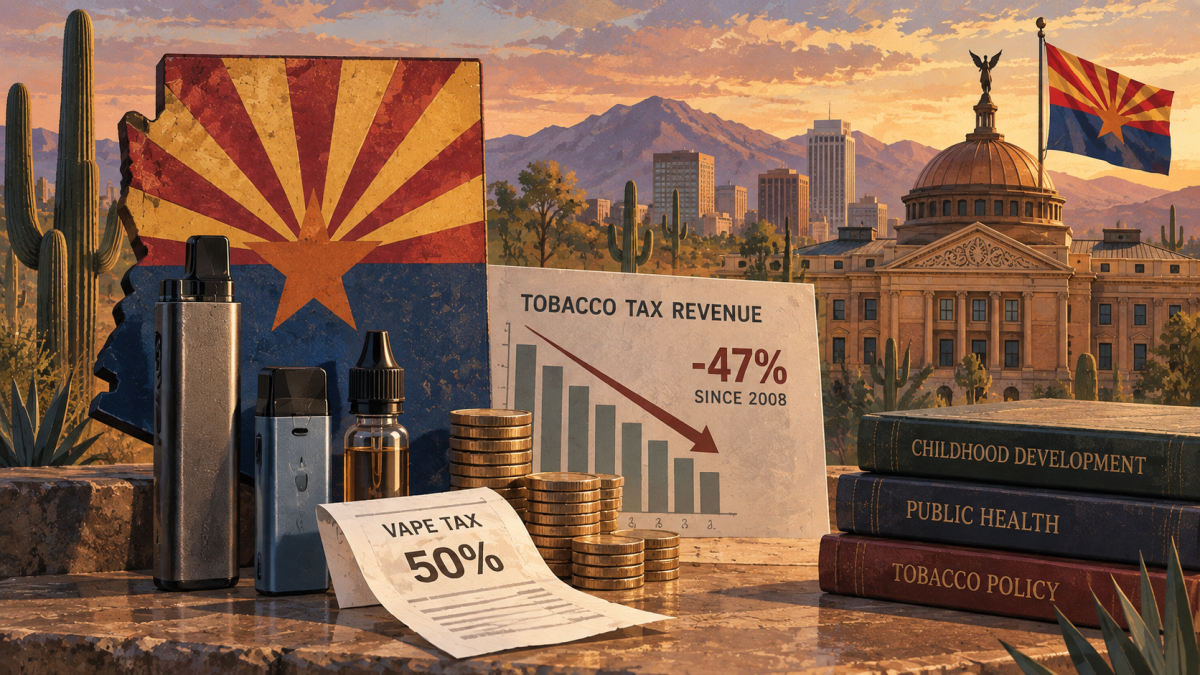
Arizona's First Things First is pushing for an excise tax equal to 50% of the retail price of vaping products, estimating that the measure could generate about $100 million annually. The agency says its tobacco-tax revenue has fallen 47% from 2008 levels. Arizona has attempted to broaden its nicotine tax base in each of the past two years: a 2025 bill proposed a 50% wholesale-price tax, while a 2026 measure shifted to a 50% retail-price tax covering alternative nicotine products and vapor products. Separately, the state enacted HB 4001 this year to establish a new licensing and sales framework for alternative nicotine products.
Sep.21
Special Report | Vape bans and tougher rules: the South Caucasus takes different paths
Azerbaijan's sweeping e-cigarette ban has raised concerns over enforcement errors and the emergence of illicit sales, while neighboring Armenia is tightening technical rules and preparing higher excise taxes. Georgia, meanwhile, has resisted calls for broader vape restrictions and introduced preferential taxes for some domestically produced cigarettes. The divergent approaches across the South Caucasus highlight a regional policy dilemma: how to curb nicotine use and protect public health without encouraging black markets or creating unintended economic consequences for businesses and consumers.
Nov.03
Philip Morris Malaysia Again Meets Religious Authority Over Cigarette Alternatives as Perlis Mufti Responds on Halal Criteria
Philip Morris Malaysia Managing Director Naeem Shahab Khan met Perlis Mufti Mohd Asri Zainul Abidin on September 17 and presented the company's shift from conventional cigarettes toward alternative products. The mufti said a product could be considered halal if it is clean, its side effects are not harmful or can be controlled, and it does not involve excessive waste. His remarks did not mention IQOS or any other specific PMI product and did not amount to a new product-specific religious ruling. It was at least the second publicly reported engagement between Philip Morris Malaysia and a Malaysian religious institution over cigarette alternatives within six months.
Regulations
Sep.18 by 2Firsts Perspectives
Special Report|Virginia Vape Directory Shows Contrast Between Vuse and JUUL Pod Systems and CrossBar 20K, Loon Flavored Disposables
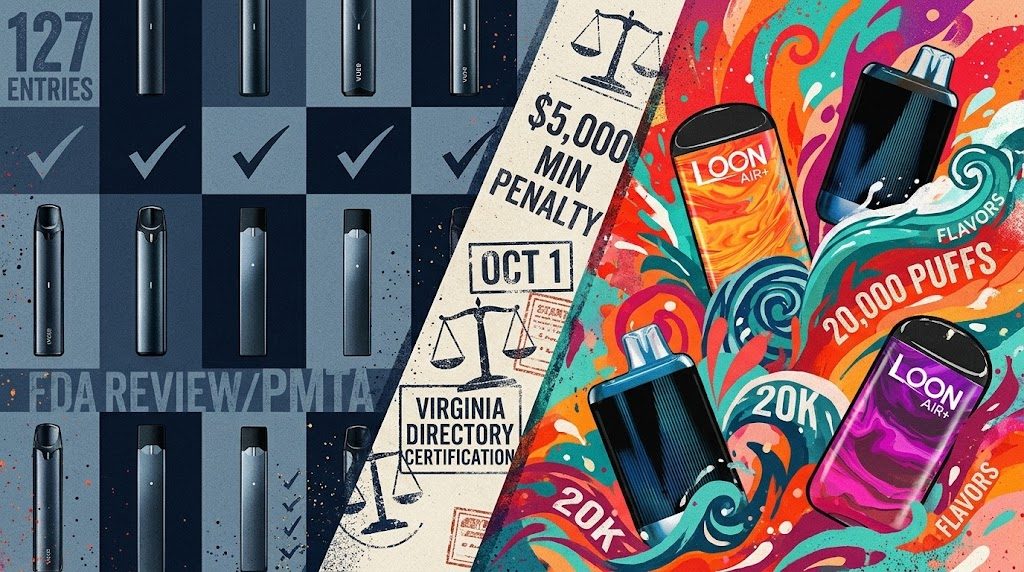
A 2Firsts analysis of Virginia's liquid nicotine and vapor product certification directory identified 213 product records from 15 manufacturers. Companies associated with BAT, Altria, Imperial Brands, JTI and JUUL account for 127 entries. The directory also includes independent brands CrossBar 20K, Loon and Breeze. CrossBar advertises a 13mL disposable capable of up to 20,000 puffs, while Loon has 16 disposable entries featuring fruit, cooling and beverage-related flavors. Of all records, 120 are labeled as under FDA PMTA review. Virginia introduced revised penalties on October 1, 2026, including a minimum first-violation civil penalty of $5,000 per unlisted product, alongside new retail tobacco permitting requirements.
Regulations
Oct.30
Virginia Tobacco Retail Permit Takes Effect October 1, Covering Vapes as More Than 3,000 Businesses Apply in September
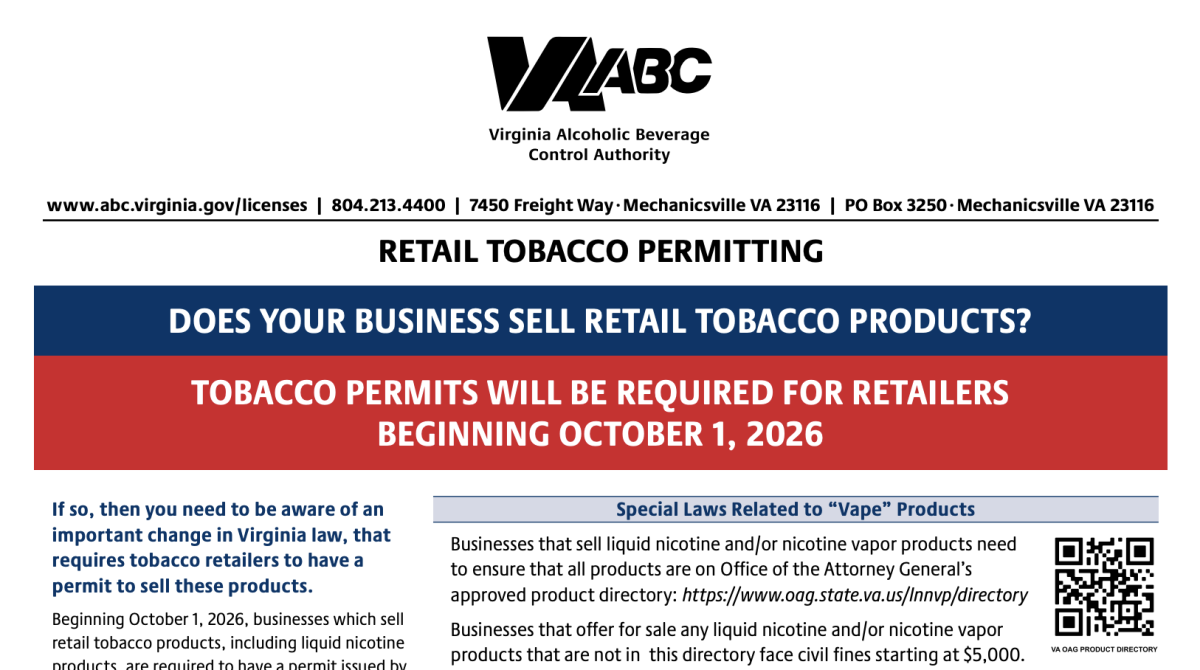
Virginia's new retail tobacco permit system took effect October 1, requiring sellers of vapes, nicotine products and related devices and accessories to obtain a Retail Tobacco Permit for each business location. Virginia ABC said more than 3,000 businesses applied in September alone, creating a processing backlog. Qualifying applicants that filed before October 1 may temporarily operate under a Letter of Authorization. The new store-level permit also sits alongside Virginia's existing vape product directory, where sales of unlisted liquid nicotine or nicotine vapor products can trigger civil penalties starting at $5,000.
Regulations
Oct.03