Vietnam to Ban Investment and Trade in E-cigarettes and Heated Tobacco, with Exceptions for Export and Research

Oct.17.2025
Vietnam to Ban Investment and Trade in E-cigarettes and Heated Tobacco, with Exceptions for Export and Research
Vietnam’s finance vice minister proposes banning investment and business in e-cigarettes and heated tobacco under a 2024 resolution, with possible exceptions for export-only products and research/medical/defense uses.

Key points at a glance


  • Vietnam’s Deputy Finance Minister proposes classifying e-cigarettes and heated tobacco as prohibited investment and business sectors, to implement National Assembly Resolution No. 173/2024/QH15 (adopted Nov 30, 2024).
  • The Chair of the NA’s Economic & Financial Committee suggests exceptions for products “for export only” and for specific uses such as research, healthcare, and national defense.
  • Plan to trim up to 21 conditional business lines, shifting toward post-market (ex post) regulation.
  • The draft was reviewed and commented on at the 50th session of the National Assembly Standing Committee.


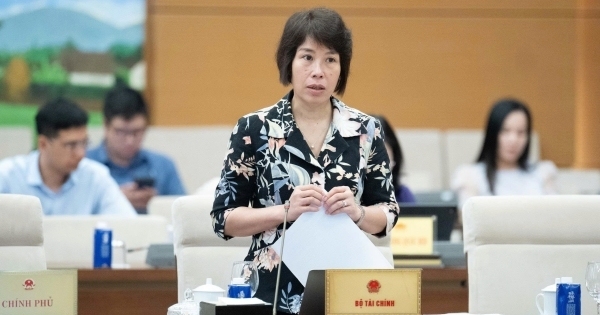
2Firsts, October 17, 2025 — According to Đời sống & Pháp luật (“Life & Law”), the National Assembly Standing Committee’s 50th session continued deliberations on the Investment Law (replacement) draft. In her presentation, Deputy Minister of Finance Nguyễn Thị Bích Ngọc stated that the draft proposes listing “business in e-cigarettes and heated tobacco” under Article 6 of the Investment Law as a prohibited investment and business sector, in order to implement Resolution No. 173/2024/QH15 of the National Assembly (adopted on November 30, 2024). That resolution expressly agrees to ban the production, trading, import, concealment/harboring, transport, and use of e-cigarettes, heated tobacco products, and addictive, health-harming gases and substances.


The draft comprises 7 chapters, 60 articles, and 4 appendices: it amends or supplements 33 of the current law’s 77 articles, repeals 17, retains 25, and adds 2 new articles, while adjusting the structure. Beyond the above prohibition, the draft also proposes removing 21 business lines that do not meet the criteria of Article 7 (business lines subject to conditions), establishing clearer principles for setting conditions so that more areas can shift from prior licensing to post-market oversight.


On adding “business in e-cigarettes and heated tobacco” to the prohibited list, Phan Văn Mãi, Chair of the Economic and Financial Committee (Ủy ban Kinh tế và Tài chính), recommended considering exceptions for items “for export only, not for consumption in Vietnam,” as well as for warranty/inspection, scientific research, healthcare, pharmaceutical production, and national defense/security.


Responding to members’ opinions, Deputy Minister Nguyễn Thị Bích Ngọc said the Ministry of Finance will continue, together with the Ministry of Industry and Trade and others, to review condition-setting for relevant sectors. As for investment and business activities involving e-cigarettes and heated tobacco, the issue should be carefully studied based on the implementation review of Resolution No. 173, and coordinated with the Ministry of Health and other agencies to report to the Government so as to ensure the feasibility and effectiveness of the policy.


Cover image: Đời sống & Pháp luật.

We welcome news tips, article submissions, interview requests, or comments on this piece.

Please contact us at info@2firsts.com, or reach out to Alan Zhao, CEO of 2Firsts, on LinkedIn


Notice

1.  This article is intended solely for professional research purposes related to industry, technology, and policy. Any references to brands or products are made purely for objective description and do not constitute any form of endorsement, recommendation, or promotion by 2Firsts.

2.  The use of nicotine-containing products — including, but not limited to, cigarettes, e-cigarettes, nicotine pouchand heated tobacco products — carries significant health risks. Users are responsible for complying with all applicable laws and regulations in their respective jurisdictions.

3.  This article is not intended to serve as the basis for any investment decisions or financial advice. 2Firsts assumes no direct or indirect liability for any inaccuracies or errors in the content.

4.  Access to this article is strictly prohibited for individuals below the legal age in their jurisdiction.


Copyright


This article is either an original work created by 2Firsts or a reproduction from third-party sources with proper attribution. All copyrights and usage rights belong to 2Firsts or the original content provider. Unauthorized reproduction, distribution, or any other form of unauthorized use by any individual or organization is strictly prohibited. Violators will be held legally accountable.

For copyright-related inquiries, please contact: info@2firsts.com


AI Assistance Disclaimer


This article may have been enhanced using AI tools to improve translation and editorial efficiency. However, due to technical limitations, inaccuracies may occur. Readers are encouraged to refer to the cited sources for the most accurate information.

We welcome any corrections or feedback. Please contact us at: info@2firsts.com

From Nicotine Pouches to Soft Candy Forms: China Tobacco Hubei explores adjustable-release oral nicotine products
China-based China Tobacco Hubei Industrial Co., Ltd. has filed a patent application covering an oral nicotine product and its preparation method. The patent proposes a soft candy-shaped oral nicotine product containing nicotine ingredients, gelling agents, sweeteners and alkaline pH regulators. Through formulation adjustments and homogeneous or dual-layer structures, the technology aims to achieve different nicotine release profiles. The filing reflects exploration of new oral nicotine product formats and controlled nicotine delivery approaches.
Aug.06
China Tobacco Regulator Deputy Head Visits Laos as Both Sides Strengthen Cooperation on Illegal Tobacco Trade
China’s official Xinhua News Agency reported that Liu Sanjiang, deputy head and Party group member of China’s tobacco regulator, led a delegation to Laos from July 31 to Aug. 2, 2026, for discussions with Lao authorities on combating cross-border illegal tobacco trade. The two sides discussed areas including law enforcement cooperation, information sharing and efforts to address tobacco-related illegal activities such as counterfeiting and smuggling. The visit highlights cooperation between Chinese and Lao authorities on illicit tobacco control.
News
Aug.05
KT&G’s Lil Strengthens Market Lead in Korea as Heated Tobacco Share Reaches 47.4%
According to South Korea’s UpKorea, KT&G’s heated tobacco brand Lil reached a 47.4% share of Korea’s heated tobacco stick market in the first quarter of 2026. The company is expanding its next-generation products (NGP) business through product development, technology investment and overseas growth. KT&G reported NGP sales of 890.1 billion won (approximately US$650 million) in 2025, up significantly from 279.3 billion won in 2020. Lil products are now available in 34 markets, while KT&G continues building its technology portfolio through patents and multiple product platforms.
Jul.23
Malaysia Nicotine Vape Market Faces Legal Uncertainty Over Tax and Poisons List Ruling
Malaysia’s Finance Minister Anwar Ibrahim said duties and taxes on nicotine-containing vape products will be determined in line with the Court of Appeal’s ruling on whether liquid or gel nicotine can be exempted from the Poisons List under the Poisons Act 1952, a case that could affect the legal basis for vape taxation, retail sales and future ban policy.
Jun.29
CCPIT Says Trade Friction Index for China-Related Electronics Sector Remains High, With Vape Products Among Areas of Focus
China Council for the Promotion of International Trade (CCPIT) held its July regular press conference on July 31, 2026, releasing the May 2026 Global Economic and Trade Friction Index. CCPIT spokesperson Yang Fan said the global trade friction index stood at 95 in May, remaining at a medium-to-high level. By industry, the electronics sector recorded the highest trade friction index among 13 monitored industries. In China-related trade frictions, the index stood at 93, with electronics products including drones, chips and vape products among areas where friction remained elevated.
Aug.03
Changing Assumptions in U.S. Cigar Consumption: 2Firsts Interviews Cigar Educator Mechelle Merkerson
U.S. premium cigar culture is shifting toward education, broader choice and deeper links to craftsmanship and origin, cigar educator Mechelle Merkerson told 2Firsts. She sees boutique brands, women consumers and production-region experiences making knowledge central to cigar participation. For global brands, retailers and emerging markets such as China, education may help turn curiosity into sustained engagement.
Special Report
Jul.06