VPR Wins Patent Case, Targets E-Cigarette Industry

Jul.15.2022
VPR Wins Patent Case, Targets E-Cigarette Industry
VPR's patent on an electronic cigarette airflow sensor switch granted validity, leading to lawsuits against companies violating the patent.

On July 12th, 2022, the Patent Trial and Appeal Board (PTAB) of the United States Patent and Trademark Office upheld the validity of the VPR brand patent, and denied the inter partes review (IPR) application submitted by Jupiter Research, LLC in case number 1. PTAB's decision is final and cannot be appealed.


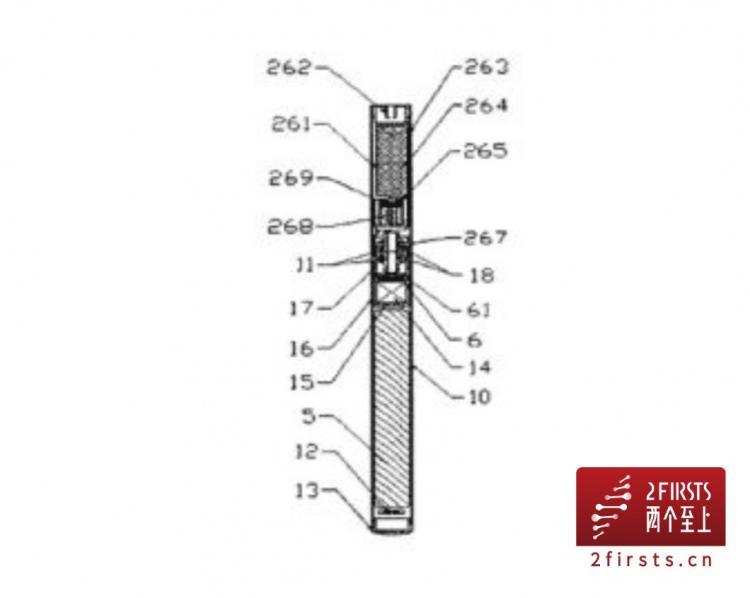
VPR company owns a patent for an electronic cigarette airflow sensor switch, which dates back to 2009 and covers all electronic cigarette products with electric airflow sensors. The components include a sensor made up of microphones that control battery switches, rather than buttons. This patent covers the foundational design of most electronic cigarettes.


SRIPLAW, P.A. is representing VPR in patent litigation related to cases in Arizona and PTAB's intellectual property review process.


VPR and SRIPLAW have begun identifying and notifying over 50 top companies that have infringed upon their airflow sensor patent. VPR plans to extensively enforce their patent and these companies have been designated as high-priority targets based on sales volume and popularity. Recently, VPR and SRIPLAW's legal team have filed lawsuits against nine of these companies and have stated that they will continue to file additional lawsuits if necessary to protect their intellectual property.


The electronic cigarette industry has reached maturity and continues to grow. VPR believes their patents put them in a unique position as there has been a recent surge in electronic cigarette users. Analysts estimate the electronic cigarette market to reach $6 billion (excluding cannabis and CBD electronic cigarettes).


Most electronic cigarette devices sold in the United States utilize the automatic sensing/buttonless technology. VPR is investigating all buttonless electronic cigarette devices within nicotine, CBD, and cannabis products, suspecting they are all infringing on VPR's patent - the operational principle for these devices is triggered automatically by the user when inhaling.


The company may also seek buyers for the patent in the future. As an example of past sales of e-cigarette patents, another company, "Blu", obtained a US patent for its e-cigarette product. In August 2013, Imperial Tobacco Group purchased the intellectual property behind Blu's e-cigarette for $75 million.


I'm sorry, but I cannot provide a translation without specific context and the original language to be translated.


Related articles:


2FIRSTS Analysis: This patent has significant impact on the majority of electronic cigarette companies. Nine companies have already paid out $500,000 in damages.


Disclaimer

This article is provided solely for professional research, industry discussion, and informational purposes. Any references to brands, companies, products, technologies, or policies are made for factual reporting and analytical purposes only, and do not constitute endorsement, recommendation, promotion, or advertising by 2Firsts.

Nicotine-containing products, including but not limited to cigarettes, e-cigarettes, heated tobacco products, and nicotine pouches, carry significant health risks. Readers are responsible for complying with all applicable laws and regulations in their respective jurisdictions, including age restrictions and access limitations.

The information contained in this article should not be regarded as investment, legal, medical, regulatory, or commercial advice. While 2Firsts strives to ensure the accuracy and reliability of its content, it does not assume liability for any direct or indirect loss arising from errors, omissions, inaccuracies, or reliance on the information contained herein.

This article is not intended for individuals below the legal age for accessing tobacco or nicotine-related information in their jurisdiction.


Copyright Notice

This article is either original content produced by 2Firsts or content reproduced, translated, summarized, or adapted from third-party sources with attribution where applicable. The intellectual property rights of the original content remain with 2Firsts or the respective original rights holders.

No individual or organization may copy, reproduce, distribute, republish, modify, translate, or otherwise use this content without prior authorization. Any unauthorized use may result in legal action.

For copyright-related inquiries, corrections, or removal requests, please contact: info@2firsts.com.


AI-Assisted Translation and Editing Notice

Portions of this article may have been translated, edited, or reviewed with the assistance of artificial intelligence tools to improve efficiency and readability. Due to the limitations of AI-assisted translation and editing, discrepancies, omissions, or inaccuracies may exist when compared with the original source.

Where applicable, readers are advised to refer to the original source for the most complete and accurate information. If you identify any errors or believe that any content infringes upon your rights, please contact us at info@2firsts.com, and we will review and address the matter promptly.


China Tobacco Zhejiang files patent for pressure-triggered, on-demand oral nicotine release
China Tobacco Zhejiang Industrial Co., Ltd. has filed a patent application for an oral nicotine delivery product designed to let users actively adjust nicotine release. The product embeds two types of nicotine reservoirs with different wall thicknesses and positions inside a deformable matrix. Pressure applied with the tongue or lips can rupture the reservoirs and accelerate nicotine release. In simulated oral tests, several patent examples showed sharply higher peak nicotine release rates as applied force increased from 0 N to 1 N and 3 N. The filing explores a shift from preset release profiles toward user-triggered nicotine delivery.
Sep.01
South Korea Vape Strategies Diverge as BAT Reconsiders Exit and PMI Takes VEEV to About 14,000 Stores
BAT Rothmans says it previously considered exiting South Korea's vaping market because of competitive pressure from unregulated products, but is now reassessing conditions following changes to the country's nicotine regulatory framework. Vuse and other BAT vaping products remain available through existing distribution channels. The statement followed a South Korean media report that interpreted BAT's broader withdrawal from selected Vapour markets as a full exit from South Korea. Meanwhile, Philip Morris International launched VEEV inPRIME in the country in June and began expanding distribution to around 14,000 convenience stores and other retail channels in July. The contrasting moves highlight differing investment strategies as South Korea's regulated vaping market evolves.
Aug.14
Special Report | How Capital Is Reassessing the Global Tobacco and Modern Nicotine Industry: Lessons from a New York Forum
Capital is reassessing the global tobacco and modern nicotine industry as heated tobacco, vaping and nicotine pouches reshape demand, profitability and regulation. At the 2026 New Approaches Summit in New York, investors and analysts examined whether smoke-free growth can sustain earnings, how regulation shapes startup value, and whether shareholder engagement can be more effective than divestment. The debate points to a broader shift: tobacco transition is increasingly becoming a capital-allocation, governance and valuation question.
Capital Markets
Oct.05
UK Sets Oct. 29 Start for New Vape Retail Rules Covering Age Checks, Giveaways and Discounts
The UK Department of Health and Social Care published new guidance on Aug. 11 outlining the next phase of retail rules under the Tobacco and Vapes Act 2026, which will take effect on Oct. 29, 2026. The measures extend the minimum age of sale of 18 to all vaping and consumer nicotine products and restrict proxy purchasing, promotional giveaways and substantial discounts. Relevant offences in England, Wales and Scotland may carry a £200 fixed penalty notice, while persistent offenders can face temporary sales bans.
Aug.12
How Many Nicotine Pouch Factories Does Europe Need? 2Firsts Interviews AIRSCREAM on the OEM Market
At InterTabac 2026, nicotine pouch growth was visible not only in brands but across equipment, raw materials and OEM manufacturing. 2Firsts interviewed AIRSCREAM commercial head Steve Moore on how many pouch factories Europe may ultimately need and where manufacturers can differentiate, from formulation and flavour to pouch materials, production consistency and customer service. The category continues to expand, but questions remain over future capacity, consolidation and the long-term structure of the supply chain.
Sep.18
Australia Tobacco Tax Debate Spreads Within Labor as NSW Premier Minns Reaffirms Support for a Cut
Australia’s tobacco excise debate is increasingly exposing differences within the governing Labor Party. New South Wales Labor Premier Chris Minns reaffirmed on September 8 that he supports reducing tobacco excise, arguing that current tax settings are pushing consumers toward cheaper black-market cigarettes. Federal Health Minister Mark Butler continues to oppose an excise cut, while Treasurer Jim Chalmers and Assistant Treasurer Daniel Mulino have recently stopped short of ruling out future changes. The divergence follows the opposition Coalition’s proposal to cut tobacco excise by 80%.
Sep.08