Will the new Juul ban help Colorado’s high teen vape use?

RegulationsMarket
Jun.27.2022
Puff Bar, Vuse and SMOK are more popular brands, though roughly one in five high school vape users admits to not knowing the brand they consume.

Juul is no more, but the brand only accounts for a fraction of Colorado’s teen vaping.


The U.S. Food and Drug Administration banned the sale of Juul products on Thursday and ordered the company to pull its products from store shelves. The action is part of a larger effort to curb teen vaping rates.


FDA bans Juul e-cigarettes tied to teen vaping surge


This should hit Colorado’s vapers hard. The state has the largest rate of teen vape users, according to 2017 survey data from the U.S. Centers for Disease Control and Prevention. This follows one of the nation’s highest overall vaping rates. Colorado ranked fourth in the nation in 2018, with 7.3% of its population using vape products.
Will the new Juul ban help Colorado’s high teen vape use?

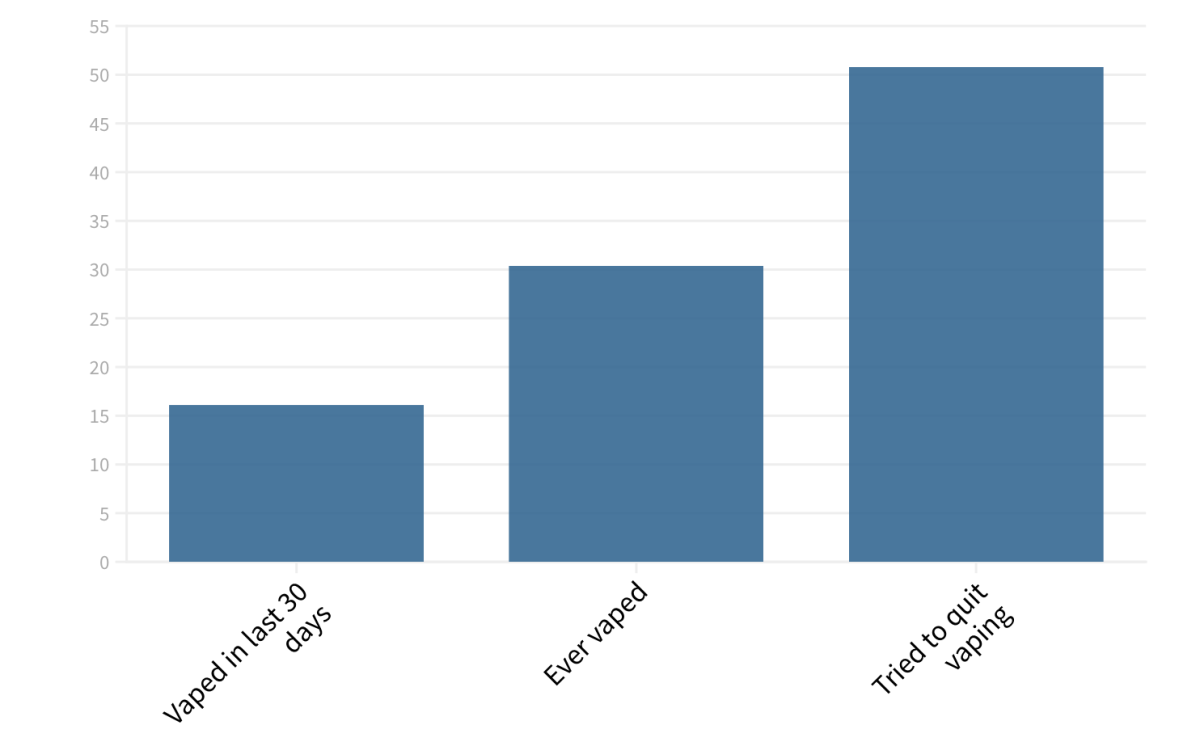
High schoolers vape at even higher rates, according to the state health department’s Health Kids Colorado Survey.


Among Colorado high schoolers, 30.4% have vaped at least once. Just over 16% have vaped in the last 30 days. Users aren’t simply dabbling, either. Half of the high schoolers who vaped in the last 30 days were trying to quit.


Juul is not the preferred product, however.
Will the new Juul ban help Colorado’s high teen vape use?

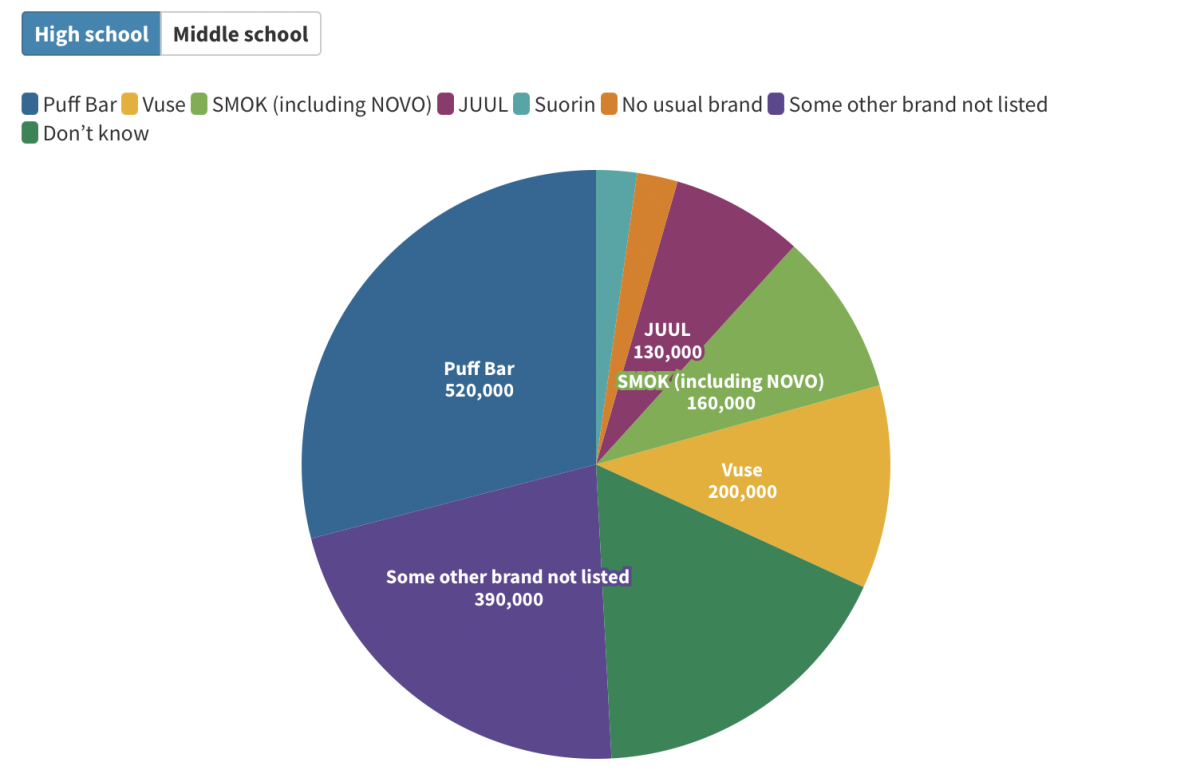
Nationally, 130,000 high school vape users prefer Juul, according to a CDC study. This only constitutes about 7%. Among middle schooler vape users, only 6% prefer Juul.


Puff Bar, Vuse and SMOK are more popular brands, though roughly one in five high school vape users admits to not knowing the brand they consume.


Malaysia Police Plan Saliva Tests at Roadblocks to Detect Synthetic Drugs Mixed Into Vape Liquids
Malaysian police plan to use saliva test kits at roadblocks to detect drivers using synthetic liquid drugs marketed as “Piu Piu” and “Magic Mushroom,” substances that authorities say are mixed into vape liquids and inhaled through e-cigarette devices, raising road-safety concerns and adding pressure on vape regulation.
Jun.29
Special Report | China’s Tobacco Tax Debate Shifts Toward Tax Design as Policy Trade-offs Come Into Focus
China’s tobacco tax debate is moving from whether to raise prices to how the tax system should be designed. At a Beijing forum on World No Tobacco Day, experts discussed higher specific excise taxes, minimum tax burdens and dynamic adjustments linked to income and inflation. The issue also connects to China’s broader consumption tax reform, health financing and chronic disease costs. Public reports did not mention e-cigarettes, heated tobacco, nicotine pouches or other new nicotine products.
Jun.11
BP, Marathon and Valero Warn U.S. Gas-Station Stores: Illegal Vape Sales Could Bring Heavy Fines and Card-Processing Limits
Fiserv and service station operators including BP, Marathon Petroleum and Valero have warned U.S. partners and gas-station convenience-store owners that selling illegal vapes could lead to heavy fines, breach brand agreements and even put stores’ card-processing access at risk, according to Reuters.
Regulations
Jul.07 by 2Firsts Perspectives
Argentina Updates Health Warning Rules to Include Vapes and Nicotine Pouches
Argentina’s Ministry of Health has updated its health warning rules for tobacco and nicotine products, adding e-cigarettes, vapes, heated tobacco products, sticks and nicotine pouches to mandatory warning requirements.
Jul.08
JT Plans ¥800 Billion Investment in Heated Tobacco Over Three Years, Betting on Ploom as Second Growth Engine
Japan Tobacco Inc. (JT) CEO Takehiko Tsutsui said the company plans to invest about ¥800 billion (approximately US$5.4 billion) in heated tobacco products over three years through 2028, aiming to establish Ploom as a second growth engine after combustible cigarettes. Tsutsui said Ploom AURA helped JT increase its share of Japan’s heated tobacco market to 15.8% in the first quarter of 2026. Ploom products are now available in 29 markets, with Ploom AURA sold in 25 markets including Japan. JT also plans to continue its cigarette business while positioning its food operations, particularly frozen noodle products in North America, as another growth opportunity.
Jul.23
PMI Expands IQOS and VEEV Presence at Frankfurt Airport Through Travel Retail Pop-Ups
According to The Moodie Davitt Report, PMI Global Travel Retail and Frankfurt Airport Retail have launched new IQOS and VEEV retail spaces at Frankfurt Airport. The installations, located inside and outside duty-free areas, showcase IQOS heated tobacco products and VEEV e-vapor products through product education, consumer interaction and brand experiences. Frankfurt Airport Retail, operated by Fraport Group and Gebr. Heinemann, manages key retail activities at Frankfurt Airport. The initiative follows PMI’s broader strategy of expanding smoke-free products through global travel retail channels. PMI has previously introduced VEEV products across multiple European airports while continuing to expand IQOS and VEEV availability in international markets.
Jul.17