WHO Urges Cambodia to Increase Tobacco Tax

Regulations by 2FIRSTS.ai
Dec.22.2023
WHO Urges Cambodia to Increase Tobacco Tax
Cambodian government urged to increase tobacco tax by WHO and Cambodia Health Movement Organization.

On December 21st, the Phnom Penh Times reported that the World Health Organization and the Cambodian Health Movement Organization are urging the Cambodian government to increase tobacco taxes.


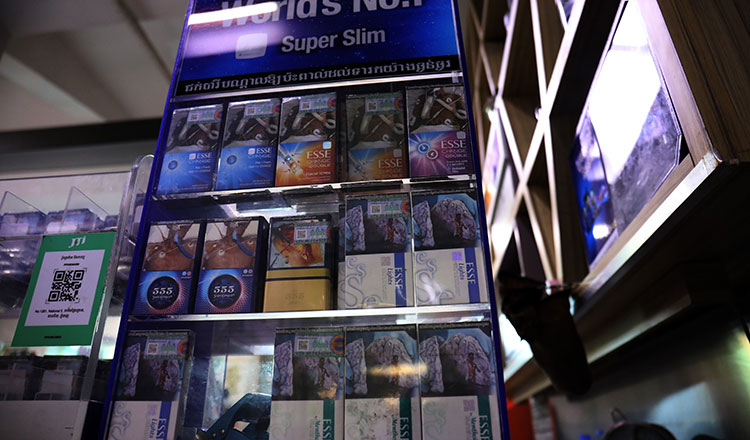
Cambodia imposes relatively low taxes on tobacco products. Locally produced cigarettes are subjected to a tariff of 25%, while the tax rate for imported cigarettes stands at 31%. According to the Ministry of Economy and Finance, Cambodia's tobacco product taxes are 20% lower than those of other ASEAN countries.


According to the World Health Organization (WHO), increasing tobacco taxes is the most effective way to reduce smoking and related health issues. A recent study by the WHO has found that raising the price of a pack of cigarettes by 0.12 dollars would not only prevent at least 30,000 people from smoking next year, but also prevent 10,000 deaths over the next 10 years, and generate approximately 53 million dollars in tax revenue annually.


According to data from the Health Center, the number of smokers in Cambodia has increased from 1.47 million people in 2011 to 1.63 million people in 2021.


We welcome news tips, article submissions, interview requests, or comments on this piece.

Please contact us at info@2firsts.com, or reach out to Alan Zhao, CEO of 2Firsts, on LinkedIn


Notice

1.  This article is intended solely for professional research purposes related to industry, technology, and policy. Any references to brands or products are made purely for objective description and do not constitute any form of endorsement, recommendation, or promotion by 2Firsts.

2.  The use of nicotine-containing products — including, but not limited to, cigarettes, e-cigarettes, nicotine pouchand heated tobacco products — carries significant health risks. Users are responsible for complying with all applicable laws and regulations in their respective jurisdictions.

3.  This article is not intended to serve as the basis for any investment decisions or financial advice. 2Firsts assumes no direct or indirect liability for any inaccuracies or errors in the content.

4.  Access to this article is strictly prohibited for individuals below the legal age in their jurisdiction.


Copyright


This article is either an original work created by 2Firsts or a reproduction from third-party sources with proper attribution. All copyrights and usage rights belong to 2Firsts or the original content provider. Unauthorized reproduction, distribution, or any other form of unauthorized use by any individual or organization is strictly prohibited. Violators will be held legally accountable.

For copyright-related inquiries, please contact: info@2firsts.com


AI Assistance Disclaimer


This article may have been enhanced using AI tools to improve translation and editorial efficiency. However, due to technical limitations, inaccuracies may occur. Readers are encouraged to refer to the cited sources for the most accurate information.

We welcome any corrections or feedback. Please contact us at: info@2firsts.com

South Korea’s New Vape Rules Raise Bar for E-Liquid Makers and China-Linked Supply Chains, Expert Says
South Korea’s new vape regulations are reshaping the e-liquid market, raising compliance requirements for manufacturers, retailers and overseas suppliers. In an interview with 2Firsts, Korean nicotine products specialist Sam Kim discusses licensing barriers, inventory impacts, China-linked supply chains, and emerging regulatory challenges around nicotine analogues, nicotine-free products and DIY mixing. The Korean case may offer broader insights as governments worldwide adapt to rapidly evolving nicotine products.
Jul.16
Nicotine Pouches Gain Ground in U.S. Convenience Stores as Vape Unit Sales Fall 14%
According to convenience retail publication CStore Decisions, U.S. convenience store tobacco categories are undergoing a structural shift. Based on Circana OmniMarket Total U.S. Convenience data for the 52 weeks ending June 14, 2026, cigarettes remained the largest category with $50.8 billion in sales, but unit sales declined 5.3%. Electronic smoking devices and vaping products also declined, while modern oral nicotine products continued to grow, with nicotine pouch sales rising 29% in dollars and 17% in units. Retailers said changing consumer preferences are reshaping tobacco product assortments at convenience stores.
Regulations
Aug.07
Illegal Vape Sellers Still Use TikTok and Other Platforms to Drive Sales Despite Australia’s Ad Ban
Illegal vape sellers are still promoting nicotine products on TikTok, Instagram and YouTube despite Australia’s 2024 advertising ban, while illicit tobacco sales are increasingly moving from physical stores to online marketplaces.
Jul.15
South Korea Vape Strategies Diverge as BAT Reconsiders Exit and PMI Takes VEEV to About 14,000 Stores
BAT Rothmans says it previously considered exiting South Korea's vaping market because of competitive pressure from unregulated products, but is now reassessing conditions following changes to the country's nicotine regulatory framework. Vuse and other BAT vaping products remain available through existing distribution channels. The statement followed a South Korean media report that interpreted BAT's broader withdrawal from selected Vapour markets as a full exit from South Korea. Meanwhile, Philip Morris International launched VEEV inPRIME in the country in June and began expanding distribution to around 14,000 convenience stores and other retail channels in July. The contrasting moves highlight differing investment strategies as South Korea's regulated vaping market evolves.
Aug.14
UK HMRC Plans 30,000 Retail Enforcement Actions as Illegal Tobacco and Vape Sellers Face Tougher Crackdown
The UK government has announced that HM Revenue & Customs (HMRC) will carry out more than 30,000 interventions targeting businesses and retail premises during the 2026-2027 financial year. The actions will focus on tax fraud, illegal goods sales and businesses involved in unlawful activities through retail channels. The government said illegal tobacco and illegal vape sales remain areas of concern. The move shows that UK enforcement against illegal nicotine products is expanding from import and supply channels toward retail-level oversight, alongside the upcoming introduction of the Vaping Products Duty.
Jul.24
UK Reform Party Proposes Cap of 1,000 Vape Shops Under Plan to Tighten Retail Controls
The UK Reform Party has proposed limiting the number of dedicated vape shops in the country to around 1,000 as part of a plan to tighten oversight of vape retail channels. The proposal was put forward by Reform UK deputy leader and MP Lee Anderson. The plan remains a political proposal and has not become UK government policy, with no detailed legislation, implementation timeline or allocation rules announced.
Aug.10