Disclaimer:
1. This article is an industry innovation trend analysis. The product names and images referenced are used solely to illustrate innovation trends and do not constitute any form of promotion or advertising.
2. This article does not evaluate or endorse the innovation of any specific brand or product.
3. This content is intended for adults only.
Key Points:
- In 2026, competition in the new tobacco industry is shifting from isolated feature upgrades toward system-level capability built around experience management, compliance architecture, and engineering execution.
- Heated tobacco products (HTP) are evolving from simple heating devices into adjustable, manageable experience systems that can be optimized over time.
- Nicotine pouches are accelerating their transition from “tobacco alternatives” to an independent oral consumer category, as regulatory pathways and product forms mature in parallel.
- Vape products are moving away from flavor- and parameter-driven competition, with system design, compliance deployment, and digital capability emerging as key competitive variables.
- By reviewing ten representative product developments globally, 2Firsts illustrates how products themselves are reshaping the long-term competitive logic of the new tobacco industry.
2Firsts, January 13, 2026, Shenzhen——On January 9, 2026, at the “Decisive 2026 — U.S. New Tobacco Market Annual Review & Compliance Outlook” seminar hosted by 2Firsts, the 2Firsts team released 2026 Global New Tobacco Product Trends. Drawing on representative products from 2025, the report reviews key product trends and looks ahead to how competitive rules may shift and be reshaped in 2026—underscoring that products are rewriting the industry’s competitive logic.

Rather than focusing on individual product launches or incremental parameter upgrades, this trend review draws on a curated selection of “product news” to examine how product design and engineering decisions reflect shifts in competitive dynamics across the global new tobacco industry.
Against a backdrop of tightening regulation, intensifying competition, and increasingly mature technology pathways, product innovation has begun to shift its emphasis. Fewer changes are now concentrated on isolated functional additions; instead, innovation is increasingly expressed through system-level design centered on experience management, compliance structures, and operational efficiency.
In 2026, the three major product categories are expected to follow distinct yet converging evolutionary paths. Heated tobacco devices are moving from tools that simply deliver heat toward experience systems that can be adjusted and managed; nicotine pouches are gradually shedding their dependence on tobacco form factors and usage logic, evolving into an independent oral consumer category; and vape products are beginning to move beyond competition driven by flavors and performance parameters, placing greater emphasis on the coordination of compliance architecture, product engineering, and digital capabilities.
Collectively, these changes—manifested through specific products and product formats—are reshaping how competition unfolds across the new tobacco industry.
Heated Tobacco Products (HTP): Heating Is Becoming a Manageable System
In 2026, a clear shift is emerging in heated tobacco products. Devices are no longer defined solely as hardware that performs a heating function; instead, they are increasingly evolving into experience systems that can be adjusted, managed, and continuously optimized during use.
Unlike earlier phases of competition that centered on heating efficiency or isolated performance parameters, the new generation of HTP devices is incorporating more system-level design elements. These include multi-level temperature control, connectivity features, and integration with software systems, allowing the heating process to be adjusted based on different usage scenarios rather than being fixed by hardware alone. This shift is redefining the product boundaries of heated tobacco devices.
Product News 1: Ploom AURA Brings Heating Into Digital Experience Management
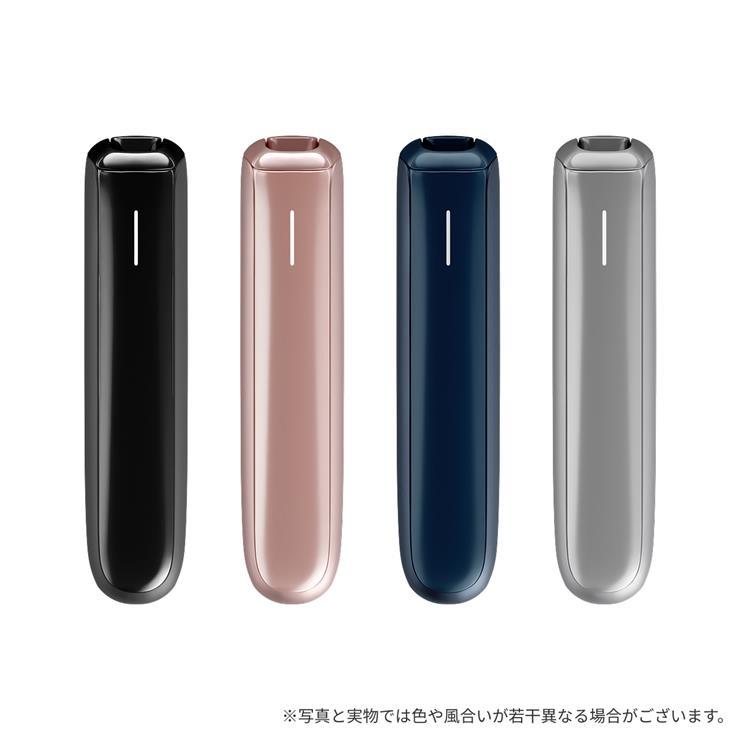
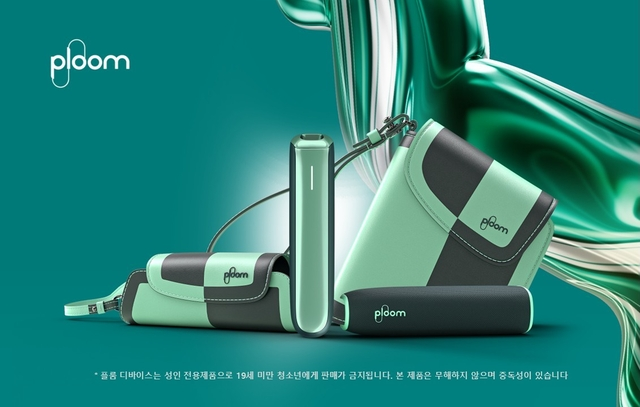
Ploom AURA, launched by Japan Tobacco (JT) in 2025, offers a concrete example of this transition. Positioned as JTI’s strategic flagship product for the year, Ploom AURA does not center its design on a single performance breakthrough. Instead, it focuses on enhancing the adjustability and manageability of the heating experience.
The device offers four temperature settings and enables more granular experience adjustment via Bluetooth connectivity, allowing users to select heating rhythm and intensity across different usage scenarios. Compared with traditional devices that rely on fixed presets, this design gives the heating experience a degree of ongoing manageability.
At the same time, Ploom AURA has further systematized the relationship between device and consumables through an expanding cartridge lineup, linking experience management with repeat purchase dynamics. From a market perspective, the product debuted in Japan and has since been rolled out progressively to other markets, becoming one of JT’s key products in advancing its global HTP deployment.
Product News 2: Usonic Dual Introduces AI Into Heated Tobacco Systems
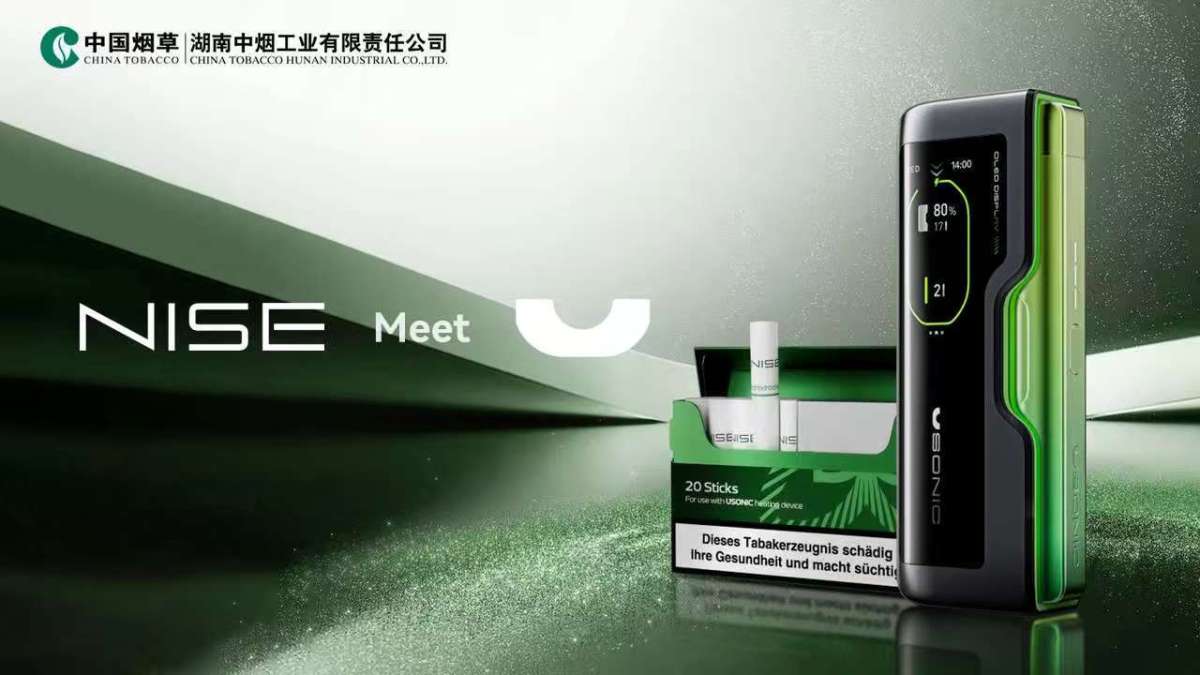
If Ploom AURA represents a path defined by refined control and experience management, Usonic Dual extends this logic into the algorithmic layer. Jointly launched by Hunan Tobacco and Heli Group, the product is built on a hardware foundation of omnidirectional heating and tidal temperature control, with an emphasis on preserving tobacco flavor authenticity.
On top of this hardware base, Usonic Dual integrates a smart app and connects with the DeepSeek large language model, enabling the heating experience to be adjusted and optimized through algorithms rather than relying solely on preset parameters. This design gives heated tobacco devices characteristics more commonly associated with smart devices: the experience is no longer fixed at setup but can be dynamically adjusted based on usage data and algorithmic logic.
Usonic Dual received the “Best HNB Product” award at InterTabac, underscoring the growing industry attention toward system-oriented and intelligent approaches in the HTP segment.
A Signal Taking Shape
From Ploom AURA to Usonic Dual, these products are not competing on whether heating can be achieved. Instead, they deconstruct the heating process into a series of variables that can be adjusted and optimized in different ways. Viewed together, these designs indicate that heated tobacco devices are evolving from single-function hardware into product forms that more closely resemble experience management systems—an evolution that is gradually defining a new competitive starting point for the HTP category.
Nicotine Pouches: An Independent Category Takes Shape
In 2026, changes in nicotine pouches are no longer primarily reflected in sales volumes or market buzz. Instead, they are increasingly visible in the category’s boundaries and product forms themselves. As regulatory pathways become clearer and product design continues to move away from traditional tobacco logic, nicotine pouches are evolving from a “tobacco alternative” into a consumer category with its own rules and development rhythm.
This transition is not driven by a single factor, but by the simultaneous acceleration of two paths. On the one hand, uncertainty at the regulatory level is declining; on the other, product engineering and design language are being adjusted, gradually shedding their reliance on tobacco form factors.
Product News 3: Faster PMTA Authorizations Make Compliance Pathways More Replicable
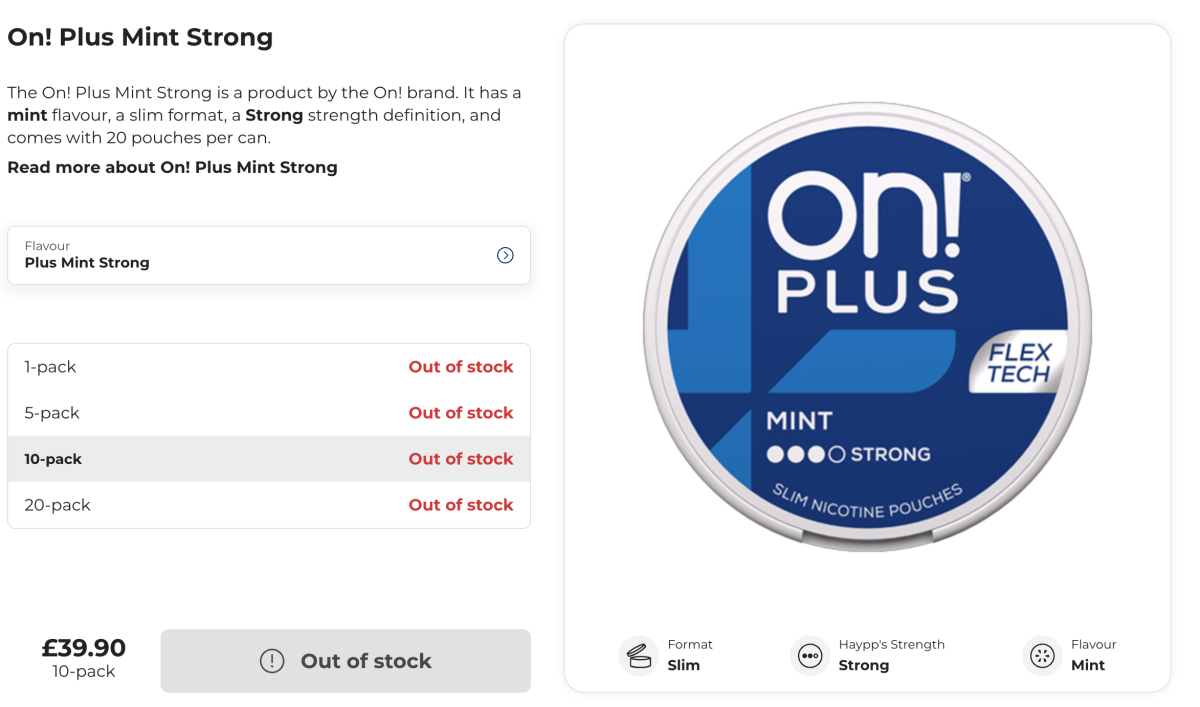
In the U.S. market, 2025 marks a year of noticeable change in the regulatory environment for nicotine pouches. As the FDA accelerates the pace of PMTA reviews for relevant products, clearer and more predictable compliance pathways are beginning to emerge.
Products such as ZYN and ON! Plus, after receiving authorization, have achieved more stable distribution through mainstream channels. Together, they send a clear signal that regulatory approval is shifting from isolated, case-by-case breakthroughs toward processes that can be understood and replicated. This change directly affects whether products can enter mainstream channels, how they do so, and how companies approach compliance investment and product portfolio decisions.
For the category as a whole, as regulatory uncertainty declines, both market expansion and the potential for substitution away from traditional tobacco are entering a phase of reassessment.
Product News 4: Product Forms Move Beyond Tobacco Logic, Making Design a Core Variable
Beyond regulatory developments, nicotine pouches in 2025 are also undergoing a clear shift in form and experience. An increasing number of products are no longer attempting to mimic tobacco in appearance or usage, instead redesigning around the oral use scenario itself.
Products such as ZAR Nicotine Strip and NAKD Nicotine Pods exemplify this approach. By reengineering product form, access method, and nicotine release mechanisms, these designs weaken visual and functional associations with traditional tobacco. As a result, the products more closely resemble oral consumer goods centered on portability, comfort, and experience consistency.
At the same time, materials technology is beginning to play a deeper role in the underlying structure of nicotine pouch products, influencing nicotine release dynamics and sensory experience, and creating new avenues for product differentiation.
The Outline of an Independent Category
Taken together, nicotine pouches are gradually shedding their dependence on the tobacco category. As compliance pathways continue to clarify and product design language becomes increasingly independent, the outline of a nicotine category with its own rules, design logic, and development pace is steadily taking shape.
Vape: Competition Is Shifting Toward “System Capability”
In 2026, changes in vape products will no longer be concentrated on expanding flavor lineups or improving a single performance parameter; instead, innovation will gradually shift toward more complex, system-level competition.As regulatory constraints tighten and markets mature, vapes are evolving from consumer electronics designed around stimulation-driven experiences into a product category that must balance compliance architecture, product engineering, and digital capability.
This transition is not being driven by any single device. Rather, it is emerging through a set of product design choices that point in the same direction.
Product News 5: Localization Becomes a Technical Pathway to Market Entry
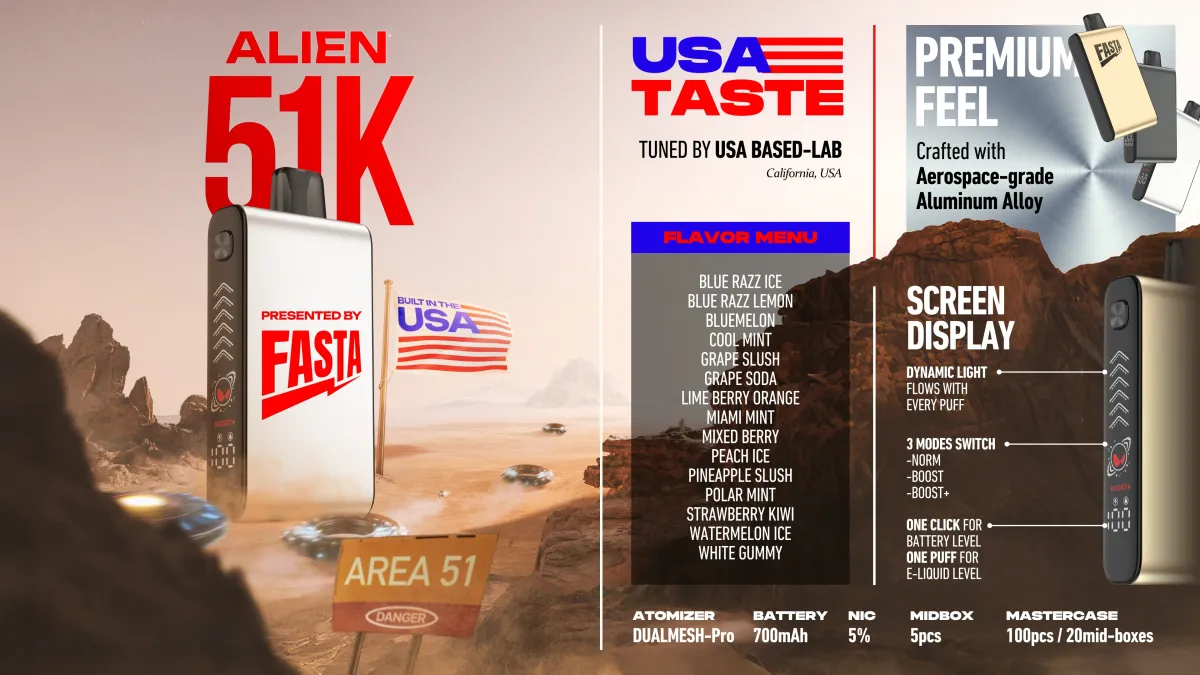
In the U.S. market, more vape products are reinforcing localization pathways—but the shift is not limited to branding or marketing. It is increasingly reflected in supply-chain structure and compliance deployment. Some products improve shelf-entry efficiency through approaches such as “relabeling upon arrival,” while others build local manufacturing and assembly capacity to reduce compliance friction and strengthen long-term supply capability.
Products including Pachamama 25K, NEXA FLEX, FASTA Alien, and SKE V-BOT illustrate different approaches to market entry. Together, these pathways suggest that understanding local regulatory rules and supply-chain structures is becoming a key variable in vape product design and commercial deployment.
Product News 6: Modular Design Creates Room Within Compliance Constraints
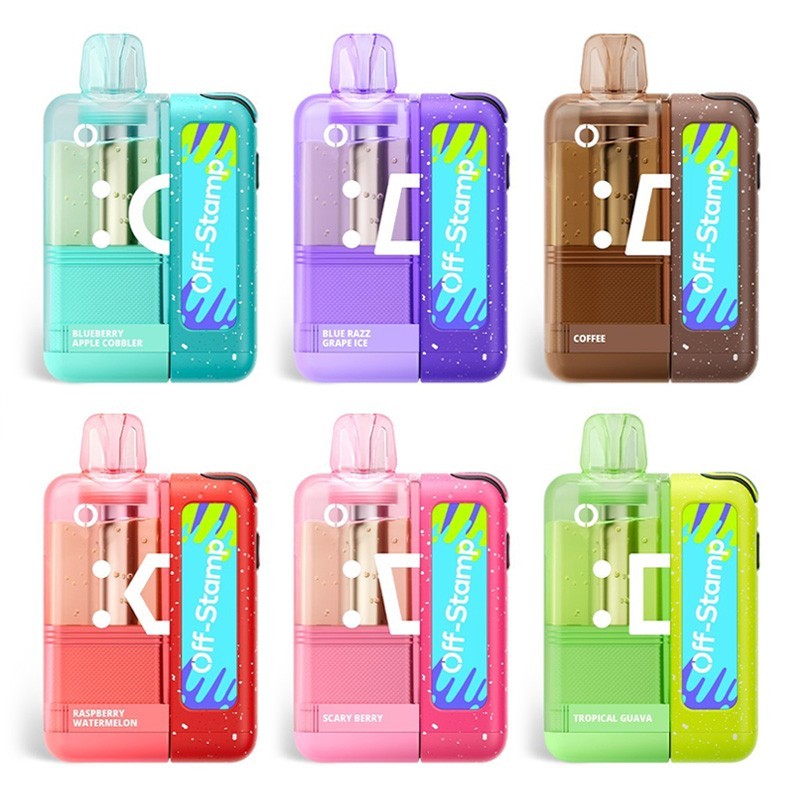
Under regulatory constraints such as capacity limits, vape products are beginning to look for new space through structural design. Multiple products have introduced “multi-pod combinations,” using physical separation paired with logical connection to deliver longer usage cycles while remaining within regulatory requirements.
Products such as ELFBAR JoinOne, JNR Whale, and RELX MAXGO Combo reflect this trend. Modular structures not only change how the products are used; they also reshape retail logic, moving vapes from single-SKU offerings toward systems composed of a main device, refill modules, and replaceable components.
Product News 7: Transparent Structures Build “Trust” Into Product Design
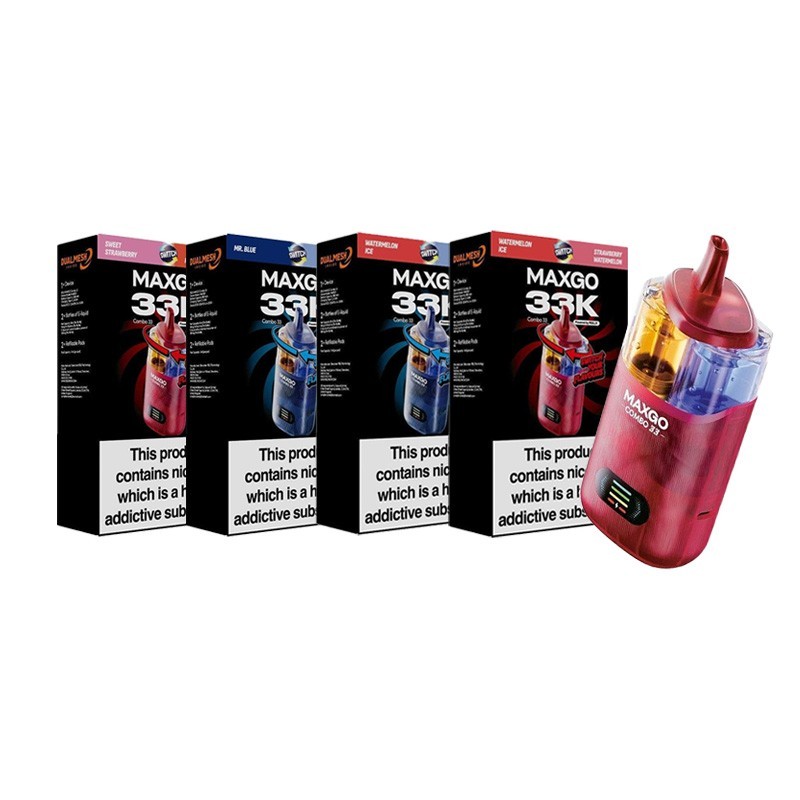
As product structures become more complex, users’ perception of uncertainty during use has also increased. In response, some vape products are turning to structural design and using “visibility” as a solution.
With transparent tanks, remaining e-liquid becomes immediately visible, reducing concerns about sudden depletion or burnt hits. Products such as Off-Stamp X Cube and SKE Crystal Edge X combine visualized structures with magnetic modules and high-puff-count design, making “trust” not merely a perception but an embedded part of product architecture.
Product News 8: Flavor Begins to Be Managed Through Quantification
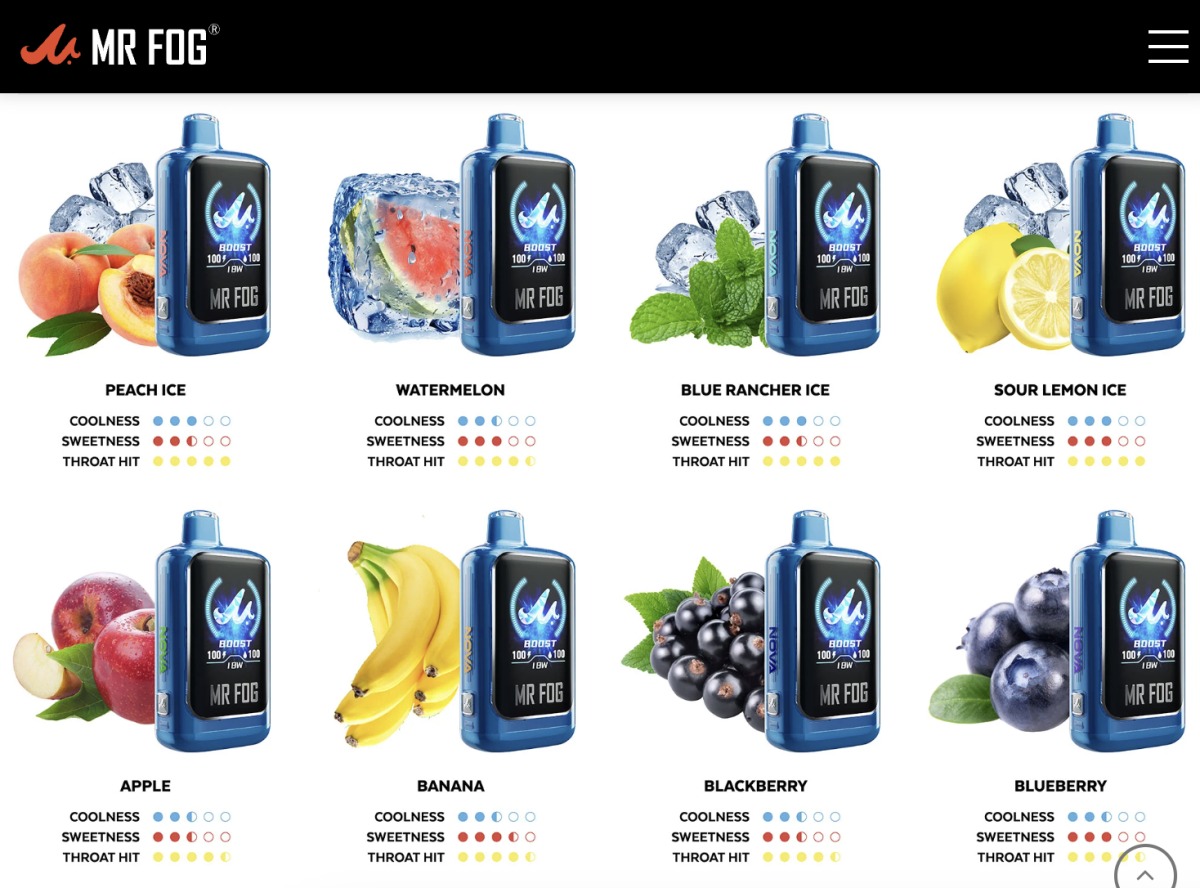
In 2026, competition around vape flavors is also shifting direction. Rather than simply expanding the number of flavors, some products are attempting to break flavor down into parameters that can be described and managed—such as sweetness, cooling intensity, or throat hit.
Products such as MR FOG, Pyne Pod Click, and GEEKBAR Nic Salts reflect this approach. By parameterizing flavor dimensions, they reduce the user’s decision cost and make flavor consistency a target that can be managed through engineering. This shift makes flavor management look closer to quality-control logic in manufacturing systems.
Product News 9: High-Performance Parameters Move From Niche to Mainstream
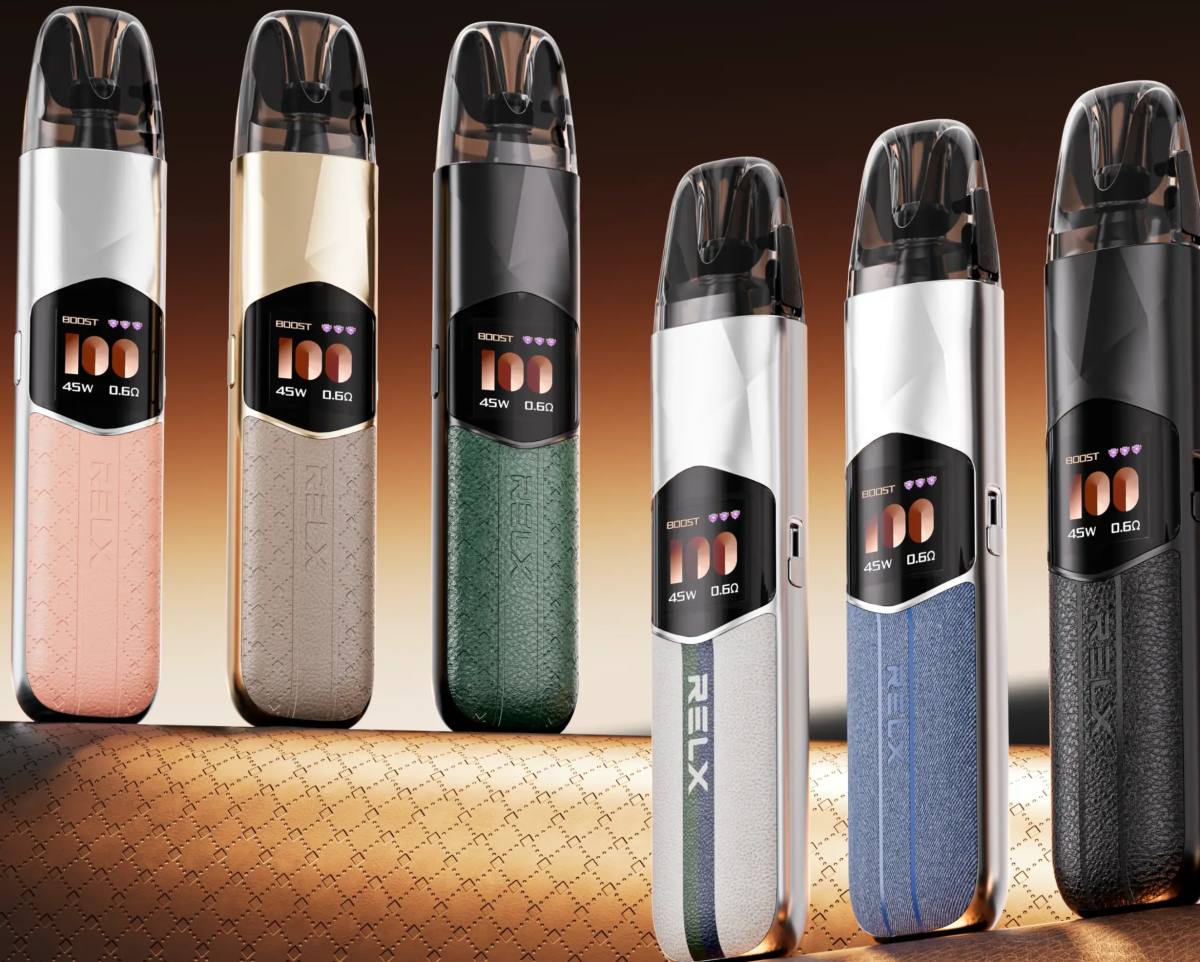
High-performance configurations that once primarily served enthusiast users began moving into broader consumer markets in 2025. Higher power output and stepless adjustment features are filtering down from niche devices into mainstream product lines.
Products such as RELX Prime Pro and GEEKBAR HOOKAH X offer up to 45W output and more flexible adjustment, bringing DTL (direct-to-lung) experiences to a wider consumer base. This trend is also pushing competition away from external styling and toward the capabilities of the atomization system itself.
Product News 10: Vapes Begin to Take on “Smart Device” Characteristics
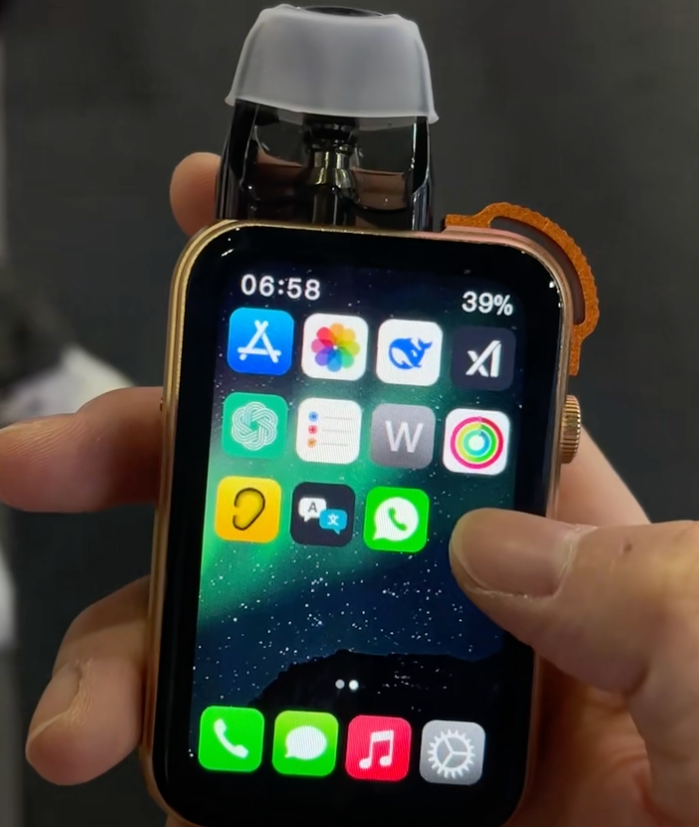
With the introduction of screens, touch interfaces, and algorithms, some vape products in 2025 are showing clear signs of digitization. Screens are no longer only status displays; they are becoming interaction entry points that allow users to adjust settings with greater precision.
Products such as Vuse Ultra and GAAGEE Nova Link/Core connect devices with smart apps and introduce sensing of puffing states along with dynamic output adjustment. These designs point to a shift in vapes—from one-time consumables toward smart devices that are connectable, manageable, and capable of ongoing interaction.
Conclusion: Understanding Long-Term Direction Through Product Change
Looking back at the product shifts seen in the new tobacco category in 2025, one increasingly clear trend is emerging for 2026:what is driving industry evolution is not individual products or short-term momentum, but a series of system-level adjustments centered on experience management, compliance architecture, and engineering capability. Across heated tobacco, nicotine pouches, and vape products, competition is being continuously reshaped through concrete design choices and technical pathways.
As a global new tobacco industry media and consulting platform, 2Firsts closely tracks the interaction between products, technology, and regulation. Through professional reporting and research, 2Firsts helps industry participants understand the structural logic behind these changes. The focus is not only on what products are, but on why they take their current form—and what impact they may have over longer time horizons.
Globally, 2Firsts will continue to build on scientific research and technological innovation, focusing on new products and technologies that can support the sustainable development of tobacco harm reduction (THR), while providing consistent and reliable trend insights for the industry.
Follow 2Firsts for the latest product trends and developments across the global new tobacco industry.