The Brazilian National Health Surveillance Agency (Agevisa) has been strengthening its actions and partnerships aimed at combating smoking in the Paraiba region throughout the year. On August 29th (National Day to Combat Tobacco), General Director Geraldo Moreira de Menezes outlined measures that not only aim to educate the public about the serious harm caused by tobacco products but also to train collaborating organizations to better protect human health and the state's environment.
He emphasized the importance of establishing partnerships between the State Health Surveillance Agency, Procon/PB, the Public Department, state and federal police, Sudema/PB, the Federal Revenue Service, and other state health agencies (members of this structure). This Agency has been providing advice on the implementation and execution of a quality management system for Agevisa/PB, which has yielded very positive results. The improvement of this Agency's activities in promoting and protecting human health in Paraíba has been positively impacted.
From August 22 to 25, Agevisa/PB actively participated in a training program on tobacco control legislation and inspection for health supervisors and Procons professionals in Paraiba. The event was held online and was co-organized by the National Cancer Institute (Inca), the National Health Surveillance Agency (Anvisa), and the Pan American Health Organization (PAHO).
Helena Teixeira de Lima Barbosa, the Technical Director of Agevisa/PB's Medical Science and Technology and Related department, discussed the role of health monitoring in tobacco control. She focused on the responsibilities and challenges facing regulators and highlighted the importance of societal awareness and participation in the fight against smoking. In her speech, Helena discussed Paraiba's health surveillance actions, responsibilities, legal documents, and experiences in combating smoking. She emphasized the extreme damage to health and the environment caused by the many substances in tobacco products, including electronic cigarette devices, also known as e-cigarettes.
According to Geraldo Moreira, this year Agevisa/PB has also promoted tobacco product inspection training for coordinators and municipal health inspectors to expand and improve the promotion and protection of public health in the region.
On June 14th and 15th, training was held for public health surveillance professionals in National Health Zones 1, 12, and 14. On March 30th, a training session was conducted for Visas staff from various cities in the second health zone during an event in Guarabira/PB.
Sustainability and tobacco control - Agevisa/PB is also actively involved in the National Cancer Institute's technical visit program to Paraiba to introduce sustainable tobacco control projects. From June 27th to July 1st, 2022, representatives from INCA, PAHO, the Secretary of State, and the Municipal Health Secretary discussed the project, Agevisa/PB, Empresa Paraibana de Turismo (PBTur), and tourism in the capital of Paraiba at the Casa de Jose Americo Foundation in João Pessoa/PB.
Geraldo Moreira de Menezes, the director general of Agevisa/PB, attended the event and emphasized the state government's commitment to expanding efforts to combat smoking in Paraiba. He discussed the agency's responsibility for oversight and education, and pointed out their concerns about the growth of smoking, including hookah and e-cigarettes.
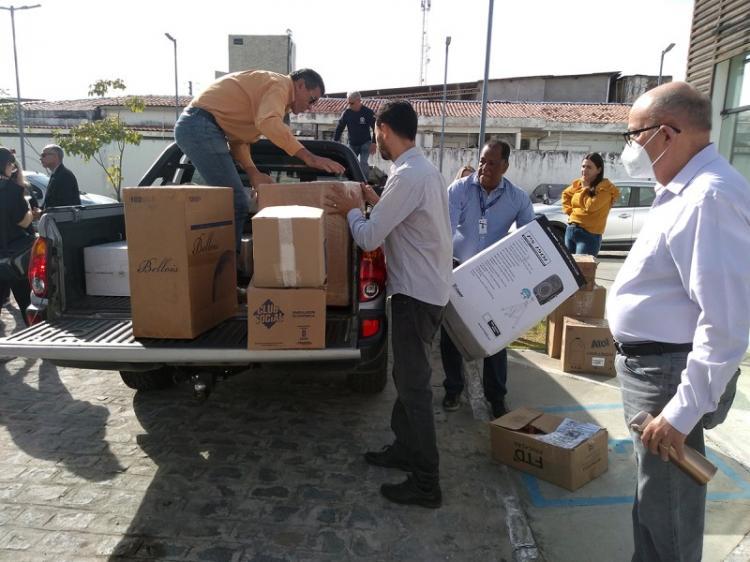
Confiscation of electronic cigarettes - as part of a permanent effort to combat smoking in Paraiba, the director of Agevisa/PB emphasized on the 29th that the working group, which was launched on June 30th in João Pessoa/PB, seized a large number of electronic smoking devices at a tobacco store near Tambau. The owner of the establishment was arrested at the time and taken to the Federal Police Headquarters for questioning.
Késsia Liliana, the head of Procon/PB, Hugo José de Barros Franca, the health technology director, and Ado Augusto Bezerra de Brito, the health risk inspection and control technology manager from Agevisa attended this operation. PB, Procon inspectors, and federal police agent Geraldo Moreira announced an intensified inspection and imposed sanitary penalties on those responsible for public or private collective-use environments allowing the use of electronic cigarettes, vaporizers, vapes, and e-cigarettes throughout the state of Paraiba. The use of cigarettes, electronic cigarettes, e-cigarettes, or any other electronic smoking device (DEF) is prohibited in environments under their responsibility.
According to Geraldo Moreira, the initiative of Law 12,351/2022 aims to strengthen Paraiba's struggle against smoking by creating a smoke-free environment for collective use, considering whether Law 1 originated from smoke.
Disclaimer: 1. The content of this article is compiled from third-party information and is only for industry exchange and learning purposes. 2. This article does not represent the views of 2FIRSTS, and 2FIRSTS is also unable to confirm the truthfulness and accuracy of the content. The compile of this article is only for industry exchange and research purposes. 3. Due to the limited compilation level, the compiled article may not express the same meaning as the original, please refer to the original article for accuracy. 4. Regarding any domestic, Hong Kong, Macao, Taiwan, and foreign expressions and positions, 2FIRSTS maintains full consistency with the Chinese government. 5. The copyright of the compiled information belongs to the original media and author. If there is any infringement, please contact us for deletion.
Disclaimer
This article is provided solely for professional research, industry discussion, and informational purposes. Any references to brands, companies, products, technologies, or policies are made for factual reporting and analytical purposes only, and do not constitute endorsement, recommendation, promotion, or advertising by 2Firsts.
Nicotine-containing products, including but not limited to cigarettes, e-cigarettes, heated tobacco products, and nicotine pouches, carry significant health risks. Readers are responsible for complying with all applicable laws and regulations in their respective jurisdictions, including age restrictions and access limitations.
The information contained in this article should not be regarded as investment, legal, medical, regulatory, or commercial advice. While 2Firsts strives to ensure the accuracy and reliability of its content, it does not assume liability for any direct or indirect loss arising from errors, omissions, inaccuracies, or reliance on the information contained herein.
This article is not intended for individuals below the legal age for accessing tobacco or nicotine-related information in their jurisdiction.
Copyright Notice
This article is either original content produced by 2Firsts or content reproduced, translated, summarized, or adapted from third-party sources with attribution where applicable. The intellectual property rights of the original content remain with 2Firsts or the respective original rights holders.
No individual or organization may copy, reproduce, distribute, republish, modify, translate, or otherwise use this content without prior authorization. Any unauthorized use may result in legal action.
For copyright-related inquiries, corrections, or removal requests, please contact: info@2firsts.com.
AI-Assisted Translation and Editing Notice
Portions of this article may have been translated, edited, or reviewed with the assistance of artificial intelligence tools to improve efficiency and readability. Due to the limitations of AI-assisted translation and editing, discrepancies, omissions, or inaccuracies may exist when compared with the original source.
Where applicable, readers are advised to refer to the original source for the most complete and accurate information. If you identify any errors or believe that any content infringes upon your rights, please contact us at info@2firsts.com, and we will review and address the matter promptly.