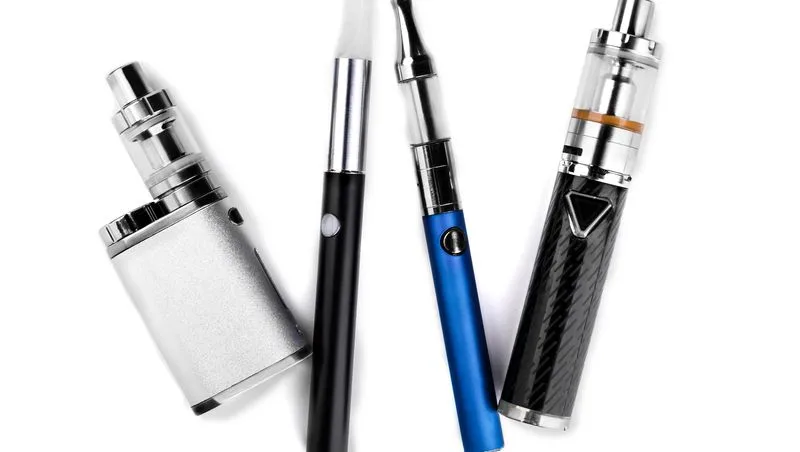
Alarming Rise of Illegal Disposable E-Cigarette Use among Utah's Youth

Market by 2FIRSTS.ai
Jan.02.2024
Alarming Rise of Illegal Disposable E-Cigarette Use among Utah's Youth
Despite being banned by the federal government, disposable e-cigarettes remain the top choice for Utah children, according to a national survey.

According to a report by news.yahoo on December 30, a study has found that despite being federally banned nationwide in the United States, a certain product has still become a favorite choice among children in the state of Utah.


A nationwide survey report on tobacco use among adolescents reveals that disposable e-cigarettes remain the top choice among high school students. Currently, over 1.2 million adolescents are using e-cigarettes, with illicit Chinese brands Elf Bar and Esco Bar ranking first and second among teenagers.


Despite praise from the US FDA and the Centers for Disease Control and Prevention for the declining number of high school students using e-cigarettes, there is a gradual increase in e-cigarette use among middle school students. Concerns are growing over younger children using these highly addictive and dangerous products.


Despite a federal ban on flavored cigarettes in 2020, brands such as Elf Bar, Esco Bar, and numerous others are still available on store shelves in Utah. These products, manufactured in Shenzhen, China, have not complied with the regulations and standards set by the US FDA before being imported into the country.


In recent days, Braden Ainsworth, the head of the Utah Department of Health's Tobacco Prevention and Control Program, has announced that local health authorities will enhance enforcement efforts against these illicit disposable e-cigarettes.


We welcome news tips, article submissions, interview requests, or comments on this piece.

Please contact us at info@2firsts.com, or reach out to Alan Zhao, CEO of 2Firsts, on LinkedIn


Notice

1.  This article is intended solely for professional research purposes related to industry, technology, and policy. Any references to brands or products are made purely for objective description and do not constitute any form of endorsement, recommendation, or promotion by 2Firsts.

2.  The use of nicotine-containing products — including, but not limited to, cigarettes, e-cigarettes, nicotine pouchand heated tobacco products — carries significant health risks. Users are responsible for complying with all applicable laws and regulations in their respective jurisdictions.

3.  This article is not intended to serve as the basis for any investment decisions or financial advice. 2Firsts assumes no direct or indirect liability for any inaccuracies or errors in the content.

4.  Access to this article is strictly prohibited for individuals below the legal age in their jurisdiction.


Copyright


This article is either an original work created by 2Firsts or a reproduction from third-party sources with proper attribution. All copyrights and usage rights belong to 2Firsts or the original content provider. Unauthorized reproduction, distribution, or any other form of unauthorized use by any individual or organization is strictly prohibited. Violators will be held legally accountable.

For copyright-related inquiries, please contact: info@2firsts.com


AI Assistance Disclaimer


This article may have been enhanced using AI tools to improve translation and editorial efficiency. However, due to technical limitations, inaccuracies may occur. Readers are encouraged to refer to the cited sources for the most accurate information.

We welcome any corrections or feedback. Please contact us at: info@2firsts.com

Adani’s Mumbai Airport Duty-Free Shops Face Scrutiny Over Nicotine Pouch Sales in India
An Indian investigation found that duty-free shops at Mumbai international airport operated by billionaire Gautam Adani’s business group sold nicotine pouches in breach of the law, Reuters reported, in a case that could shape how India regulates sales of new nicotine products at airport retail outlets.
Jul.08
AHA Journal Study: WS-23 Triples Premature Heartbeats, Raising Concerns Over Vape Cooling Agents
A University of Louisville research team published a study in an American Heart Association journal suggesting that synthetic cooling agents used in e-cigarettes, including WS-3 and WS-23, may disrupt cardiac electrical activity and increase arrhythmia risk. In animal experiments, WS-23 tripled premature heartbeats.
Jun.16
Spain Plans to Extend Smoking Ban to Terraces and Beaches, Bringing Vapes Under New Restrictions
Spain is advancing a new tobacco-control reform that would expand smoking restrictions to additional public spaces, including restaurant terraces and beaches, while bringing vaping and other nicotine products into the same regulatory framework. The proposed measures aim to reduce secondhand smoke exposure, protect young people and expand smoke-free environments. The proposal remains under legislative development, and final implementation details have not yet been confirmed.
Jul.23
Japan’s Heated Tobacco Tax Changes Reshape Consumer Choices, Survey Reveals Impact of Price and Income
A consumer survey by Japanese heated tobacco information platform RELAZO found that rising tobacco prices and planned heated tobacco tax changes may influence smoking decisions among Japanese consumers. The survey covered 49,879 men and women aged 20 to 69 nationwide. It found that around 40% of respondents cumulatively indicated they may consider quitting when a pack reaches ¥600 (approximately US$4.1), while nearly 90% expressed potential quitting intentions at a ¥1,000 (approximately US$6.8) price level. The survey also found significant differences by income level, with lower-income respondents showing greater sensitivity to price increases.
Jul.24
BAT Calls for Retailer Input in Future Nicotine Regulations
British American Tobacco (BAT) has called for stronger retailer involvement in shaping future nicotine product regulations in the UK, arguing that frontline market feedback should be considered during policy development. BAT said retailers provide direct insight into consumer behavior, market changes and regulatory implementation challenges. The comments come as the UK nicotine market undergoes regulatory changes, including the disposable vape ban, Vaping Products Duty and efforts to address illicit vape sales.
Jul.29
UK Vaping Products Duty to Raise £565 Million by 2030/31
The UK will introduce Vaping Products Duty on all vaping liquids from October 1, 2026, with government revenue forecast to rise from £135 million in 2026/27 to £565 million by 2030/31.
Jun.18