According to a study commissioned by the second largest tobacco company in the United States, Altria, reported by YahooFinance on May 30th, nearly every e-cigarette used by people in New York City is illegally imported flavored e-cigarettes from China.
Market intelligence company WSPM, commissioned by Ochiai, analyzed 100 different locations in various districts of New York City where empty e-cigarette products were discarded.
During the period from February 1st to March 21st this year, collectors discovered 2,000 discarded e-cigarette packages. Of these e-cigarettes, 99% were imported from China and 99% were disposable flavored e-cigarettes. New York banned these types of e-cigarettes in 2020 because they are appealing to children and teenagers.
David Sutton, spokesperson for Ochiai, stated, "The most popular e-cigarette brands among children have flooded into New York. We strongly support New York's efforts to increase enforcement and remove these illegal products from the market."
The spokeswoman for New York Governor Kathy Hochul stated that they "take this issue very seriously," but also noted that data from the state health department shows a decrease in the number of high school students using e-cigarettes from 2018 to 2022.
In addition, a spokesperson for New York City Mayor Eric Adams stated that over the weekend, the New York City Sheriff's Office and the New York Police Department "captured a major distributor" who was allegedly selling millions of dollars worth of illegal e-cigarette products.
The spokesperson wrote in an email to Fortune magazine: "We are facing a rampant problem of e-cigarette and heated tobacco use among young people, and we will not stand idly by as manufacturers and wholesalers supply our city with illegal harmful products, targeting the most vulnerable New Yorkers - children.
The United States Food and Drug Administration (FDA) has only authorized 23 tobacco-flavored e-cigarette products and devices for the market, including NJOY e-cigarette by Altria. However, these FDA-authorized products are not very popular, making up only 2.4% of e-cigarette sales in 2023.
Acia appears to have been impacted. Last year, the company sued 34 domestic and foreign e-cigarette manufacturers, demanding compensation for losses caused by "unfair competition," and urging the FDA to enforce its own regulations.
An FDA spokesperson declined to answer specific questions regarding enforcement but stated that the agency is taking action across the entire supply chain, including manufacturers, importers, distributors, and retailers. The FDA has issued import alerts to multiple Chinese tobacco companies, such as Shenzhen Heaven Gifts (iMiracle Technology), which produce popular e-cigarette brands ElfBar, EBCreate, and Lost Mary. Import alerts allow FDA field personnel to detain certain products without physical examination.
Last December, the FDA announced that they had seized and destroyed e-cigarette flavorings from Heaven Gifts (iMiracle) worth $18 million. However, the company has avoided customs multiple times by changing the name to ElfBar, importing products worth hundreds of millions of dollars.
Another illegal Chinese e-cigarette brand, Air Bar, has taken the lead in a study conducted in New York City. Among the e-cigarettes found in large trash bins, 50% were Air Bar products, including flavors such as "pink lemonade" and "blueberry ice."
In response, Air Bar's compliance director Quentin Brunel confirmed that the company is headquartered in China but declined to comment on the study.
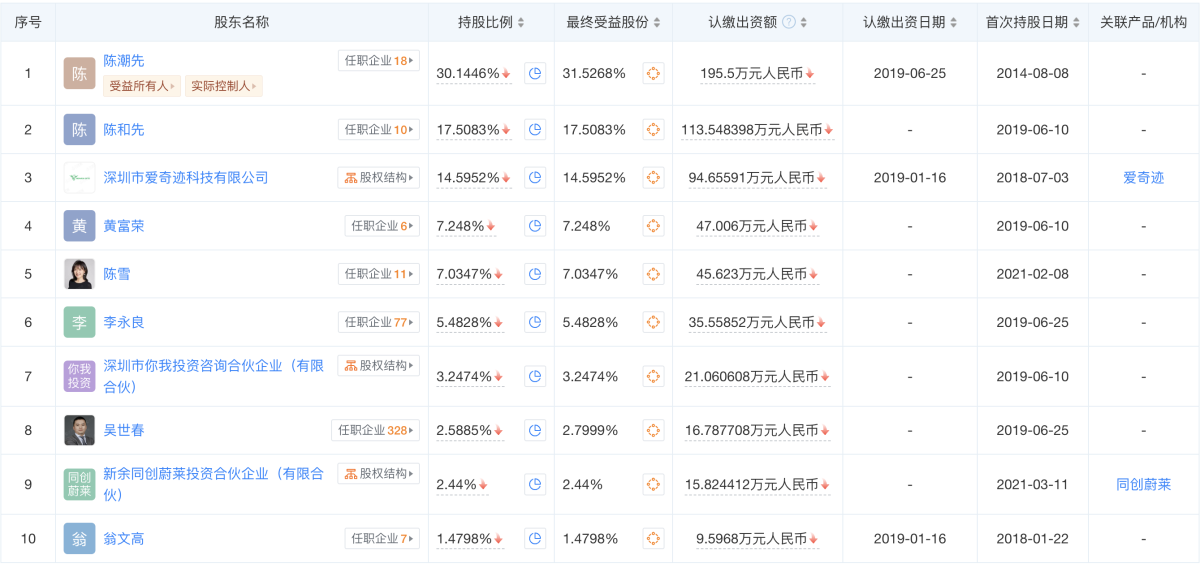
According to reports, the applicant for the 34-tobacco smoking device trademark of Air Bar is Shenzhen Youme Network Technology Co., Ltd., established in 2014 and located in Shenzhen, Guangdong Province. Shenzhen Heaven Gifts Technology Co., Ltd. holds a 14.59% stake in the company.
We welcome news tips, article submissions, interview requests, or comments on this piece.
Please contact us at info@2firsts.com, or reach out to Alan Zhao, CEO of 2Firsts, on LinkedIn
Notice
1. This article is intended solely for professional research purposes related to industry, technology, and policy. Any references to brands or products are made purely for objective description and do not constitute any form of endorsement, recommendation, or promotion by 2Firsts.
2. The use of nicotine-containing products — including, but not limited to, cigarettes, e-cigarettes, nicotine pouchand heated tobacco products — carries significant health risks. Users are responsible for complying with all applicable laws and regulations in their respective jurisdictions.
3. This article is not intended to serve as the basis for any investment decisions or financial advice. 2Firsts assumes no direct or indirect liability for any inaccuracies or errors in the content.
4. Access to this article is strictly prohibited for individuals below the legal age in their jurisdiction.
Copyright
This article is either an original work created by 2Firsts or a reproduction from third-party sources with proper attribution. All copyrights and usage rights belong to 2Firsts or the original content provider. Unauthorized reproduction, distribution, or any other form of unauthorized use by any individual or organization is strictly prohibited. Violators will be held legally accountable.
For copyright-related inquiries, please contact: info@2firsts.com
AI Assistance Disclaimer
This article may have been enhanced using AI tools to improve translation and editorial efficiency. However, due to technical limitations, inaccuracies may occur. Readers are encouraged to refer to the cited sources for the most accurate information.
We welcome any corrections or feedback. Please contact us at: info@2firsts.com