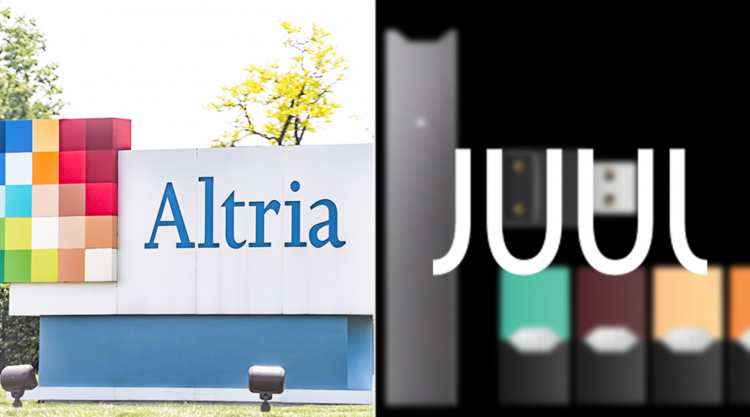
On May 10th, according to a report from Reuters, Altria Group announced it will pay $235 million to settle at least 6,000 lawsuits accusing the company of encouraging teenage e-cigarette use by investing in Juul, a leading e-cigarette manufacturer.
This deal settled nearly all lawsuits brought against Altria by local government agencies and individuals across the United States related to Juul. Altria anticipates recording a pre-tax charge of $235 million in the second quarter of 2023 and intends to exclude this charge from adjusted earnings per share.
Sarah London, one of the lead lawyers for the plaintiff, stated in a written statement regarding the settlement that it would provide "unprecedented and truly meaningful relief for youth, parents, and government organizations nationwide.
Murray Garnick, Altria's Executive Vice President and General Counsel, recently said that the claims against Altria are unfounded. However, he believes that settling the matter would be in the best interest of the company's shareholders.
However, we believe this resolution avoids the uncertainty and costs of lengthy legal proceedings, and is in the best interests of our shareholders.
The plaintiff in the lawsuit alleges that Juul employed inappropriate methods (such as promoting flavored e-cigarettes and utilizing internet and social media campaigns) to market their products to minors, and that Altria assisted Juul's marketing efforts by allowing them to use their sales team and display their products on shelves next to Altria's own products.
Altria has announced that it has relinquished its 35% stake in Juul. As of December 2022, its stake in Juul was worth $250 million, down from the $12.8 billion it invested in 2018.
Juul has reached settlements in the majority of its cases, paying over $1 billion to 48 states and territories, as well as $1.7 billion to individual and local government entities.
Beth Wilkinson, lawyer for Altria, stated in a recent lawsuit that the company did not benefit from its investment in JUUL.
This investment of 12.8 billion dollars did not result in any returns, and Altria did not benefit from it in any way.
References:
Altria has agreed to pay $235 million in order to settle all cases related to Juul, the vaping giant in which the cigarette maker has a 35% stake. This settlement will end all lawsuits that have been filed against Altria over Juul-related issues.
Disclaimer
This article is provided solely for professional research, industry discussion, and informational purposes. Any references to brands, companies, products, technologies, or policies are made for factual reporting and analytical purposes only, and do not constitute endorsement, recommendation, promotion, or advertising by 2Firsts.
Nicotine-containing products, including but not limited to cigarettes, e-cigarettes, heated tobacco products, and nicotine pouches, carry significant health risks. Readers are responsible for complying with all applicable laws and regulations in their respective jurisdictions, including age restrictions and access limitations.
The information contained in this article should not be regarded as investment, legal, medical, regulatory, or commercial advice. While 2Firsts strives to ensure the accuracy and reliability of its content, it does not assume liability for any direct or indirect loss arising from errors, omissions, inaccuracies, or reliance on the information contained herein.
This article is not intended for individuals below the legal age for accessing tobacco or nicotine-related information in their jurisdiction.
Copyright Notice
This article is either original content produced by 2Firsts or content reproduced, translated, summarized, or adapted from third-party sources with attribution where applicable. The intellectual property rights of the original content remain with 2Firsts or the respective original rights holders.
No individual or organization may copy, reproduce, distribute, republish, modify, translate, or otherwise use this content without prior authorization. Any unauthorized use may result in legal action.
For copyright-related inquiries, corrections, or removal requests, please contact: info@2firsts.com.
AI-Assisted Translation and Editing Notice
Portions of this article may have been translated, edited, or reviewed with the assistance of artificial intelligence tools to improve efficiency and readability. Due to the limitations of AI-assisted translation and editing, discrepancies, omissions, or inaccuracies may exist when compared with the original source.
Where applicable, readers are advised to refer to the original source for the most complete and accurate information. If you identify any errors or believe that any content infringes upon your rights, please contact us at info@2firsts.com, and we will review and address the matter promptly.