American Snuff Co. Recalls Kodiak Premium Wintergreen Tobacco

Business by 2FIRSTS.ai
Dec.19.2023
American Snuff Co. Recalls Kodiak Premium Wintergreen Tobacco
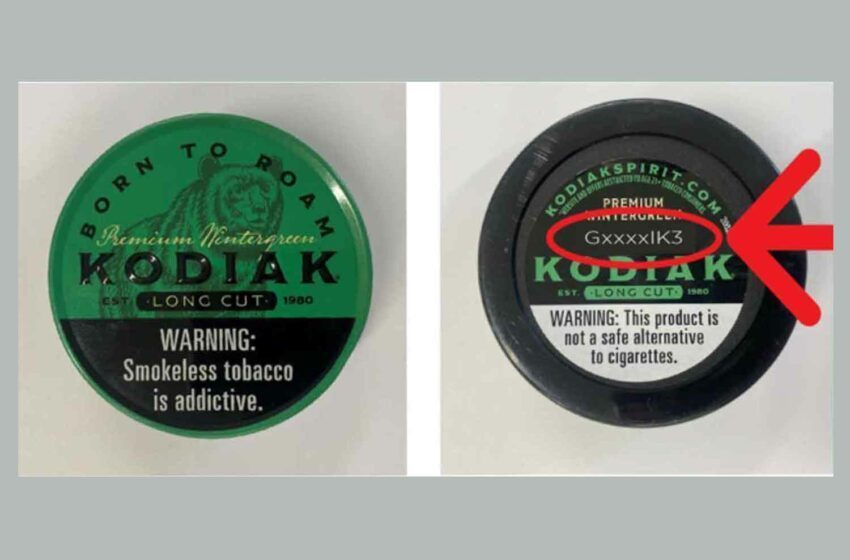
American Snuff Co., ASC voluntarily recalls batches of Kodiak Premium Wintergreen Longcut Tobacco sold in 18 states due to potential metallic contamination.

According to a report from Tobaccoreporter, American Snuff Co., ASC, is voluntarily recalling certain batches of Kodiak Premium Wintergreen Longcut Tobacco that were produced at their factory in Clarksville, Tennessee and sold in 18 states.


ASC has reported this voluntary recall incident to the US Food and Drug Administration and is working with the agency to address the issue.


According to a notice on the company's website, ASC has initiated a recall after discovering that certain batches of its products may contain metal foreign objects that may or may not be visible to consumers. The recall was prompted by a routine inspection which found issues with the production equipment, leading to wear and tear between metal components. This wear and tear could potentially result in metal fragments coming into contact with tobacco during the production process. So far, no products containing these foreign objects have been found, and the company has not received any consumer complaints or reports of consumer harm.


ASC's other products have not been affected, including other varieties of Kodiak, Grizzly, Hawken, and Cougar smokeless tobacco products, as well as all loose leaf, twisted, dry snuff, and plug products.


The American Smokeless Tobacco Company (ASC) has instructed wholesalers and retailers to separate the recalled Kodiak Premium Wintergreen Longcut tobacco from their inventory.


We welcome news tips, article submissions, interview requests, or comments on this piece.

Please contact us at info@2firsts.com, or reach out to Alan Zhao, CEO of 2Firsts, on LinkedIn


Notice

1.  This article is intended solely for professional research purposes related to industry, technology, and policy. Any references to brands or products are made purely for objective description and do not constitute any form of endorsement, recommendation, or promotion by 2Firsts.

2.  The use of nicotine-containing products — including, but not limited to, cigarettes, e-cigarettes, nicotine pouchand heated tobacco products — carries significant health risks. Users are responsible for complying with all applicable laws and regulations in their respective jurisdictions.

3.  This article is not intended to serve as the basis for any investment decisions or financial advice. 2Firsts assumes no direct or indirect liability for any inaccuracies or errors in the content.

4.  Access to this article is strictly prohibited for individuals below the legal age in their jurisdiction.


Copyright


This article is either an original work created by 2Firsts or a reproduction from third-party sources with proper attribution. All copyrights and usage rights belong to 2Firsts or the original content provider. Unauthorized reproduction, distribution, or any other form of unauthorized use by any individual or organization is strictly prohibited. Violators will be held legally accountable.

For copyright-related inquiries, please contact: info@2firsts.com


AI Assistance Disclaimer


This article may have been enhanced using AI tools to improve translation and editorial efficiency. However, due to technical limitations, inaccuracies may occur. Readers are encouraged to refer to the cited sources for the most accurate information.

We welcome any corrections or feedback. Please contact us at: info@2firsts.com

Illegal Market Surges After Kazakhstan Bans E-Cigarettes; Telegram Becomes the Main Trading Channel
Since Kazakhstan banned e-cigarette sales in June 2024, transactions have gone underground, shifting to Telegram and some e-commerce platforms and making enforcement harder; related research indicates the ban has not significantly reduced demand.
Oct.20 by 2FIRSTS.ai
BAT plans to sell its stake in ITC Hotels, using proceeds to reduce debt
British American Tobacco (BAT) plans to sell all or part of its stake in ITC Hotels via an accelerated bookbuild, with the sale size expected to be up to 15.3% of the company’s shares. The company says the proceeds will be used to reduce debt and bring its leverage back within the target range.
Dec.05 by 2FIRSTS.ai
NSW Landlords Could Face Jail or $165,000 Fine for Allowing Illegal Vape and Tobacco Sales
According to The Guardian, landlords in New South Wales who knowingly allow tenants to sell illicit tobacco or illegal vapes could face fines of up to AUD 165,000, a year in prison, or both. The new offences are part of the state government’s broader crackdown on Australia’s growing black market for cigarettes and vaping products.
Nov.12 by 2FIRSTS.ai
Philip Morris International Restructures to Drive Its Smoke-Free Transformation
Philip Morris International (PMI) announced a new organizational model effective January 1, 2026, creating two main business units — PMI International and PMI U.S. — to accelerate its smoke-free strategy. The restructuring replaces four regional segments with three: International Smoke-Free, International Combustibles, and U.S., enhancing agility, governance, and long-term growth in reduced-risk products.
Nov.05 by 2FIRSTS.ai
Saratov Governor Supports Russian Nationwide Ban on E-Cigarette Sales
Governor of Saratov Oblast, announced on his official Telegram channel that he fully supports a nationwide ban on the sale of e-cigarettes. Busargin noted that while restrictions on such products have long been in place, enforcement remains weak and health experts continue to warn of the risks posed to children. He stressed that economic interests must not outweigh public health and said Saratov is ready to enforce a ban once regional powers are granted.
Nov.17 by 2FIRSTS.ai
U.S. FDA Includes Cytisinicline for Vaping Addiction in National Priority Voucher Program, Shortens Review to 1–2 Months
The U.S. Food and Drug Administration (FDA) has added Cytisinicline, a plant-based therapy developed by Achieve Life Sciences for nicotine vaping addiction, to its new National Priority Voucher (CNPV) program. The initiative shortens drug review timelines from 10–12 months to just 1–2 months, expediting approval for treatments that address major public health needs.
Oct.20 by 2FIRSTS.ai