Analysis of China's E-Cigarette Export Data to Italy in February 2024

Industry Insight by 2FIRSTS
Apr.12.2024
Analysis of China's E-Cigarette Export Data to Italy in February 2024
China's e-cigarette exports to Italy in February 2024 saw a 38.47% decrease in value but a 238.11% increase year-on-year.

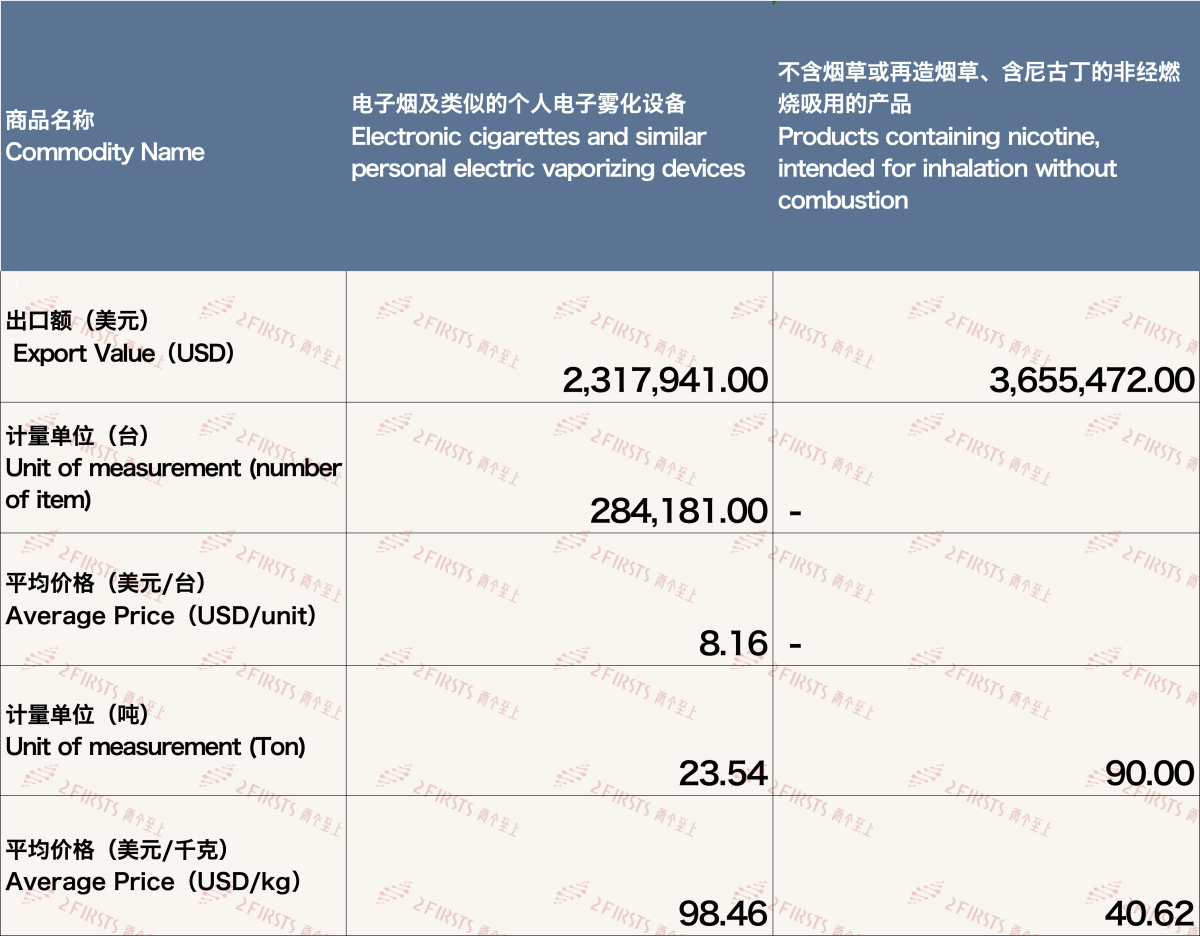
According to updated trade data from the General Administration of Customs of the People's Republic of China, 2FIRSTS has compiled e-cigarette export data to Italy in February 2024. The specific details are as follows:
 

2月中国出口意大利电子烟约597万美元 环比下降38.47%
Image source: 2FIRSTS (created by Mincy)


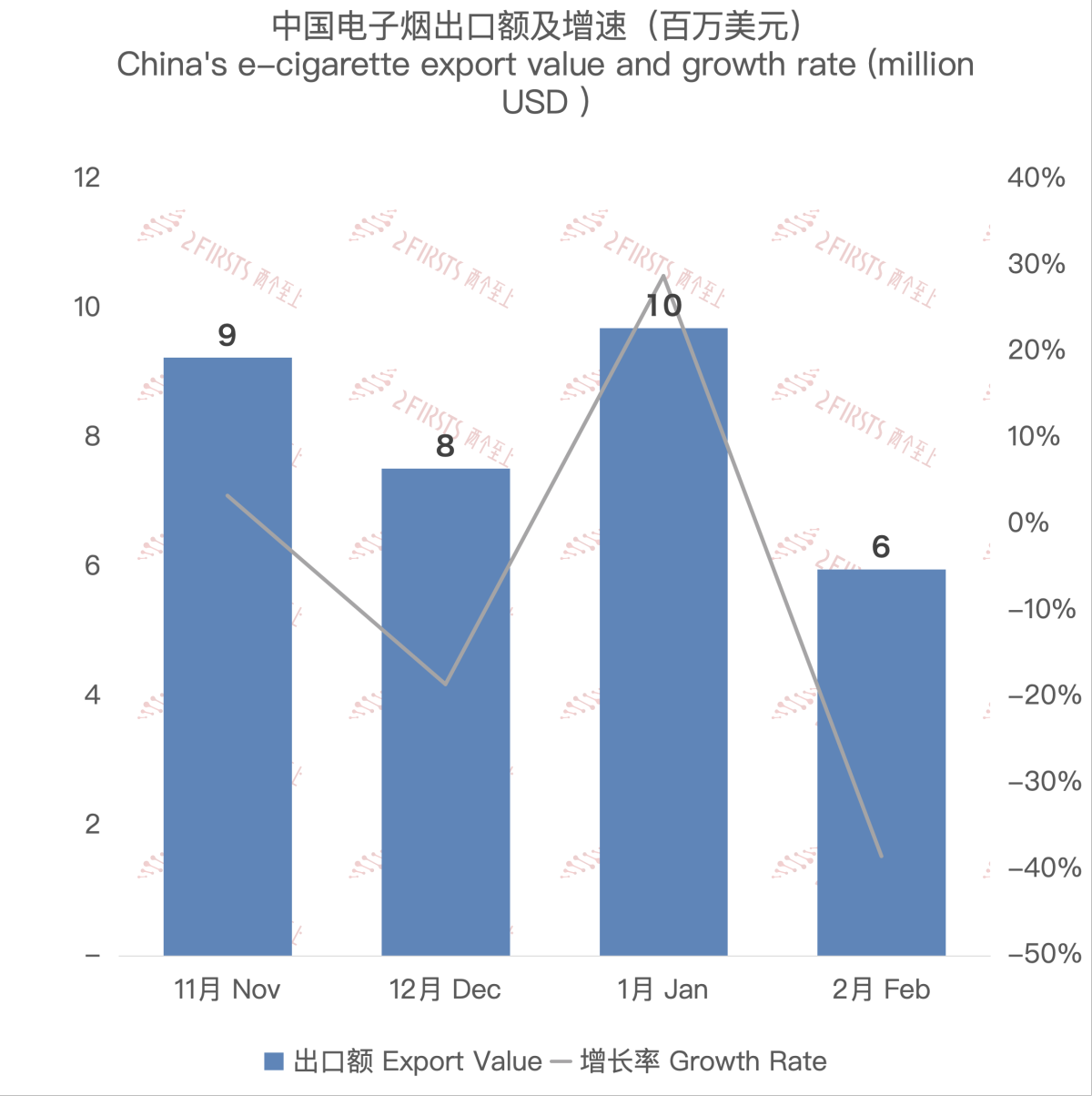
The export volume amounted to approximately 5.97 million US dollars, a decrease of 38.47% compared to the previous period, but an increase of 238.11% compared to the same period last year.
 

2月中国出口意大利电子烟约597万美元 环比下降38.47%
Image source: 2FIRSTS (Created by Mincy)


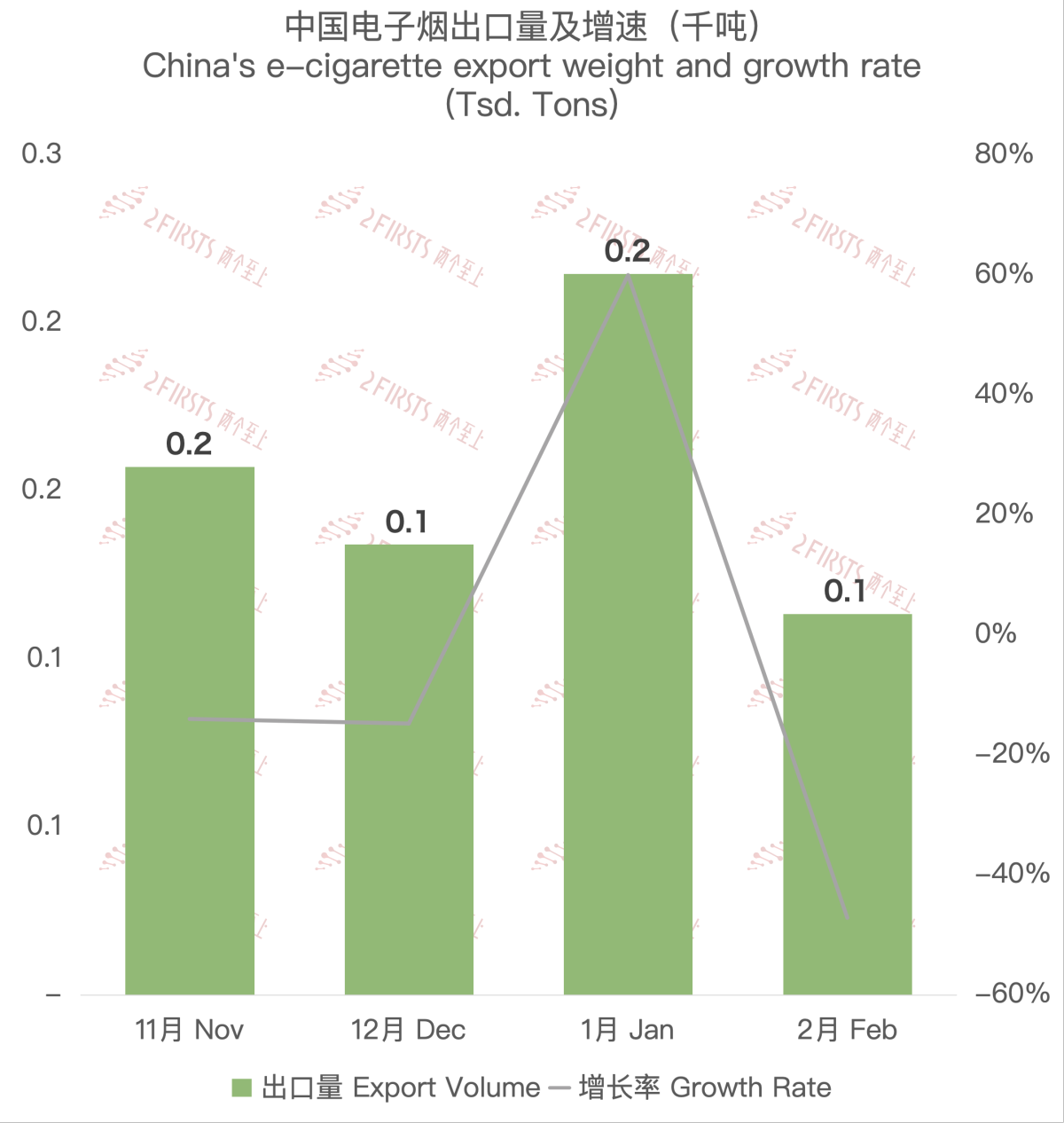
The export volume is approximately 113 tons, with a month-on-month decrease of 47.12% and a year-on-year increase of 216.49%.
 

2月中国出口意大利电子烟约597万美元 环比下降38.47%
Image source: 2FIRSTS (Map created by Mincy)


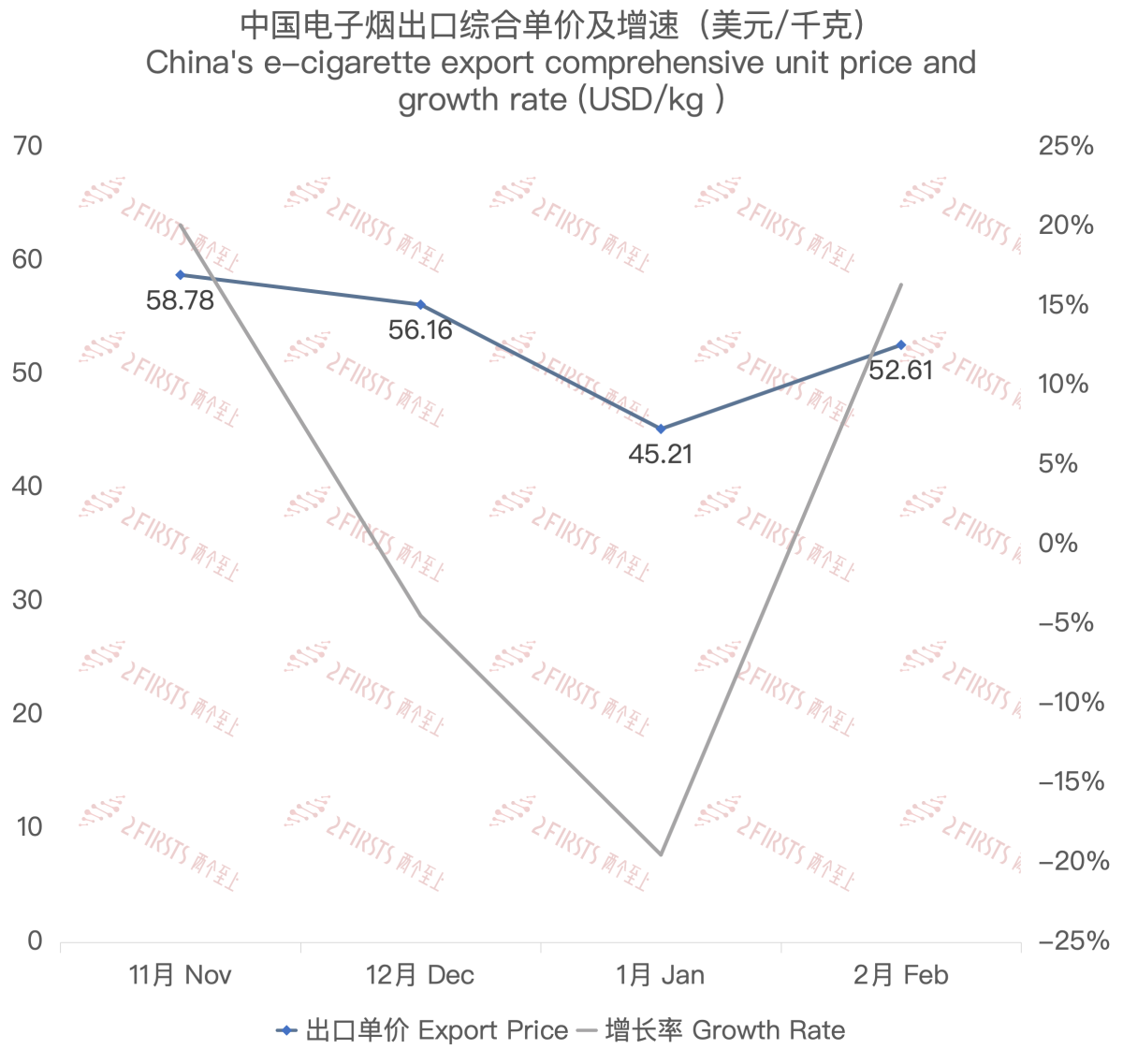
The export unit price was $52.61 per kilogram, up 16.36% month-on-month and 6.83% year-on-year; the average price for "e-cigarettes and similar personal electronic vaporizing devices" was $8.16 per unit.
 

2月中国出口意大利电子烟约597万美元 环比下降38.47%
Image source: 2FIRSTS (created by Mincy)


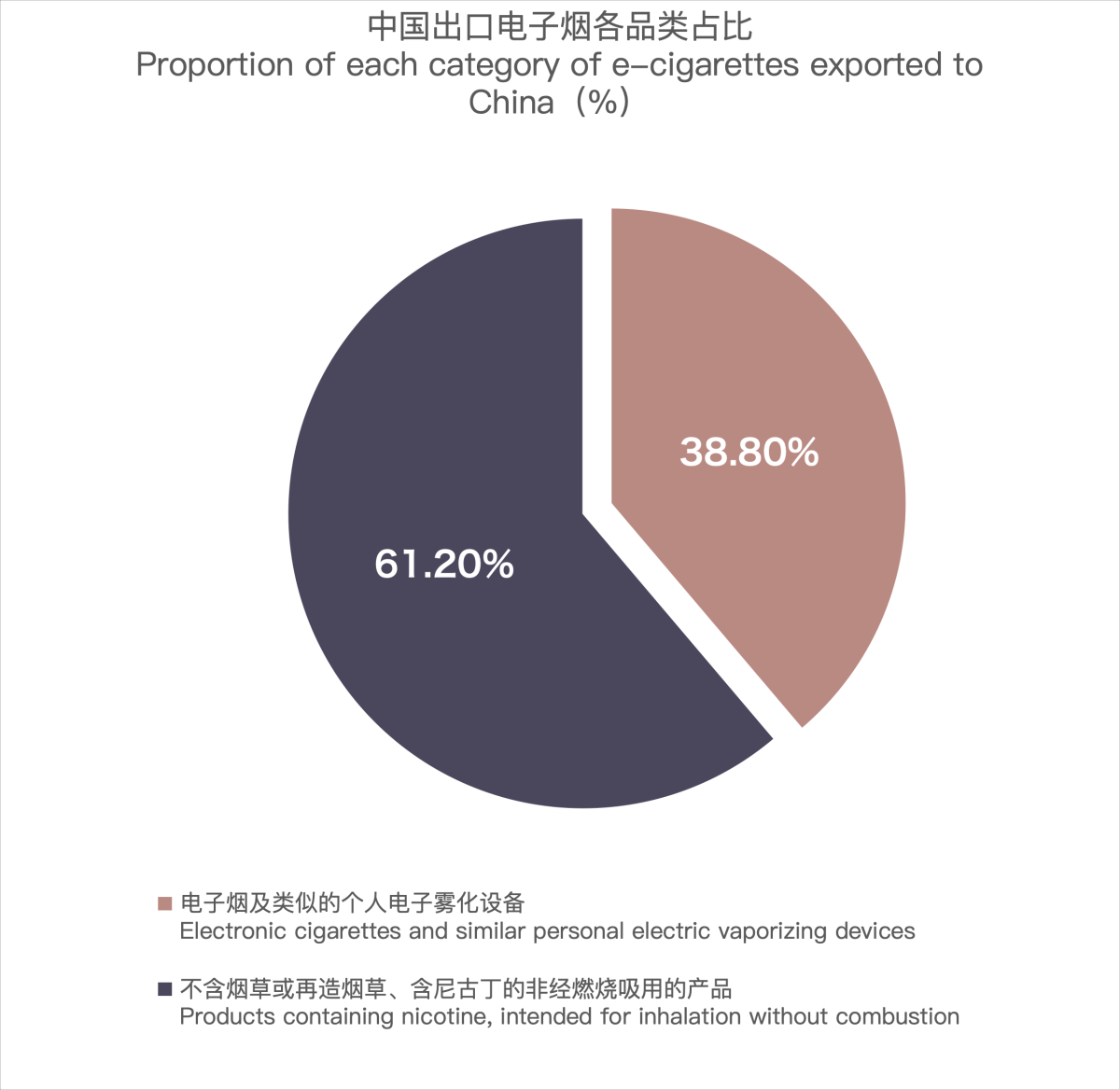
Among them, "e-cigarettes and similar personal electronic vaporizing devices" accounted for 38.80% of the export product category, while "nicotine-containing non-combustible products that do not contain tobacco or reconstituted tobacco" accounted for 61.20%.
 

Analysis of China's E-Cigarette Export Data to Italy in February 2024
Image source: 2FIRSTS (created by Mincy)


We welcome news tips, article submissions, interview requests, or comments on this piece.

Please contact us at info@2firsts.com, or reach out to Alan Zhao, CEO of 2Firsts, on LinkedIn


Notice

1.  This article is intended solely for professional research purposes related to industry, technology, and policy. Any references to brands or products are made purely for objective description and do not constitute any form of endorsement, recommendation, or promotion by 2Firsts.

2.  The use of nicotine-containing products — including, but not limited to, cigarettes, e-cigarettes, nicotine pouchand heated tobacco products — carries significant health risks. Users are responsible for complying with all applicable laws and regulations in their respective jurisdictions.

3.  This article is not intended to serve as the basis for any investment decisions or financial advice. 2Firsts assumes no direct or indirect liability for any inaccuracies or errors in the content.

4.  Access to this article is strictly prohibited for individuals below the legal age in their jurisdiction.


Copyright


This article is either an original work created by 2Firsts or a reproduction from third-party sources with proper attribution. All copyrights and usage rights belong to 2Firsts or the original content provider. Unauthorized reproduction, distribution, or any other form of unauthorized use by any individual or organization is strictly prohibited. Violators will be held legally accountable.

For copyright-related inquiries, please contact: info@2firsts.com


AI Assistance Disclaimer


This article may have been enhanced using AI tools to improve translation and editorial efficiency. However, due to technical limitations, inaccuracies may occur. Readers are encouraged to refer to the cited sources for the most accurate information.

We welcome any corrections or feedback. Please contact us at: info@2firsts.com

PMI Oral Products Chief Says Lack of Rules May Push Nicotine Pouch Market Into Illicit Trade
Nick Ricketts, President of Oral Products at Philip Morris International (PMI), told Logos Press that nicotine pouches should be brought under clear regulatory frameworks covering nicotine limits, flavor rules, age verification, sales controls and marketing standards, arguing that the absence of clear rules or blanket bans may push consumer demand into illegal or semi-legal channels.
Jul.06
South Korea’s New Vape Rules Raise Bar for E-Liquid Makers and China-Linked Supply Chains, Expert Says
South Korea’s new vape regulations are reshaping the e-liquid market, raising compliance requirements for manufacturers, retailers and overseas suppliers. In an interview with 2Firsts, Korean nicotine products specialist Sam Kim discusses licensing barriers, inventory impacts, China-linked supply chains, and emerging regulatory challenges around nicotine analogues, nicotine-free products and DIY mixing. The Korean case may offer broader insights as governments worldwide adapt to rapidly evolving nicotine products.
Jul.16
Altria Smokeable Profit Rises 2.4% as Marlboro Share Falls and U.S. Discounts Gain
Altria’s second-quarter results show a U.S. nicotine market splitting across price, product and regulation. Smokeable profit rose 2.4% as Marlboro pricing offset lower volumes, while discount brand Basic gained share among value-conscious smokers. In oral nicotine, on! PLUS expanded distribution but faced intensifying competition from ZYN and Velo. NJOY remained off the market as patent and regulatory hurdles delayed its return. The broader lesson: U.S. growth increasingly depends on price-tier strategy, retail execution, authorisation and enforcement readiness across the industry.
Special Report
Jul.31
WIRED Investigation: Chinese-Made Vapes Turn to 6-Methyl-Nicotine and Other Analogs, Challenging U.S. Regulation
U.S. technology and investigative publication WIRED has examined how nicotine analogs are emerging as a new challenge for the country’s vape regulatory framework. The article argues that after the U.S. expanded federal oversight of nicotine products in 2022, some manufacturers began using nicotine-like compounds such as 6-methyl-nicotine that may fall outside existing definitions. Researchers cited by WIRED said some nicotine analogs could be more potent than traditional nicotine, although human health impacts remain unclear. U.S. policymakers are considering broader definitions of nicotine to bring these compounds under federal oversight.
Jul.27
FDA 2025 NYTS: Youth E-Cigarette Use Declines but Unauthorized Disposables Remain Prominent; Nicotine Pouch Use Stays Low
The U.S. Food and Drug Administration (FDA) released its 2025 National Youth Tobacco Survey analysis, saying about 2.01 million U.S. middle and high school students currently used any tobacco product; among current youth e-cigarette users, unauthorized disposable brands including Geek Bar, Elf Bar, Lost Mary and Raz had high reported shares, potentially making them a focus for future enforcement.
Jun.24
Oral Thin-Film Technology Firm CTT Pharma Eyes U.S. Nicotine Product Trials
CTT Pharmaceutical Holdings said it has signed a letter of intent with a U.S. company to conduct clinical trials and testing for several potential nicotine products using its patented oral thin-film technology.
Jun.18