China's E-cigarette Exports to France: February 2024 Data Update

Industry Insight by 2FIRSTS
Apr.11.2024
China's E-cigarette Exports to France: February 2024 Data Update
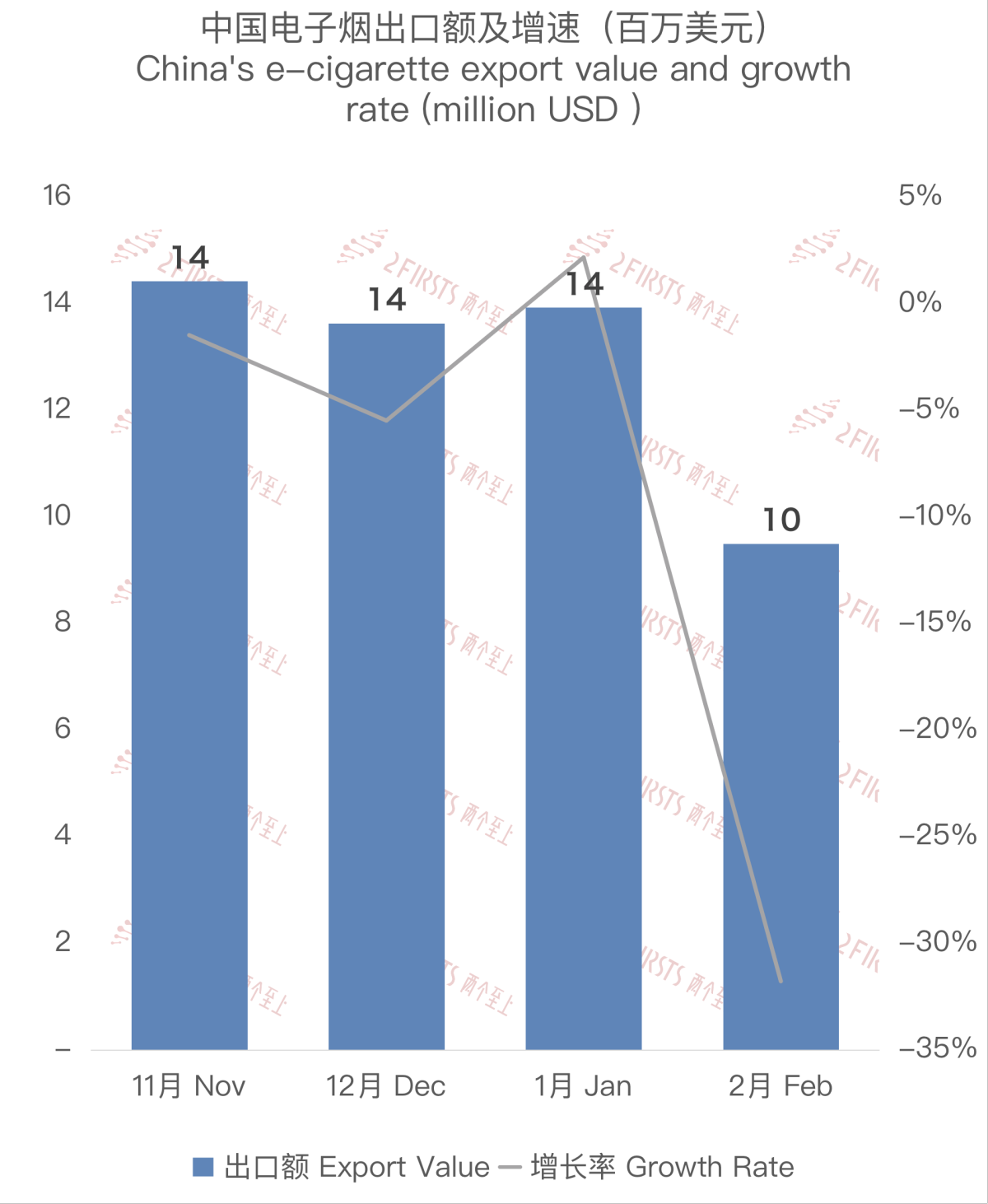
China's e-cigarette exports to France in February 2024 reached $9.5 million, showing a 31.78% monthly decrease but 39.81% yearly increase.

According to the latest data released by the General Administration of Customs of the People's Republic of China, the e-cigarette exports to France in February 2024 were as follows:
China's E-cigarette Exports to France: February 2024 Data Update
Image source: 2FIRSTS (Mincy mapping)


The export volume amounted to approximately $9.5 million, representing a month-on-month decrease of 31.78% and a year-on-year increase of 39.81%.
China's E-cigarette Exports to France: February 2024 Data Update
Image source: 2FIRSTS (Mincy Drawing)


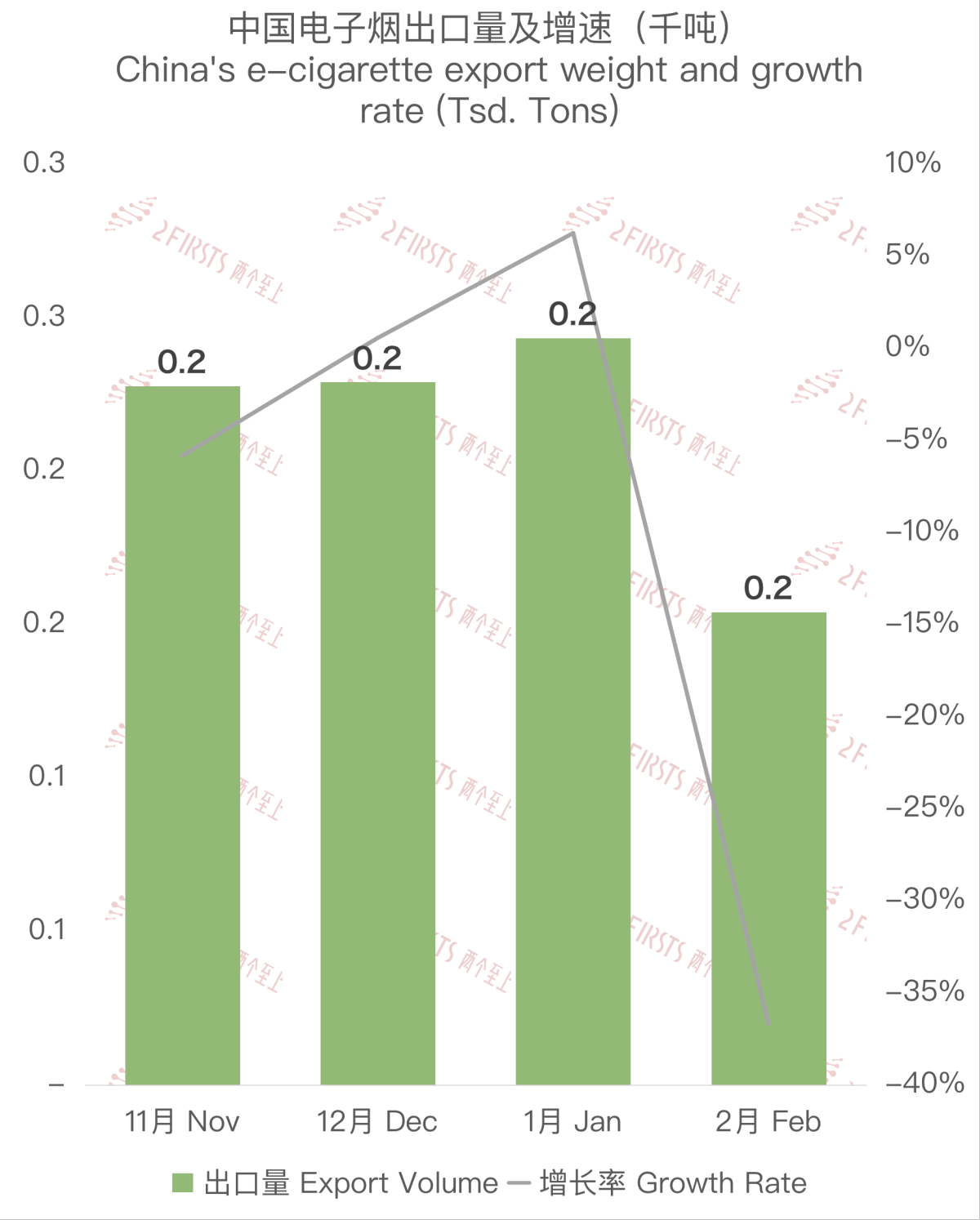
The export volume was approximately 154 tons, a decrease of 36.68% compared to the previous month, but an increase of 52.07% compared to the same period last year.
China's E-cigarette Exports to France: February 2024 Data Update
Image source: 2FIRSTS (Mincy drawing)


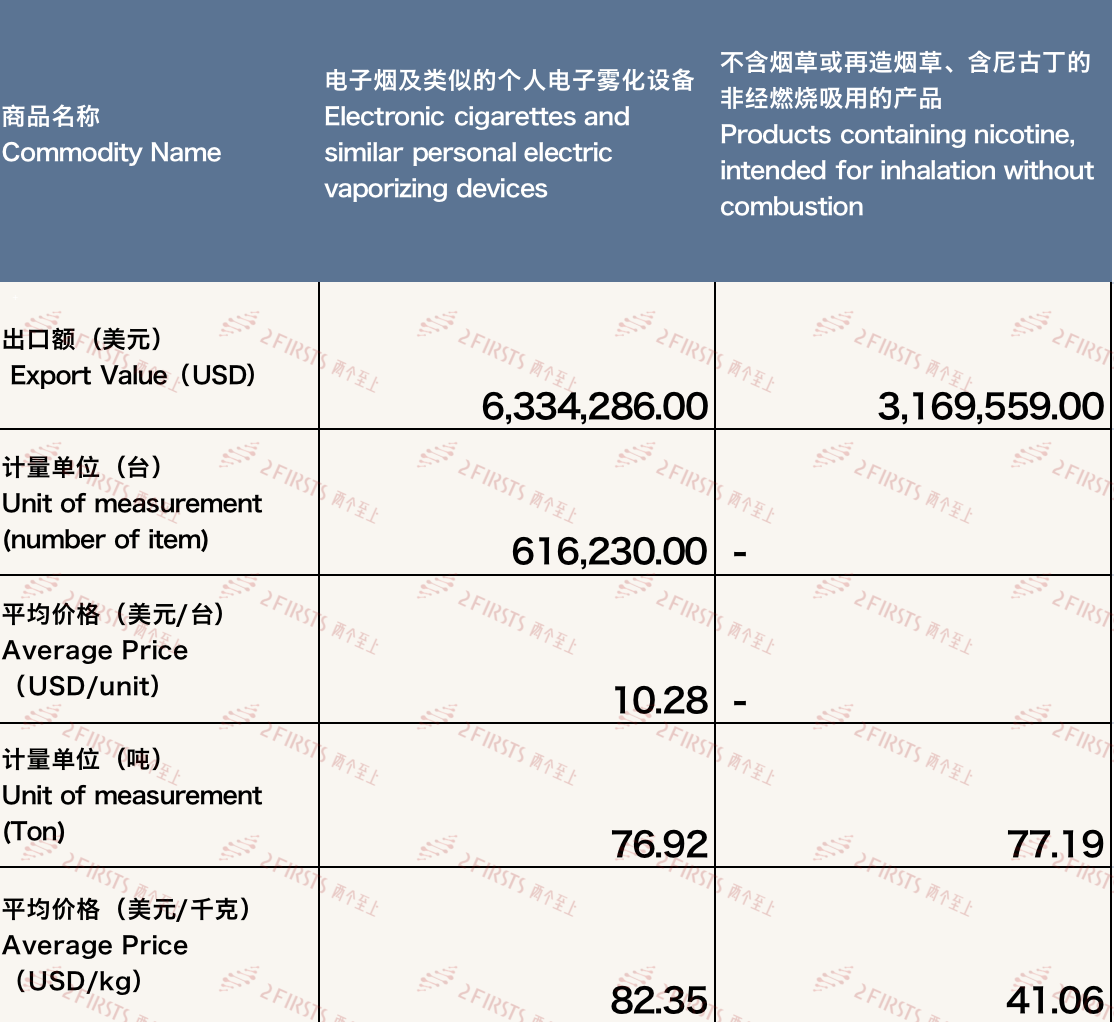
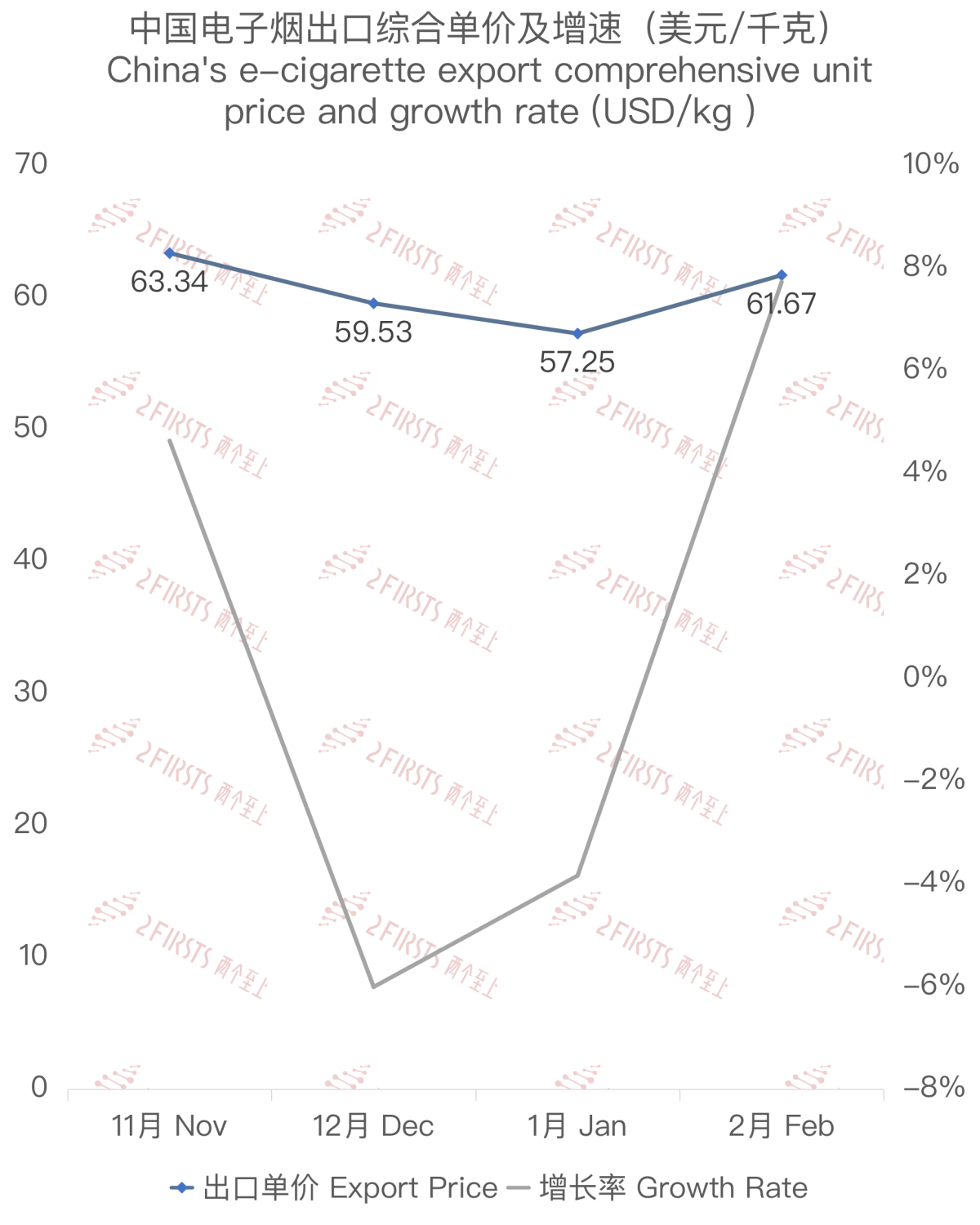
The export unit price is $61.67 per kilogram, representing a 7.73% increase month-on-month but an 8.06% decrease year-on-year. Additionally, the average price of "e-cigarettes and similar personal electronic vaporizers" is $10.28 per unit.
China's E-cigarette Exports to France: February 2024 Data Update
Image source: 2FIRSTS (Mincy Chart)


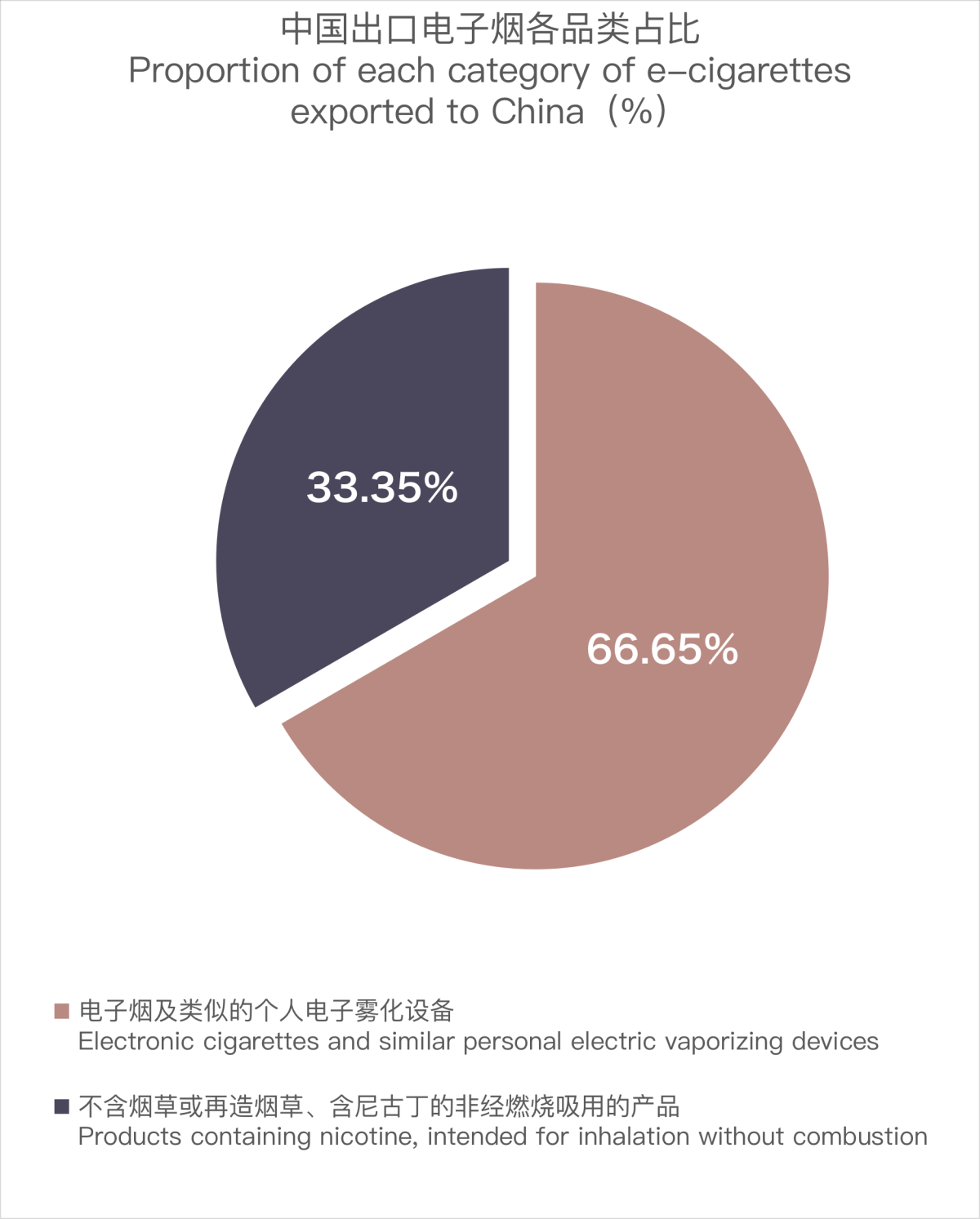
Among them, "e-cigarettes and similar personal electronic vapor devices" accounted for 66.65% of the export category, while "non-tobacco or reconstituted tobacco products containing nicotine for non-combustible use" accounted for 33.35%.
China's E-cigarette Exports to France: February 2024 Data Update
Image source: 2FIRSTS (drawn by Mincy)


We welcome news tips, article submissions, interview requests, or comments on this piece.

Please contact us at info@2firsts.com, or reach out to Alan Zhao, CEO of 2Firsts, on LinkedIn


Notice

1.  This article is intended solely for professional research purposes related to industry, technology, and policy. Any references to brands or products are made purely for objective description and do not constitute any form of endorsement, recommendation, or promotion by 2Firsts.

2.  The use of nicotine-containing products — including, but not limited to, cigarettes, e-cigarettes, nicotine pouchand heated tobacco products — carries significant health risks. Users are responsible for complying with all applicable laws and regulations in their respective jurisdictions.

3.  This article is not intended to serve as the basis for any investment decisions or financial advice. 2Firsts assumes no direct or indirect liability for any inaccuracies or errors in the content.

4.  Access to this article is strictly prohibited for individuals below the legal age in their jurisdiction.


Copyright


This article is either an original work created by 2Firsts or a reproduction from third-party sources with proper attribution. All copyrights and usage rights belong to 2Firsts or the original content provider. Unauthorized reproduction, distribution, or any other form of unauthorized use by any individual or organization is strictly prohibited. Violators will be held legally accountable.

For copyright-related inquiries, please contact: info@2firsts.com


AI Assistance Disclaimer


This article may have been enhanced using AI tools to improve translation and editorial efficiency. However, due to technical limitations, inaccuracies may occur. Readers are encouraged to refer to the cited sources for the most accurate information.

We welcome any corrections or feedback. Please contact us at: info@2firsts.com

South Korea Brings Synthetic-Nicotine E-Cigarettes Under Tobacco Rules From June 24, Targeting Online Sales and Evasion
South Korea began full enforcement of tobacco-style rules for synthetic-nicotine e-cigarettes on June 24, 2026, with fines of up to 100,000 won for use in non-smoking areas and enforcement focus on online sales, raw nicotine liquids and products falsely marketed as nicotine-free.
MarketNews
Jun.25 by 2Firsts Perspectives
FDA Tobacco Proposal Signals Full-Chain Compliance Test for Global E-Cigarette Supply Chains
FDA’s proposed foreign tobacco establishment registration and product listing rule remains unfinished, but Accorto told 2Firsts it reflects a shift toward structured oversight similar to medical device and pharmaceutical compliance frameworks. For Chinese and global e-cigarette suppliers, U.S. market access is moving beyond product authorization toward full-chain compliance covering manufacturing, documentation, import control, distribution, retail and marketing discipline.
Special Report
Jul.09
Special Report | China Opens Draft Mandatory Heated Cigarette Standard for Comment, Multiple Heating Technologies Remain in Scope
China’s State Tobacco Monopoly Administration (STMA) has released a draft mandatory national standard for heated cigarettes, setting out detailed requirements for tobacco sticks, heating devices and aerosols. The proposal treats the stick and device as parts of the same product system, focuses on minimum safety and quality requirements, and leaves several heating architectures within scope.
Special Report
Jul.29
Science | International Experts Propose a New Smoking Cessation Pathway, Citing Higher Quit Rates With E-Cigarettes Than Nicotine Replacement Therapy
A new expert paper in JAMA urges U.S. clinicians to include nicotine e-cigarettes in smoking-cessation discussions, citing higher quit rates than nicotine replacement therapy. It also stresses that products must deliver enough nicotine to replace cigarettes, dual use should be brief, and complete switching is the goal. 2Firsts argues the recommendations matter beyond clinics: public-health professionals should reassess relative risk, regulators should preserve sufficient product appeal for adult smokers, and manufacturers should focus on helping users quit cigarettes more sustainably.
SCIENCE
Aug.03 by 2Firsts Perspectives
Japan’s Heated Tobacco Tax Changes Reshape Consumer Choices, Survey Reveals Impact of Price and Income
A consumer survey by Japanese heated tobacco information platform RELAZO found that rising tobacco prices and planned heated tobacco tax changes may influence smoking decisions among Japanese consumers. The survey covered 49,879 men and women aged 20 to 69 nationwide. It found that around 40% of respondents cumulatively indicated they may consider quitting when a pack reaches ¥600 (approximately US$4.1), while nearly 90% expressed potential quitting intentions at a ¥1,000 (approximately US$6.8) price level. The survey also found significant differences by income level, with lower-income respondents showing greater sensitivity to price increases.
Jul.24
Indonesia’s BNN Pushes Total Vape Ban as Health Ministry Tightens Tobacco Packaging Rules, Putting $40 Billion Industry at Risk
Indonesia is entering a new phase of debate over vape and tobacco regulation. The National Narcotics Agency (BNN) has proposed a total vape ban, with some lawmakers supporting stronger restrictions. At the same time, the Health Ministry is advancing tobacco and nicotine regulations under Government Regulation No. 28/2024, including measures such as plain packaging and product controls. Tobacco and vape industries have warned that tighter rules could affect a sector worth around $40 billion, supporting about 6 million jobs and contributing significant tax revenue.
Jul.27