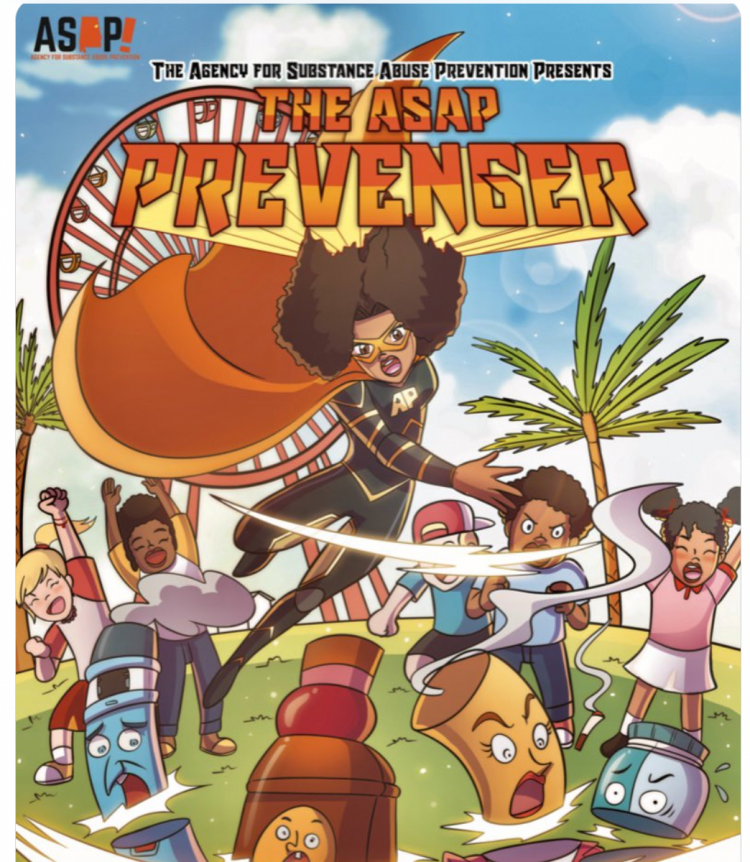
In the dramatic storyline of the comic book series "Preventers' Alliance," the female protagonist, known as "The Preventer," froze the character Icky Nicky with her icy breath.
Source: ASAP. "This will teach Icky Nicky to quit smoking," she told young elementary school readers who need to understand the dangers of cigarettes and other forms of tobacco.
In another captivating scene, the female lead used her laser-focused eyes to attack Li'l Boozie.
It's time to wake up," she warned.
Her comedic antics were even stricter than employees of the Oxford-based drug abuse prevention organization that serves the communities of Cowhorn and Cleburne counties. However, their shared goal is to prevent drug abuse, particularly through education on the dangers of drug use among students. The leaders of ASAP believe that comic books are a great way to reach children, and their research suggests they are correct. They conducted a study to measure the effectiveness of the books and found that children were able to repeat the lessons learned after reading them.
On Thursday, prevention expert Quiera Lane from a drug abuse prevention agency delivered comic books to Weaver Elementary School. The books were illustrated and written by former intern Destini Elston from ASAP, and told the story of how the ASAP Prevenger fights against two villains representing other types of abuse. The characters include Vaponator, who uses an e-cigarette device, and Split-Dose, an addict who abuses prescription drugs.
Ryan stated, "We believe that this is an important and creative way to educate students about drug abuse and its dangers." "This book includes interactive pages, allowing students and their guardians to read and learn together, which will encourage students to ask questions.
The books were initially delivered to fifth-grade students at Weaver School, who emerged as winners in the robotics competition organized by ASAP in Calhoun County.
They love these books," said Tawana Bonds, counselor at Weaver Elementary School, after distributing the books at a classroom party. "I heard them talking about the pictures.
More comic books will soon be delivered to other students.
ASAP also has programs for older students. A sixth-grade student at Weaver Elementary School won a $100 gift card from Big Time Entertainment in another competition.
The Oxford City Council has provided sufficient funds for all primary school students in its school system to receive a comic book, while Alabama Power Company has also provided funds for students in Calhoun County to obtain a book.
Ryan said that these comic books are very popular and that ASAP plans to create more stories in future versions.
This is a creative and innovative way for students to learn about the dangers of certain materials they may encounter in their community," said Ryan.
2FIRSTS will continue to provide ongoing coverage of this topic, with updates available on the '2FIRSTSAPP'. Scan the QR code below to download the app.
Disclaimer
This article is provided solely for professional research, industry discussion, and informational purposes. Any references to brands, companies, products, technologies, or policies are made for factual reporting and analytical purposes only, and do not constitute endorsement, recommendation, promotion, or advertising by 2Firsts.
Nicotine-containing products, including but not limited to cigarettes, e-cigarettes, heated tobacco products, and nicotine pouches, carry significant health risks. Readers are responsible for complying with all applicable laws and regulations in their respective jurisdictions, including age restrictions and access limitations.
The information contained in this article should not be regarded as investment, legal, medical, regulatory, or commercial advice. While 2Firsts strives to ensure the accuracy and reliability of its content, it does not assume liability for any direct or indirect loss arising from errors, omissions, inaccuracies, or reliance on the information contained herein.
This article is not intended for individuals below the legal age for accessing tobacco or nicotine-related information in their jurisdiction.
Copyright Notice
This article is either original content produced by 2Firsts or content reproduced, translated, summarized, or adapted from third-party sources with attribution where applicable. The intellectual property rights of the original content remain with 2Firsts or the respective original rights holders.
No individual or organization may copy, reproduce, distribute, republish, modify, translate, or otherwise use this content without prior authorization. Any unauthorized use may result in legal action.
For copyright-related inquiries, corrections, or removal requests, please contact: info@2firsts.com.
AI-Assisted Translation and Editing Notice
Portions of this article may have been translated, edited, or reviewed with the assistance of artificial intelligence tools to improve efficiency and readability. Due to the limitations of AI-assisted translation and editing, discrepancies, omissions, or inaccuracies may exist when compared with the original source.
Where applicable, readers are advised to refer to the original source for the most complete and accurate information. If you identify any errors or believe that any content infringes upon your rights, please contact us at info@2firsts.com, and we will review and address the matter promptly.