Austria to Tighten Sales Rules for Nicotine Pouches and E-Liquids From April 1

Mar.30
Austria to Tighten Sales Rules for Nicotine Pouches and E-Liquids From April 1
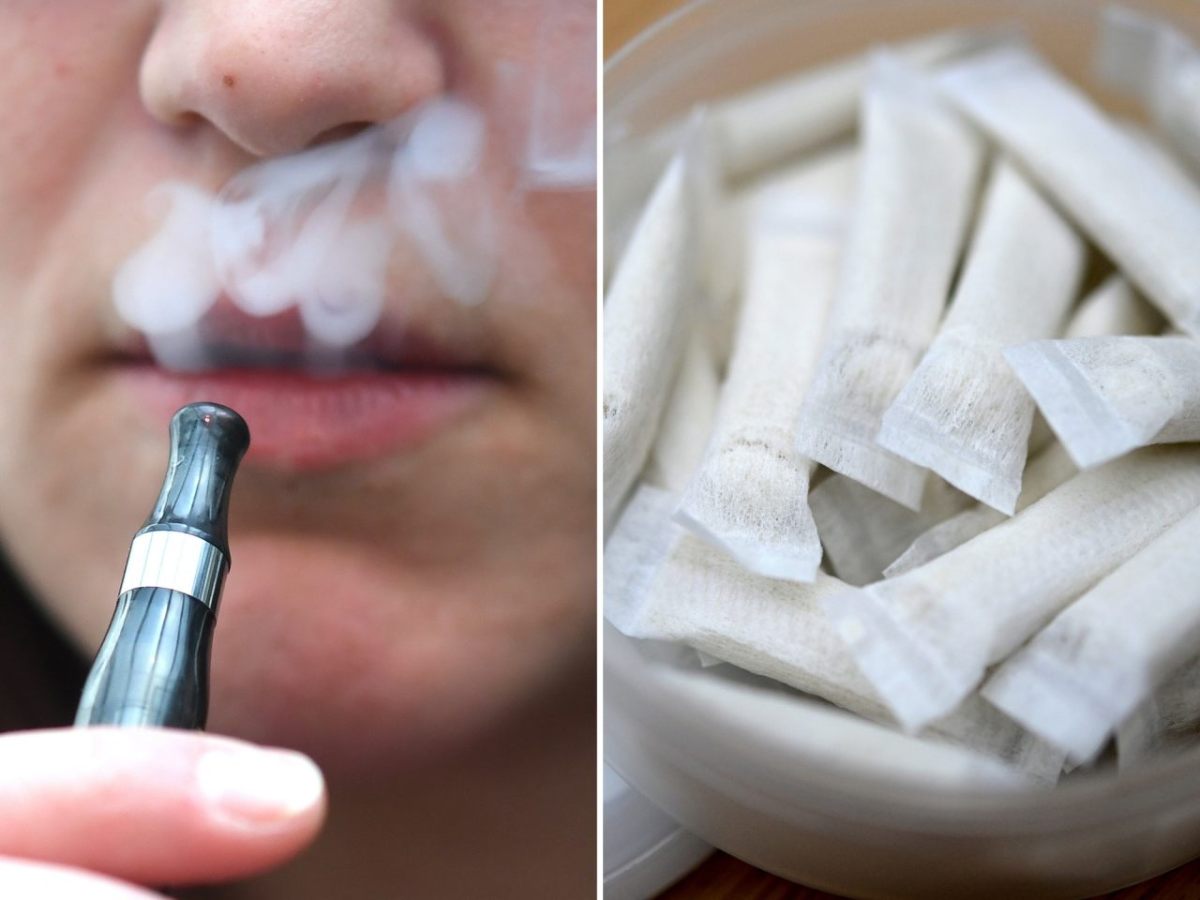
Austria will introduce new sales rules for nicotine products from April 1, 2026. Under a reform of the tobacco law passed in December 2025, nicotine pouches will in future be sold only through tobacco shops, while e-liquids will be sold only through tobacco shops and licensed specialist stores. Other points of sale will no longer be permitted to sell these products.

Key Takeaways


  • Austria’s new sales rules for nicotine products will take effect on April 1, 2026.
  • Nicotine pouches will in future be sold only through tobacco shops and brought under the tobacco monopoly.
  • E-liquids will be sold only through tobacco shops and licensed specialist stores.
  • From May 2026, nicotine products may no longer be sold without the required registration.
  • Existing nicotine product stocks may only be sold through December 31, 2026.


2Firsts, March 30, 2026


According to VOL.AT, Austria will introduce stricter rules for nicotine products from April 1, 2026, with tighter sales requirements for e-cigarettes and nicotine pouches.


Nicotine pouches will be limited to tobacco shops from April 1


The changes are based on a reform of Austria’s tobacco law that was passed in December 2025. The measures mainly affect nicotine pouches and e-liquids, which had previously been available at many retail outlets.


Under the new rules, nicotine pouches may in future be sold only through tobacco shops and will fall under the tobacco monopoly. E-liquids may be sold only through tobacco shops and licensed specialist stores, while other retail outlets will no longer receive authorization.


The reform also raises tobacco taxes and brings the products into the monopoly system


The reform includes several additional changes. Tobacco tax will increase from 2026, including for heated tobacco products and fine-cut tobacco. At the same time, nicotine pouches and e-liquids will be brought under the tobacco monopoly framework.


The law also provides that cannabis products will from 2029 be sold only through tobacco shops. Existing hemp and CBD shops will have a transition period through the end of 2028.


Austria links the new rules to rising youth use of newer nicotine products


One of the stated reasons for the reform is rising use of newer nicotine products. Data cited in the report say that 28% of 15-year-olds use e-cigarettes. Nicotine pouches can contain up to 20 milligrams of nicotine, while one cigarette contains less than 1 milligram.


Austria also set out a timeline for the changes: the new sales rules for nicotine pouches and e-liquids take effect on April 1, 2026; from May 2026, nicotine products may no longer be sold without proper registration, including in venues such as gastronomy outlets; December 31, 2026 is the deadline for selling existing nicotine product stocks; and December 31, 2028 is the end of the transition period for hemp and CBD shops, after which sales will only be allowed through tobacco shops.


Image source: VOL.AT.


We welcome news tips, article submissions, interview requests, or comments on this piece.

Please contact us at info@2firsts.com, or reach out to Alan Zhao, CEO of 2Firsts, on LinkedIn


Notice

1.  This article is intended solely for professional research purposes related to industry, technology, and policy. Any references to brands or products are made purely for objective description and do not constitute any form of endorsement, recommendation, or promotion by 2Firsts.

2.  The use of nicotine-containing products — including, but not limited to, cigarettes, e-cigarettes, nicotine pouchand heated tobacco products — carries significant health risks. Users are responsible for complying with all applicable laws and regulations in their respective jurisdictions.

3.  This article is not intended to serve as the basis for any investment decisions or financial advice. 2Firsts assumes no direct or indirect liability for any inaccuracies or errors in the content.

4.  Access to this article is strictly prohibited for individuals below the legal age in their jurisdiction.


Copyright


This article is either an original work created by 2Firsts or a reproduction from third-party sources with proper attribution. All copyrights and usage rights belong to 2Firsts or the original content provider. Unauthorized reproduction, distribution, or any other form of unauthorized use by any individual or organization is strictly prohibited. Violators will be held legally accountable.

For copyright-related inquiries, please contact: info@2firsts.com


AI Assistance Disclaimer


This article may have been enhanced using AI tools to improve translation and editorial efficiency. However, due to technical limitations, inaccuracies may occur. Readers are encouraged to refer to the cited sources for the most accurate information.

We welcome any corrections or feedback. Please contact us at: info@2firsts.com

RLX Technology Dropped From FTSE All-World as International Business Reaches 68.5% of Q2 Revenue
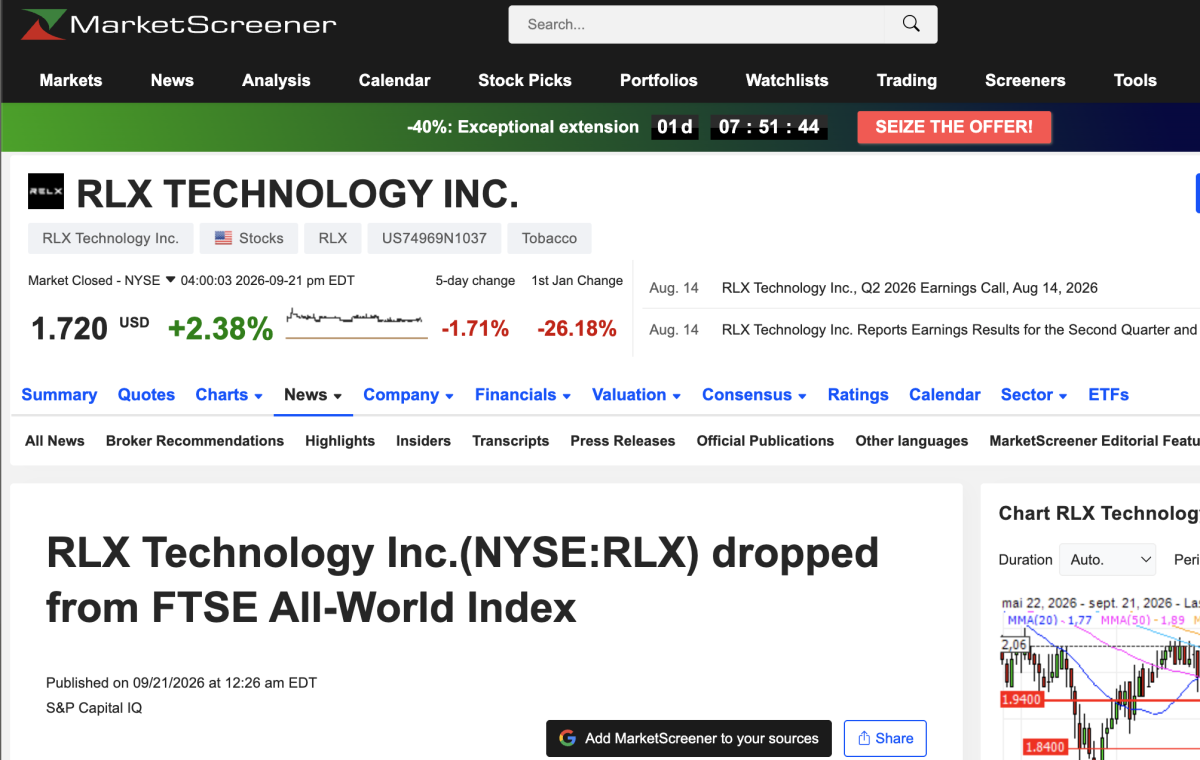
RLX Technology (NYSE: RLX) has been removed from the FTSE All-World Index, effective September 21. FTSE Russell records show RLX was already part of its global equity index universe by 2022, when its American depositary receipts were classified as China Large Cap securities. Trading volume rose to about 44.77 million shares on September 18, roughly 23 times the previous session's volume. RLX reported RMB1.0105 billion in second-quarter revenue, up 14.8% year over year, with international operations contributing 68.5%. The company also acquired a 51% stake in one of Western Europe's largest distributors of next-generation smoke-free and FMCG products in July.
Sep.22
Major U.S.  Vape Distributor Demand Vape Pays at Least $300,000 for White House Lobbying Amid Enforcement Pressure
Major U.S. Vape Distributor Demand Vape Pays at Least $300,000 for White House Lobbying Amid Enforcement Pressure
New York vape distributor Ecto World, which operates as Demand Vape, hired political consultant Roger Stone to lobby the Executive Office of the President on regulation of vaping and related products while facing state enforcement and multiple lawsuits. Public lobbying disclosures show that Ecto World paid at least $300,000 for the work through June 30, 2026. Separately, New York State announced in March that more than 28,500 pounds of vaping products tied to the company had been seized, while New York City and the state have pursued legal or enforcement actions. Public records do not show that the lobbying directly changed any specific regulatory or enforcement outcome.
Sep.08
Product | PMI Launches TEREA Black Mint Pearl in Japan, Adding First Capsule Variant to Black Range With Nationwide Rollout From October 19
Philip Morris Japan (PMJ) launched TEREA Black Mint Pearl on October 15, 2026, introducing the first capsule-equipped heated tobacco stick in the TEREA Black range for IQOS ILUMA devices. The product combines a strong menthol profile with a crushable mint capsule and is priced at ¥640 per 20-stick pack, including tax. Sales began at four IQOS stores and selected retail partners on October 15, with distribution expanding to convenience stores and other tobacco retailers nationwide from October 19. The launch brings Japan's TEREA portfolio to 28 variants, including 21 menthol-related products, or 75% of the range.
product
Oct.16 by 2Firsts Perspectives
NAS 2026 | FDA CTP Director Says PMTA Pathway Is “Predicated on Tobacco Harm Reduction”
At the 2026 New Approaches Summit in New York, FDA Center for Tobacco Products Director Bret Koplow said the PMTA pathway is “predicated on tobacco harm reduction.” He outlined four CTP priorities: youth prevention, helping adults quit or switch to lower-risk products, improving relative-risk communication, and reducing unauthorized products. Koplow also addressed flavored e-cigarettes, public risk perceptions, industry credibility and efforts to make PMTA reviews more efficient and predictable.
Sep.26
Inside Nicotine-Pouch M&A Through Imperial's Yoik Deal: Latham, KPMG, PwC, Goldman Sachs and Morgan Stanley Form the Adviser Lineup
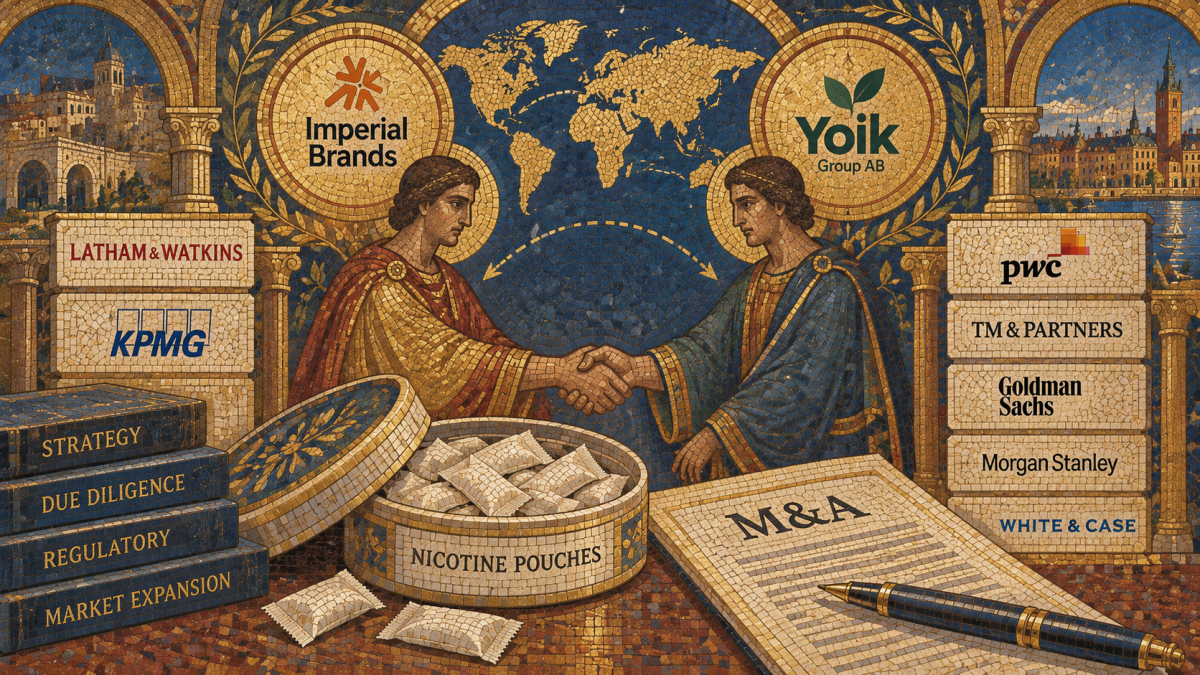
Imperial Brands' acquisition of Swedish Helwit owner Yoik Group AB has highlighted the professional-services firms supporting cross-border oral nicotine M&A. Latham & Watkins and KPMG advised Imperial, while PwC and TM & Partners advised Yoik. KPMG also appeared on Imperial's acquisition of Black Buffalo earlier in 2026, while PwC played an extensive role in KT&G's acquisition of Swedish nicotine-pouch company Another Snus Factory. Imperial's public disclosures put the global modern oral nicotine delivery market at approximately £8.8 billion in retail sales and 23.5 billion pouches in 2024
Sep.20
Smoke-Free Business Hits 42% of Q2 Net Revenue as PMI’s First TNFD Report Covers Single-Use Electronics, Critical Raw Materials and IQOS Repairs
Philip Morris International has published its first report aligned with the Taskforce on Nature-related Financial Disclosures, bringing its electronics supply chain and the use and end-of-life stages of smoke-free devices and consumables into its nature-related assessment. PMI said its smoke-free business accounted for about 42% of total net revenues in the second quarter of 2026. The report says non-circular electronic products, particularly single-use items, can increase consumption of limited natural resources and also details an IQOS repair pilot. A 2040 circularity scenario tests assumptions including a 50% reduction in product waste-related costs, 10% raw-material savings and a 25% substitution rate for refurbished products versus new products.
Sep.23