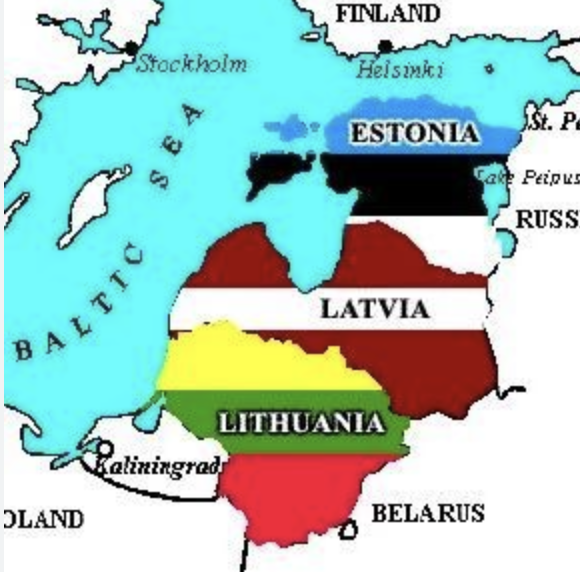
Baltic Health Ministers Meet to Limit Youth Nicotine Consumption

Nov.17.2022
Baltic Health Ministers Meet to Limit Youth Nicotine Consumption
Baltic health leaders meet to discuss drug policies and restrict access to e-cigarettes and nicotine among youth.

Health ministers and healthcare leaders from Estonia, Latvia, and Lithuania convened for a two-day meeting in Lithuania on Monday and Tuesday. In addition to drug policy, a key issue discussed was the restriction of electronic cigarettes and nicotine pouches among young people, as well as limiting their access to these products.


Health and Labor Minister Pippi Peterson (SDE) gave a speech this week at the Baltic Health Ministers Conference, held in Lithuania. Image source: Ministry of Social Affairs, November 15, 2022.


On November 16th, in a statement to ERR News, Minister of Health and Labour Peep Peterson (SDE) expressed the desire to reduce nicotine consumption, particularly among young people. Peterson noted that addictive products like nicotine may be difficult to regulate at the national level and suggested that cooperation with neighboring countries may lead to better results. This statement comes in light of concerns surrounding the harmful effects of nicotine on health and the appeal of nicotine products to younger generations.


The Estonian Minister acknowledges that the spread of e-cigarettes and nicotine pouches is a concern shared by the Baltic states. He further stated that Estonia, Latvia, and Lithuania must strengthen their active cooperation on this issue in order to truly implement existing regulations and support them through other measures.


In December 2017, three Baltic countries signed a memorandum of cooperation (MoC) agreeing to develop joint policies on alcohol, tobacco, and promoting good nutrition. Among other items, the memorandum includes provisions that the defense department will treat all tobacco and nicotine products equally, and regulate and strengthen oversight of new products including e-cigarettes and their liquid.


Estonia and Lithuania have banned flavored e-cigarettes that may be appealing to children, while Latvia's Saeima is currently processing similar legislation, which has already passed its second reading.


Statement:


The content of this article has been compiled from third-party information, solely for the purpose of industry exchange and learning.


This article does not represent the views of 2FIRSTS, and 2FIRSTS cannot confirm the truthfulness or accuracy of its content. This translation of the article is only intended for industry exchange and research purposes.


Due to limitations in translation skills, the translated article may not accurately reflect the original text. Please refer to the original text for accuracy.


For any domestic, Hong Kong, Macau, Taiwan, or international references and positions, 2FIRSTS maintains complete alignment with the Chinese government.


The copyright of the compiled information belongs to the original media and author. If there is any infringement, please contact us to request removal.


Disclaimer

This article is provided solely for professional research, industry discussion, and informational purposes. Any references to brands, companies, products, technologies, or policies are made for factual reporting and analytical purposes only, and do not constitute endorsement, recommendation, promotion, or advertising by 2Firsts.

Nicotine-containing products, including but not limited to cigarettes, e-cigarettes, heated tobacco products, and nicotine pouches, carry significant health risks. Readers are responsible for complying with all applicable laws and regulations in their respective jurisdictions, including age restrictions and access limitations.

The information contained in this article should not be regarded as investment, legal, medical, regulatory, or commercial advice. While 2Firsts strives to ensure the accuracy and reliability of its content, it does not assume liability for any direct or indirect loss arising from errors, omissions, inaccuracies, or reliance on the information contained herein.

This article is not intended for individuals below the legal age for accessing tobacco or nicotine-related information in their jurisdiction.


Copyright Notice

This article is either original content produced by 2Firsts or content reproduced, translated, summarized, or adapted from third-party sources with attribution where applicable. The intellectual property rights of the original content remain with 2Firsts or the respective original rights holders.

No individual or organization may copy, reproduce, distribute, republish, modify, translate, or otherwise use this content without prior authorization. Any unauthorized use may result in legal action.

For copyright-related inquiries, corrections, or removal requests, please contact: info@2firsts.com.


AI-Assisted Translation and Editing Notice

Portions of this article may have been translated, edited, or reviewed with the assistance of artificial intelligence tools to improve efficiency and readability. Due to the limitations of AI-assisted translation and editing, discrepancies, omissions, or inaccuracies may exist when compared with the original source.

Where applicable, readers are advised to refer to the original source for the most complete and accurate information. If you identify any errors or believe that any content infringes upon your rights, please contact us at info@2firsts.com, and we will review and address the matter promptly.

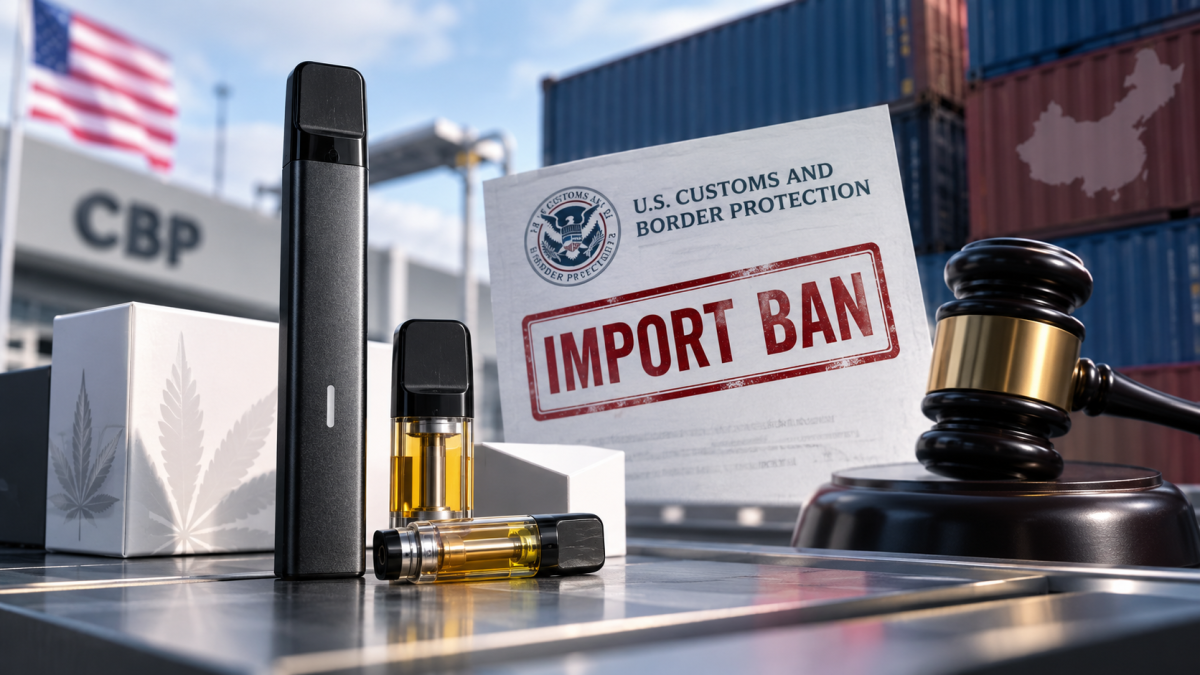
STIIIZY Redesign Fails to Escape PAX Labs Patent Import Ban as Section 337 Case Also Involves China ALD
U.S. Customs and Border Protection ruled that STIIIZY had not shown that the redesigned cannabis-vape products covered by its latest request fall outside an ITC limited exclusion order tied to PAX Labs patents. CBP accepted some of STIIIZY’s claim-construction and non-infringement arguments, but the company did not address two additional claims in the same patent. Earlier STIIIZY redesigned cartridges and certain associated components imported with them had received separate CBP clearance.
Sep.16
EU Trade Department Faces Scrutiny Over Contacts With Tobacco Industry
European Ombudswoman Teresa Anjinho has opened an inquiry into how the European Commission’s Directorate-General for Trade handles interactions with the tobacco industry. The case follows a complaint from a civil society organisation that alleges regular, unnecessary and non-transparent contacts between DG TRADE and tobacco industry representatives, raising questions over compliance with the EU’s obligations under the WHO Framework Convention on Tobacco Control. The inquiry remains ongoing, and the Ombudswoman has not reached any finding of maladministration.
Aug.24
Smoore Seeks to Toss CCELL Price-Fixing Claim as Court Weighs Vertical Distribution Versus Horizontal Conspiracy
Smoore and four authorized U.S. CCELL distributors are asking a California federal court to permanently dismiss a core antitrust claim brought by direct purchasers. Plaintiffs allege that Smoore coordinated minimum wholesale prices, customer allocation and limits on price competition among distributors, amounting to a per se unlawful horizontal conspiracy. The defendants say the alleged conduct reflects ordinary vertical relationships between a manufacturer and its distributors. The court previously dismissed a similar claim, and the latest dispute centers on whether the second amended complaint adds sufficient facts to establish a horizontal agreement.
Sep.14
Malaysia Liquid Nicotine Returns to Poisons List, Leaving Vape Retail and RM354 Million Tax Collection in Legal Uncertainty
Malaysia’s withdrawal of its appeal in a landmark liquid-nicotine case has left a High Court ruling that struck down the 2023 nicotine exemption in force, bringing liquid and gel nicotine used in vaping products back under the Poisons Act 1952. At the same time, the Control of Smoking Products for Public Health Act 2024 continues to provide a regulatory framework for vaping products, creating uncertainty over retail sales, taxation and existing inventory. MPs are calling for nicotine vape sales and excise collection to stop, including refunds of more than RM354 million collected since 2023, while industry and consumer groups are asking the government to clarify the current legal position.
Sep.04
China Tobacco Supply-Chain Leader Huabao’s Three-Way Transformation Takes Hold as Overseas Revenue Jumps 216%, Non-Flavor Businesses Reach 42.2% and the Company Expands Into Global Next-Generation Tobacco Supply Chains
Huabao’s H1 2026 results show the company advancing across three connected fronts: international expansion, entry into next-generation tobacco supply chains and diversification beyond its traditional tobacco-related base. Overseas revenue rose 216.08% to CNY 96.02 million, while non-flavor businesses reached 42.2% of total revenue. Huabao also said it had entered the supply chains of leading global tobacco customers, as its nutrition, food ingredient, fragrance and personal-care businesses gained ground in Europe, Southeast Asia, Australia and New Zealand. However, adjusted net profit increased only 2.78%, and next-generation tobacco revenue was not separately disclosed, showing that the transformation is reshaping revenue and customer exposure but has yet to translate fully into underlying earnings.
Aug.28
Special Report|AIR H1 Revenue Rises 3.7% as Shisha Volumes Fall 9%, Testing Its Shift Beyond Traditional Hookah
AIR’s first half-year results as a listed company offer a new test of how far a traditional hookah business can transform. H1 2026 revenue rose 3.7%, even as Flavored Shisha Molasses shipments fell 9%, with pricing and mix supporting growth. Traditional shisha still generates almost all revenue, while OOKA, Crown Switch, Greentank and U.S. regulatory spending point to accelerating diversification. The next test is whether those investments can become a second business of meaningful scale and profitability.
Capital Markets
Aug.21