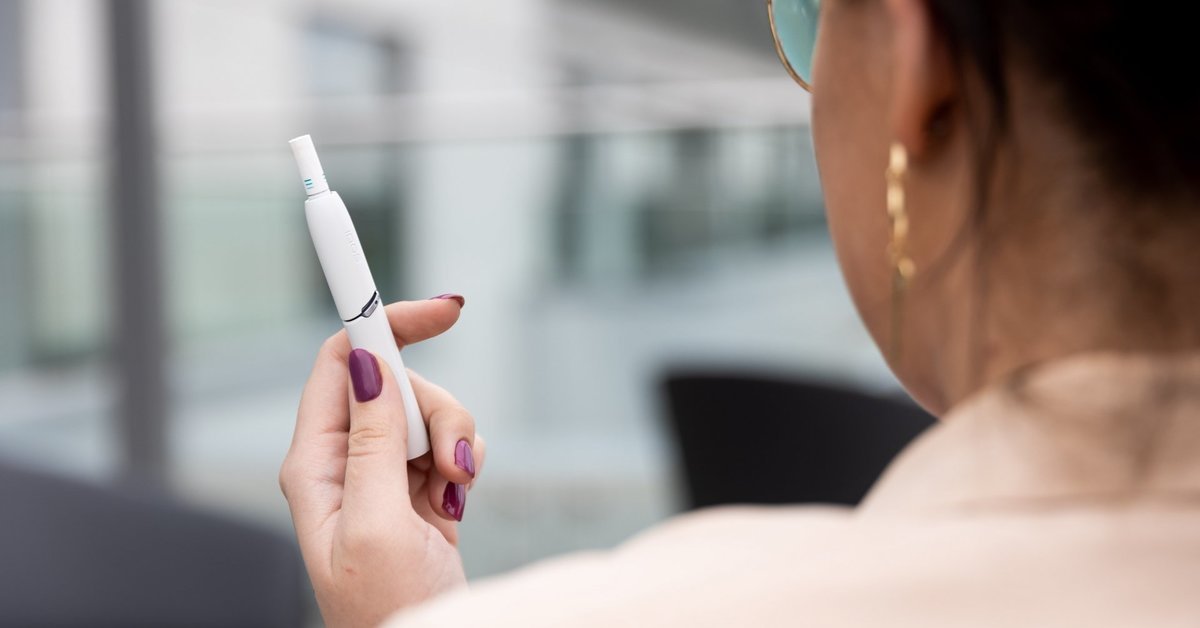
According to Lithuania's news website 15min, the ban on flavored heated tobacco products came into effect on October 23. This means that only tobacco products with a tobacco flavor are legally allowed to be sold.
Gražina Belian, interim head of Lithuania's Department of Drug, Tobacco, and Alcohol Control, has revealed that there have been recent attempts to sell leftover cigarettes.
We have witnessed a shift as the variety of tobacco products is dwindling, and they are expected to be sold out soon.
She pointed out that flavored tobacco products will no longer be available as the ban on heated tobacco is a decision at the European Union level. She also mentioned that regulations on how to enforce inspection procedures have already been established to determine if such products still exist in the market.
Currently, flavored products account for half of the overall category of heated tobacco products. A significant 42% of heated tobacco consumers opt for these flavored products.
According to data from the retail website "Maxima," heated tobacco products account for one-third of its total tobacco product category and their sales have been increasing every year. Compared to 2020, the sales volume of combustible tobacco increased by one-fifth last year, possibly influenced by the ban on flavored cigarettes, such as mint, that came into effect in 2020. This year, the demand for combustible tobacco is growing slightly higher than 5%.
According to Bailey, heating tobacco products is particularly appealing to individuals below the age of 24. She firmly states that the purpose of the ban is to safeguard adolescents and children.
Currently, Philip Morris International (PMI) Baltic and Japan Tobacco International offer heated tobacco products in Lithuania. In Lithuania, heated tobacco products account for almost one-third of all tobacco sales, with 38% of sales occurring in the capital city of Vilnius, making it the city with the highest consumption of such products globally.
We welcome news tips, article submissions, interview requests, or comments on this piece.
Please contact us at info@2firsts.com, or reach out to Alan Zhao, CEO of 2Firsts, on LinkedIn
Notice
1. This article is intended solely for professional research purposes related to industry, technology, and policy. Any references to brands or products are made purely for objective description and do not constitute any form of endorsement, recommendation, or promotion by 2Firsts.
2. The use of nicotine-containing products — including, but not limited to, cigarettes, e-cigarettes, nicotine pouchand heated tobacco products — carries significant health risks. Users are responsible for complying with all applicable laws and regulations in their respective jurisdictions.
3. This article is not intended to serve as the basis for any investment decisions or financial advice. 2Firsts assumes no direct or indirect liability for any inaccuracies or errors in the content.
4. Access to this article is strictly prohibited for individuals below the legal age in their jurisdiction.
Copyright
This article is either an original work created by 2Firsts or a reproduction from third-party sources with proper attribution. All copyrights and usage rights belong to 2Firsts or the original content provider. Unauthorized reproduction, distribution, or any other form of unauthorized use by any individual or organization is strictly prohibited. Violators will be held legally accountable.
For copyright-related inquiries, please contact: info@2firsts.com
AI Assistance Disclaimer
This article may have been enhanced using AI tools to improve translation and editorial efficiency. However, due to technical limitations, inaccuracies may occur. Readers are encouraged to refer to the cited sources for the most accurate information.
We welcome any corrections or feedback. Please contact us at: info@2firsts.com