BAT's Nicotine Pouch VELO Sees Rapid Growth in US

Mar.17.2025
BAT's Nicotine Pouch VELO Sees Rapid Growth in US
British American Tobacco's nicotine pouch VELO's US market share rises by 185%, reaching 7.9%, surpassing competitors like ZYN.

Key points:


1. The nicotine pouch VELO, under the BAT (British American Tobacco) brand, saw a 185% year-on-year increase in sales in the US market, with a market share of 7.9%.


2. Velo Plus was launched only 12 weeks ago, capturing a market share of 5.4%.


3. ZYN's market share has dropped to 55%, while Philip Morris International (PMI) claimed that its actual share was higher and growing faster than the overall market.


2Firsts, reporting from Shenzhen - NielsenIQ report shows British American Tobacco's Velo nicotine pouch sales in the U.S. surged 185% year-on-year for the four-week period ending February 22, 2025, with market share reaching 7.9%, Tobaccoinsider reported.


The report also indicated that VELO's implied market share for the latest week was approximately 10%, in line with BAT's previous statement.


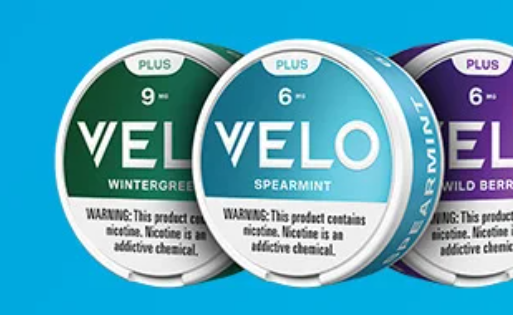
VELO's growth was mainly attributed to the consumer acceptance of VELO Plus and retail expansion. Just 12 weeks after its launch, the product has captured a 5.4% market share nationwide. 


Compared to the traditional "dry" ZYN and regular VELO, VELO Plus came in a larger, softer, and more moist pouch format.


According to Nielsen IQ data, ZYN continued to lose its edge, with year-over-year growth of only 13.2%, and its category share dropping to close to 55%. 


However, PMI claimed that ZYN’s category volume was 10% higher than reported by NielsenIQ (approximately 65% according to Circana data), and emphasized that ZYN was growing faster than the overall nicotine pouch market in the U.S.


We welcome news tips, article submissions, interview requests, or comments on this piece.

Please contact us at info@2firsts.com, or reach out to Alan Zhao, CEO of 2Firsts, on LinkedIn


Notice

1.  This article is intended solely for professional research purposes related to industry, technology, and policy. Any references to brands or products are made purely for objective description and do not constitute any form of endorsement, recommendation, or promotion by 2Firsts.

2.  The use of nicotine-containing products — including, but not limited to, cigarettes, e-cigarettes, nicotine pouchand heated tobacco products — carries significant health risks. Users are responsible for complying with all applicable laws and regulations in their respective jurisdictions.

3.  This article is not intended to serve as the basis for any investment decisions or financial advice. 2Firsts assumes no direct or indirect liability for any inaccuracies or errors in the content.

4.  Access to this article is strictly prohibited for individuals below the legal age in their jurisdiction.


Copyright


This article is either an original work created by 2Firsts or a reproduction from third-party sources with proper attribution. All copyrights and usage rights belong to 2Firsts or the original content provider. Unauthorized reproduction, distribution, or any other form of unauthorized use by any individual or organization is strictly prohibited. Violators will be held legally accountable.

For copyright-related inquiries, please contact: info@2firsts.com


AI Assistance Disclaimer


This article may have been enhanced using AI tools to improve translation and editorial efficiency. However, due to technical limitations, inaccuracies may occur. Readers are encouraged to refer to the cited sources for the most accurate information.

We welcome any corrections or feedback. Please contact us at: info@2firsts.com

Canada’s Federal Vape Flavor Restrictions Remain Unclear Five Years After Announcement
Five years after Canada’s federal government announced plans to restrict vaping flavors nationwide, Health Minister Marjorie Michel has not said when or whether the measure will still proceed. In 2021, Health Canada said it planned to limit vaping flavors nationwide to mint, menthol and tobacco, citing evidence that fruity and sweet flavors appeal to youth.
May.11 by 2FIRSTS.ai
Kentucky Governor Signs Tobacco, Nicotine, and Vapor Product Licensing Bill Into Law
A Kentucky bill relating to tobacco, nicotine, and vapor product licensing was signed by the governor on April 10, 2026, and enacted as Acts Chapter 70. The measure sets application requirements for tobacco, nicotine, and vapor product licenses, governs batch licensing, renewals, ownership changes, and denial grounds, and requires the Department of Alcoholic Beverage Control to publish application forms and related regulations within 30 days of the law’s effective date.
Apr.14 by 2FIRSTS.ai
Imperial Tobacco Canada Responds to Anti-Smoking Groups on Youth Vaping
Imperial Tobacco Canada responded to the April 17 press conference by anti-smoking groups by calling for a more focused, fact-based discussion on youth vaping that targets the illicit market. The company said youth should not be using nicotine products and that it supports strong measures to prevent youth access, but argued that the discussion failed to clearly distinguish between the regulated market and the illicit market that is driving youth access.
Apr.22 by 2FIRSTS.ai
FDA Opens Public Comment Period on Draft Guidance for Flavored E-Cigarette Applications
The U.S. Food and Drug Administration’s Center for Tobacco Products announced an open public comment period for a draft guidance titled Flavored Electronic Nicotine Delivery Systems (ENDS) Premarket Applications – Considerations Related to Youth Risk.
Apr.09 by 2FIRSTS.ai
FDA Tobacco Center Pushes Review-Efficiency Statement After Commissioner’s Exit
FDA CTP issued a May 7 statement on accelerating product review and improving PMTA efficiency, but did not push it via official X and newsletter until May 13, one day after FDA Commissioner Marty Makary’s resignation was confirmed. FDA has not explained the delay, and no public evidence links it directly to the leadership change. The timing is notable given CTP’s usual 24-hour distribution practice.
Special Report
May.14
Reuters: Big Tobacco Emerges as Winner After FDA Regulatory Shift
According to Reuters, major tobacco companies may emerge as key beneficiaries after the U.S. FDA loosened regulations on vaping and nicotine pouch products, a shift that has sparked debate over public health risks.
Industry Insight
May.26