Brazilian Man Sentenced for Illegal E-Cigarette Sales; Products Largely Sourced from China and Paraguay

Jul.22.2025
Brazilian Man Sentenced for Illegal E-Cigarette Sales; Products Largely Sourced from China and Paraguay
A Brazilian man has been sentenced to four years in prison for e-cigarette smuggling and illegal possession of ammunition. The case highlights the use of social media to sell e-cigarettes unlawfully and underscores authorities’ resolve to crack down on the black market.

Key  Points:


·Brazilian Federal Court sentenced a man for smuggling e-cigarettes and possessing ammunition illegally.


·The verdict includes a 4-year prison sentence, 1-year detention, and a fine.


·The case involves the illegal sale of e-cigarette devices from China and Paraguay.


·This ruling underscores the Brazilian government's determination to crack down on the black market for e-cigarettes.


【2Firsts News Flash】According to Reporterpb's report on July 21, the Federal Prosecution Service of Brazil (MPF) successfully convicted a man for smuggling and illegally possessing ammunition. The judgement was made by the Fourth Federal Court of Paraiba state, sentencing the man to 4 years of imprisonment, 1 year of detention, and a fine. The sentence will begin with semi-open imprisonment.


The focus of the ruling in this case was on the defendant's illegal sale of imported e-cigarettes. The Brazilian National Health Surveillance Agency (Anvisa) prohibits the sale, distribution, storage, transportation, and promotion of these products due to a lack of scientific validation of their safety. Investigations revealed that the defendant engaged in illegal e-cigarette trade through two main channels.


The first confiscation occurred in May 2024, when the Health Department lawfully seized 52 e-cigarettes and accessories at the defendant's father's bar in Campana Grande. A report alleged that the defendant was promoting and selling these products through an Instagram account, and that the contact number provided was linked to the defendant. During questioning, he admitted to conducting sales through social media and phone calls, but denied engaging in direct transactions at the bar.


The second raid occurred in September 2024, when federal police executed a search warrant at the defendant's residence and found 496 e-cigarettes, mostly originating from China and Paraguay. Additionally, a .22 caliber ammunition was discovered at the defendant's residence, which was identified as belonging to a category of allowed ammunition, but the defendant failed to provide a legal permit for possession.


Based on the potential risks of e-cigarette smuggling and ammunition, the court has decided not to apply the principle of leniency for minor offenses. In response, the federal prosecutor's office pointed out that this decision demonstrates the commitment of institutions and the federal justice system to combat the illegal e-cigarette market, which is considered a public health and safety threat. This decision also strengthens efforts to crackdown on criminal activities conducted through digital platforms.


We welcome news tips, article submissions, interview requests, or comments on this piece.

Please contact us at info@2firsts.com, or reach out to Alan Zhao, CEO of 2Firsts, on LinkedIn


Notice

1.  This article is intended solely for professional research purposes related to industry, technology, and policy. Any references to brands or products are made purely for objective description and do not constitute any form of endorsement, recommendation, or promotion by 2Firsts.

2.  The use of nicotine-containing products — including, but not limited to, cigarettes, e-cigarettes, nicotine pouchand heated tobacco products — carries significant health risks. Users are responsible for complying with all applicable laws and regulations in their respective jurisdictions.

3.  This article is not intended to serve as the basis for any investment decisions or financial advice. 2Firsts assumes no direct or indirect liability for any inaccuracies or errors in the content.

4.  Access to this article is strictly prohibited for individuals below the legal age in their jurisdiction.


Copyright


This article is either an original work created by 2Firsts or a reproduction from third-party sources with proper attribution. All copyrights and usage rights belong to 2Firsts or the original content provider. Unauthorized reproduction, distribution, or any other form of unauthorized use by any individual or organization is strictly prohibited. Violators will be held legally accountable.

For copyright-related inquiries, please contact: info@2firsts.com


AI Assistance Disclaimer


This article may have been enhanced using AI tools to improve translation and editorial efficiency. However, due to technical limitations, inaccuracies may occur. Readers are encouraged to refer to the cited sources for the most accurate information.

We welcome any corrections or feedback. Please contact us at: info@2firsts.com

FDA Unifies Tobacco Registration and Product Listing Form Across Product Categories
The U.S. FDA has consolidated two tobacco establishment registration and product listing forms into a redesigned Form FDA 3741 covering all regulated product categories, including e-cigarettes, heated tobacco products and nicotine pouches. The current requirements remain limited to domestic establishments. Separately, the FDA has proposed extending registration and product listing requirements to foreign manufacturers, signaling greater regulatory attention to manufacturing entities and product-level information across the tobacco and nicotine supply chain.
FDA
Sep.30
Hungary Moves to End BAT-Backed Tobacco Supply Monopoly Eight Years Early After $200 Million in Profits, With No Compensation Planned
Hungary's government announced on November 18, 2026, plans to terminate the exclusive tobacco retail supply concession held by Országos Dohányboltellátó (ODBE) on June 1, 2027, approximately eight years before the contract's scheduled expiry in 2035. ODBE is owned 49% by a Hungarian subsidiary of British American Tobacco (BAT) and 51% by Tabán Trafik. It has served as the exclusive supplier to Hungary's licensed tobacco retail network since 2015. The proposed legislation would end the concession without compensation and allow other qualified suppliers and tobacco wholesalers to serve retailers directly. ODBE generated HUF 67.3 billion (approximately $200 million) in after-tax profit between 2015 and 2025 and distributed nearly HUF 64 billion ($191 million) in dividends. The bill also proposes changes to retail margins, inventory rules, payment arrangements and procurement penalties, including those affecting heated tobacco products.
company
Nov.19 by 2Firsts Perspectives
Product | JT Launches Three Autumn-Limited Ploom Tobacco Sticks in Japan Across EVO, MEVIUS and CAMEL Brands
Japan Tobacco Inc. (JT) launched three limited-edition autumn tobacco sticks for its Ploom heated tobacco devices in Japan on October 16, 2026, under the EVO, MEVIUS and CAMEL brands. All three are regular tobacco variants with seasonal packaging. Each pack contains 20 sticks, priced at ¥620, ¥590 and ¥570, respectively, including tax. The products are compatible with all Ploom devices and are sold in limited quantities exclusively through the CLUB JT online store while supplies last.
product
Oct.20
Japan's Heated Tobacco Use Rises From 0.1% to 14.9% Over a Decade as Growth Extends Beyond Cigarette Switching
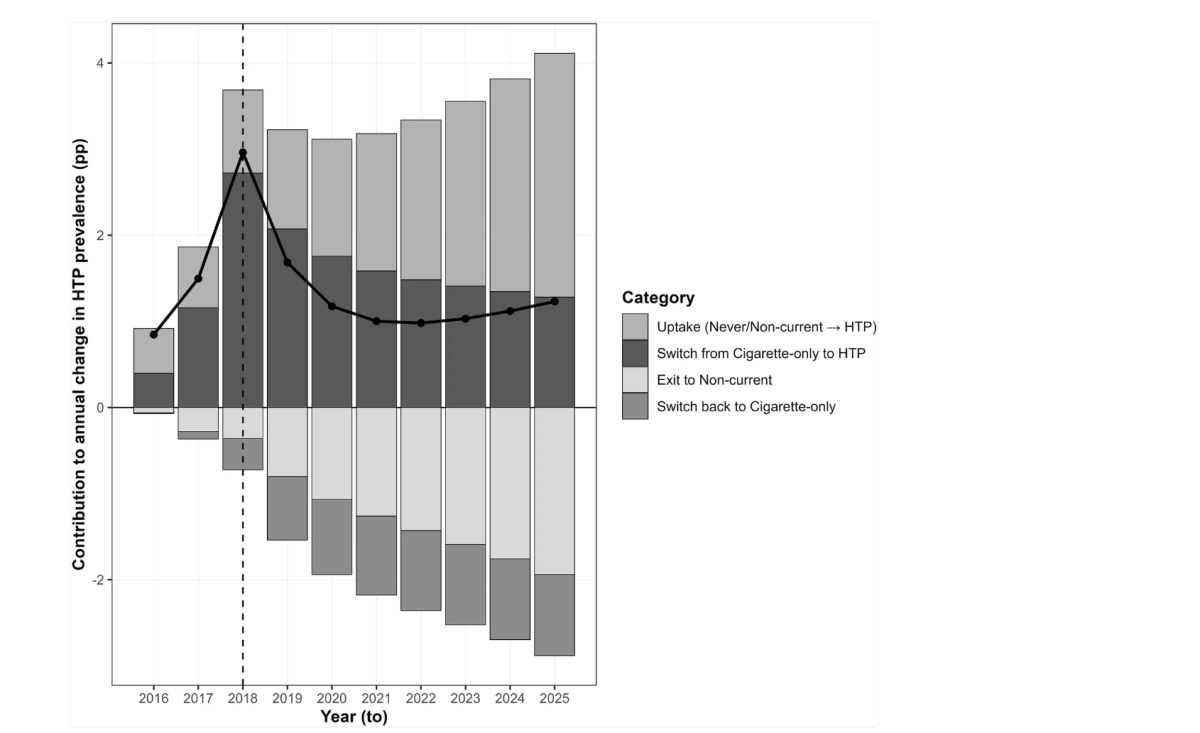
A decade-long study published in The Lancet Regional Health – Western Pacific found that heated tobacco product use in Japan increased from 0.1% in 2015 to 14.9% in 2025, although growth slowed after 2018. Switching from conventional cigarettes remained an important source of HTP uptake, while the contribution from previously non-current users increased. Approximately 56% of HTP users also smoked conventional cigarettes in 2025. Separate industry data show that Japan's heated tobacco sales reached 73.4 billion units in fiscal 2025, approaching conventional cigarette sales of 78.2 billion units.
SCIENCE
Nov.10
Hawaii's Largest Independent Vape Retailer and Wholesaler Volcano to Close All 13 Stores Ahead of 2027 Sales Rules
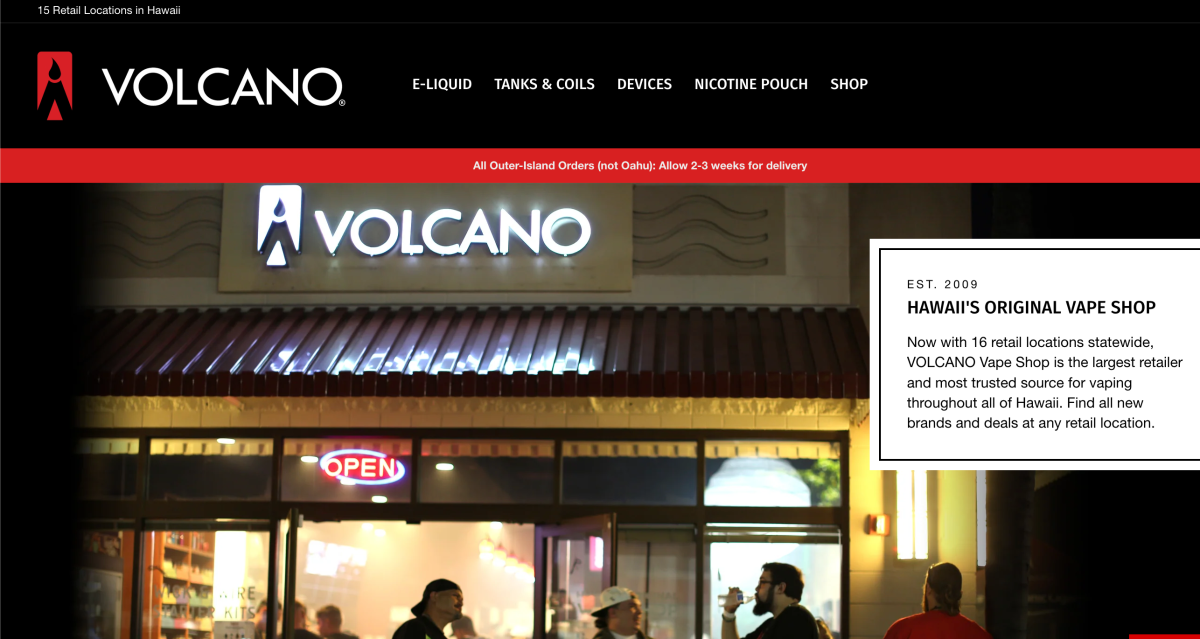
Hawaii-based vaping company Volcano eCigs plans to close all 13 physical retail stores on December 31, 2026, affecting approximately 56 employees. Volcano operates retail, wholesale, proprietary product and online sales businesses and has previously described itself in legislative testimony as Hawaii's largest independent vape retailer and wholesaler. Its operating company, Jocor Enterprises LLC, filed a formal closure notice on November 4, citing changes in the state's regulatory environment. From January 1, 2027, Hawaii will restrict the sale, acquisition and possession of vaping devices and e-liquids not listed in a state product directory, alongside separate restrictions on certain disposable devices. The closure concerns Volcano's physical retail network; the company has not announced the termination of wholesale or online operations.
Market
Nov.09
U.S. Health Groups Seek to Overturn FDA Enforcement Discretion for Pending PMTAs as Altria's Helix, NJOY and AVM Move to Intervene
American Vapor Manufacturers (AVM) and Altria subsidiaries Helix Innovations and NJOY filed separate motions on October 7, 2026, seeking to intervene on the FDA's side in a lawsuit challenging its enforcement guidance for certain e-cigarette and nicotine pouch products with pending premarket tobacco product applications (PMTAs). Seven public health and tobacco-control organizations, including the Campaign for Tobacco-Free Kids, sued the agency in July to overturn the policy. AVM argues that vacating the guidance could disrupt orders, inventory, retail distribution and investments in regulatory submissions.
Regulations
Oct.09