China's E-cigarette Export to Italy, December 2023

Industry Insight by 2FIRSTS Mincy
Mar.04.2024
China's E-cigarette Export to Italy, December 2023
China's e-cigarette exports to Italy in December 2023 dropped by 55.72% year-on-year, with a total value of $7.53 million.

According to updated trade data from the General Administration of Customs of the People's Republic of China, 2FIRSTS has compiled e-cigarette export data from China to Italy in December 2023. The specifics are as follows:
China's E-cigarette Export to Italy, December 2023
Image source: 2FIRSTS (Created by Mincy)


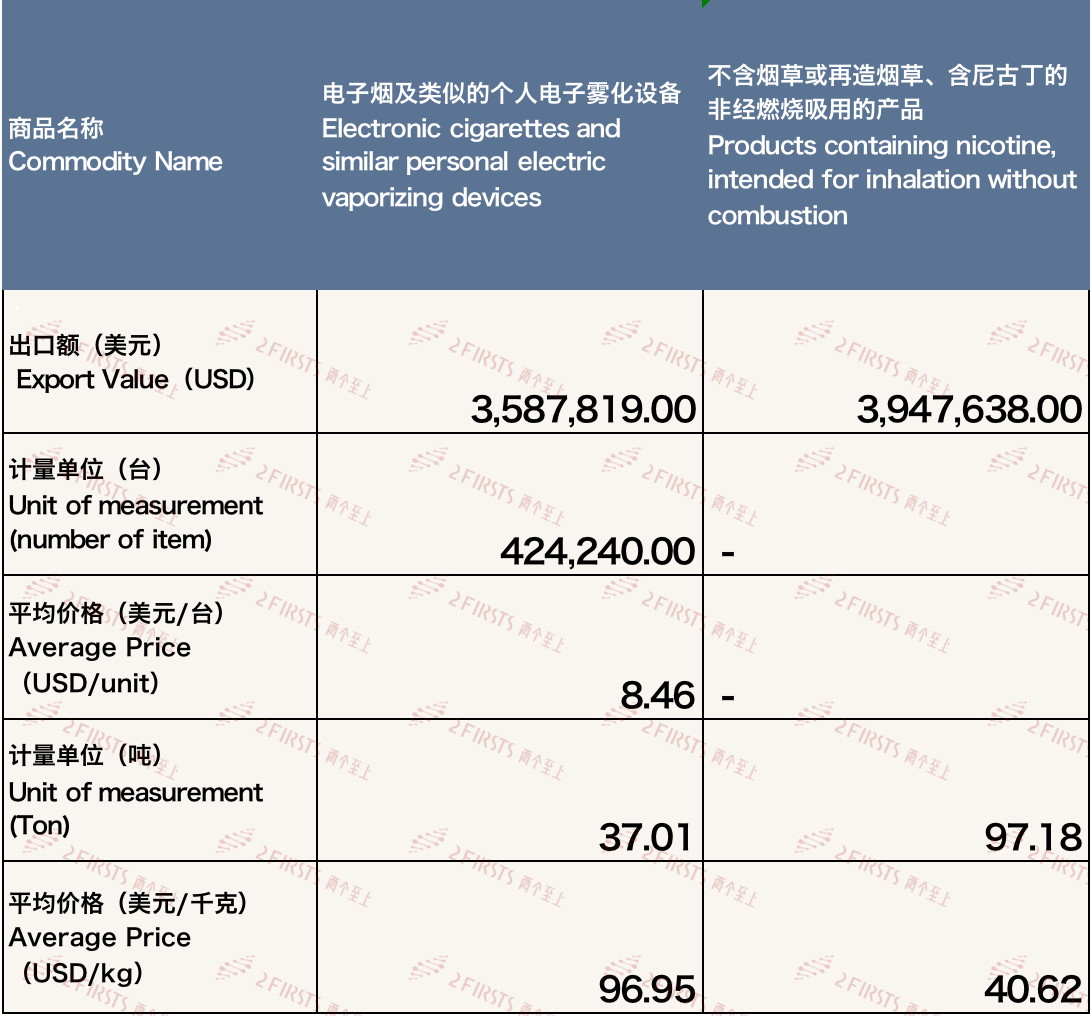
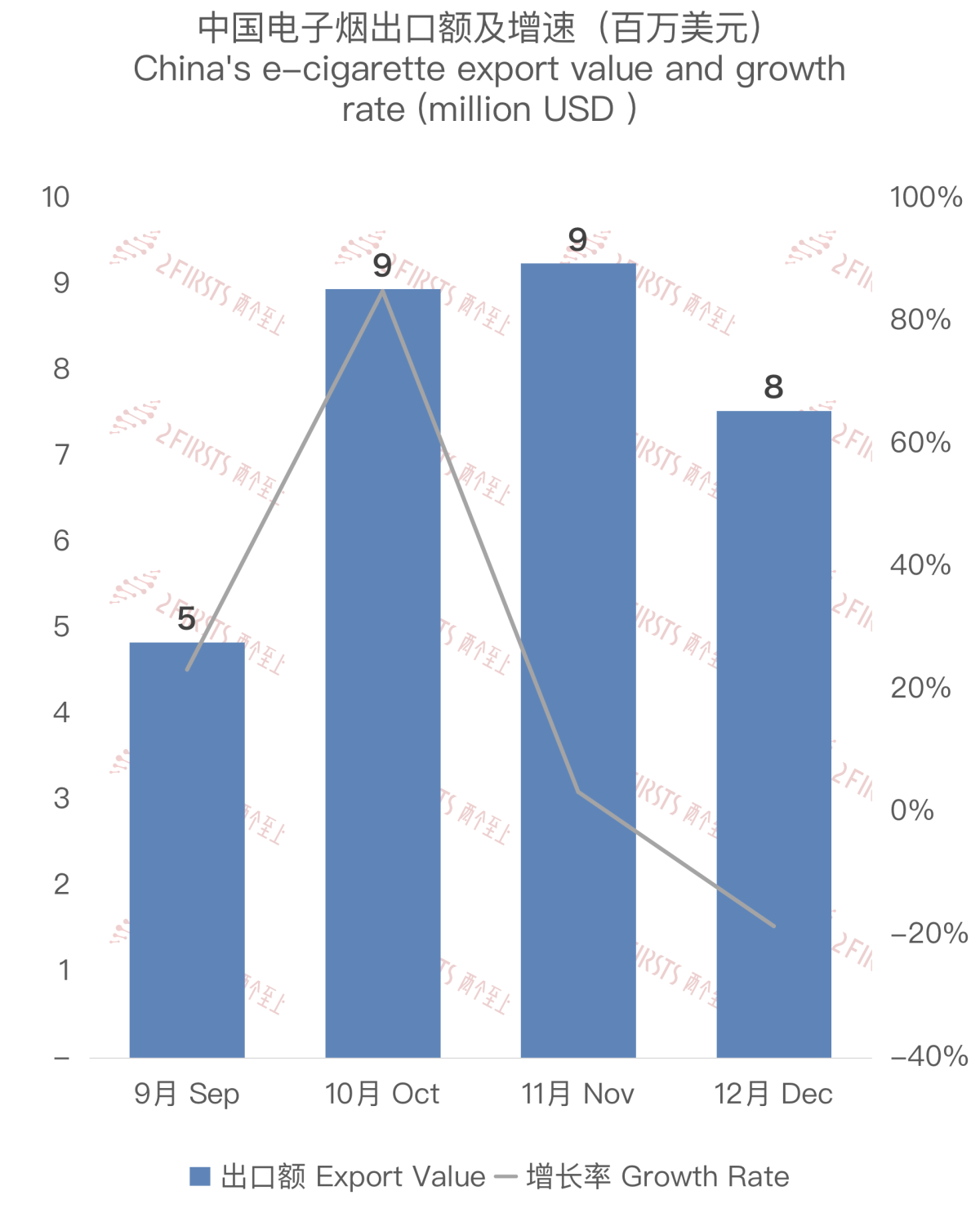
The export value was approximately $7.53 million, showing a decrease of 18.52% compared to the previous period and a decrease of 55.72% compared to the same period last year.
China's E-cigarette Export to Italy, December 2023
Image source: 2FIRSTS (Mincy chart)


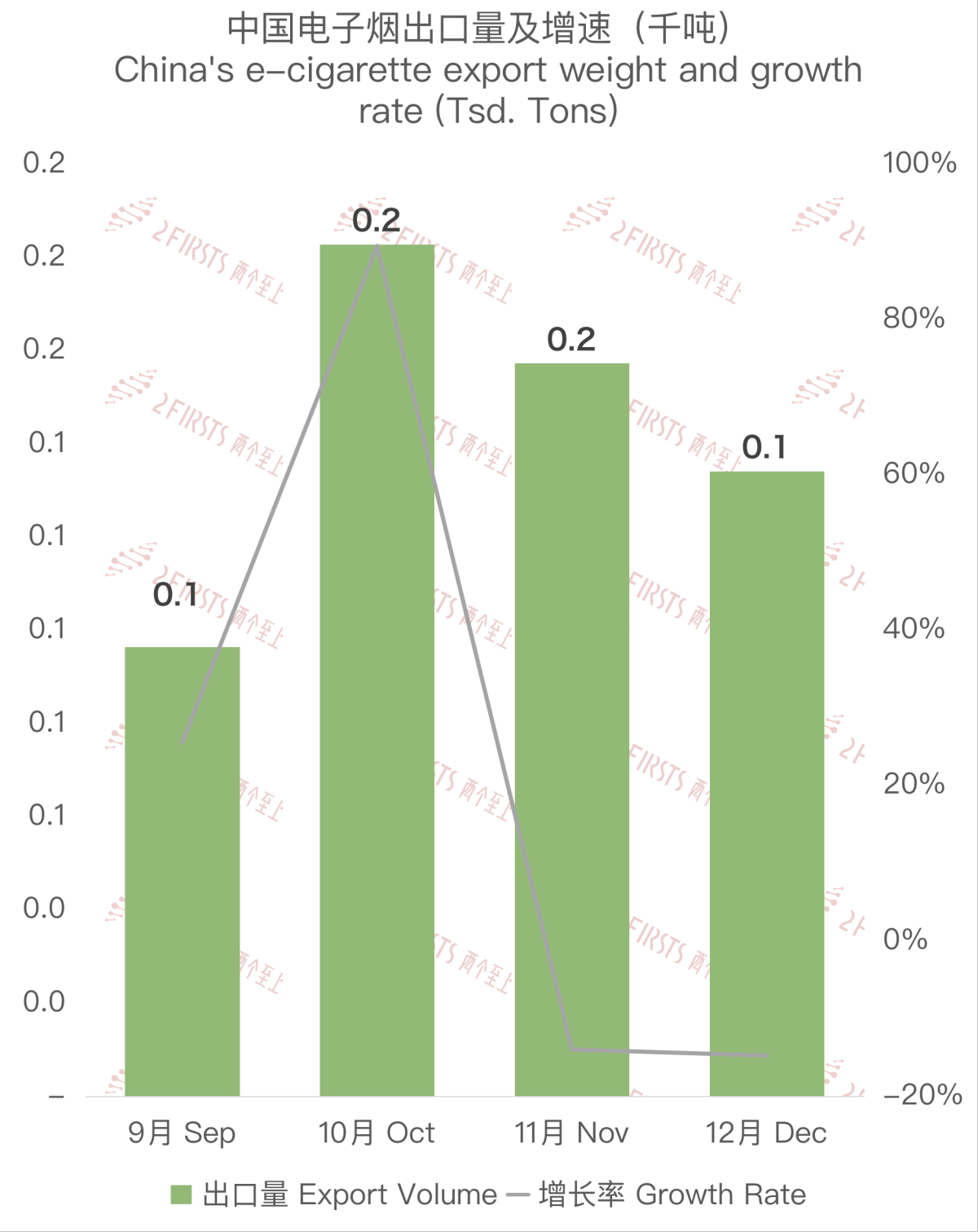
The export volume decreased by about 134 tons, with a month-on-month decline of 14.72% and a year-on-year decrease of 63.01%.
China's E-cigarette Export to Italy, December 2023
Image source: 2FIRSTS (created by Mincy)


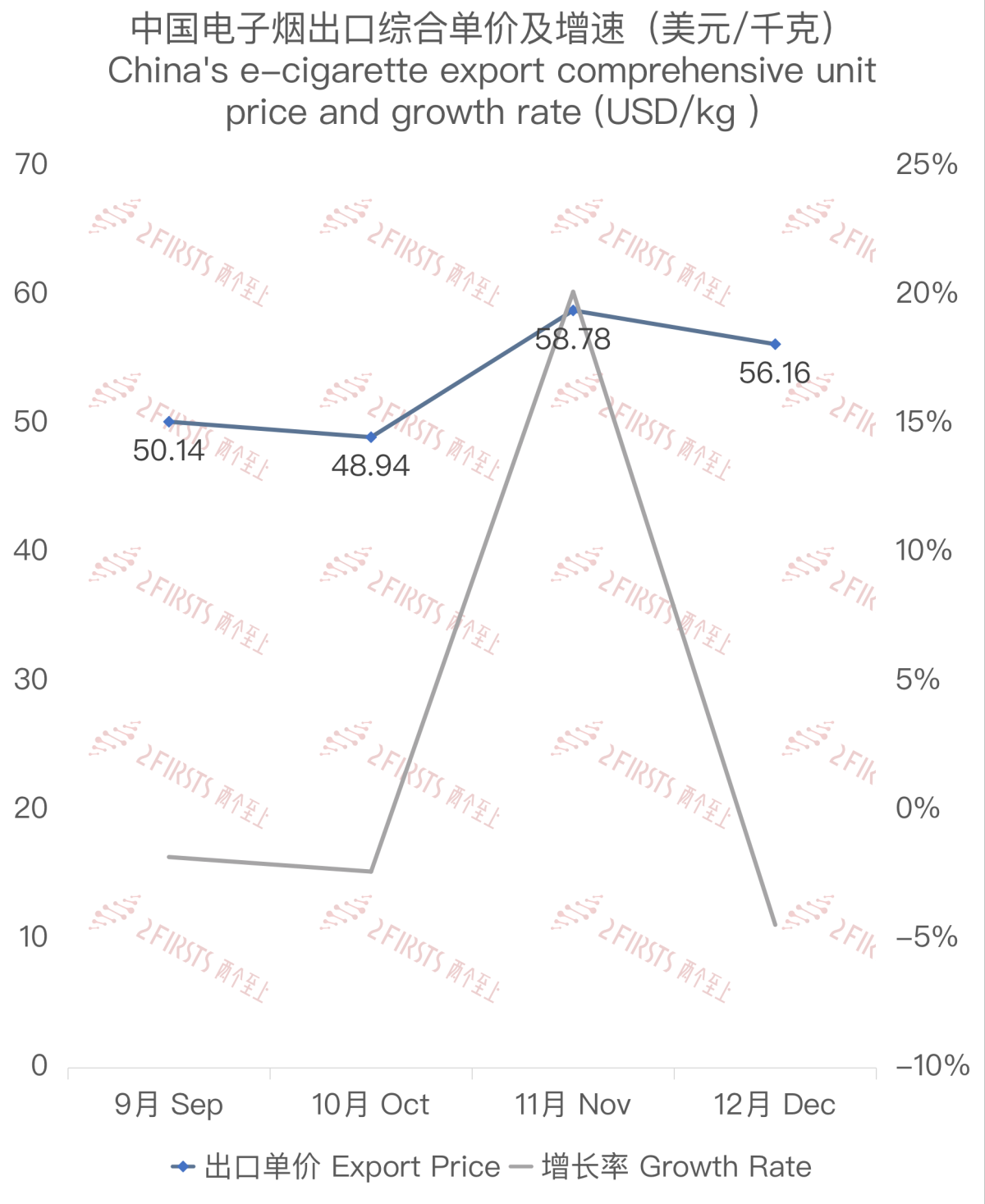
The export unit price is 56.16 US dollars per kilogram, a decrease of 4.46% month-on-month and an increase of 19.72% year-on-year; the average price of "e-cigarettes and similar personal electronic vaporizing devices" is 8.46 US dollars per unit.
China's E-cigarette Export to Italy, December 2023
Image source: 2FIRSTS (Mincy drawing)


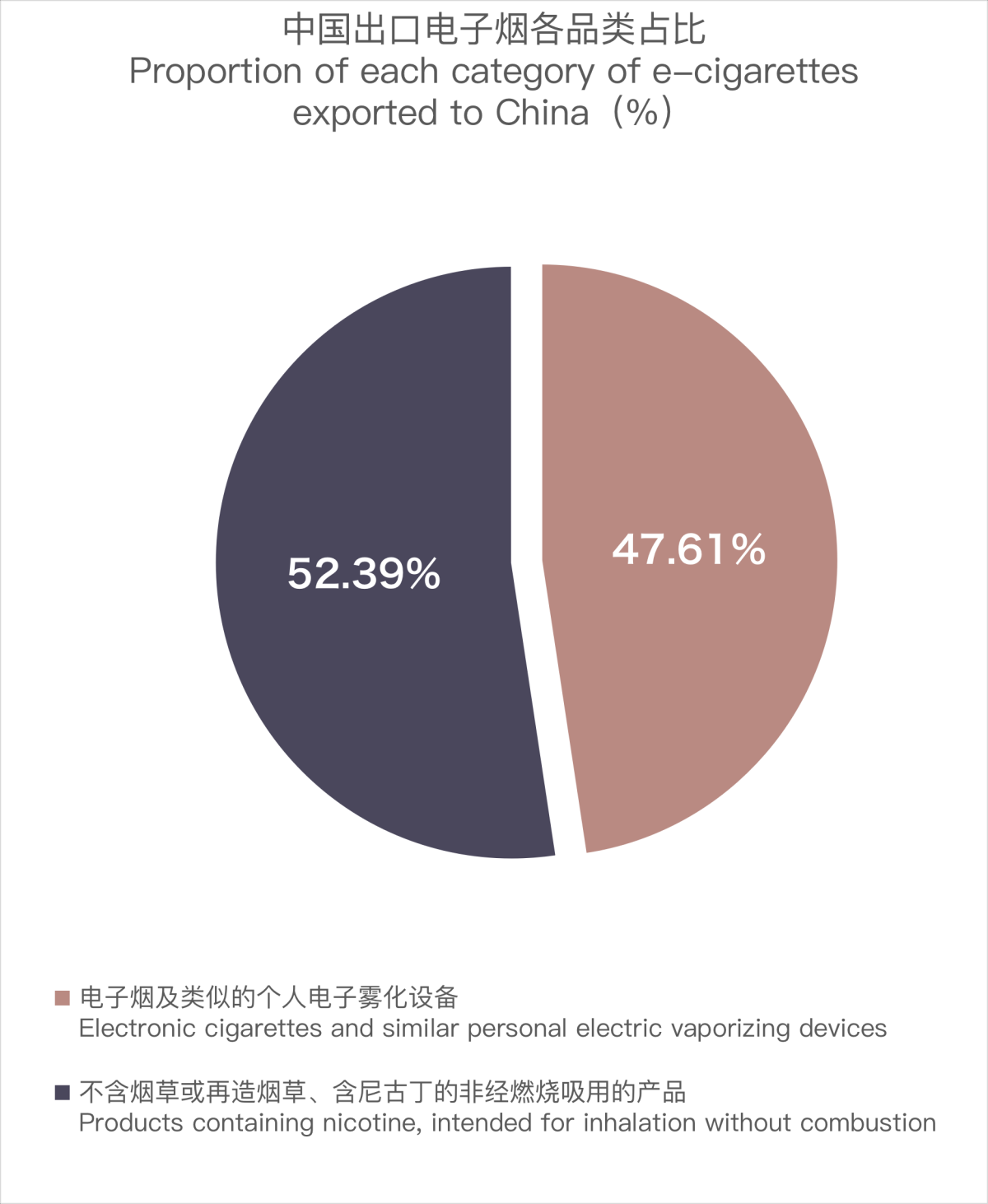
Among them, "e-cigarettes and similar personal electronic vaporizing devices" account for 47.61% of the export category, while "non-tobacco or non-reconstituted tobacco products containing nicotine for non-combustible use" account for 52.39%.
China's E-cigarette Export to Italy, December 2023
Image source: 2FIRSTS (created by Mincy)


We welcome news tips, article submissions, interview requests, or comments on this piece.

Please contact us at info@2firsts.com, or reach out to Alan Zhao, CEO of 2Firsts, on LinkedIn


Notice

1.  This article is intended solely for professional research purposes related to industry, technology, and policy. Any references to brands or products are made purely for objective description and do not constitute any form of endorsement, recommendation, or promotion by 2Firsts.

2.  The use of nicotine-containing products — including, but not limited to, cigarettes, e-cigarettes, nicotine pouchand heated tobacco products — carries significant health risks. Users are responsible for complying with all applicable laws and regulations in their respective jurisdictions.

3.  This article is not intended to serve as the basis for any investment decisions or financial advice. 2Firsts assumes no direct or indirect liability for any inaccuracies or errors in the content.

4.  Access to this article is strictly prohibited for individuals below the legal age in their jurisdiction.


Copyright


This article is either an original work created by 2Firsts or a reproduction from third-party sources with proper attribution. All copyrights and usage rights belong to 2Firsts or the original content provider. Unauthorized reproduction, distribution, or any other form of unauthorized use by any individual or organization is strictly prohibited. Violators will be held legally accountable.

For copyright-related inquiries, please contact: info@2firsts.com


AI Assistance Disclaimer


This article may have been enhanced using AI tools to improve translation and editorial efficiency. However, due to technical limitations, inaccuracies may occur. Readers are encouraged to refer to the cited sources for the most accurate information.

We welcome any corrections or feedback. Please contact us at: info@2firsts.com

Global Tobacco Control Faces Regional Adaptation Test as Nicotine Markets Evolve, Asian Specialist Says
As e-cigarettes, heated tobacco products and nicotine pouches expand across global markets, a central question is gaining urgency: can tobacco control rely on a universal policy model? In an interview with 2Firsts, Asian public health and addiction medicine specialist Dr. Rashidi Mohamed bin Pakri Mohamed says Western experience remains relevant, but policies must be adapted to local culture, healthcare systems, enforcement capacity, illicit markets and clinical evidence.
Jul.08
Ohio Supreme Court Weighs Whether State Consumer Law Can Restrict Flavored Vape Sales
The Ohio Supreme Court is hearing a case involving flavored vape sales and whether state authorities can use consumer protection laws to take action against retailers selling unauthorized vape products. Ohio officials argue that selling unauthorized flavored vapes may constitute consumer deception, while retailers argue that tobacco product regulation falls under federal Food and Drug Administration (FDA) authority and that states cannot impose additional restrictions through consumer laws. The case could affect the scope of state-level vape regulation across the United States.
Aug.06
South Korea Vape Strategies Diverge as BAT Reconsiders Exit and PMI Takes VEEV to About 14,000 Stores
BAT Rothmans says it previously considered exiting South Korea's vaping market because of competitive pressure from unregulated products, but is now reassessing conditions following changes to the country's nicotine regulatory framework. Vuse and other BAT vaping products remain available through existing distribution channels. The statement followed a South Korean media report that interpreted BAT's broader withdrawal from selected Vapour markets as a full exit from South Korea. Meanwhile, Philip Morris International launched VEEV inPRIME in the country in June and began expanding distribution to around 14,000 convenience stores and other retail channels in July. The contrasting moves highlight differing investment strategies as South Korea's regulated vaping market evolves.
Aug.14
Australia-China Operation Dismantles Tobacco Smuggling Network: 112 Containers, 60 Arrests and A$92 Million in Illicit Tobacco
According to The Maritime Executive on August 19, 2026, the Australian Border Force (ABF) and China’s Anti-Smuggling Bureau of General Administration of China Customs worked together to dismantle an international illicit tobacco smuggling network targeting Australia. According to information released by ABF on August 20, sustained information sharing and cooperation led to investigations into 112 shipping containers, with 91 found to contain illicit tobacco. Authorities seized more than 60 million cigarettes and 60 kilograms of loose-leaf tobacco, representing more than A$92 million in unpaid duties. More than 60 people suspected of involvement in the network were arrested in China.
Aug.20
BAT's VELO Partners With McLaren F1 Team for Global Fan Campaign to Expand Nicotine Pouch Brand Reach
BAT-owned nicotine pouch brand VELO and the McLaren Mastercard Formula 1 Team have launched a global fan engagement campaign offering motorsport enthusiasts opportunities to win exclusive team-related experiences. The initiative aims to connect racing culture, fan interaction and VELO’s brand experience across global markets. The partnership reflects BAT’s broader strategy of expanding modern nicotine product brands beyond traditional tobacco categories through lifestyle and cultural marketing.
Jul.23
UK Councils Seize More Than 1.3 Million Non-Compliant Vapes One Year After Disposable Ban
One year after the UK disposable vape ban came into force, local authorities continue to seize illegal and non-compliant vaping products. FOI data compiled by nicotine retailer Northerner shows more than 1.3 million products were seized between June 2025 and May 2026, with Bolton recording the highest number of seizures and Swansea reporting the highest estimated value.
Jul.21