On July 28th, in the Southern District Court of Florida in the United States, a Chinese electronic cigarette company called Happy Vaping filed a lawsuit against Japan Tabaco International (JTI) and its subsidiary Logic, alleging that their product Logic Pro infringed on their US patent US9,924,744 (referred to as the 744 patent), titled "Electronic cigarette with three connecting parts".
On March 25th of this year, the US FDA announced that eight electronic cigarettes produced by Japan Tobacco have passed the PMTA review, including vapeLogic Pro, Logic Power, Logic Vapeleaf (a non-combustible heating product), and five tobacco supplementary kits for these products.
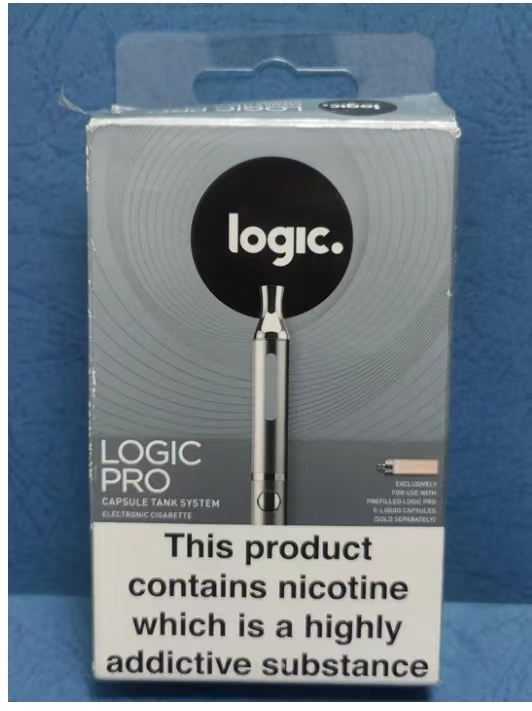
According to a report from a company patent watchdog, the lawsuit filed accuses Japan Tobacco's Logic Pro product of infringing on patent 744, which discloses an electronic cigarette device where the atomizer can be removed from the e-cigarette casing, allowing users to change it without having to replace the entire casing.
The product Logic Pro accused of copyright infringement.
Furthermore, a comparative view was provided between the patent and Apple's Logic Pro, which is the accused infringing product.
744 Patents and Accused Infringing Products
A Shenzhen-based electronic cigarette company has used the term "strikingly similar" in its lawsuit against Japanese tobacco company JTI, claiming that JTI's products infringe on their 744 patent. The company argues that JTI should have known about the patent since March 27, 2018 and should have been aware of the infringement of the aforementioned product.
This company in Shenzhen is demanding not only compensation for patent infringement and triple damages for malicious infringement, but also a request for patent licensing fees that are reasonable and no less than standard rates.
Japan Tobacco International (JTI) acquired Logic company in 2015. For JTI, electronic cigarettes and heated tobacco are seen as new activities that will replace traditional tobacco products, representing a new market opportunity. JTI aims to become a leader in the heated tobacco field by 2030.
The plaintiff in this lawsuit, Happy Vaping of Shenzhen, is believed to be Shenzhen Kanghongwei Technology Co., Ltd., which was established in 2011 and primarily produces electronic smoking devices and components. The company has over 2,000 employees and an annual production capacity of 360 million e-cigarette cartridges and 60 million e-cigarette kits, mainly for the overseas market.
Looking at the development history of this company, it is clear that they place a strong emphasis on intellectual property and innovation. The inventor of 744 patents, Lin Guangrong, is the actual controlling shareholder of the company, owning 95% of its shares.
Happy Vaping Website
This US patent also has patents in Europe, Japan, and China of the same family. Although it is only a utility model patent in China, from the perspective of overseas layout, it basically covers the electronic cigarette markets of developed countries.
This article has been created by extracting, compiling, and integrating information from multiple sources. It is intended for educational purposes only and the copyrights of the summarized information belong to the original media and the authors. If there are any infringement issues, please contact for removal.
Disclaimer
This article is provided solely for professional research, industry discussion, and informational purposes. Any references to brands, companies, products, technologies, or policies are made for factual reporting and analytical purposes only, and do not constitute endorsement, recommendation, promotion, or advertising by 2Firsts.
Nicotine-containing products, including but not limited to cigarettes, e-cigarettes, heated tobacco products, and nicotine pouches, carry significant health risks. Readers are responsible for complying with all applicable laws and regulations in their respective jurisdictions, including age restrictions and access limitations.
The information contained in this article should not be regarded as investment, legal, medical, regulatory, or commercial advice. While 2Firsts strives to ensure the accuracy and reliability of its content, it does not assume liability for any direct or indirect loss arising from errors, omissions, inaccuracies, or reliance on the information contained herein.
This article is not intended for individuals below the legal age for accessing tobacco or nicotine-related information in their jurisdiction.
Copyright Notice
This article is either original content produced by 2Firsts or content reproduced, translated, summarized, or adapted from third-party sources with attribution where applicable. The intellectual property rights of the original content remain with 2Firsts or the respective original rights holders.
No individual or organization may copy, reproduce, distribute, republish, modify, translate, or otherwise use this content without prior authorization. Any unauthorized use may result in legal action.
For copyright-related inquiries, corrections, or removal requests, please contact: info@2firsts.com.
AI-Assisted Translation and Editing Notice
Portions of this article may have been translated, edited, or reviewed with the assistance of artificial intelligence tools to improve efficiency and readability. Due to the limitations of AI-assisted translation and editing, discrepancies, omissions, or inaccuracies may exist when compared with the original source.
Where applicable, readers are advised to refer to the original source for the most complete and accurate information. If you identify any errors or believe that any content infringes upon your rights, please contact us at info@2firsts.com, and we will review and address the matter promptly.