Chinese Hong Kong Man Arrested for Producing and Selling E-cigarettes

Dec.23.2024
Chinese Hong Kong Man Arrested for Producing and Selling E-cigarettes
A Hong Kong man arrested in Pattaya for producing and selling e-cigarettes to Chinese tourists, along with illegal firearms possession.

According to The Pattaya News on December 22nd, on December 19th, Thai authorities arrested a male individual of Chinese Hong Kong nationality (Hing Ping Sin) at a hotel in Pattaya. The man is accused of producing and selling e-cigarettes and e-liquid to Chinese tourists in the area.

Chinese Hong Kong Man Arrested for Producing and Selling E-cigarettes
Thai police seize large quantities of illegal e-cigarette products | Image source: The Pattaya News


After searching the suspect's residence, the police discovered 43 e-cigarette pods, 1200 empty cartridges, 30 e-cigarette devices, 900 e-cigarette bases, four bottles of e-liquid, 968 grams of liquid ingredient powder, three gallons of e-liquid, one electronic scale, one unregistered semi-automatic firearm, and three .380 caliber bullets.

Chinese Hong Kong Man Arrested for Producing and Selling E-cigarettes
Thai police seize large quantities of illegal e-cigarette products | Image source: The Pattaya News


According to reports, Mr. Xin admitted to primarily producing and selling e-cigarettes to Chinese tourists. He also admitted to illegally carrying firearms for self-defense during transactions.


The police have charged the suspect with smuggling illegal goods and possessing unregistered firearms and ammunition.


Currently, he is undergoing legal proceedings.


We welcome news tips, article submissions, interview requests, or comments on this piece.

Please contact us at info@2firsts.com, or reach out to Alan Zhao, CEO of 2Firsts, on LinkedIn


Notice

1.  This article is intended solely for professional research purposes related to industry, technology, and policy. Any references to brands or products are made purely for objective description and do not constitute any form of endorsement, recommendation, or promotion by 2Firsts.

2.  The use of nicotine-containing products — including, but not limited to, cigarettes, e-cigarettes, nicotine pouchand heated tobacco products — carries significant health risks. Users are responsible for complying with all applicable laws and regulations in their respective jurisdictions.

3.  This article is not intended to serve as the basis for any investment decisions or financial advice. 2Firsts assumes no direct or indirect liability for any inaccuracies or errors in the content.

4.  Access to this article is strictly prohibited for individuals below the legal age in their jurisdiction.


Copyright


This article is either an original work created by 2Firsts or a reproduction from third-party sources with proper attribution. All copyrights and usage rights belong to 2Firsts or the original content provider. Unauthorized reproduction, distribution, or any other form of unauthorized use by any individual or organization is strictly prohibited. Violators will be held legally accountable.

For copyright-related inquiries, please contact: info@2firsts.com


AI Assistance Disclaimer


This article may have been enhanced using AI tools to improve translation and editorial efficiency. However, due to technical limitations, inaccuracies may occur. Readers are encouraged to refer to the cited sources for the most accurate information.

We welcome any corrections or feedback. Please contact us at: info@2firsts.com

As JUUL2 Wins FDA Authorization, Harm Reduction Journal Highlights the Role of Real-World Evidence in Nicotine Product Regulation
A commentary published in the international open-access, peer-reviewed Harm Reduction Journal argues that randomized controlled trials remain central to evaluating smoking cessation efficacy but cannot alone capture real-world uptake, complete switching, longer-term use and population impact of non-combustible nicotine products such as e-cigarettes, heated tobacco and nicotine pouches. The authors frame impact as “reach × efficacy” and call for real-world evidence to complement RCTs. Three days after publication, the FDA authorized three JUUL2 products and highlighted complete switching among adult smokers in explaining its decision, providing a timely regulatory backdrop to the debate.
Sep.08
South Korea Extends Vape Rules to Unmanned Stores After Bringing Synthetic Nicotine Under Tobacco Law
South Korea's Ministry of Gender Equality and Family said on September 14 that it plans to designate unmanned e-cigarette stores as businesses where minors are prohibited from entering or working. Operators would be required to verify customers' ages and display notices restricting access by minors. The proposal is open for public comment through October 6. The move follows an April expansion of South Korea's statutory tobacco definition that brought products made with natural or synthetic nicotine under the Tobacco Business Act. Nicotine-free liquids and products using nicotine analogues such as 6-methylnicotine, however, remain an emerging regulatory issue.
Sep.21
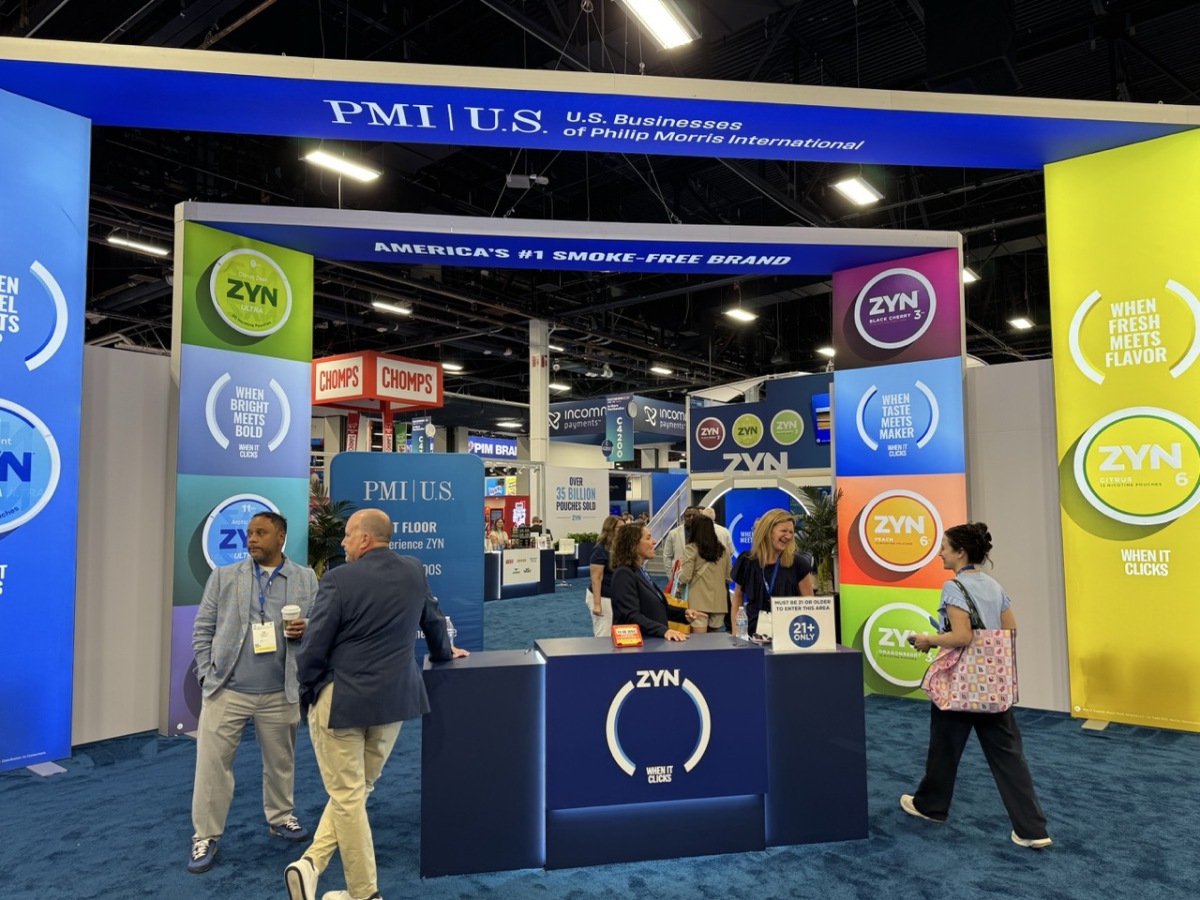
PMI Showcases ZYN, IQOS and U.S. Investments at NACS Show 2026
At the 2026 NACS Show in Las Vegas, Philip Morris International (PMI) showcased its ZYN nicotine pouches, IQOS heated tobacco products and U.S. investments. A 2Firsts review of FDA records found that several ZYN products displayed at the booth were not on the agency's marketing authorization list, including certain nicotine strengths and flavors. A PMI booth representative also confirmed that IQOS is currently sold in three U.S. states, while the newer IQOS ILUMA system remains under FDA review.
EXPO
Oct.10
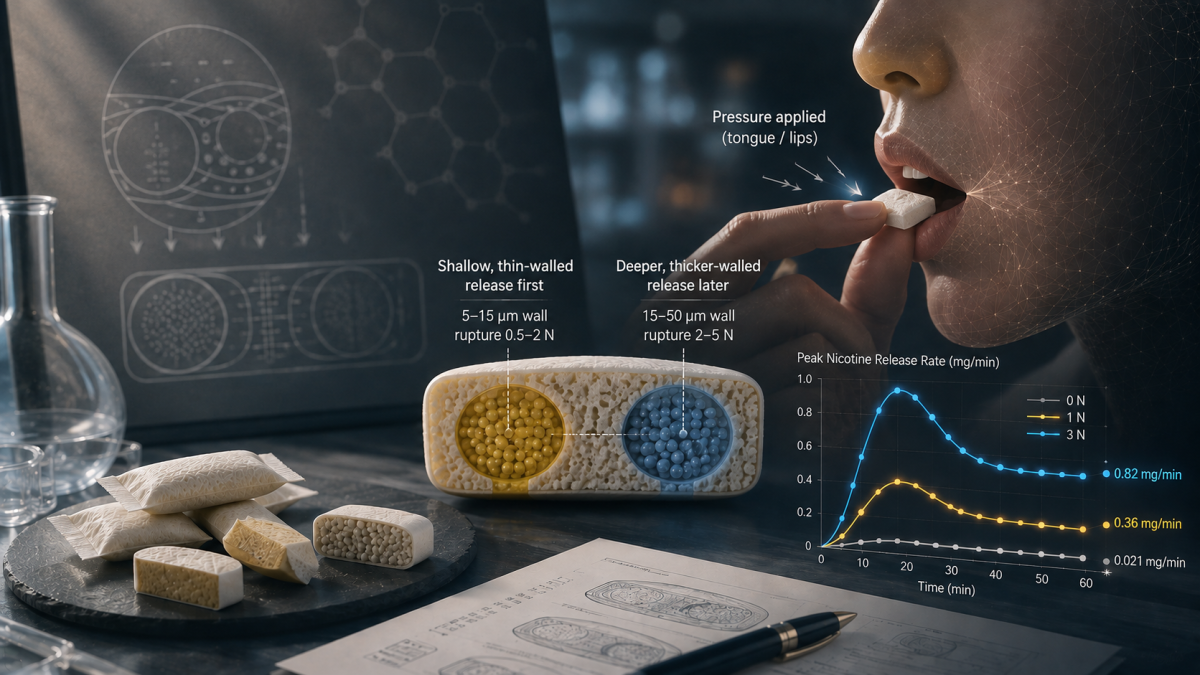
China Tobacco Zhejiang files patent for pressure-triggered, on-demand oral nicotine release
China Tobacco Zhejiang Industrial Co., Ltd. has filed a patent application for an oral nicotine delivery product designed to let users actively adjust nicotine release. The product embeds two types of nicotine reservoirs with different wall thicknesses and positions inside a deformable matrix. Pressure applied with the tongue or lips can rupture the reservoirs and accelerate nicotine release. In simulated oral tests, several patent examples showed sharply higher peak nicotine release rates as applied force increased from 0 N to 1 N and 3 N. The filing explores a shift from preset release profiles toward user-triggered nicotine delivery.
Sep.01
NAS 2026 | Cliff Douglas: Risk Continuum Should Play a Central Role in Tobacco Policy
Cliff Douglas, a veteran U.S. tobacco-control and public health policy figure, told NAS 2026 that the “continuum of risk” should play a central role in tobacco policy. He called for clearer market pathways, stronger risk communication, differentiated regulation and enforcement, and said possible FDA reforms to PMTA reviews could be a “welcome correction” if they create a more efficient, predictable route for scientifically substantiated lower-risk products. Read 2Firsts’ on-site coverage.
Sep.26
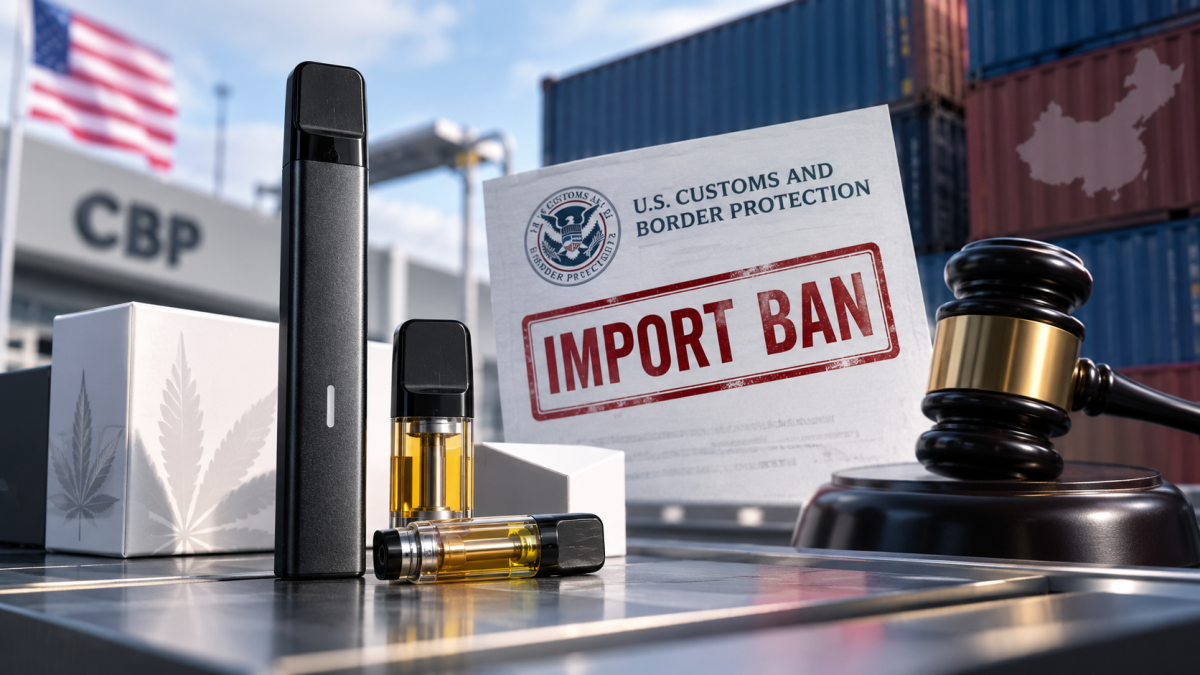
STIIIZY Redesign Fails to Escape PAX Labs Patent Import Ban as Section 337 Case Also Involves China ALD
U.S. Customs and Border Protection ruled that STIIIZY had not shown that the redesigned cannabis-vape products covered by its latest request fall outside an ITC limited exclusion order tied to PAX Labs patents. CBP accepted some of STIIIZY’s claim-construction and non-infringement arguments, but the company did not address two additional claims in the same patent. Earlier STIIIZY redesigned cartridges and certain associated components imported with them had received separate CBP clearance.
Sep.16