A leading e-cigarette brand is flouting rules to promote its products to young people in Britain, an Observer investigation has found, as experts warn that brightly coloured, sweet-flavoured vapes are being used by children as young as seven.

Elf Bar, a Chinese-owned vaping giant that has seen the use of its products by under-18s soar in the past year, is being promoted by social influencers, who in some cases claim to be paid for the promotions and benefit from free products.
The videos – many of which show influencers vaping on camera – are not age restricted and are not always clearly marked as ads. Some have attracted hundreds of thousands of views on the short-form video app TikTok, which is used by half of eight to 11-year-olds and three-quarters of 16 to 17-year-olds.
The promotions, which appear to break rules prohibiting e-cigarette advertising on social media, are seemingly part of a push by Elf Bar to reach new customers in Britain, including campaigns on buses and billboards and giveaways of its products. TikTok this weekend removed two accounts promoting Elf Bar products after being alerted to them by the Observer.
The UK vaping market is worth more than £1bn a year, but public health experts are alarmed that disposable vapes such as those made by Elf Bar, which cost as little as £3.99 each, are leading to increased use among young people.
Selling e-cigarettes to under-18s is illegal, but they are easy to buy online and on the high street.
The Association of Directors of Public Health (ADPH) said this weekend it wanted to see tighter regulations to ban brightly coloured packaging such as that used by Elf Bar and a review of flavours likely to appeal to children.
Dr Gareth Nye, programme leader for medical science at Chester University, warned of potential long-term health consequences, including lung conditions. “Despite vaping being of huge benefit to many people, the shocking increase in non-smokers and vapers picking up these products means we need to seriously consider the way these products are advertised and sold,” he said.
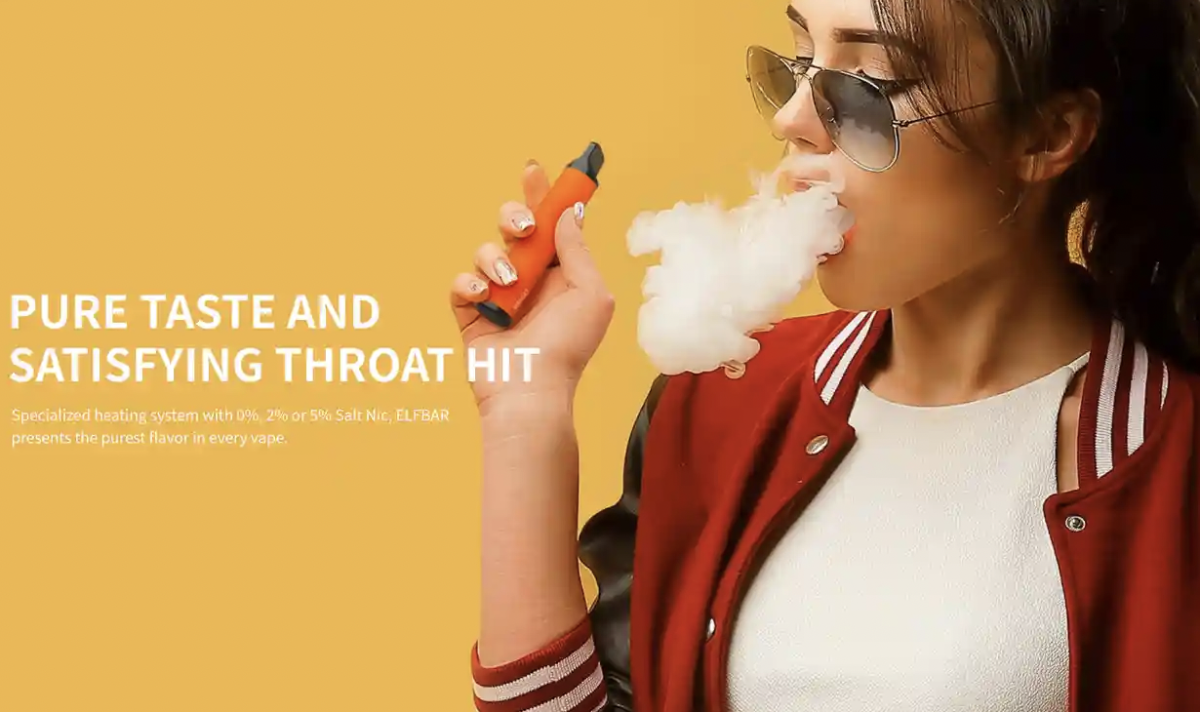
Elf Bar was barely known as an e-cigarette brand two years ago, but has now become one of the most popular makes among young people in Britain. The brand, owned by a technology company based in China, is best known for its disposable vapes, which come in flavours such as rainbow candy, bubblegum and cheesecake.
They do not contain tobacco but come prefilled with a nicotine salt-based e-liquid containing 20 milligrams of nicotine per millilitre – the highest concentration permitted by UK law.
Health experts are concerned that the growing popularity of Elf Bar, whose slogan is “Make it Elf, enjoy yourself,” may lead to a significant increase in youth vaping in Britain in the same way that Juul is alleged to have fuelled the use of e-cigarettes among children in the US.
Juul, which is part-owned by the Marlboro cigarette maker Altria, was last month ordered to remove all its products from the US market by the Food and Drug Administration, whose director claimed its products had played a “disproportionate role in the rise of youth vaping”. The company is appealing against the ban, which has been temporarily halted.
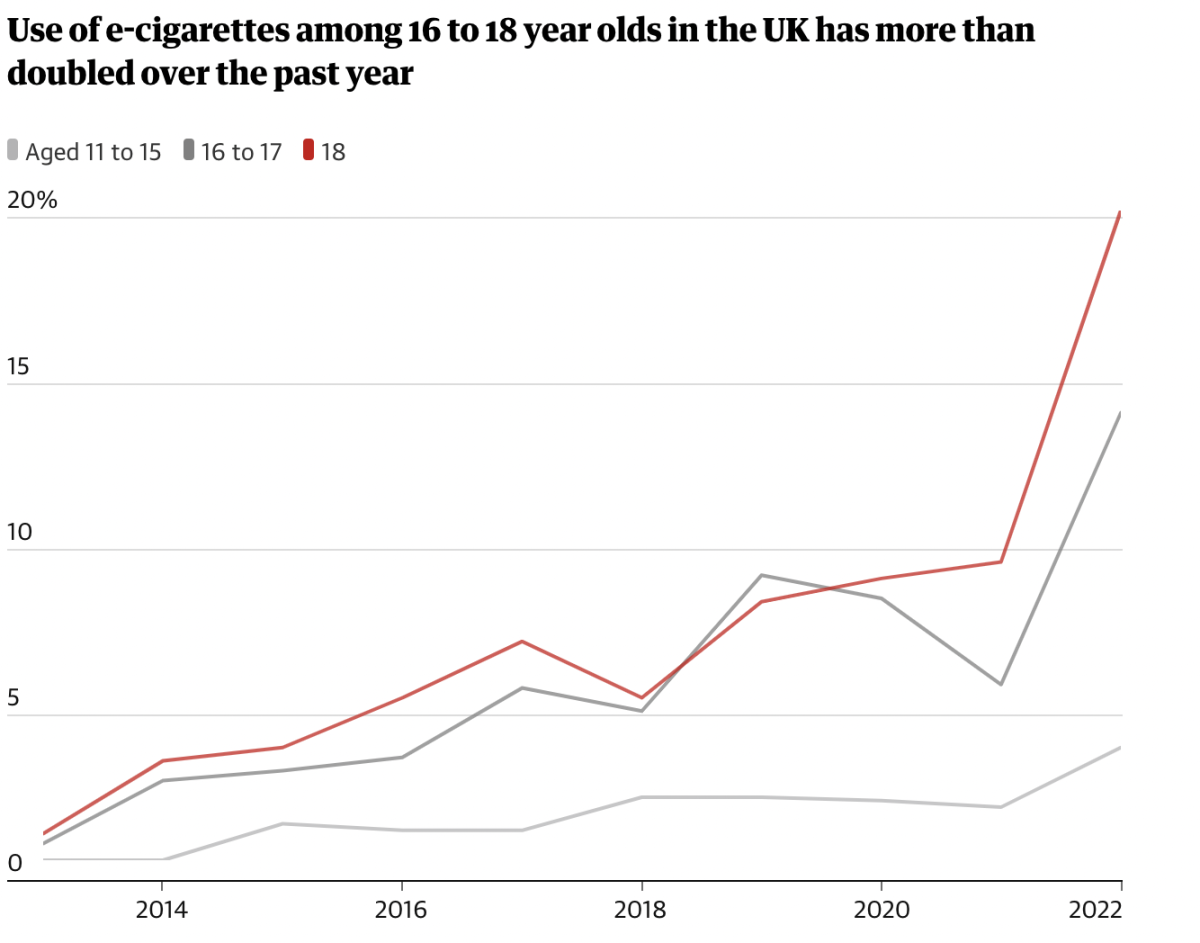
In Britain, while the number of young people who use e-cigarettes is relatively low, research suggests the figure is growing. A survey by YouGov and the charity Action on Smoking and Health (Ash) found that the proportion of children aged 11 to 17 who vape has risen from 4% in 2020 to 7% in 2022. The percentage of children who had tried vaping has also risen, from 14% to 16%.
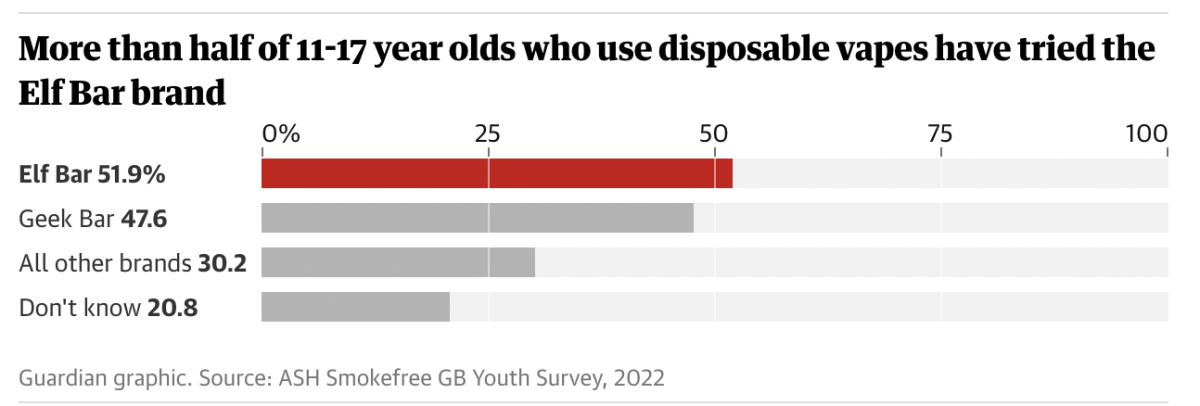
More than half the children who vape said disposable e-cigarettes were their preferred product – up from 7% in 2020 – and the most popular brand among them was Elf Bar.
There are strict rules on promoting vaping products in the UK that are designed to prevent irresponsible marketing and ads aimed at young people. In 2019 four e-cigarette companies were sanctioned for flouting advertising rules to promote their products on social media.
But promotions on TikTok for Elf Bar products appear to openly flout those rules.
“Haul” videos showing influencers unwrapping big packages of products they say have been sent to them for free, or posting reviews that they say have been sponsored, have attracted hundreds of thousands of views.
One British TikToker has said in videos that she “works for Elf Bar” and is paid by the brand to post about its products. “Easy money,” one caption reads. “Get free Elf Bars and get paid to taste test them,” another says.
Her content, which has been viewed 5m times, includes a video of her trying a cherry-flavoured disposable Elf Bar vape on camera, which is presented as a review but contains a small label stating it is an ad. “Oh my God! She’s pretty,” she says, unwrapping the vape and testing it on camera. “That is beautiful. It tastes like cherryade ... I’m obsessed. I love it. I think it beats every flavour I’ve tried so far.”
In another video, she unwraps a “huge delivery” of Elf Bar products, with flavours including cheesecake, rainbow candy and bubblegum, and declares: “Elf Bar, I just love you.” The video is marked as “gifted”, suggesting the products were sent to her by Elf Bar, but is not clearly labelled as an ad. Another British TikToker who has promoted Elf Bar’s products states on his profile that he is 20. One video, liked more than 7,000 times, shows him holding disposable vape pens in various colours to the camera. “What’s your favourite flavour as i’ve never tried one @Elfbarofficialuk #ad,” the caption states.
Advertising Standards Authority (ASA) rules say that ads for e-cigarettes must be targeted responsibly, not be directed at under-18s and they should not be advertised on any platform where more than 25% of the audience is under 18. In addition, people in ads promoting these products should not be, or appear to be, under 25.
The watchdog said it was assessing evidence passed to it by the Observer. After being contacted for comment, TikTok said it had removed content flagged with it for violating its rules.
A spokesperson said: “Our guidelines make clear that content promoting the sale, trade or offer of ... vaping products is not permitted, regardless of age. We have investigated and removed the content flagged to us and taken action against these accounts.”
Ash, which promotes vaping as a healthier alternative to cigarettes, said ads for Elf Bar were “problematic” and helped “drive the perception of glamour around these devices”.
Hazel Cheeseman, the charity’s deputy chief executive, said: “The value of e-cigarettes for public health is as an aid to quitting smoking, but it doesn’t seem that they’re positioning these products as an alternative to smoking cigarettes. They’re promoting them as an enjoyable experience in their own right.”
Anecdotal evidence from headteachers is pointing to a much bigger problem. We are potentially creating an addiction
Ruth Tennant, public health director
Public health directors are now supporting calls for tighter regulations on e-cigarettes after warning of reports that children as young as seven are vaping. They also want new restrictions on the promotion of vaping to young people.
Ruth Tennant, an ADPH board member and director of public health for Solihull, said: “Vaping started off small scale [in schools], but the anecdotal evidence from headteachers is pointing to a much bigger problem. School are talking about doing things like bag searches … We are potentially creating an addiction.”Devon county council last month sent out a letter to headteachers warning of a reported rise in the number of incidents involving pupils and vaping. It says the problem is mainly in secondary schools, but has warned of reports that some primary pupils are using vaping products.
Steve Brown, Devon’s director of public health, said the Elf Bar brand promoted its products on its website with young women models vaping and he was concerned it was targeting younger people. He said: “In the 1970s and 1980s, tobacco packaging was branded to attract people into smoking and my worry is we are something similar in the vaping market.
“It is a nicotine-containing product and we need to have similar controls to tobacco.”
A review by former Barnardo’s chief executive Javed Khan into the government’s ambition to make England smoke-free by 2030 warned last month of a “wild west” of vaping products available online. The report said vapes were “at least 50% and probably closer to 95% less harmful than a cigarette”. The report said schools and college leaders were relating that vaping products were too easily available to under-18s. The report proposes banning cartoon characters from vaping products, reviewing the available flavours, barring companies from giving vaping products away for free and making the use of age-restricted products illegal on school and college premises. The report is awaiting a government response.
John Dunne, director general of the UK Vaping Industry Association, which represents companies in the sector, said he was concerned about the increased reports of vaping in schools. He said: “We are getting calls from schools because they are starting to see kids getting these products. It’s primarily disposables.”
Dunne said the association was calling for tighter regulation, including imposing tougher fines of up to £10,000 for rogue traders who sell to children. “It’s not rocket science,” he said. “If you don’t want kids using these products, then you have to stop the supply.”
In a statement, Elf Bar said it was “very aware of the UK regulations” and would conduct “internal investigations” into the allegations put to it by the Observer. It said it had a “no paid-for influencers” policy in place and that it adhered to ASA regulations on vape advertising, gaining its approval in advance of running campaigns on buses and billboards.
A spokesperson said: “We are fully committed to addressing the issue of vape products getting into the hands of minors. This includes everything from cracking down on unofficial Elf Bar promotions on social media and rogue retailers. All Elf Bar packaging indicates that our products are not for sale to under-18s.”
The Department of Health and Social Care said: “We have some of the strongest regulations in place on vapes to protect young people, and will continue to work closely with the MHRA [Medicines and Healthcare products Regulatory Agency], trading standards and other regulatory enforcement agencies to ensure that products sold in the UK comply with them.”
The content excerpted or reproduced in this article comes from a third-party, and the copyright belongs to the original media and author. If any infringement is found, please contact us to delete it. Any entity or individual wishing to forward the information, please contact the author and refrain from forwarding directly from here.