Colombian Congress Proposes Tax Increase on Tobacco Products

Aug.22.2024
Colombian Congress Proposes Tax Increase on Tobacco Products
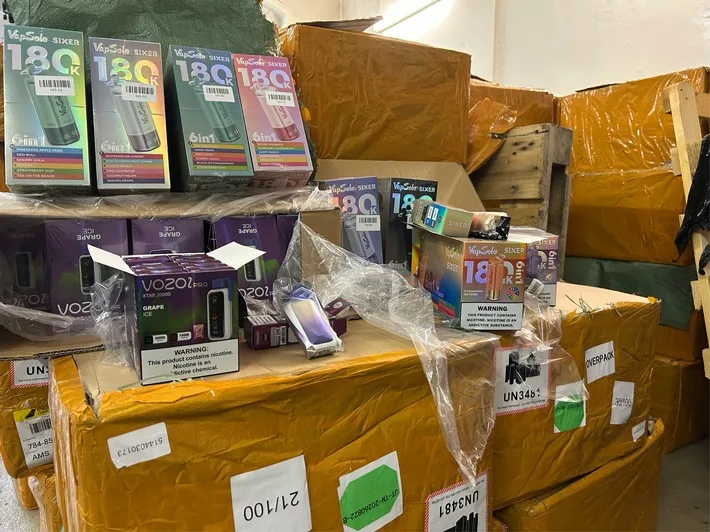
Colombian Congress plans to increase taxes on tobacco products, including e-cigarettes, to combat youth usage and environmental pollution.

According to Infobae's report on August 21st, the Colombian Congress is planning to increase taxes on tobacco products, including e-cigarettes.


According to the latest research on substance consumption, the usage rate of e-cigarettes among students aged 12 to 18 in Colombia reached 11.2% in the past month. In order to address this issue, Congress proposed a bill on August 21 aimed at increasing taxes on traditional cigarettes and establishing a new tax category for e-cigarettes.


The draft has received support from multiple scientific and civil organizations.


This legislation aims not only to raise the price of Colombian cigarettes to a level comparable to other leading countries in the Americas, but also to implement a unified tax structure for e-cigarettes and their components. This way, all nicotine products will receive fair tax treatment under the new health regulations taking effect this May.


According to data from Colombia's National Administrative Department of Statistics (Dane), tobacco consumption has significantly decreased over the past decade, thanks to similar fiscal measures. It has decreased from 8.3% in 2016 to 5.6% in 2021.


The draft states that promotional activities and price reductions of e-cigarettes have led to a sharp increase in underage consumption, thus necessitating stricter tax policies. The document also mentions that these measures aim to reduce the 34,800 smoking-related deaths annually and raise approximately 1.4 billion Colombian pesos (around 350 million dollars).


The proposal also focuses on targeting the marketing strategies of tobacco companies towards young people and vulnerable groups. Several organizations, including Anáas Foundation, Red PaPaz, Colombian Cancer Association, and National Cancer Institute, have expressed their support for the proposal.


One of the key focuses of this bill is to protect the environment from pollution caused by disposable e-cigarettes and traditional cigarette butts.


These measures have received support from the Pan American Health Organization (PAHO/WHO). At the same time, organizations such as the Colombian Pulmonology Society, Colombian Internal Medicine Association (ACMI), and Colombian Family Medicine Association have also expressed their support.


We welcome news tips, article submissions, interview requests, or comments on this piece.

Please contact us at info@2firsts.com, or reach out to Alan Zhao, CEO of 2Firsts, on LinkedIn


Notice

1.  This article is intended solely for professional research purposes related to industry, technology, and policy. Any references to brands or products are made purely for objective description and do not constitute any form of endorsement, recommendation, or promotion by 2Firsts.

2.  The use of nicotine-containing products — including, but not limited to, cigarettes, e-cigarettes, nicotine pouchand heated tobacco products — carries significant health risks. Users are responsible for complying with all applicable laws and regulations in their respective jurisdictions.

3.  This article is not intended to serve as the basis for any investment decisions or financial advice. 2Firsts assumes no direct or indirect liability for any inaccuracies or errors in the content.

4.  Access to this article is strictly prohibited for individuals below the legal age in their jurisdiction.


Copyright


This article is either an original work created by 2Firsts or a reproduction from third-party sources with proper attribution. All copyrights and usage rights belong to 2Firsts or the original content provider. Unauthorized reproduction, distribution, or any other form of unauthorized use by any individual or organization is strictly prohibited. Violators will be held legally accountable.

For copyright-related inquiries, please contact: info@2firsts.com


AI Assistance Disclaimer


This article may have been enhanced using AI tools to improve translation and editorial efficiency. However, due to technical limitations, inaccuracies may occur. Readers are encouraged to refer to the cited sources for the most accurate information.

We welcome any corrections or feedback. Please contact us at: info@2firsts.com

PMI Q2 Call: ZYN Growth, IQOS Pricing and a Diverging Global Tobacco Market
Philip Morris International’s second-quarter earnings call offered new detail on its smoke-free strategy. Management said it would increase U.S. investment behind nicotine pouch brand ZYN, keep IQOS focused on volume before stronger pricing, and use SENTIA, DELIA, LEVIA, VEEV and ZYN to manage tax and regulatory pressure across Japan and Europe. Analysts from Goldman Sachs, Morgan Stanley, UBS and other firms also pressed PMI on profitability, market share, cigarette resilience and the durability of its global transformation over coming quarters.
Jul.24
Malaysia Nicotine Vape Market Faces Legal Uncertainty Over Tax and Poisons List Ruling
Malaysia’s Finance Minister Anwar Ibrahim said duties and taxes on nicotine-containing vape products will be determined in line with the Court of Appeal’s ruling on whether liquid or gel nicotine can be exempted from the Poisons List under the Poisons Act 1952, a case that could affect the legal basis for vape taxation, retail sales and future ban policy.
Jun.29
Haypp Report: Women Emerge as a Key Growth Driver in the UK Nicotine Pouch Market
According to Haypp’s 2026 UK Nicotine Report, women are a key growth driver in the UK nicotine pouch market. Overall sales for Haypp and Northerner rose 60% year‑on‑year in 2025, but purchases by women surged 202%, versus 25% for men. Women’s share of consumers jumped from 22% to 40%. The report attributes this to discretion, perceived health benefits, and more gender‑neutral product positioning, suggesting future growth will come from a broader range of adult nicotine users.
Jul.01
Ireland Vape Bill Passes Dáil, Setting Limits on Flavours, Packaging and Retail Display
Ireland’s Public Health (Tobacco Products and Nicotine Inhaling Products) (Amendment) Bill 2026 has passed final stage in the Dáil and will move to the Seanad, with measures to limit vape flavours to tobacco or unflavoured products and tighten rules on packaging colours, retail advertising, in-store displays and sales of nicotine pouches to minors.
News
Jun.26 by 2Firsts Perspectives
Product | APUS Launches Chloe 50K, Bringing Purse-Inspired Design to the U.S. High-Puff Disposable Market
APUS has introduced the Chloe 50K disposable vape, which has appeared across U.S.-facing online retail channels including Element Vape and Vapesourcing. The device combines a purse-inspired body and chain attachment with a 20ml e-liquid capacity, 1,250mAh rechargeable battery, dual mesh coil, and battery and e-liquid indicators. It is rated for up to 50,000 puffs. The product does not appear on the FDA’s current list of authorized e-cigarettes, and U.S. retail availability does not indicate FDA marketing authorization.
Jul.15
WIRED Investigation: Chinese-Made Vapes Turn to 6-Methyl-Nicotine and Other Analogs, Challenging U.S. Regulation
U.S. technology and investigative publication WIRED has examined how nicotine analogs are emerging as a new challenge for the country’s vape regulatory framework. The article argues that after the U.S. expanded federal oversight of nicotine products in 2022, some manufacturers began using nicotine-like compounds such as 6-methyl-nicotine that may fall outside existing definitions. Researchers cited by WIRED said some nicotine analogs could be more potent than traditional nicotine, although human health impacts remain unclear. U.S. policymakers are considering broader definitions of nicotine to bring these compounds under federal oversight.
Jul.27