Tennessee to Impose 10% Tax on E-Cigarettes Starting July; Retailers Question Enforcement Clarity

Jul.09.2025
Tennessee to Impose 10% Tax on E-Cigarettes Starting July; Retailers Question Enforcement Clarity
A new law in Tennessee aimed at curbing youth vaping took effect in July, imposing a 10% excise tax and requiring e-cigarette products to be registered with the state. However, industry insiders say enforcement has been chaotic and regulations unclear, leaving small and mid-sized retailers confused.

【2Firsts News Flash】According to NewsChannel9, a new law that went into effect this month in Tennessee imposes more restrictions and taxes on the sale of e-cigarettes and vaping products. State lawmakers say the new law is designed to reduce opportunities for youth to access e-cigarette products. However, some industry professionals in the e-cigarette sector have expressed confusion over the law.


Under the new regulations, certain e-cigarette products will be subject to a new 10% tax rate. The law also establishes a deadline of August 1st for implementing additional enforcement and tracking measures. Retailers will be required to only sell e-cigarette products that are on an approved list by the state government.


There are still questions as to when and where businesses can access this list.


The president of the Tennessee Smoke Free Association, Daniel Gillis, stated, "This law has not addressed the problem of youth vaping e-cigarettes at all, it is just disguised as a 'youth e-cigarette prevention act'.


Gillis stated that the law will be implemented in three stages: the first stage involves a 10% tax starting this month, the second stage involves product registration beginning in 2026, and the third stage involves full enforcement starting in 2027.


"They are imposing taxes on a product that they themselves do not understand."


Although shop owners have been asked to adhere to the new regulations, Gilles said that many people do not truly understand the content of the rules, and the guidance provided by the state government is also very limited.


"Many stores, especially those not affiliated with the Tennessee Smoke Free Association, are now in the dark about what exactly this bill entails."


The bill's sponsor, State Representative David Hawk, stated:


"Starting from July 1st, the Tennessee Alcoholic Beverage Commission will be responsible for overseeing e-cigarette shops to ensure compliance with the new laws. Additionally, the Tennessee Department of Revenue will ultimately be in charge of creating a register of e-cigarette products. Therefore, these two state agencies are the primary enforcement bodies."


However, Gillis pointed out that the biggest issue in law enforcement lies in the cross-border circulation of products and the fact that some suppliers still do not have licenses.


"I believe law enforcement will be a major issue, and the market competition during the period before distributors obtain sales permits will be extremely unfair. I think we should establish an e-cigarette sales permit system first, clarify who is selling, and then control distribution."


Currently, e-cigarette stores must ensure that their suppliers have obtained licenses and that the products they sell can be included in the state government's registry in the future.


Gillis stated that he will continue to work with the state government to seek clearer guidance, but also warned that this confusion and delay could harm small businesses rather than improve public health.


We welcome news tips, article submissions, interview requests, or comments on this piece.

Please contact us at info@2firsts.com, or reach out to Alan Zhao, CEO of 2Firsts, on LinkedIn


Notice

1.  This article is intended solely for professional research purposes related to industry, technology, and policy. Any references to brands or products are made purely for objective description and do not constitute any form of endorsement, recommendation, or promotion by 2Firsts.

2.  The use of nicotine-containing products — including, but not limited to, cigarettes, e-cigarettes, nicotine pouchand heated tobacco products — carries significant health risks. Users are responsible for complying with all applicable laws and regulations in their respective jurisdictions.

3.  This article is not intended to serve as the basis for any investment decisions or financial advice. 2Firsts assumes no direct or indirect liability for any inaccuracies or errors in the content.

4.  Access to this article is strictly prohibited for individuals below the legal age in their jurisdiction.


Copyright


This article is either an original work created by 2Firsts or a reproduction from third-party sources with proper attribution. All copyrights and usage rights belong to 2Firsts or the original content provider. Unauthorized reproduction, distribution, or any other form of unauthorized use by any individual or organization is strictly prohibited. Violators will be held legally accountable.

For copyright-related inquiries, please contact: info@2firsts.com


AI Assistance Disclaimer


This article may have been enhanced using AI tools to improve translation and editorial efficiency. However, due to technical limitations, inaccuracies may occur. Readers are encouraged to refer to the cited sources for the most accurate information.

We welcome any corrections or feedback. Please contact us at: info@2firsts.com

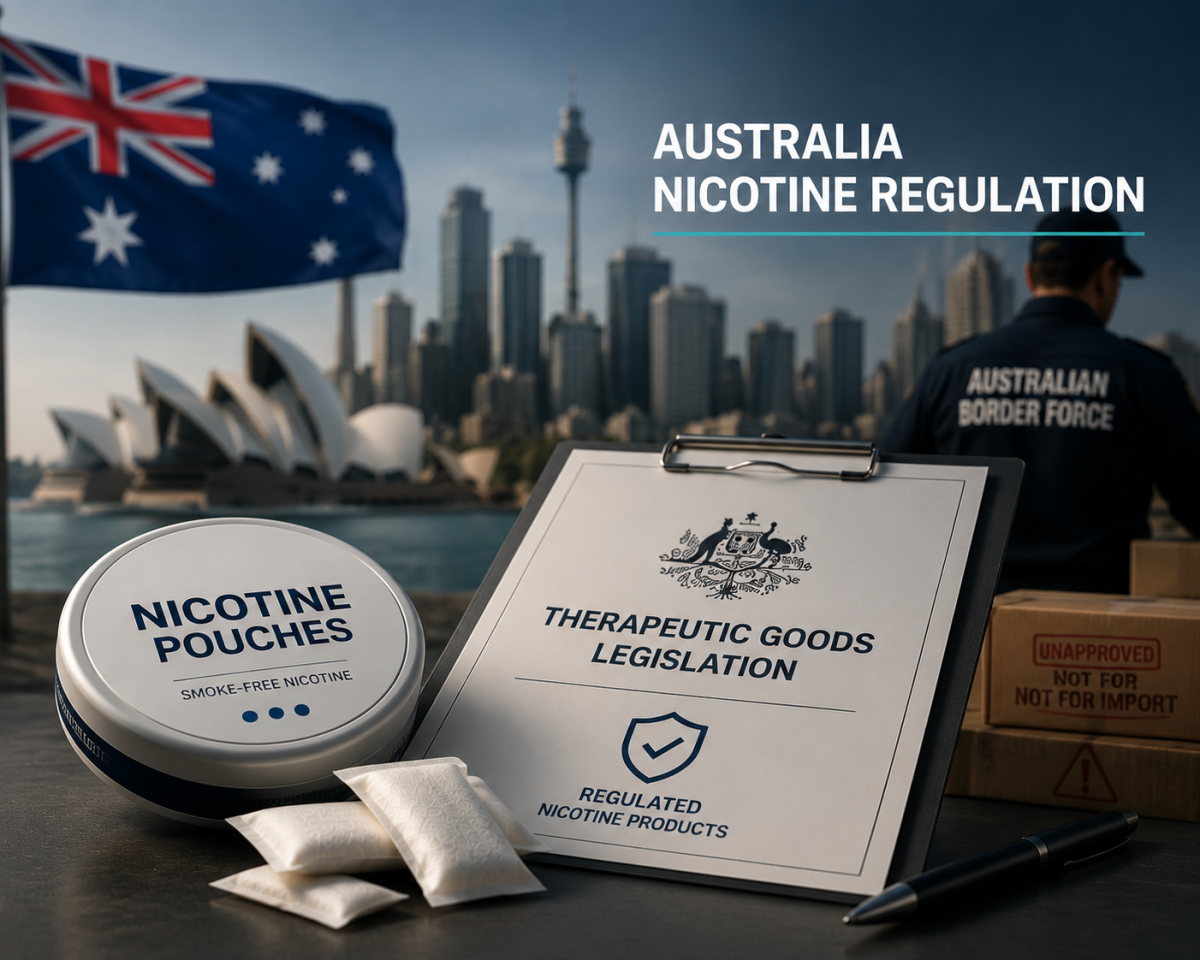
Australia’s TGA Places Nicotine Pouches Under Therapeutic Goods Rules From July 24, Blocking Imports of Unapproved Products
Australia is strengthening controls on nicotine pouches under its existing therapeutic goods regulatory framework. According to the Therapeutic Goods Administration (TGA), nicotine pouch products must meet regulatory requirements, and unapproved products cannot be legally imported. The move follows Australia’s broader approach of maintaining strict oversight of nicotine products, including nicotine-containing vapes. As nicotine pouches expand globally, Australia’s regulatory approach highlights growing differences in how countries manage emerging smoke-free nicotine products.
Regulations
Jul.27
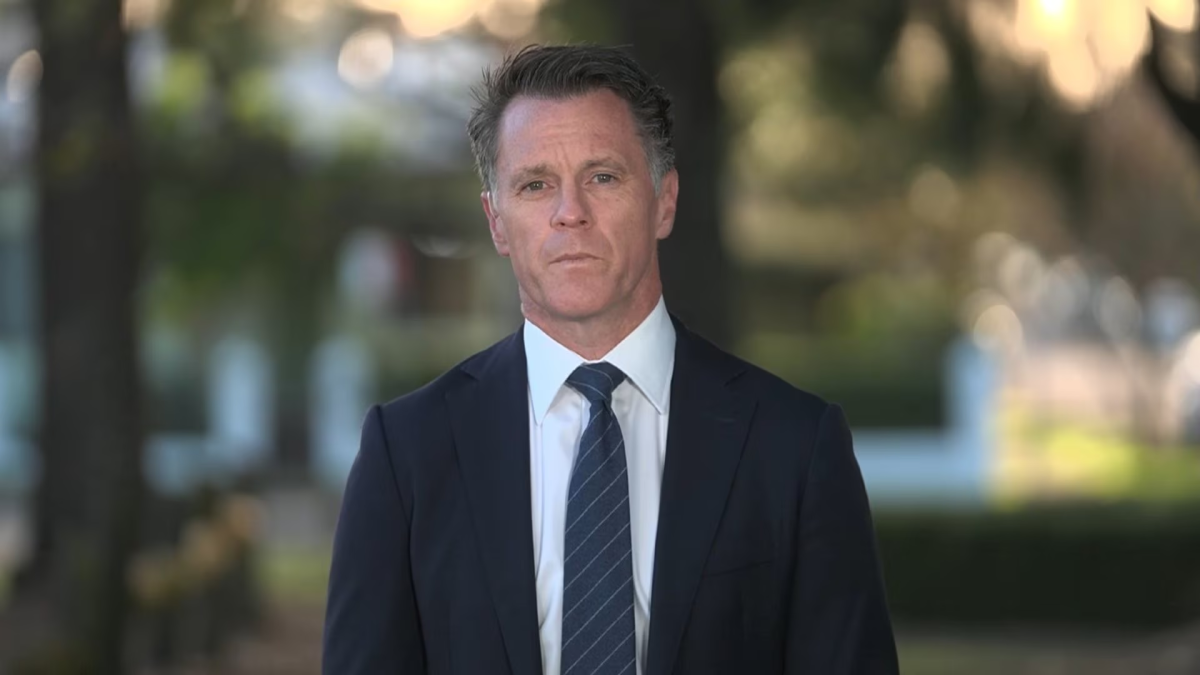
Australia Tobacco Tax Debate Spreads Within Labor as NSW Premier Minns Reaffirms Support for a Cut
Australia’s tobacco excise debate is increasingly exposing differences within the governing Labor Party. New South Wales Labor Premier Chris Minns reaffirmed on September 8 that he supports reducing tobacco excise, arguing that current tax settings are pushing consumers toward cheaper black-market cigarettes. Federal Health Minister Mark Butler continues to oppose an excise cut, while Treasurer Jim Chalmers and Assistant Treasurer Daniel Mulino have recently stopped short of ruling out future changes. The divergence follows the opposition Coalition’s proposal to cut tobacco excise by 80%.
Sep.08
 PMI Opens Generative AI Center in Portugal to Support Global Operations
PMI Opens Generative AI Center in Portugal to Support Global Operations
According to information released by Portugal’s Trade & Investment Agency (AICEP) in July 2026, Philip Morris International (PMI) has established a global Generative Artificial Intelligence Factory (GenAI Factory) at its Portuguese subsidiary Tabaqueira. The center will support PMI’s global operations by developing and deploying AI solutions focused on industrial process optimization, data analytics, operational automation and AI application development. The initiative strengthens Portugal’s role in PMI’s global technology and innovation network.
Aug.27
Retail Case Study | Wisconsin Vape Market One Year After New Regulations: Johnny Vapes Reports 80% Sales Decline as Consumers Shift Online and Across State Lines
According to WNCY on August 24, 2026, some independent vape retailers in Wisconsin say they have faced significant business pressure one year after new vape regulations took effect. Johnny Vapes, a retailer operating in northeast Wisconsin, said its store count fell from seven locations to four, sales declined by about 80%, and roughly 90% of its inventory was affected. Retailers said some consumers have shifted to online purchases or traveled to neighboring Michigan to buy vape products. The case highlights how local regulations can reshape retail operations, inventory management and consumer purchasing patterns.
Aug.28
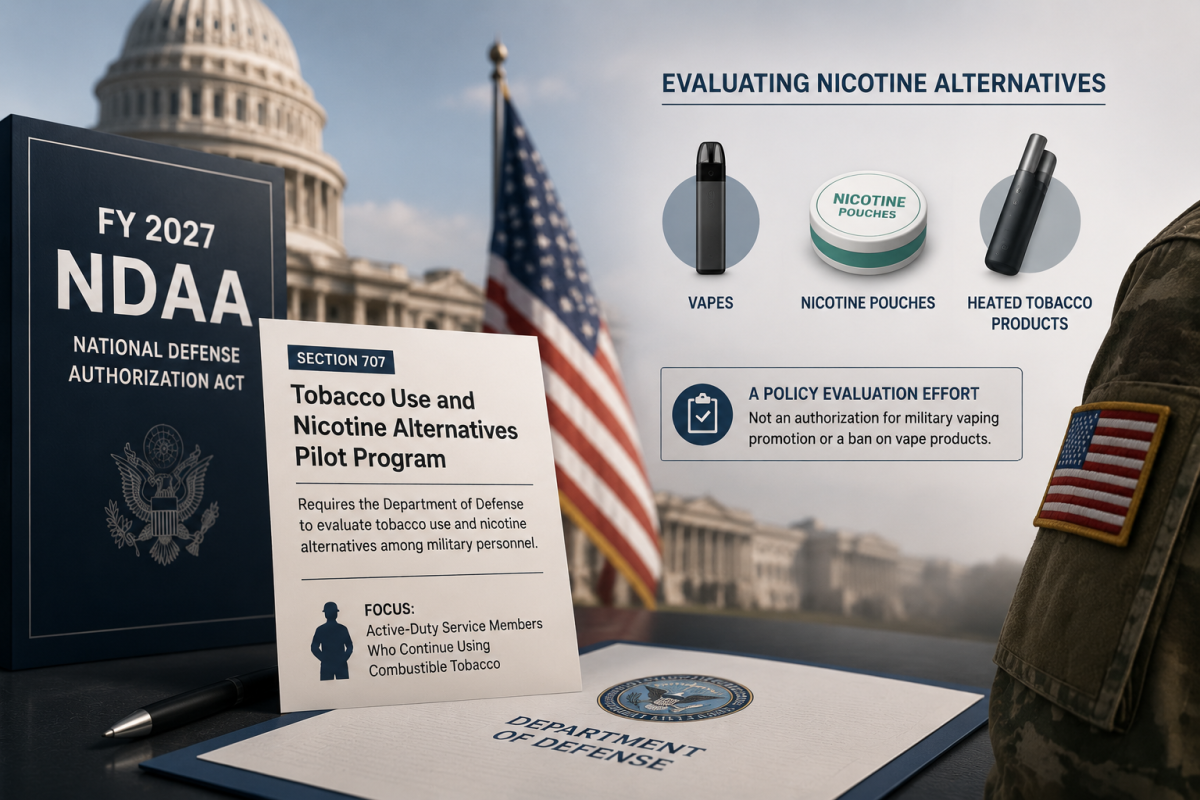
U.S. House Defense Bill Includes Pilot Review of Vapes, Nicotine Pouches and Heated Tobacco for Military Smokers
On July 23, 2026, the U.S. House of Representatives passed its version of the Fiscal Year 2027 National Defense Authorization Act (NDAA), which includes Section 707 provisions requiring the Department of Defense to evaluate tobacco use and nicotine alternatives among military personnel. The pilot program would examine products including vapes, nicotine pouches and heated tobacco products, primarily among active-duty service members who continue using combustible tobacco. The provision is a policy evaluation effort, not an authorization for military vaping promotion or a ban on vape products.
Jul.28
Philip Morris Italia Invests €1 Million to Upgrade Retail Network, Supporting 45,000 Tobacco Shops in Smoke-Free Shift
Philip Morris Italia has launched the Trade Academy program, investing €1 million to provide training and development support for approximately 45,000 tobacco retailers in Italy. The initiative aims to strengthen retailers’ capabilities in heated tobacco products, digital tools and consumer services. The move reflects how nicotine companies are increasingly investing in retail networks and frontline capabilities as new nicotine products become more important in the market.
Jul.28