Commercial Hologram Growth to Continue in 2023: IHMA Report

Jan.30.2023
Commercial Hologram Growth to Continue in 2023: IHMA Report
The holographic industry is expected to keep growing, with the integration of new technologies and a focus on sustainability.

According to the International Hologram Manufacturers Association (IHMA), which is celebrating its 30th anniversary, commercial holography is set to experience strong growth in 2023 despite facing global challenges.


The International Hologram Manufacturers Association (IHMA) is a non-profit organization comprising over 70 leading hologram manufacturing companies from around the world.


According to Paul Dunne, the president of IHMA, a verification and tracking system featuring holographic images will continue to support international efforts in strengthening both public and private protection strategies over the next twelve months. This system will aid governments and law enforcement agencies.


The act of counterfeiting remains a significant global threat both presently and in the future, constantly exposing governments, brands, and the public to potential risks. However, efforts to effectively curb this issue will continue, with the aim of reducing its impact on society as much as possible, despite facing economic, social, and global supply chain challenges. It is expected that growth will be seen by 2023, as countries strengthen and advance their holographic anti-counterfeiting programs.


These holographic images will be further integrated with other technologies to create an intuitive brand engagement plan. In addition, scanning the QR code on the label serves as a secondary method for product verification. This provides a simple and unified platform for brands to interact and engage with their customers.


Dun En believes that by 2023, holographic images on electronic cigarette labels will continue to be part of a wider range of product lifecycle tracking functions. He says that combining certification and tracking will give brand owners complete visibility and control over everything from sourcing raw materials to recycling.


This year, as more and more holographic capabilities are being introduced internally, high-security printing applications will continue to grow. This shortens the innovation cycle, allowing printers to specify their technology for new tasks such as electronic cigarettes, banknotes, product labels, and more.


Sustainability will also be one of the key themes for the next 12 months, as manufacturers develop strategies to reduce their carbon footprint as part of their corporate responsibility strategy. According to Dunne, "IHMA will lead efforts through its sustainability working group, encouraging best practices by sharing information and showcasing initiatives throughout the entire company.


Disclaimer

This article is provided solely for professional research, industry discussion, and informational purposes. Any references to brands, companies, products, technologies, or policies are made for factual reporting and analytical purposes only, and do not constitute endorsement, recommendation, promotion, or advertising by 2Firsts.

Nicotine-containing products, including but not limited to cigarettes, e-cigarettes, heated tobacco products, and nicotine pouches, carry significant health risks. Readers are responsible for complying with all applicable laws and regulations in their respective jurisdictions, including age restrictions and access limitations.

The information contained in this article should not be regarded as investment, legal, medical, regulatory, or commercial advice. While 2Firsts strives to ensure the accuracy and reliability of its content, it does not assume liability for any direct or indirect loss arising from errors, omissions, inaccuracies, or reliance on the information contained herein.

This article is not intended for individuals below the legal age for accessing tobacco or nicotine-related information in their jurisdiction.


Copyright Notice

This article is either original content produced by 2Firsts or content reproduced, translated, summarized, or adapted from third-party sources with attribution where applicable. The intellectual property rights of the original content remain with 2Firsts or the respective original rights holders.

No individual or organization may copy, reproduce, distribute, republish, modify, translate, or otherwise use this content without prior authorization. Any unauthorized use may result in legal action.

For copyright-related inquiries, corrections, or removal requests, please contact: info@2firsts.com.


AI-Assisted Translation and Editing Notice

Portions of this article may have been translated, edited, or reviewed with the assistance of artificial intelligence tools to improve efficiency and readability. Due to the limitations of AI-assisted translation and editing, discrepancies, omissions, or inaccuracies may exist when compared with the original source.

Where applicable, readers are advised to refer to the original source for the most complete and accurate information. If you identify any errors or believe that any content infringes upon your rights, please contact us at info@2firsts.com, and we will review and address the matter promptly.

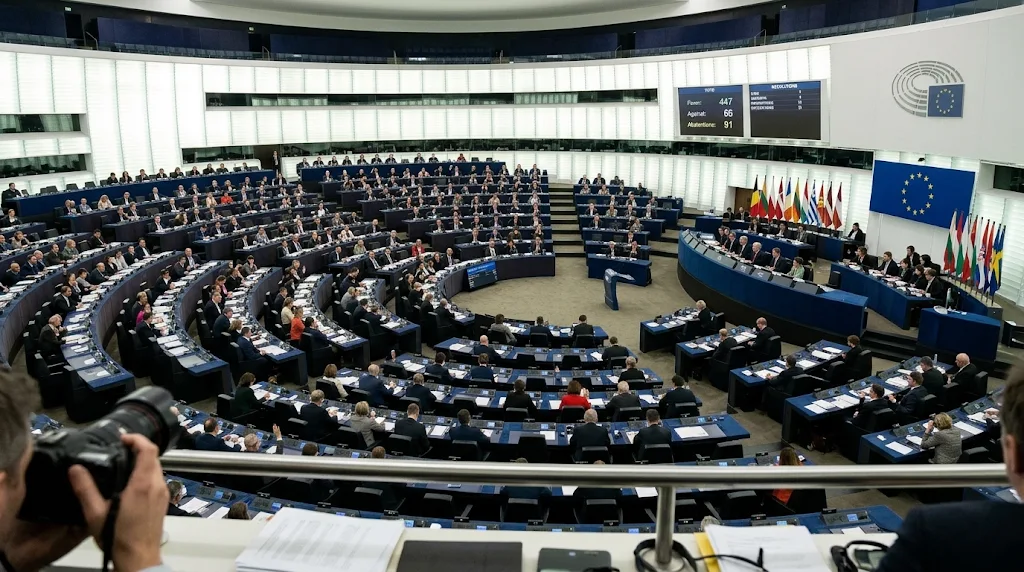
EU TPD Revision May Slip to 2027: Parliament Backs Wider Nicotine Rules by 447 Votes as Commission Impact Assessment Reportedly Receives Negative Opinion
On Nov 12, 2026, the European Parliament adopted a resolution on implementing Europe’s Beating Cancer Plan by 447 votes to 66, with 91 abstentions, urging the European Commission to speed up revisions to the Tobacco Products Directive (TPD) and Tobacco Advertising Directive (TAD). Parliament called for broader regulation of e-cigarettes, heated tobacco, nicotine pouches and other emerging nicotine products, proposing measures on packaging, health warnings, flavors, ingredient reporting, online age verification, digital marketing and premarket health impact assessments. EUNews and others reported that the Commission’s Regulatory Scrutiny Board (RSB) issued a negative opinion on the revisions’ impact assessment on Nov 9. The Commission had scheduled the initiative for December 2026, but the reported setback could push the legislative proposal into 2027. No revised official timetable has been announced, and Parliament’s resolution does not amend existing EU law.
Regulations
Nov.19
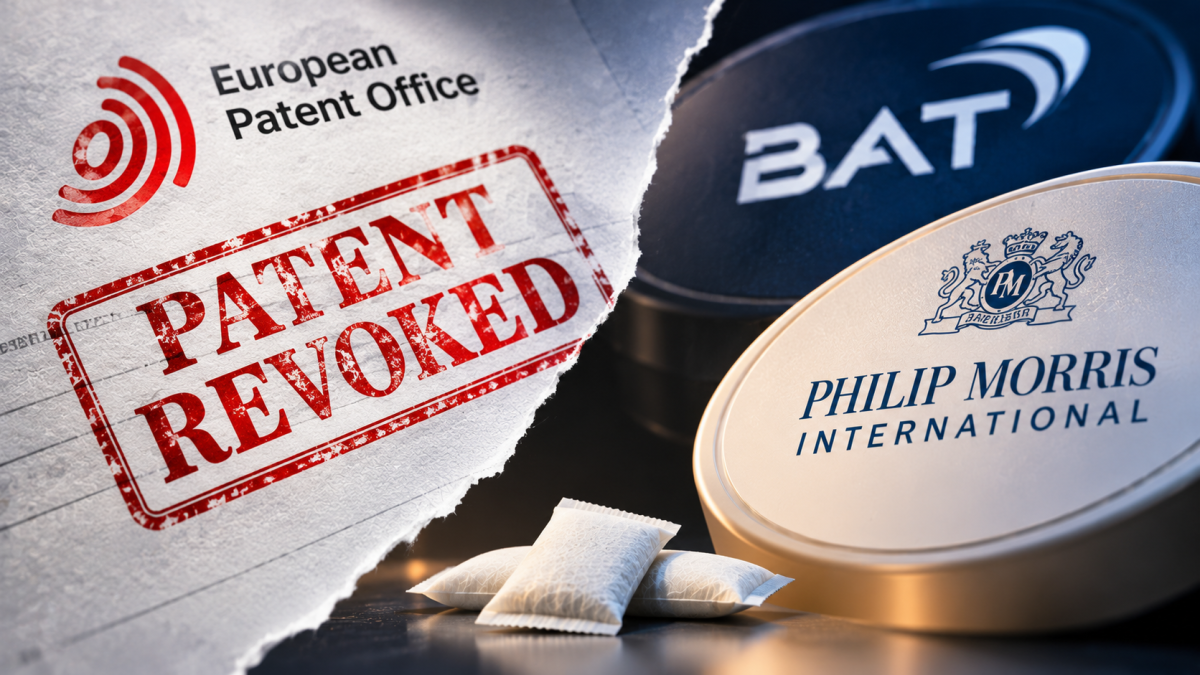
Philip Morris Loses Two European Nicotine Pouch Patents in a Month Following BAT Challenges Over Nicotine Release and Formulation Technology
The European Patent Office (EPO) published an appeal decision on November 17, 2026, revoking Philip Morris Products S.A.'s European nicotine pouch patent EP 3773494, covering a formulation involving free-base nicotine, ion-exchange resin and a water content of at least 15%. The decision followed an opposition and appeal brought by British American Tobacco (BAT) entity Nicoventures Trading Limited. Philip Morris withdrew its approval of the patent text during the appeal, leading the EPO to revoke the patent. A separate European patent, EP 3809884, covering the distribution of nicotine between a pouch membrane and its internal composition, had been revoked on September 24 following a challenge from another BAT entity. The patents share a 2019 priority basis, while related European divisional applications also exist.
company
Nov.18 by 2Firsts Perspectives
Italy Proposes Earlier Vape and HTP Tax Hikes, New Rules for E-Liquid Pricing, Exclusive Deals and Distribution
Italy's proposed 2027–2029 budget would bring forward scheduled tax increases for e-cigarette liquids and heated tobacco products from January 1, 2028, to July 1, 2027. The consumption tax coefficient for nicotine-containing e-liquids would rise from 20% to 22%, that for nicotine-free liquids and applicable flavorings from 15% to 17%, and the heated-tobacco coefficient from 41% to 42%. The bill would also introduce official retail price schedules for e-liquids, restrict exclusive agreements between retailers and suppliers, and limit single-brand-dominated displays, sales incentives and bundled offers. Importing, authorized warehousing and retailer sourcing arrangements would also change. The proposals remain subject to parliamentary approval and subsequent implementing regulations.
Regulations
Nov.04
BAT Adds Former Apple General Counsel Bruce Sewell to Board as Finance, Legal, Marketing and Regional Leadership Shift
British American Tobacco has appointed former Apple Senior Vice President, General Counsel and Secretary Bruce Sewell as an independent non-executive director, effective January 1, 2027. He will also join BAT's Audit and Nominations Committees. BAT Chair Luc Jobin highlighted Sewell's experience in technology, government and regulatory affairs, public-company governance and AI-company boards. Over the past 18 months, BAT has changed or announced changes to its CFO, general counsel, CMO and APMEA regional leadership, while the main board has also seen multiple changes. The appointment comes as BAT advances Horizon 2030 and its Fit2Win transformation while expanding New Categories and reshaping parts of its digital, technology and operating structure.
Business
Oct.29
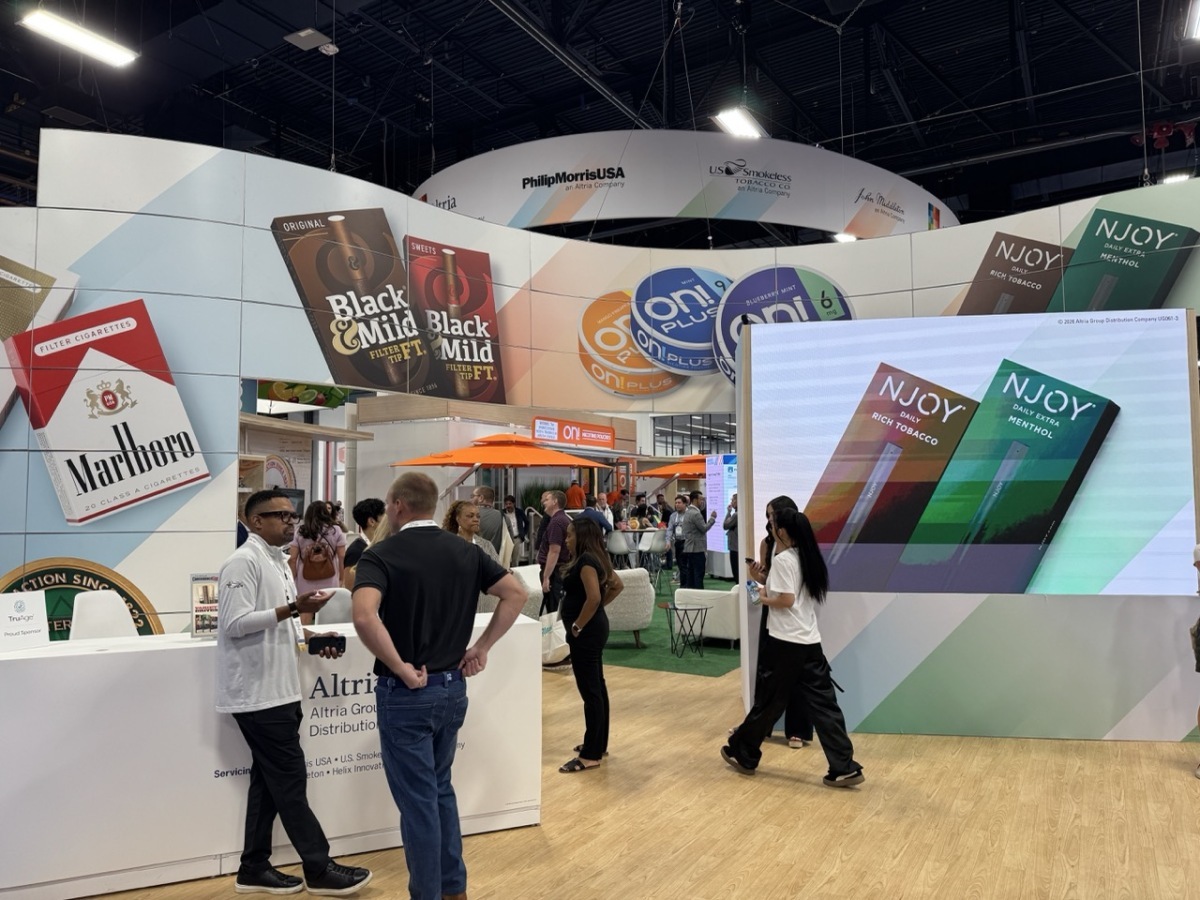
Special Report | Altria's NACS Booth Raises Questions Over U.S. Tobacco Advertising Warnings
During its coverage of Altria's booth at NACS Show 2026, 2Firsts documented product displays that prompted questions about U.S. tobacco advertising warning requirements. Following public comments from a former FDA official, 2Firsts sought responses from Altria and independently consulted U.S. regulatory lawyer Azim Chowdhury. Altria maintained that its B2B communications complied with applicable laws, while Chowdhury explained that federal warning rules provide no general trade-show exemption for e-cigarettes and nicotine pouches. The special report examines the broader regulatory implications.
Nov.04
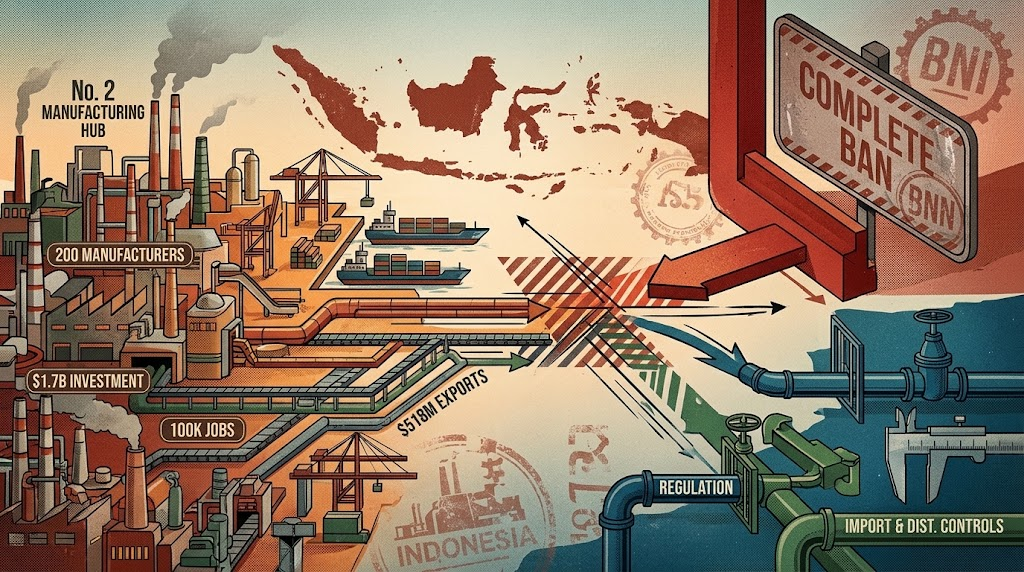
Special report|Indonesia's Vape Industry Has 200 Manufacturers and $1.7 Billion in Investment. Could a Regulatory Divide Derail Its Rise as the World's No. 2 Manufacturing Hub After Shenzhen?
Indonesia's Ministry of Industry said at a November 3, 2026, policy forum that the country has about 200 electronic cigarette companies, Rp31 trillion (approximately $1.71 billion) in cumulative industry investment and around 100,000 jobs across the supply chain. The National Narcotics Agency is seeking a comprehensive ban on vape use and circulation, while the industry ministry favors tighter import, product-standard and distribution controls. Indonesia exported approximately $518 million in vaping products in 2025, and Chinese manufacturers including Smoore, GEEKVAPE and Jinjia Group have established local operations. An international logistics specialist interviewed by 2Firsts said more Chinese vape companies began production in Indonesia from the second half of 2025, accompanied by increased shipments of manufacturing equipment and investment in logistics facilities. The regulatory debate comes as Indonesia expands its role in international vaping manufacturing.
Special Report
Nov.05