Controversial Juul E-cigarettes Removed from Market by FDA

Jun.24.2022
Controversial Juul E-cigarettes Removed from Market by FDA
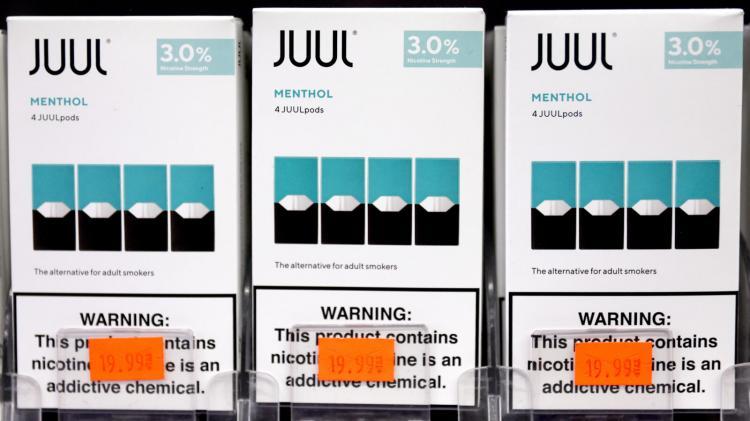
All Juul e-cigarette products are being taken off the market by the FDA due to potentially harmful chemicals.

The US Food and Drug Administration has removed all electronic cigarette products manufactured by controversial company Juul, but not for the reasons one might expect.


The US Food and Drug Administration (FDA) has announced its plans to remove Juul products from the market. This decision is based on toxicology data and the potential risk of harmful chemicals that have been found to seep out from the company's proprietary pods, rather than their appeal to young people.


This move by the FDA is the most significant action taken to date against a major tobacco company and could spell disaster for the Juul brand.


Disclaimer

This article is provided solely for professional research, industry discussion, and informational purposes. Any references to brands, companies, products, technologies, or policies are made for factual reporting and analytical purposes only, and do not constitute endorsement, recommendation, promotion, or advertising by 2Firsts.

Nicotine-containing products, including but not limited to cigarettes, e-cigarettes, heated tobacco products, and nicotine pouches, carry significant health risks. Readers are responsible for complying with all applicable laws and regulations in their respective jurisdictions, including age restrictions and access limitations.

The information contained in this article should not be regarded as investment, legal, medical, regulatory, or commercial advice. While 2Firsts strives to ensure the accuracy and reliability of its content, it does not assume liability for any direct or indirect loss arising from errors, omissions, inaccuracies, or reliance on the information contained herein.

This article is not intended for individuals below the legal age for accessing tobacco or nicotine-related information in their jurisdiction.


Copyright Notice

This article is either original content produced by 2Firsts or content reproduced, translated, summarized, or adapted from third-party sources with attribution where applicable. The intellectual property rights of the original content remain with 2Firsts or the respective original rights holders.

No individual or organization may copy, reproduce, distribute, republish, modify, translate, or otherwise use this content without prior authorization. Any unauthorized use may result in legal action.

For copyright-related inquiries, corrections, or removal requests, please contact: info@2firsts.com.


AI-Assisted Translation and Editing Notice

Portions of this article may have been translated, edited, or reviewed with the assistance of artificial intelligence tools to improve efficiency and readability. Due to the limitations of AI-assisted translation and editing, discrepancies, omissions, or inaccuracies may exist when compared with the original source.

Where applicable, readers are advised to refer to the original source for the most complete and accurate information. If you identify any errors or believe that any content infringes upon your rights, please contact us at info@2firsts.com, and we will review and address the matter promptly.


Nicotine Beyond Tobacco? Cell Study Signals Emerging Shift in Production Systems
Researchers at the Chinese Academy of Sciences reconstructed nicotine biosynthesis in non-tobacco plants and yeast systems, highlighting how advances in synthetic biology could gradually reshape future nicotine production technologies and challenge regulatory frameworks built around tobacco-derived definitions.
Special Report
May.07
UK Vaping Products Duty to Raise £565 Million by 2030/31
The UK will introduce Vaping Products Duty on all vaping liquids from October 1, 2026, with government revenue forecast to rise from £135 million in 2026/27 to £565 million by 2030/31.
Jun.18
Special Report | Russian Vape Compromise Faces First Hurdles
Russia’s regional vape-ban model is facing early legal and political tests, as Perm Krai moves ahead before federal legislation is fully adopted. The case highlights uncertainty over regional authority, concerns from business groups about market fragmentation, and the risk that pressure against regional bans could revive calls for a stricter nationwide prohibition.
Industry Insight
May.28
UK Retailers Call on Government to Better Resource Trading Standards to Fight Illicit Tobacco and Vape Trade
Retailers in the UK have called on the government to provide greater resources to Trading Standards in response to the growing trade in illicit tobacco and vapes. Fed national vice-president Hemanshu Patel made the call during a panel discussion at the National Convenience Show in Birmingham on April 15.
Apr.21 by 2FIRSTS.ai
    Shenzhen Tobacco Monopoly Bureau Moves to Advance E-Cigarette Regulatory System 2.0
Shenzhen Tobacco Monopoly Bureau Moves to Advance E-Cigarette Regulatory System 2.0
The Shenzhen Tobacco Monopoly Bureau recently held the city’s 2026 e-cigarette regulation work conference to implement higher-level meeting requirements, review the city’s e-cigarette regulatory work in 2025 and during the 14th Five-Year Plan period, assess the current situation, and deploy the rollout of E-cigarette Regulatory System 2.0 across Shenzhen’s tobacco commercial system.
Apr.28 by 2FIRSTS.ai
German Environment Minister Plans Bill to Ban Disposable E-Cigarettes This Year
German Federal Environment Minister Carsten Schneider said he is preparing legislation to ban disposable e-cigarettes and will present a bill this year. Industry data estimated that legal e-cigarette sales in Germany rose by about one quarter in 2025 to €2.4 billion. Refillable devices are not expected to be affected by the ban.
May.09 by 2FIRSTS.ai