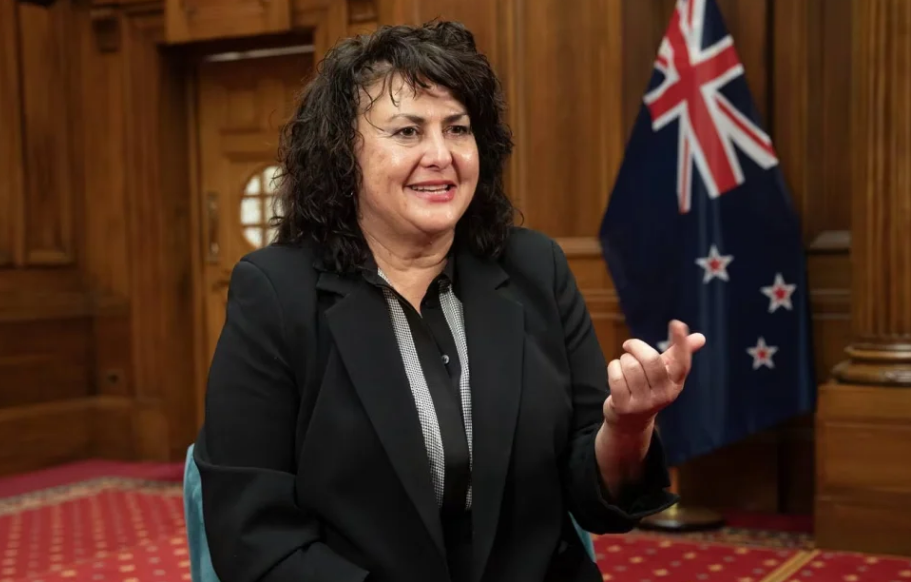
On January 25, the New Zealand Herald reported that Casey Costello, the Deputy Minister of Health for New Zealand, has put forward a series of innovative ideas for tobacco control, sparking widespread controversy. One of the proposals is to freeze cigarette taxes in order to prevent cigarettes from being affected by overall inflation.
Currently, the tobacco consumption tax is subjected to annual adjustments based on the Consumer Price Index (CPI). Costello is now proposing a suggestion to freeze the growth of the tobacco-related CPI for three years.
However, during the interview with Costello, when asked about this proposal, she stated that she hadn't considered it at all. She said, "I haven't even discussed it. It's not something I specifically sought advice on.
Despite stating in the interview that she did not seek any advice on the matter, the report from the Department of Health tells a different story. The report asked Costello, "Do you wish to receive recommendations regarding the freeze on tobacco-related excise for the next three years starting from January 2024?" The option "yes" on this report was circled and has been signed and confirmed by Costello on December 20, 2023.
Furthermore, although Costello has not confirmed that she is proposing a freeze in the increase of consumption tax, she has shown an openness to this practice.
She expressed, "This is a significant burden for the most vulnerable individuals in our society, as they are dependent on nicotine and yet we continuously penalize this segment of the population." She sympathizes with the freeze in this practice because we are currently dealing with a small group that is under immense economic pressure.
However, Janet Hoek, a professor of public health at the University of Otago, believes that this would put tobacco products in a favorable position compared to other consumer goods. She said, "This freezing measure will effectively shield tobacco from the impact of inflation." Hoek also pointed out that recently, due to the growth of the Consumer Price Index (CPI), we have seen the typical cigarette prices increase by around $2, which may be enough to make smokers consider quitting.
In addition, the New Zealand government has further plans for reforming smoking and e-cigarette laws, such as prohibiting the sale of tobacco among those born on or after January 1, 2009, in order to create a smoke-free generation.
On this basis, the Costa-Lawson Proposal aims to increase the penalties for selling e-cigarettes to minors. Currently, the fine for selling tobacco to minors is $10,000, while in other cases it is $5,000. Although no e-cigarette vendors have been prosecuted for selling to minors, it is understood that Costa-Lawson is proposing to raise the maximum fine for selling e-cigarettes to minors to $30,000.
We welcome news tips, article submissions, interview requests, or comments on this piece.
Please contact us at info@2firsts.com, or reach out to Alan Zhao, CEO of 2Firsts, on LinkedIn
Notice
1. This article is intended solely for professional research purposes related to industry, technology, and policy. Any references to brands or products are made purely for objective description and do not constitute any form of endorsement, recommendation, or promotion by 2Firsts.
2. The use of nicotine-containing products — including, but not limited to, cigarettes, e-cigarettes, nicotine pouchand heated tobacco products — carries significant health risks. Users are responsible for complying with all applicable laws and regulations in their respective jurisdictions.
3. This article is not intended to serve as the basis for any investment decisions or financial advice. 2Firsts assumes no direct or indirect liability for any inaccuracies or errors in the content.
4. Access to this article is strictly prohibited for individuals below the legal age in their jurisdiction.
Copyright
This article is either an original work created by 2Firsts or a reproduction from third-party sources with proper attribution. All copyrights and usage rights belong to 2Firsts or the original content provider. Unauthorized reproduction, distribution, or any other form of unauthorized use by any individual or organization is strictly prohibited. Violators will be held legally accountable.
For copyright-related inquiries, please contact: info@2firsts.com
AI Assistance Disclaimer
This article may have been enhanced using AI tools to improve translation and editorial efficiency. However, due to technical limitations, inaccuracies may occur. Readers are encouraged to refer to the cited sources for the most accurate information.
We welcome any corrections or feedback. Please contact us at: info@2firsts.com