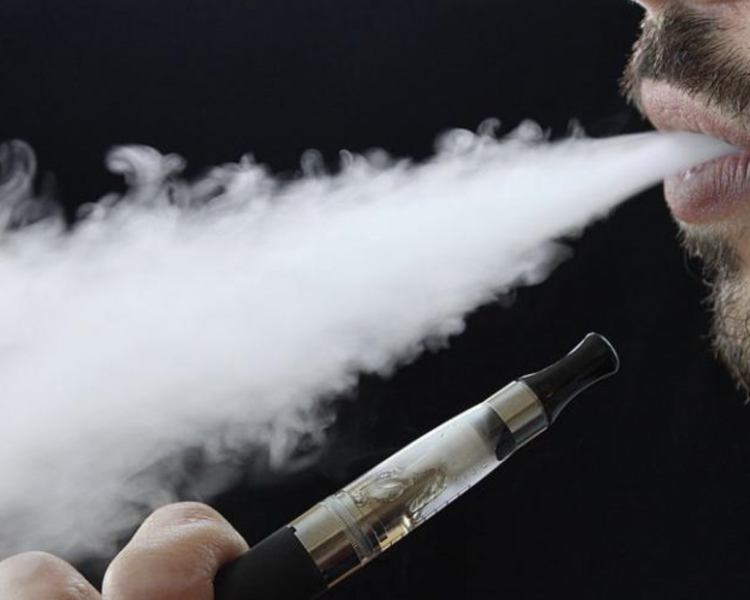
Master Electricians warn that young people who use DIY methods to charge disposable e-cigarette devices are at risk of their hands exploding. A school in Taranaki has issued a warning to parents this week to be aware of this practice.
Within our community, a small number of young people have been taking old electronic cigarettes with depleted batteries, opening them up, exposing the battery, and recharging it so that it can be used again.
This is very clever, but also very dangerous," the email stated when referring to this hasty charging method, but did not provide detailed explanations of potential issues.
Bernie McLaughlin, CEO of Master Electricians, expressed great concern over this practice.
My initial reaction is that these individuals are actually circumventing many of the built-in safety features of the product. By doing so, they are actually putting themselves at risk of a lithium battery exploding in their hands.
When lithium is ignited, it becomes extremely unstable, and attempting to charge these devices with charging methods that are far from the safety standards of the industry really concerns me.
We have seen it numerous times, whether it be cars, electric scooters, or e-cigarettes - in reality, lithium is an extremely unstable product. Once ignited, it is very difficult to extinguish.
According to McLaughlin, using a charging cable without short-circuit protection means that it may explode or overheat and melt. But the real danger is overcharging the battery.
Early on we observed that electronic cigarettes, in particular, are prone to explosions which can cause severe burns to the legs or arms of individuals, should they explode in a person's pocket. This is perhaps the biggest danger as it is associated with the lithium used in electronic cigarettes.
McLaughlin said that it was his first time hearing about this practice, but he wasn't surprised that ambitious individuals were looking for ways to reuse disposable items.
The concerning issue is that the payment methods for these items are not the ones truly designated by the manufacturers, hence, although they are ambitious, they can be very dangerous.
McLaughlin advises against anyone opening devices not designed for repair, whether they be electronic cigarettes or household appliances.
Once it has access to electricity, it no longer cares whether or not you are its owner; instead, it may potentially harm you.
He issued a warning to his family.
If parents discover any damage to the charger, it's not worth keeping it around. The best option is to ensure that it's unplugged and then permanently cut the wire and dispose of it so that it can't be used.
Of course, if you discover that the e-cigarette is not designed for multiple uses and appears to be charging in a non-compliant manner, I strongly advise you to handle it properly.
Statement:
This article is compiled from third-party information and is intended for industry communication and learning.
This article does not represent the views of 2FIRSTS and 2FIRSTS cannot confirm the truth or accuracy of the article's content. The translation of this article is only for the purpose of industry communication and research.
Due to limitations in the translation process, the translated article may not fully express the original text. Please refer to the original text for accuracy.
2FIRSTS fully aligns with the Chinese government on any domestic, Hong Kong, Macau, Taiwan, and foreign-related statements and positions.
The compilation and ownership of information contained herein vest in the original media and author. In case of copyright infringement, please contact us for prompt removal.
Disclaimer
This article is provided solely for professional research, industry discussion, and informational purposes. Any references to brands, companies, products, technologies, or policies are made for factual reporting and analytical purposes only, and do not constitute endorsement, recommendation, promotion, or advertising by 2Firsts.
Nicotine-containing products, including but not limited to cigarettes, e-cigarettes, heated tobacco products, and nicotine pouches, carry significant health risks. Readers are responsible for complying with all applicable laws and regulations in their respective jurisdictions, including age restrictions and access limitations.
The information contained in this article should not be regarded as investment, legal, medical, regulatory, or commercial advice. While 2Firsts strives to ensure the accuracy and reliability of its content, it does not assume liability for any direct or indirect loss arising from errors, omissions, inaccuracies, or reliance on the information contained herein.
This article is not intended for individuals below the legal age for accessing tobacco or nicotine-related information in their jurisdiction.
Copyright Notice
This article is either original content produced by 2Firsts or content reproduced, translated, summarized, or adapted from third-party sources with attribution where applicable. The intellectual property rights of the original content remain with 2Firsts or the respective original rights holders.
No individual or organization may copy, reproduce, distribute, republish, modify, translate, or otherwise use this content without prior authorization. Any unauthorized use may result in legal action.
For copyright-related inquiries, corrections, or removal requests, please contact: info@2firsts.com.
AI-Assisted Translation and Editing Notice
Portions of this article may have been translated, edited, or reviewed with the assistance of artificial intelligence tools to improve efficiency and readability. Due to the limitations of AI-assisted translation and editing, discrepancies, omissions, or inaccuracies may exist when compared with the original source.
Where applicable, readers are advised to refer to the original source for the most complete and accurate information. If you identify any errors or believe that any content infringes upon your rights, please contact us at info@2firsts.com, and we will review and address the matter promptly.