Thailand's Department of Health Support Services survey shows e-cigarette use is trending towards younger age, with the average age of new users being just 13

Sep.05.2025
Thailand's Department of Health Support Services survey shows e-cigarette use is trending towards younger age, with the average age of new users being just 13
Thailand DHSS survey shows alarming trend of e-cigarette use among children and teens, with youngest user aged 6.

Key points:


·The use of e-cigarettes is becoming increasingly popular among minors: A national survey conducted by the Department of Health Support Services (DHSS) in Thailand revealed a trend of younger age groups using e-cigarettes, with the youngest new user being only 6 years old. 

·Peer pressure is a major factor: The survey found that peer pressure is the main driving force behind young people using e-cigarettes, with 45.56% of respondents stating that they tried e-cigarettes because of friends. 

·The role of social media: Social media plays a significant role in the exposure and spread of e-cigarettes, with Facebook and TikTok being the main platforms for e-cigarette advertising, accounting for 27.88% and 27.60% respectively. 

·Age distribution of users: The highest proportion of e-cigarette users falls within the 19 to 25 age group (37.62%), followed by 16 to 18 year olds (29.26%) and 13 to 15 year olds (22.39%). 

·Lack of public awareness: The survey revealed a widespread lack of understanding of the dangers of e-cigarettes among the public, highlighting the need for increased attention and action on this issue.


According to a report by Bangkok Post on September 4, 2025, a nationwide survey conducted by the Department of Health Support Services (DHSS) in Thailand has revealed a concerning trend in the use of e-cigarettes by children and teenagers. The youngest new user was only 6 years old.


Peer pressure is considered to be one of the main reasons why teenagers start using e-cigarettes, with 45.56% of respondents stating that they tried e-cigarettes because of the influence of their friends.


Dr. Panuwat Panket, Director General of the Department of Health Service Support, stated that the department's Health Education Division conducted an online survey earlier this year, with 40,344 Thai adolescents participating. The survey collected data on their use of e-cigarettes.


According to data, the highest proportion of e-cigarette users are in the 19 to 25 age group, accounting for 37.62% of the total. Following them are teenagers aged 16 to 18, making up 29.26% of users, and teenagers aged 13 to 15, comprising 22.39% of users.


He also stated that the investigation found that the average age at which new users start using e-cigarettes is 13, with the youngest recorded age being 6.


In addition, the investigation also highlighted the key factors driving this behavior.


Social media has also played a significant role in the exposure of e-cigarettes, with Facebook being the main platform for e-cigarette advertisements, accounting for 27.88%, followed closely by TikTok at 27.60%.


Overall, the survey revealed a lack of awareness among people regarding the harmful effects of e-cigarettes.


We welcome news tips, article submissions, interview requests, or comments on this piece.

Please contact us at info@2firsts.com, or reach out to Alan Zhao, CEO of 2Firsts, on LinkedIn


Notice

1.  This article is intended solely for professional research purposes related to industry, technology, and policy. Any references to brands or products are made purely for objective description and do not constitute any form of endorsement, recommendation, or promotion by 2Firsts.

2.  The use of nicotine-containing products — including, but not limited to, cigarettes, e-cigarettes, nicotine pouchand heated tobacco products — carries significant health risks. Users are responsible for complying with all applicable laws and regulations in their respective jurisdictions.

3.  This article is not intended to serve as the basis for any investment decisions or financial advice. 2Firsts assumes no direct or indirect liability for any inaccuracies or errors in the content.

4.  Access to this article is strictly prohibited for individuals below the legal age in their jurisdiction.


Copyright


This article is either an original work created by 2Firsts or a reproduction from third-party sources with proper attribution. All copyrights and usage rights belong to 2Firsts or the original content provider. Unauthorized reproduction, distribution, or any other form of unauthorized use by any individual or organization is strictly prohibited. Violators will be held legally accountable.

For copyright-related inquiries, please contact: info@2firsts.com


AI Assistance Disclaimer


This article may have been enhanced using AI tools to improve translation and editorial efficiency. However, due to technical limitations, inaccuracies may occur. Readers are encouraged to refer to the cited sources for the most accurate information.

We welcome any corrections or feedback. Please contact us at: info@2firsts.com

India Duty-Free Nicotine Pouch Sales Face Regulatory Test as ZYN, FOX Classification Remains Open
The Bombay High Court has ruled that airport duty-free shops are not exempt from India's domestic regulatory laws merely because they operate beyond the customs barrier, leaving in place a sales halt covering ZYN and FOX nicotine pouches at Mumbai's international airport. The court, however, did not determine that the products necessarily qualify as "drugs" under India's Drugs and Cosmetics Act. The retailers have four weeks to submit product information to the appropriate authorities, including CDSCO, which must complete its review within 30 days of receiving the submissions.
Sep.24
Italy Proposes Earlier Vape and HTP Tax Hikes, New Rules for E-Liquid Pricing, Exclusive Deals and Distribution
Italy's proposed 2027–2029 budget would bring forward scheduled tax increases for e-cigarette liquids and heated tobacco products from January 1, 2028, to July 1, 2027. The consumption tax coefficient for nicotine-containing e-liquids would rise from 20% to 22%, that for nicotine-free liquids and applicable flavorings from 15% to 17%, and the heated-tobacco coefficient from 41% to 42%. The bill would also introduce official retail price schedules for e-liquids, restrict exclusive agreements between retailers and suppliers, and limit single-brand-dominated displays, sales incentives and bundled offers. Importing, authorized warehousing and retailer sourcing arrangements would also change. The proposals remain subject to parliamentary approval and subsequent implementing regulations.
Regulations
Nov.04
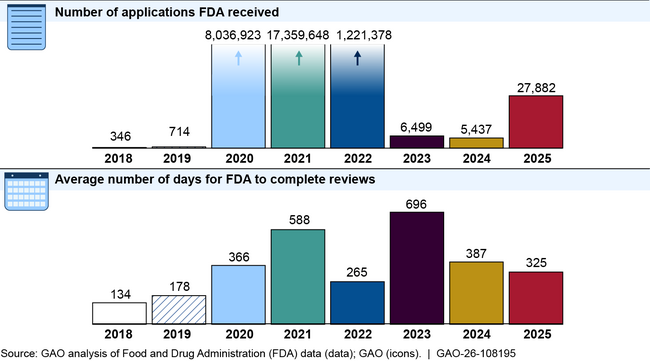
GAO Audit Finds Nearly 132,000 FDA Tobacco Applications Waiting an Average 1,266 Days as Nicotine Pouch Pilot Practices Move Into Vape PMTA Reviews
A U.S. Government Accountability Office audit found that 131,915 tobacco product applications submitted to the FDA since 2018 remained without a final review as of December 31, 2025, with pending applications waiting an average of 1,266 days. GAO also found FDA lacks the data needed to systematically determine whether scientific reviews meet applicable timelines. HHS agreed to upgrade the agency's tracking systems. At the same time, FDA has begun applying lessons from its nicotine pouch PMTA pilot to e-cigarette reviews, while changes to enforcement policy and electronic submissions are making the specific stage of a PMTA increasingly relevant to market access.
FDA
Oct.03
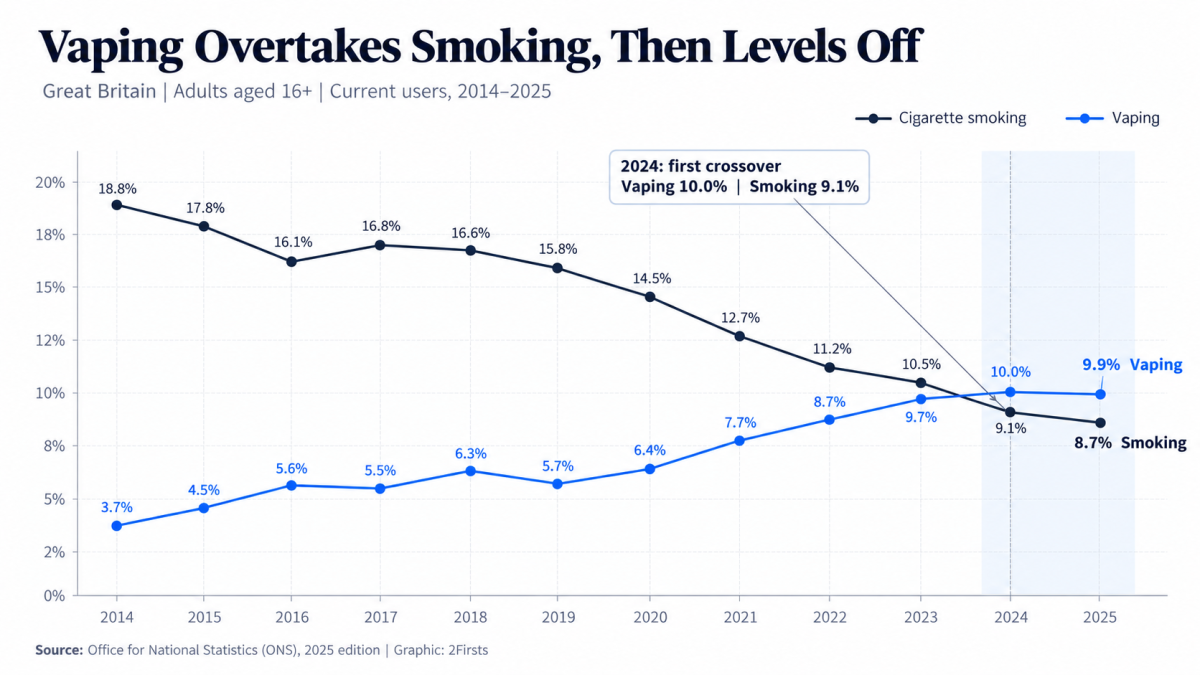
Latest UK ONS Data: Vaping Rate Edges Down to 9.9% in 2025, a Year After Overtaking Cigarette Smoking
Vaping prevalence in Great Britain edged down to 9.9% in 2025 from 10.0% in 2024, with the number of adult users holding at approximately 5.4 million for a second consecutive year, according to the Office for National Statistics (ONS). E-cigarette use had risen from 6.4% in 2020 to 10.0% in 2024, when it exceeded cigarette smoking prevalence for the first time. Cigarette smoking continued to decline to 8.7% in 2025, widening the gap to 1.2 percentage points. Daily vaping declined slightly, while usage among adults aged 25–34 increased despite falling rates in other age groups.
DATA
Oct.14
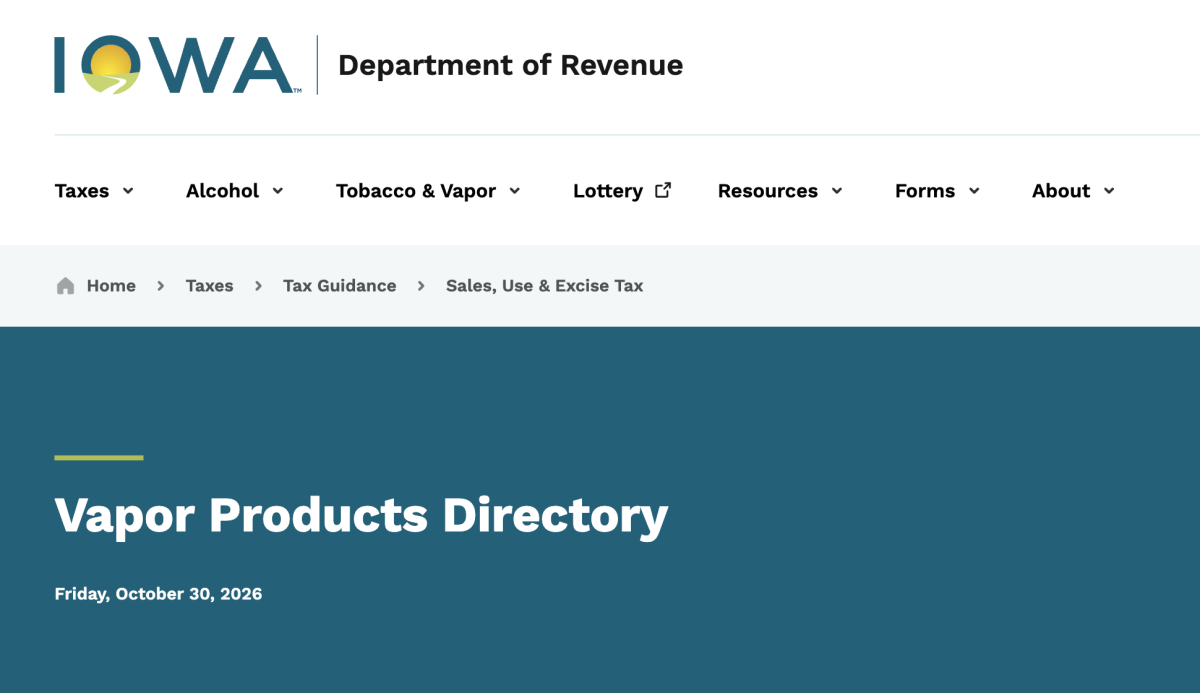
Iowa Sets November 16 Vape Directory Launch: Unlisted Products Face Sales Ban, Manufacturers $1,000 Daily Fines per Product
Iowa plans to publish its first vapor products directory on November 16, 2026, after which products not listed will be prohibited from sale or offer for sale in the state. The Department of Revenue expects to begin penalty enforcement on December 17, following an initial 21-business-day period focused on compliance education. Under House File 2677, retailers, distributors and wholesalers selling unlisted products face civil penalties of $300 per product per day, while manufacturers face $1,000 per product per day. Eligibility extends to FDA-authorized products and certain products meeting historical marketing and pending PMTA requirements. The directory program resumed after a federal appeals court vacated a preliminary injunction in July 2026.
Regulations
Nov.05
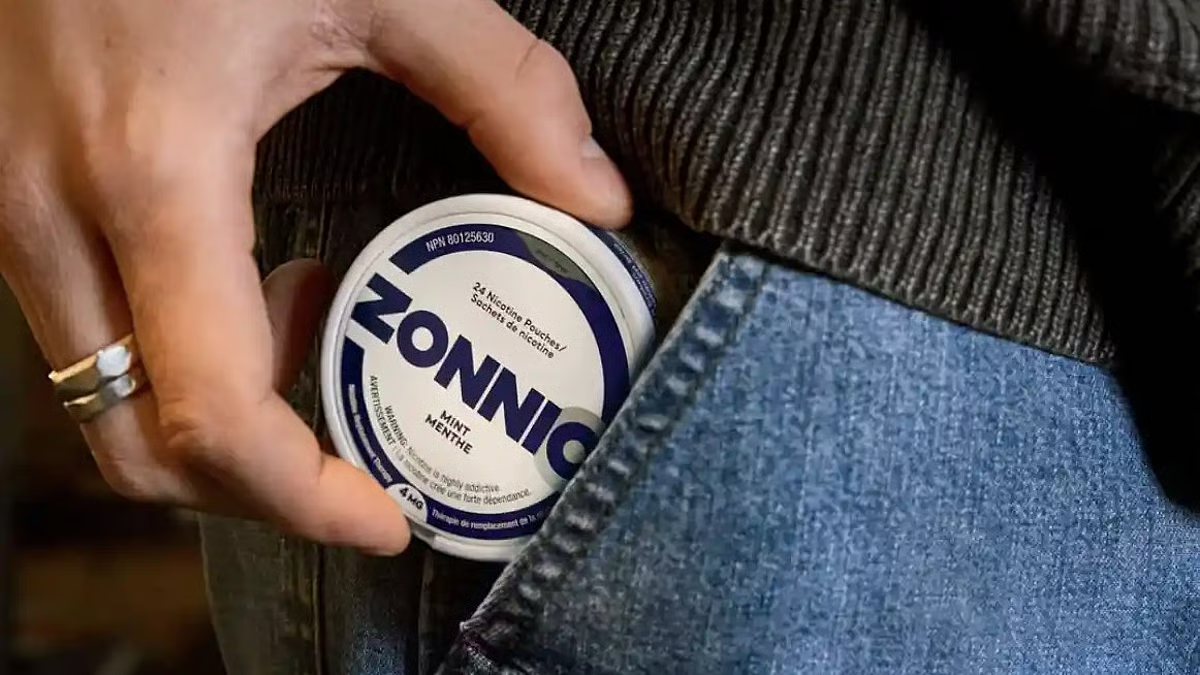
Canada Considers Easing Pharmacy-Only Nicotine Pouch Sales Rules, Potentially Reopening Convenience Store Channel
Canada's federal government is considering changes to current restrictions on where nicotine pouches can be sold, potentially allowing authorized products to return to convenience stores and other general retail channels, although no decision has been made. Since 2024, emerging nicotine replacement therapy products such as nicotine pouches have been largely restricted to behind-the-counter pharmacy sales. Health Canada, meanwhile, continues to recall unauthorized and higher-strength nicotine pouches, indicating that the current discussion concerns retail access for authorized products rather than a broad relaxation of nicotine pouch regulation.
Sep.14