E-cigarette Advertising Misleads Croatian Youth, Expert Warns

Regulations by 2FIRSTS.ai
Dec.15.2023
E-cigarette Advertising Misleads Croatian Youth, Expert Warns
Croatian public health expert warns of the dangers of e-cigarettes, highlighting the misleading advertising and accessibility to young people.

According to Croatian media outlet Glas Slavonije, Dr. Miodrag Beneš, a public health expert in Croatia, delivered a lecture to seventh and eighth-grade students at Ivan Brlić Mažuranić Elementary School in Orahovica on the topic of e-cigarettes.


He explicitly stated that e-cigarette advertising portrays it as a harmless product, misleading teenagers, and this phenomenon is particularly severe in Croatia.


Dr. Benešh, during a lecture, revealed that he has visited the majority of schools in the province and discovered students purchasing e-cigarettes near the school entrance. "E-cigarettes are marketed as a healthier alternative to regular cigarettes, but in reality, the opposite is true," he added.


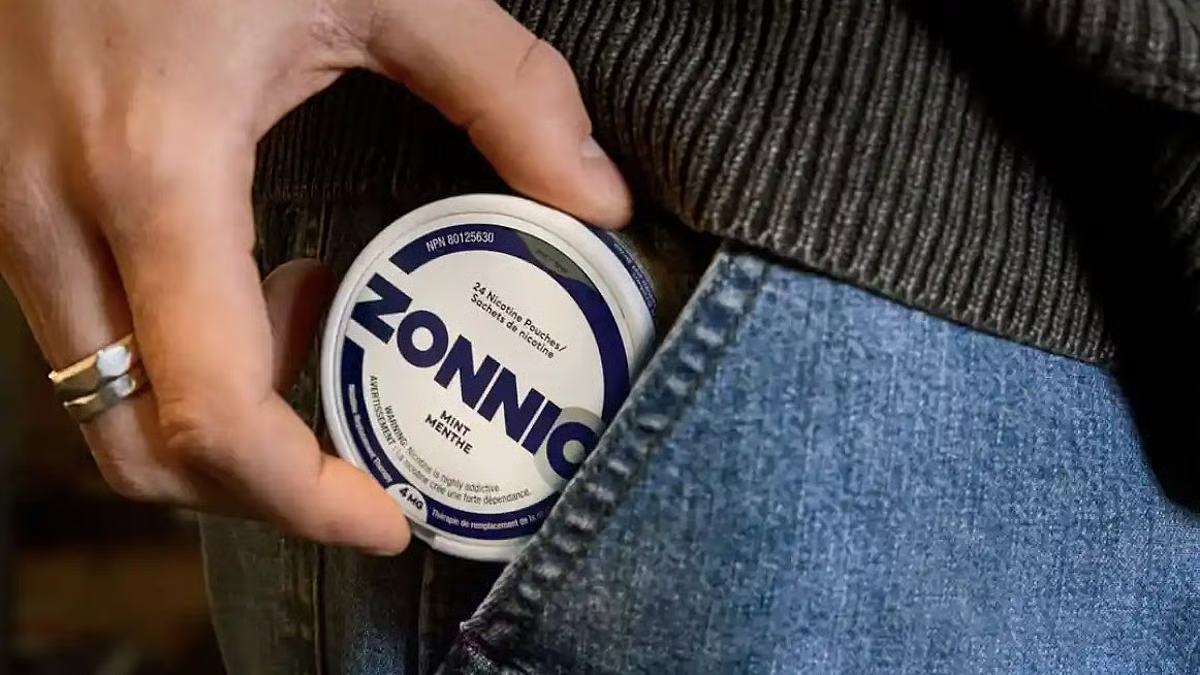
He further added that young people nowadays are putting various small pouches from their pockets into their mouths, thereby directly absorbing nicotine through the mucous membrane. "This may lead to oral cancer and gum cancer," he pointed out. He highlighted that e-cigarettes contain formaldehyde, which is used to preserve dead bodies, in addition to nicotine.


He ultimately condemned the open selling of these products to children and adolescents throughout Croatia, firmly opposing such behavior, and suggesting that their purchase should be prohibited for the sake of the well-being and normal development of children.


We welcome news tips, article submissions, interview requests, or comments on this piece.

Please contact us at info@2firsts.com, or reach out to Alan Zhao, CEO of 2Firsts, on LinkedIn


Notice

1.  This article is intended solely for professional research purposes related to industry, technology, and policy. Any references to brands or products are made purely for objective description and do not constitute any form of endorsement, recommendation, or promotion by 2Firsts.

2.  The use of nicotine-containing products — including, but not limited to, cigarettes, e-cigarettes, nicotine pouchand heated tobacco products — carries significant health risks. Users are responsible for complying with all applicable laws and regulations in their respective jurisdictions.

3.  This article is not intended to serve as the basis for any investment decisions or financial advice. 2Firsts assumes no direct or indirect liability for any inaccuracies or errors in the content.

4.  Access to this article is strictly prohibited for individuals below the legal age in their jurisdiction.


Copyright


This article is either an original work created by 2Firsts or a reproduction from third-party sources with proper attribution. All copyrights and usage rights belong to 2Firsts or the original content provider. Unauthorized reproduction, distribution, or any other form of unauthorized use by any individual or organization is strictly prohibited. Violators will be held legally accountable.

For copyright-related inquiries, please contact: info@2firsts.com


AI Assistance Disclaimer


This article may have been enhanced using AI tools to improve translation and editorial efficiency. However, due to technical limitations, inaccuracies may occur. Readers are encouraged to refer to the cited sources for the most accurate information.

We welcome any corrections or feedback. Please contact us at: info@2firsts.com

The Volume Illusion: Measuring the Future of Nicotine with the Tools of the Past
As next-generation nicotine products become economically central rather than marginal, traditional volume-based metrics are increasingly unable to explain consumption, risk, and value. Units designed for a cigarette-based economy struggle to describe systems defined by delivery speed, pharmacokinetics, and adaptive user behavior. Drawing on financial reporting, regulation, and nicotine science, a fundamental question: can the future of nicotine still be measured using the tools of its past?
Feb.09 by Alan Zhao | 2Firsts Perspectives
Florida HB 389 seeks statewide ban on smoking and vaping in public places and indoor workplaces
Florida lawmakers have introduced HB 389, a proposal to expand smoke-free protections by banning smoking and vaping in public places and enclosed indoor workplaces across the state. The bill broadens statutory definitions and outlines limited exceptions and compliance rules, with an effective date of July 1, 2026 if enacted.
Feb.10 by 2FIRSTS.ai
2Firsts Observation | Element Vape Launches “Made in USA” Section as Product Pages Show “Assembled in USA” and “Made in USA” Labels
Element Vape, a U.S. online vaping retailer, uses origin labels such as “Made in USA” and “Assembled in USA” across disposable vape product pages and a dedicated collection page, grouping items under “Made in USA Disposable Vapes,” but the platform does not disclose on its public pages the applicable standards or evidentiary basis for these different claims.
Jan.20 by 2FIRSTS.ai
Arizona e-cigarette shops ordered to pay $460,000 for selling tobacco and nicotine products to minors
Arizona Attorney General Kris Mayes announced Pro Source Supply LLC, Pro Source Vapes LLC, Pro Source CBD LLC, and owner Timothy Kell must pay $460,000 in restitution tied to a lawsuit filed last year alleging illegal sales of tobacco and nicotine products to underage buyers.
Jan.07 by 2FIRSTS.ai
Six Years of Data Show FDA Clearing PMTA Backlog
FDA data from FY2020 to FY2025 show how the PMTA system for e-cigarette products evolved after an early surge of submissions created prolonged front-end delays. Millions of applications accumulated at the Acceptance stage before entering substantive review. Since 2023, the number of applications pending acceptance has declined sharply, and industry participants report shorter initial decision timelines in late 2025.
Feb.06
Rosstandart: packaging and design requirements for vapes to be tightened in early 2026
Rosstandart head Anton Shalaev told TASS that Russia will tighten requirements for the packaging and design of vapes and other electronic nicotine delivery systems in early 2026.
Jan.12 by 2FIRSTS.ai