E-cigarette Export Data from China to the US in April 2024

Market by 2FIRSTS
May.21.2024
E-cigarette Export Data from China to the US in April 2024
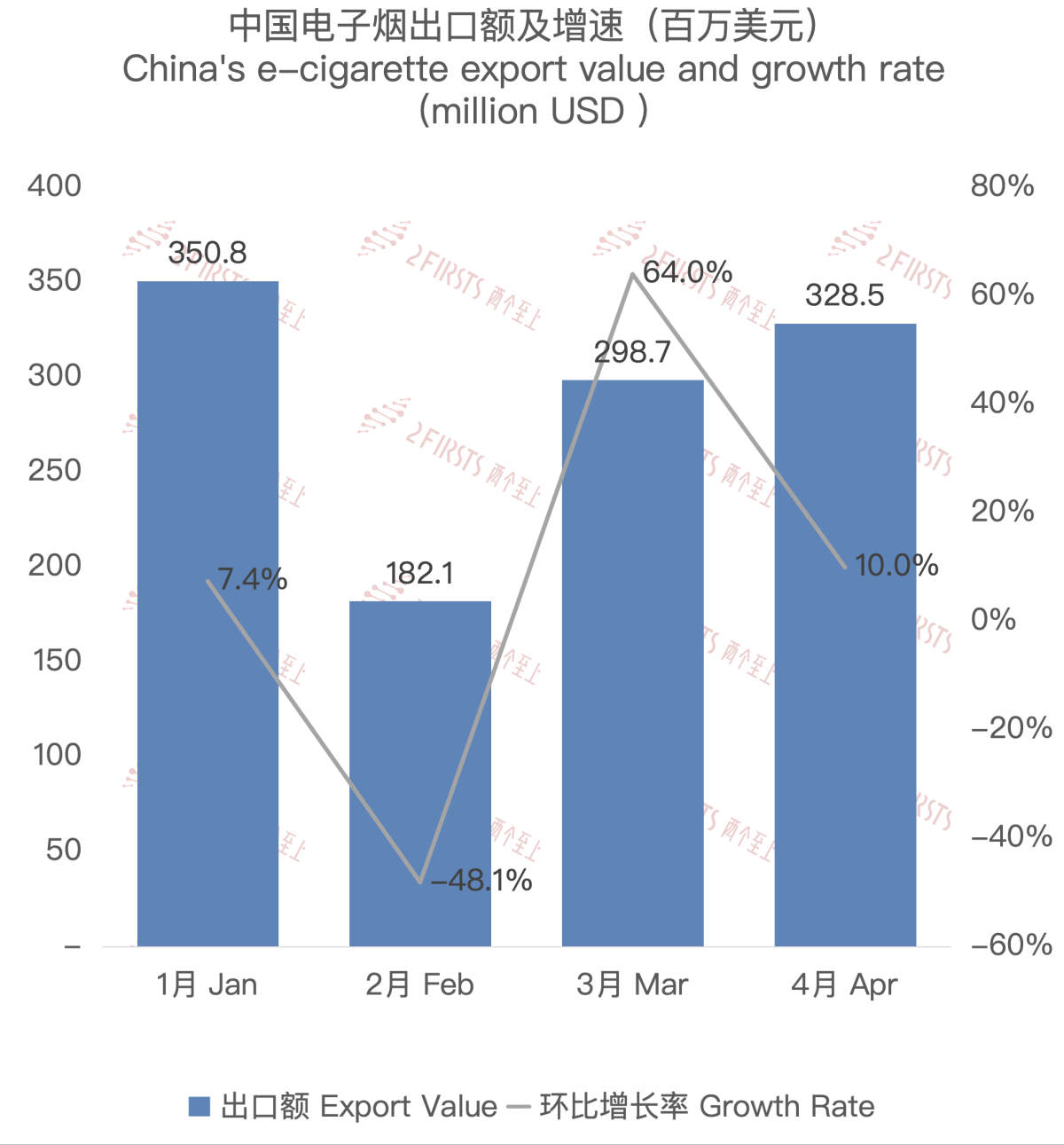
Chinese e-cigarette exports to the US in April 2024 rose to $320 million, with a 9.98% monthly and 6.89% yearly increase.

According to the latest trade data released by the General Administration of Customs, 2FIRSTS has compiled the e-cigarette export data from China to the United States in April 2024. The specifics are as follows:

E-cigarette Export Data from China to the US in April 2024
Image source: 2FIRSTS


The export value reached approximately 320 million US dollars, with a month-on-month increase of 9.98% and a year-on-year increase of 6.89%.
E-cigarette Export Data from China to the US in April 2024
Image source: 2FIRSTS


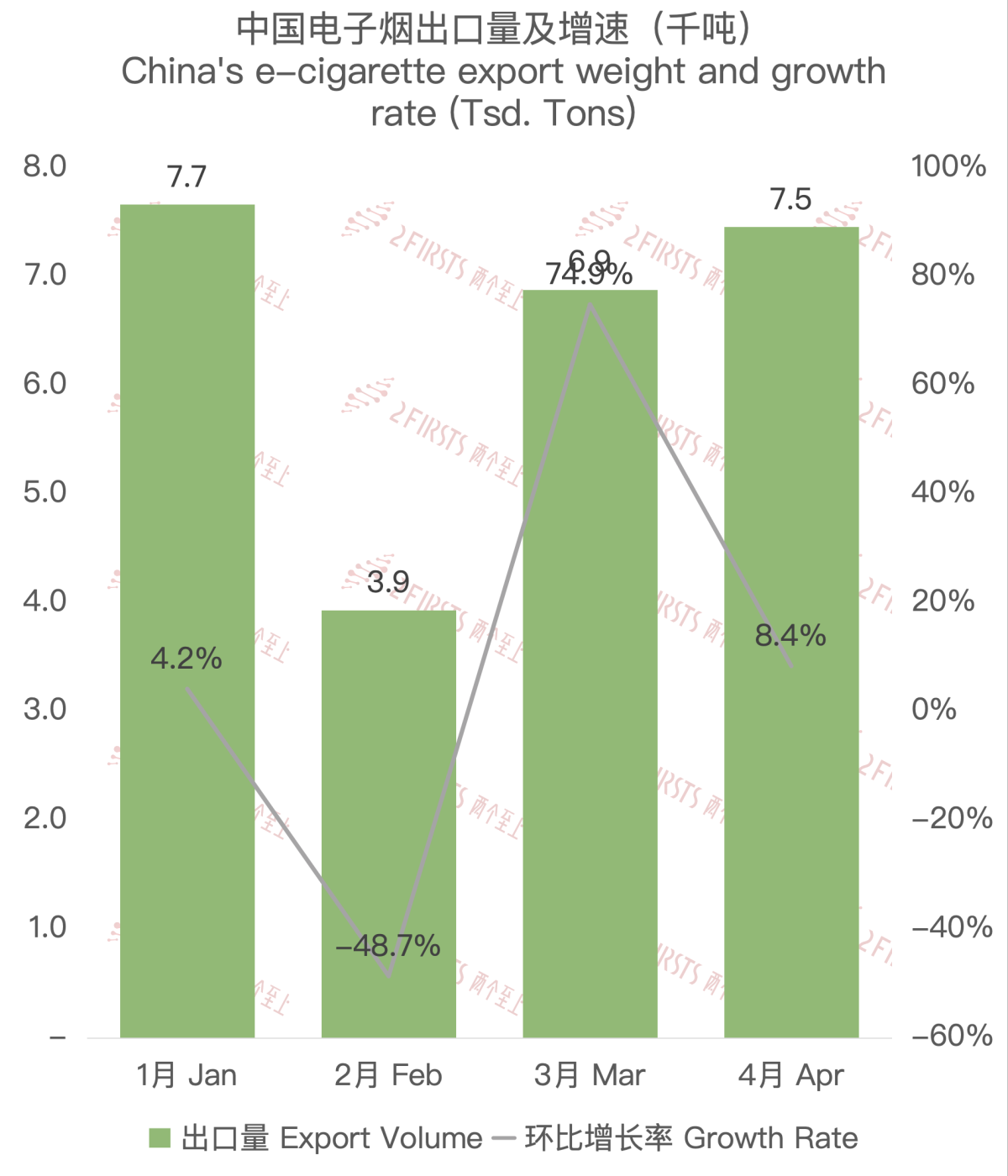
The export volume is approximately 7,457 tons, representing a month-on-month growth of 8.38% and a year-on-year growth of 18.06%.
E-cigarette Export Data from China to the US in April 2024
Image source: 2FIRSTS


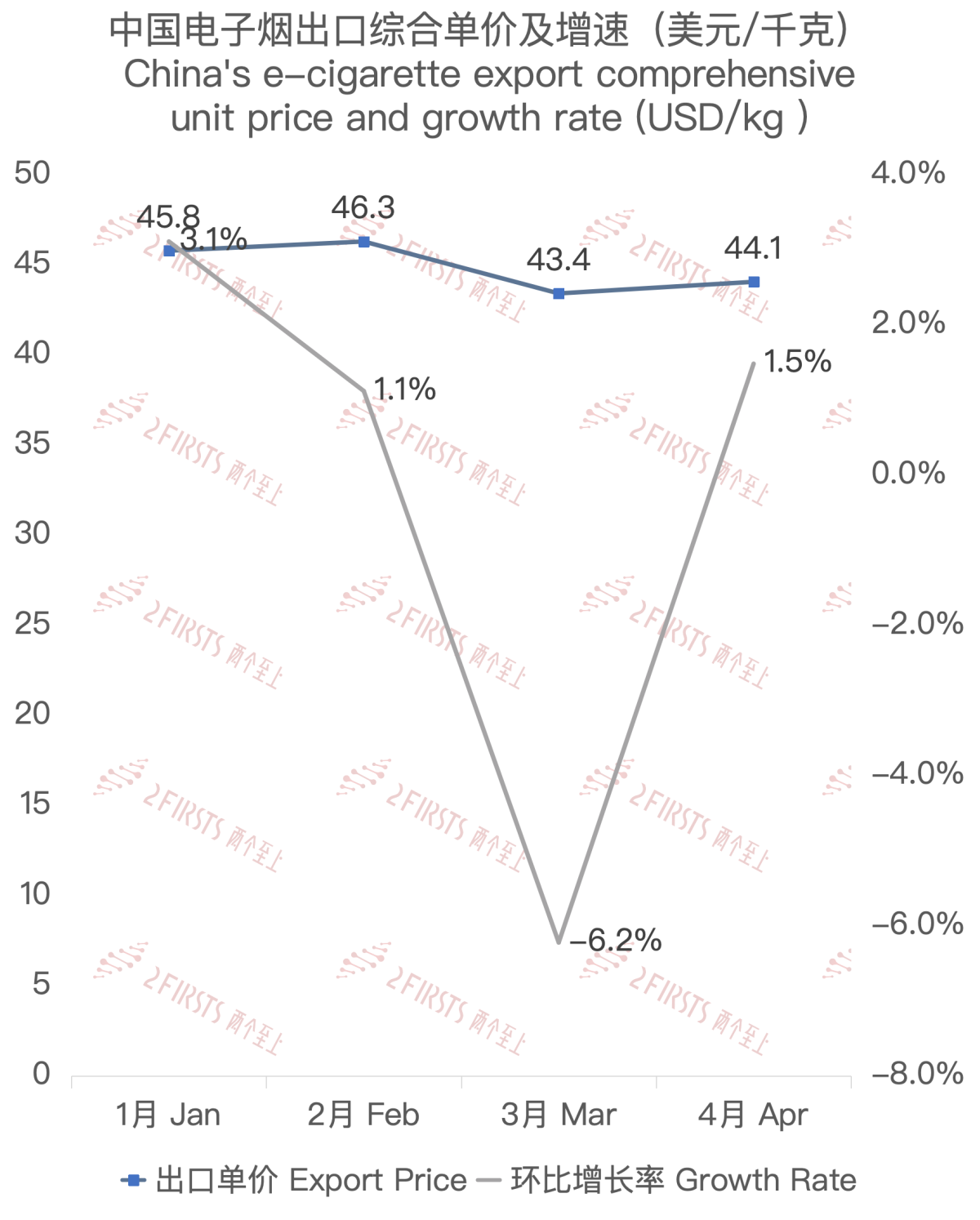
The export unit price is $44.05 per kilogram, representing a 1.5% increase on a month-to-month basis and a 9.5% decrease year-on-year; The average price of "e-cigarettes and similar personal electronic vapor devices" is $2.63 per unit.
E-cigarette Export Data from China to the US in April 2024
Image source: 2FIRSTS


Among them, "e-cigarettes and similar personal electronic vaporizing devices" account for 17.6% of the export product category, while "non-tobacco or reconstituted tobacco products containing nicotine for non-combustible use" account for 82.4%.
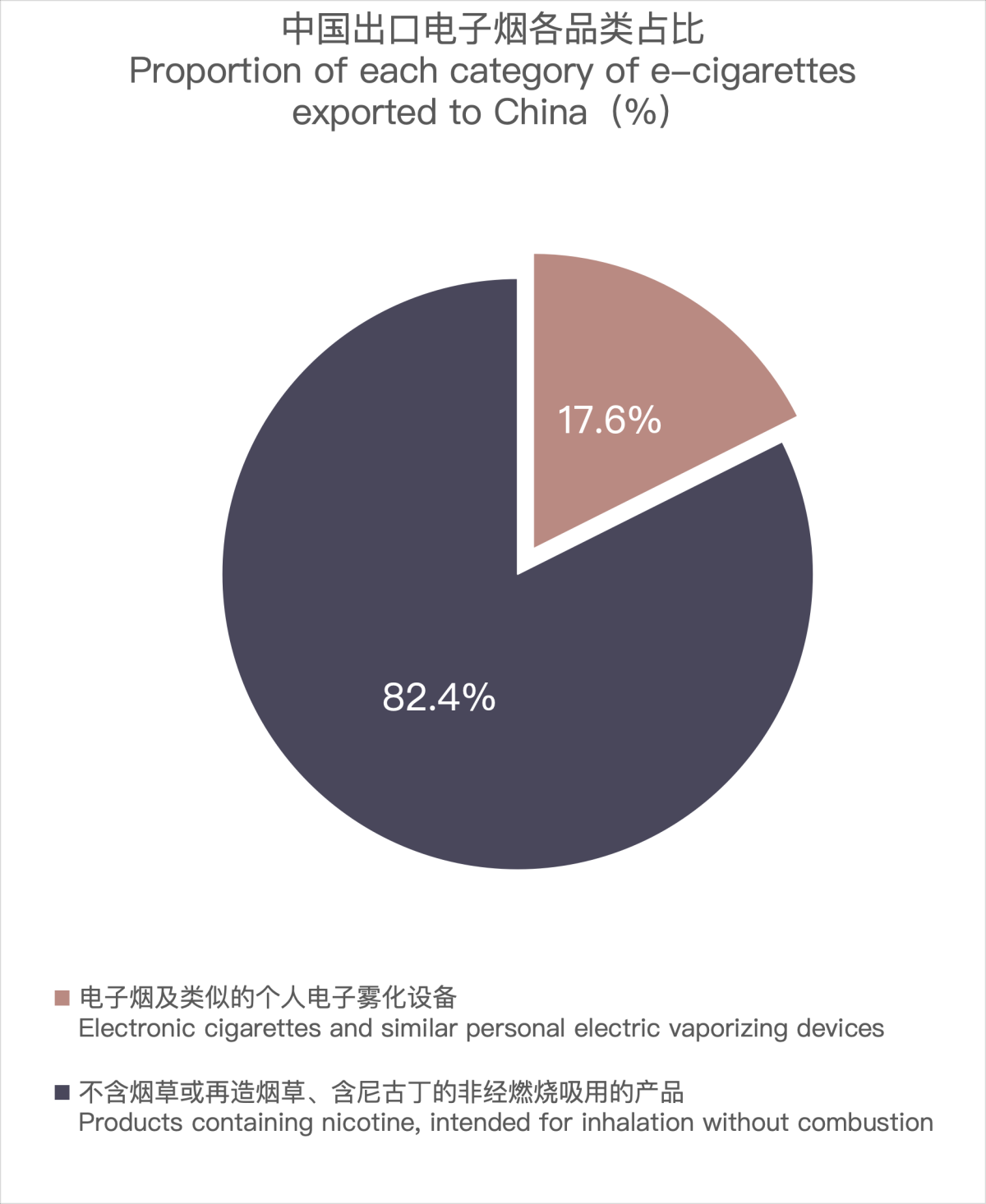
E-cigarette Export Data from China to the US in April 2024
Image source: 2FIRSTS


We welcome news tips, article submissions, interview requests, or comments on this piece.

Please contact us at info@2firsts.com, or reach out to Alan Zhao, CEO of 2Firsts, on LinkedIn


Notice

1.  This article is intended solely for professional research purposes related to industry, technology, and policy. Any references to brands or products are made purely for objective description and do not constitute any form of endorsement, recommendation, or promotion by 2Firsts.

2.  The use of nicotine-containing products — including, but not limited to, cigarettes, e-cigarettes, nicotine pouchand heated tobacco products — carries significant health risks. Users are responsible for complying with all applicable laws and regulations in their respective jurisdictions.

3.  This article is not intended to serve as the basis for any investment decisions or financial advice. 2Firsts assumes no direct or indirect liability for any inaccuracies or errors in the content.

4.  Access to this article is strictly prohibited for individuals below the legal age in their jurisdiction.


Copyright


This article is either an original work created by 2Firsts or a reproduction from third-party sources with proper attribution. All copyrights and usage rights belong to 2Firsts or the original content provider. Unauthorized reproduction, distribution, or any other form of unauthorized use by any individual or organization is strictly prohibited. Violators will be held legally accountable.

For copyright-related inquiries, please contact: info@2firsts.com


AI Assistance Disclaimer


This article may have been enhanced using AI tools to improve translation and editorial efficiency. However, due to technical limitations, inaccuracies may occur. Readers are encouraged to refer to the cited sources for the most accurate information.

We welcome any corrections or feedback. Please contact us at: info@2firsts.com

Australia Adds 6-Methylnicotine to Schedule 9 Prohibited Substances, Effective October 1
Australia's Therapeutic Goods Administration published a final decision on September 25 to classify 6-methylnicotine as a Schedule 9 prohibited substance under the Poisons Standard, effective October 1, 2026. TGA said the chemical has been reported in e-cigarette liquids sold in Australia and marketed as nicotine-free or nicotine alternatives, while evidence also indicates its use in preparations such as oral pouches. The government originally proposed a Schedule 7 classification but ultimately adopted the stricter Schedule 9 designation, citing acute toxicity, dependence risk, use in unapproved consumer products and misleading marketing.
News
Sep.29 by 2Firsts Perspectives
India Steps Up Nicotine Pouch Enforcement as ZYN, White Fox Circulate and Drug Panel Urges Halt to New Nicotine Formulations
India's Ministry of Health and Family Welfare has directed states to step up enforcement against nicotine pouch sales, citing increased availability through online and offline channels and concern about nicotine exposure among children. Reuters reported that international brands including ZYN and White Fox are being sold in India. A study led by ICMR-NICPR found pouches in seven of 10 surveyed locations and identified 68 brands and 445 flavors online. Separately, India's Drugs Technical Advisory Board recommended in August that no new nicotine formulation be approved.
Regulations
Sep.28 by 2Firsts Perspectives
As Regulators Focus on Nicotine Pouch Child Safety, Safeguard Pursues an External Packaging Route
As regulators pay closer attention to child safety in nicotine pouches, manufacturers face a practical challenge: how to strengthen child-resistant packaging without unnecessarily reworking products, production lines and regulatory submissions already in place. In a written interview with 2Firsts, Chemular detailed Safeguard’s external packaging approach, its customer-specific testing requirements and possible PMTA pathways. The model remains early-stage, but it offers a new way to think about an increasingly important regulatory and manufacturing issue.
Industry Insight
Sep.19
Gallery | InterTabac 2026 Opens as VAPORESSO, SKE, GREENTANK, GEEK BAR and Other Brands Take the Floor
InterTabac 2026 opened in Dortmund, Germany, on September 15 alongside NUBIZ and InterSupply. According to the latest figures released by the organizer, the three trade shows bring together around 750 exhibitors from 64 countries. On site, 2Firsts observed vaping and related brands including VAPORESSO, DOJO, SKE, GREENTANK, GEEK BAR, HQD and ELUX.
Special Report
Sep.15
Product | HQD SiSA 80K Enters the U.S. Market With a Hookah-Inspired Approach to the High-Capacity Disposable Segment
The HQD SiSA 80K Hookah Disposable Vape has appeared across U.S. and cross-border online retail channels. The device comes prefilled with 28ml of e-liquid, uses a 5% nicotine salt configuration and carries a brand claim of up to 80,000 puffs. Beyond puff count, the product differentiates itself through hookah-inspired features including adjustable airflow, a flowing-water sound effect and flavor options associated with traditional hookah consumption.
Aug.18
Retail Case Study | Wisconsin Vape Market One Year After New Regulations: Johnny Vapes Reports 80% Sales Decline as Consumers Shift Online and Across State Lines
According to WNCY on August 24, 2026, some independent vape retailers in Wisconsin say they have faced significant business pressure one year after new vape regulations took effect. Johnny Vapes, a retailer operating in northeast Wisconsin, said its store count fell from seven locations to four, sales declined by about 80%, and roughly 90% of its inventory was affected. Retailers said some consumers have shifted to online purchases or traveled to neighboring Michigan to buy vape products. The case highlights how local regulations can reshape retail operations, inventory management and consumer purchasing patterns.
Aug.28