Analysis of China's E-cigarette Exports to South Africa in March 2024

Industry Insight by 2FIRSTS
May.20.2024
Analysis of China's E-cigarette Exports to South Africa in March 2024
China's e-cigarette exports to South Africa in March 2024 reached $5.95 million, up 59.73% month-on-month but down 21.03% year-on-year.

According to updated trade data from the General Administration of Customs, 2FIRSTS has compiled the e-cigarette export data from China to South Africa in March 2024. The specifics are as follows:
Analysis of China's E-cigarette Exports to South Africa in March 2024
Image source: 2FIRSTS


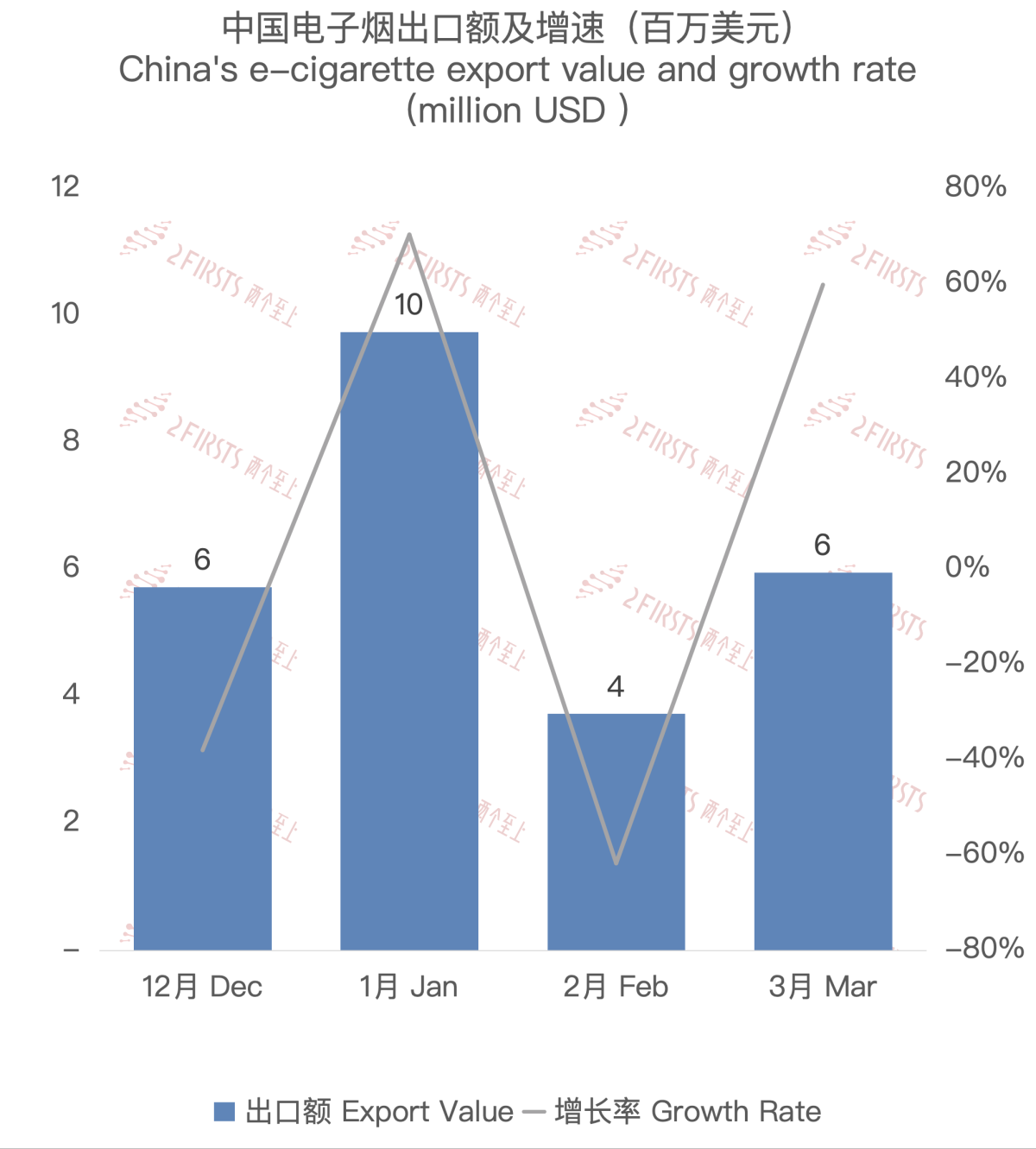
The export volume reached approximately 5.95 million US dollars, with a month-on-month increase of 59.73% and a year-on-year decrease of 21.03%.
Analysis of China's E-cigarette Exports to South Africa in March 2024
Image source: 2FIRSTS


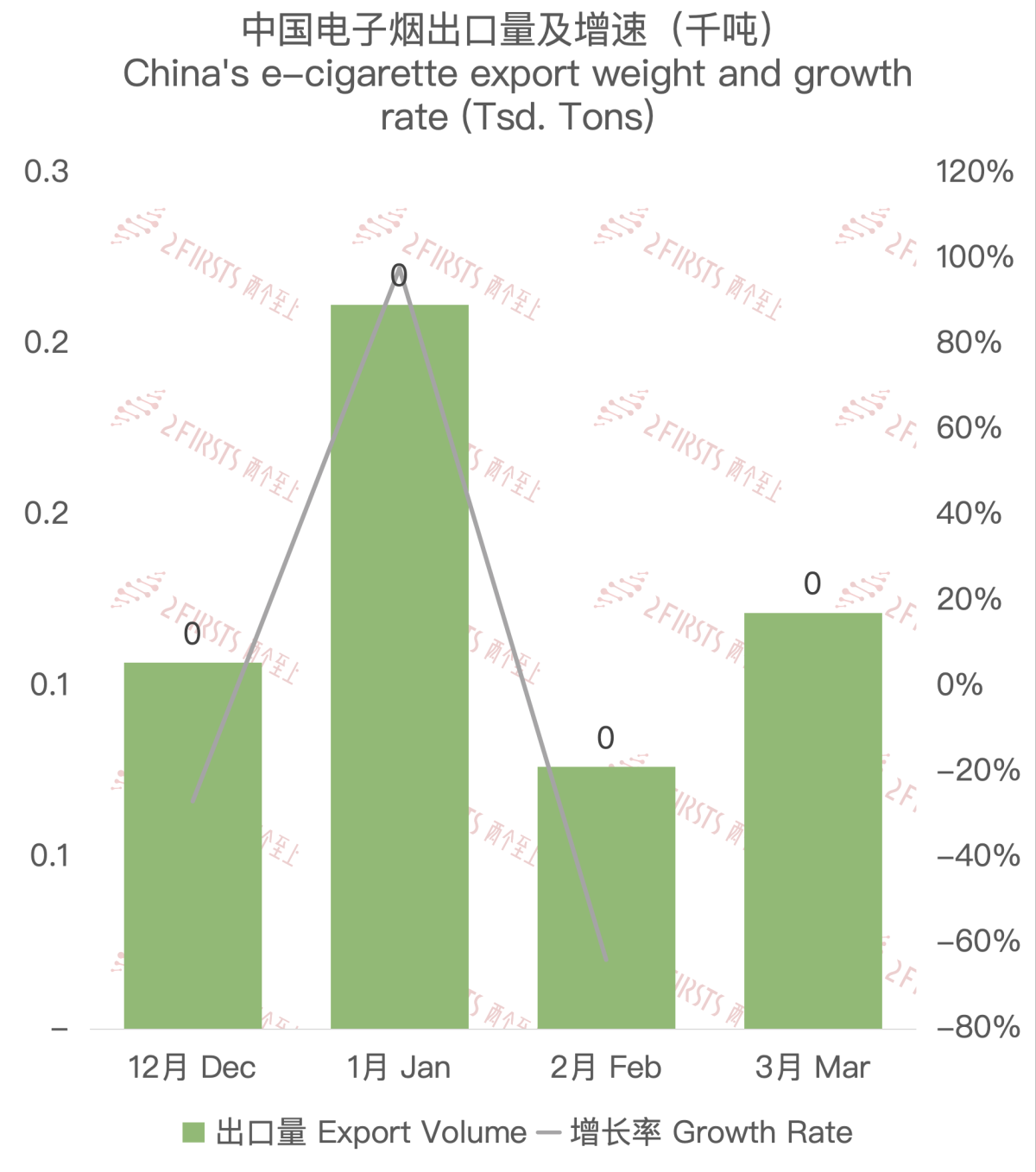
The export volume reached approximately 121 tons, representing a month-on-month increase of 58.86% but a year-on-year decrease of 3.77%.
Analysis of China's E-cigarette Exports to South Africa in March 2024
Image source: 2FIRSTS


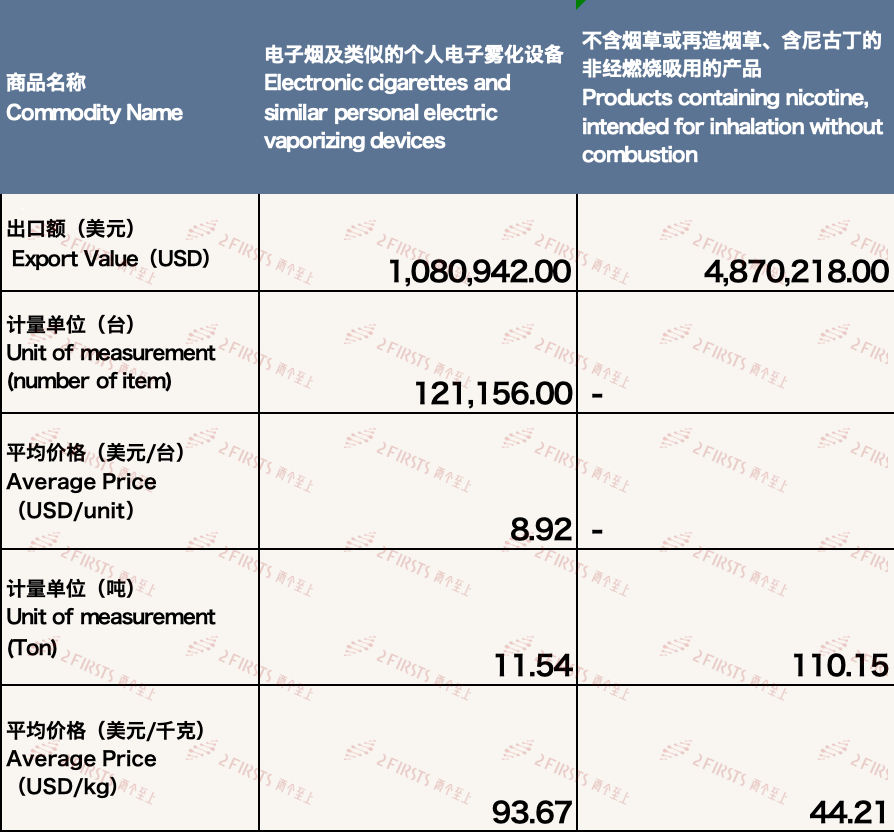
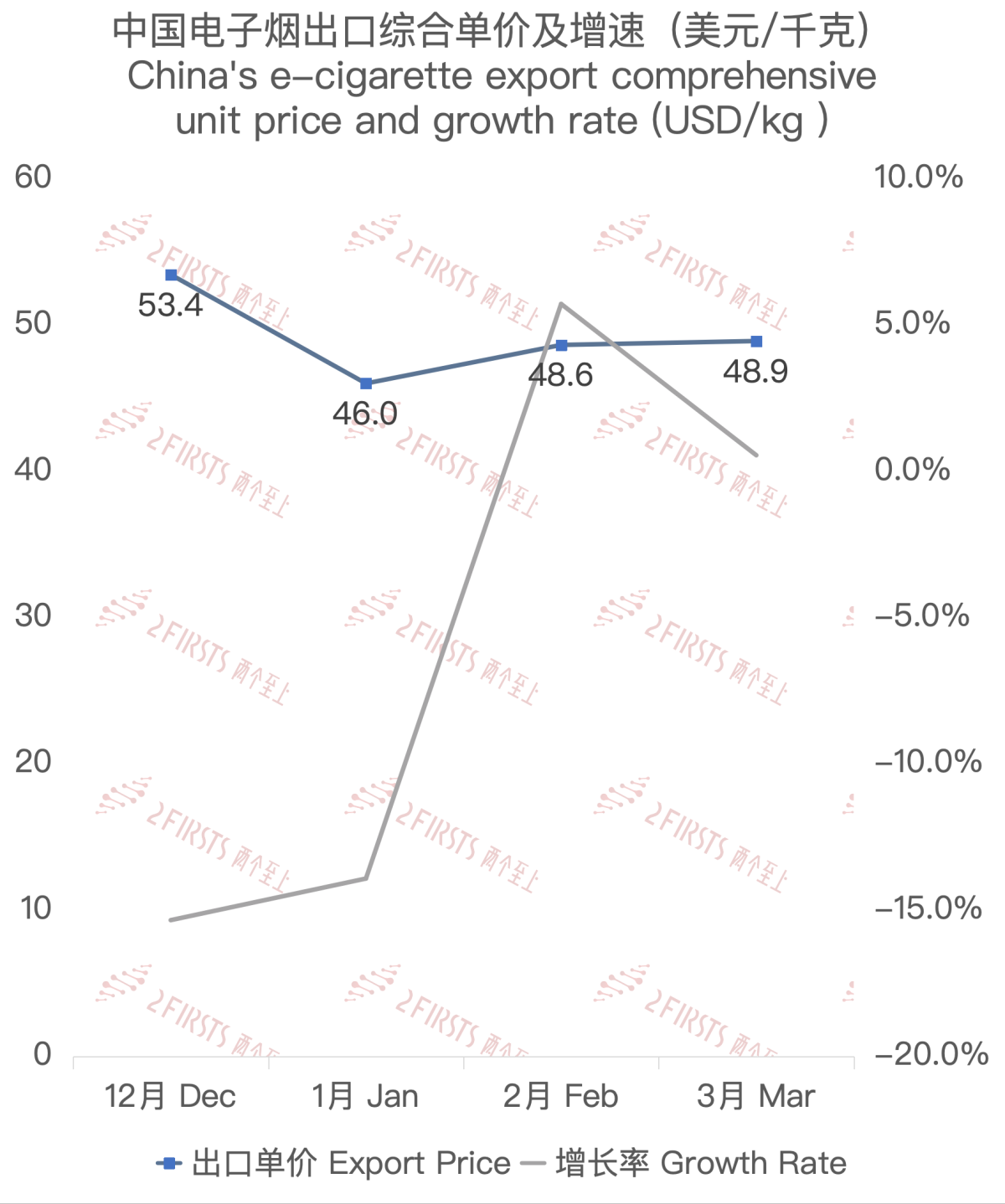
The export unit price is $48.9 per kilogram, a 0.55% increase from the previous period and a 17.94% decrease from the same time last year; the average price for "e-cigarettes and similar personal electronic vaporizing devices" is $8.92 per unit.
Analysis of China's E-cigarette Exports to South Africa in March 2024
Image source: 2FIRSTS


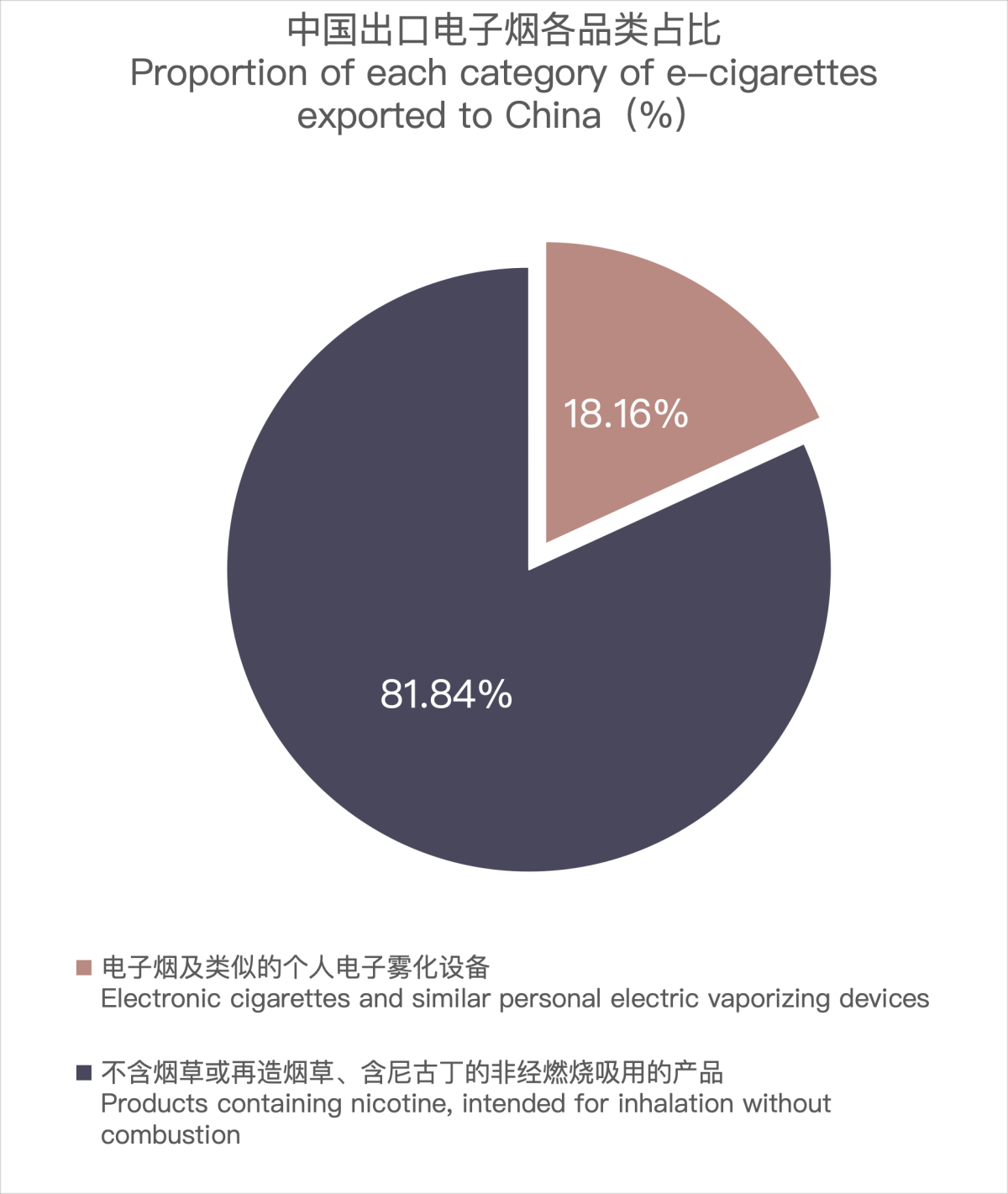
Among them, "e-cigarettes and similar personal electronic vaporizing devices" accounted for 18.16% of the export category, while "nicotine-containing non-combustible products without tobacco or reconstituted tobacco" accounted for 81.84%.
Analysis of China's E-cigarette Exports to South Africa in March 2024
Image source: 2FIRSTS


We welcome news tips, article submissions, interview requests, or comments on this piece.

Please contact us at info@2firsts.com, or reach out to Alan Zhao, CEO of 2Firsts, on LinkedIn


Notice

1.  This article is intended solely for professional research purposes related to industry, technology, and policy. Any references to brands or products are made purely for objective description and do not constitute any form of endorsement, recommendation, or promotion by 2Firsts.

2.  The use of nicotine-containing products — including, but not limited to, cigarettes, e-cigarettes, nicotine pouchand heated tobacco products — carries significant health risks. Users are responsible for complying with all applicable laws and regulations in their respective jurisdictions.

3.  This article is not intended to serve as the basis for any investment decisions or financial advice. 2Firsts assumes no direct or indirect liability for any inaccuracies or errors in the content.

4.  Access to this article is strictly prohibited for individuals below the legal age in their jurisdiction.


Copyright


This article is either an original work created by 2Firsts or a reproduction from third-party sources with proper attribution. All copyrights and usage rights belong to 2Firsts or the original content provider. Unauthorized reproduction, distribution, or any other form of unauthorized use by any individual or organization is strictly prohibited. Violators will be held legally accountable.

For copyright-related inquiries, please contact: info@2firsts.com


AI Assistance Disclaimer


This article may have been enhanced using AI tools to improve translation and editorial efficiency. However, due to technical limitations, inaccuracies may occur. Readers are encouraged to refer to the cited sources for the most accurate information.

We welcome any corrections or feedback. Please contact us at: info@2firsts.com

Australia’s Daily Smoking Rate Falls to Record Low of 5.8% as Nicotine Use Patterns Shift
According to the Australian Institute of Health and Welfare’s National Drug Strategy Household Survey, daily smoking among Australians aged 18 and over fell to a record low of 5.8% in 2025. Health Minister Mark Butler said Australia now has around 500,000 fewer daily smokers than three years ago and credited the government’s vaping reforms as part of broader progress. Among people aged 14 and over, daily smoking declined from 8.3% in 2022-23 to 5.6% in 2025. Daily vaping rates stabilised at 3.6%, while the government also moved to further restrict access to nicotine pouches through unapproved therapeutic import pathways.
Jul.21
UK HMRC Urges Public to Report Suspicious Vape Shops in Crackdown on Tax Fraud, Money Laundering and Illicit Tobacco Sales
HM Revenue & Customs is urging members of the public to report vape shops, barber shops and other high-street businesses suspected of tax fraud, money laundering or other illegal activity, with informants not required to provide personal details. HMRC plans more than 30,000 interventions in 2026-27 targeting tax fraud, organised crime and illicit activity, including the sale of illegal vapes and tobacco. The push forms part of a broader UK effort to tackle organised crime on high streets, backed by a £30 million government enforcement programme.
Regulations
Aug.17 by 2Firsts Perspectives
As JUUL2 Wins FDA Authorization, Harm Reduction Journal Highlights the Role of Real-World Evidence in Nicotine Product Regulation
A commentary published in the international open-access, peer-reviewed Harm Reduction Journal argues that randomized controlled trials remain central to evaluating smoking cessation efficacy but cannot alone capture real-world uptake, complete switching, longer-term use and population impact of non-combustible nicotine products such as e-cigarettes, heated tobacco and nicotine pouches. The authors frame impact as “reach × efficacy” and call for real-world evidence to complement RCTs. Three days after publication, the FDA authorized three JUUL2 products and highlighted complete switching among adult smokers in explaining its decision, providing a timely regulatory backdrop to the debate.
Sep.08
Earnings Analysis | CTIHK H1 2026 Revenue Falls 26.9% as Core Businesses Diverge and New Growth Drivers Remain to Be Proven
China Tobacco International (HK) reported a 26.9% revenue decline in H1 2026, while gross profit fell only 9.5%, revealing sharp divergence across its businesses. Tobacco leaf imports contracted, while leaf exports and Brazil operations expanded strongly. Cigarette exports faced China duty-free market transition, and new tobacco products remained small. Meanwhile, CTIHK continues to strengthen its role as an investment and financing platform, though major external deals have yet to emerge. 2Firsts examines what these shifts mean for its next growth drivers.
Capital Markets
Aug.24
Italy and Greece Oppose Ireland’s Nicotine Product Bill, Raising EU Regulatory Concerns
Italy and Greece have opposed Ireland’s proposed nicotine product regulations, arguing that the measures could affect EU market coordination and the free movement of products. Ireland plans to introduce stricter rules covering nicotine products including vapes and nicotine pouches, with measures involving packaging, marketing and sales controls. The dispute highlights differences among EU member states between stronger public health protections and maintaining regulatory consistency within the bloc’s single market.
Jul.29
Russia Adds Vapes to “Strategic Goods” List, Illegal Cross-Border Trade Faces Up to Five Years in Prison
Russia will place e-cigarettes and related nicotine products under its “strategic goods” framework from August 20, 2026. According to TVP World’s report published on August 19, the newly listed items include e-cigarettes, electronic smoking devices, vape liquids and nicotine salts. Individuals who illegally move these products across Russia’s customs border or its state border with other Eurasian Economic Union (EAEU) members could face up to five years in prison if shipment values exceed 100,000 rubles (about €1,000), provided all elements of a criminal offence are established.
Aug.20