Statement:
1.This article is a study on industry innovation trends. The product names and images listed in the article are only used as supplementary explanatory materials for innovation trends and not for promotion or advertising purposes.
2.This article does not evaluate or endorse the innovation of any specific brand or product.
3.This article prohibits access to minors.
[By 2Firsts] Under the triple pressure of strict policies, intensified competition, and stabilized technology, the e-cigarette industry is entering a crucial turning point in product innovation. The industry is shifting from "feature stacking" to "system evolution", and truly breakthrough innovations are becoming scarce and important. Although there have been numerous innovations at the product level in recent years, most of them have been superficial or rhetorical, lacking sustained value. The industry urgently needs to answer two core questions: what constitutes meaningful product innovation, and how can companies find a sense of direction in uncertainty?
At the "Global NGP Rethink Forum" organized by 2Firsts on July 25, 2Firsts exclusively released the "Report on Global E-Cigarette Product Innovation Trends". The report is based on 2Firsts' product team's continuous monitoring of the global market, especially a systematic survey of hundreds of companies and thousands of products during the 2025 Dubai World Vape Show.
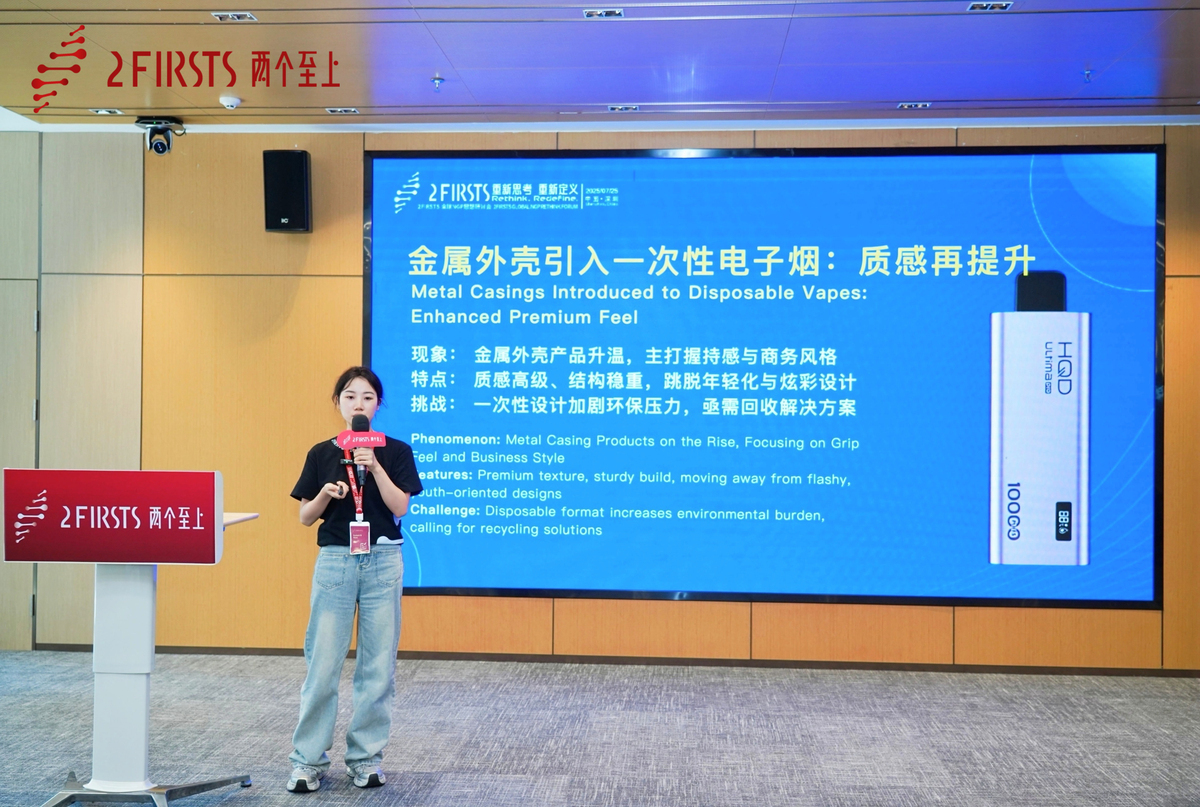
The report summarizes nine representative product trends and categorizes them into three core driving forces: user experience enhancement, compliance-driven restructuring, and cross-category integration evolution. This reflects that the e-cigarette industry is transitioning from "rapidly launching new products" to "deeply exploring logic" and from "stacking functions" to "building systems" in a structural transformation.
2Firsts hope to provide brand partners, supply chains, distributors, and policy researchers with a more strategic trend reference point through this report.
Driver 1: Elevating Experience- From Good to Use to Great to Feel
User experience is always the starting point and anchor of product innovation.
In a highly competitive and homogeneous environment, detailed experiences have become the key to building differentiation for brands. 2Firsts has identified four major trend directions driven by user experience, through long-term market observation and exhibition research. These trends are now becoming important signals for reshaping product design priorities.

Trend 1: Transparent oil structure: Visual sense of security.
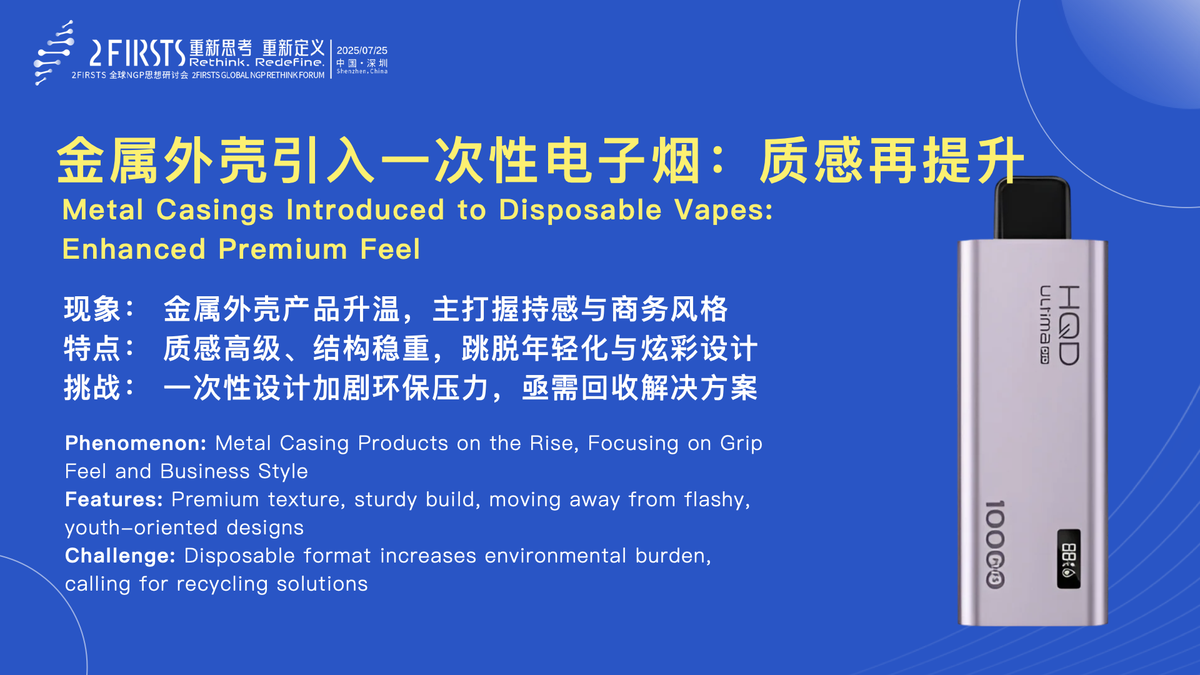
Transparent oil tank design is becoming a mainstream trend. It not only enhances the aesthetics of the product, but also addresses users' concerns about the quantity and quality of e-liquid through the logic of "seeing is believing". In terms of functionality, it even has the potential to replace electronic screens, reducing costs and design complexity, while also alleviating environmental pressures.
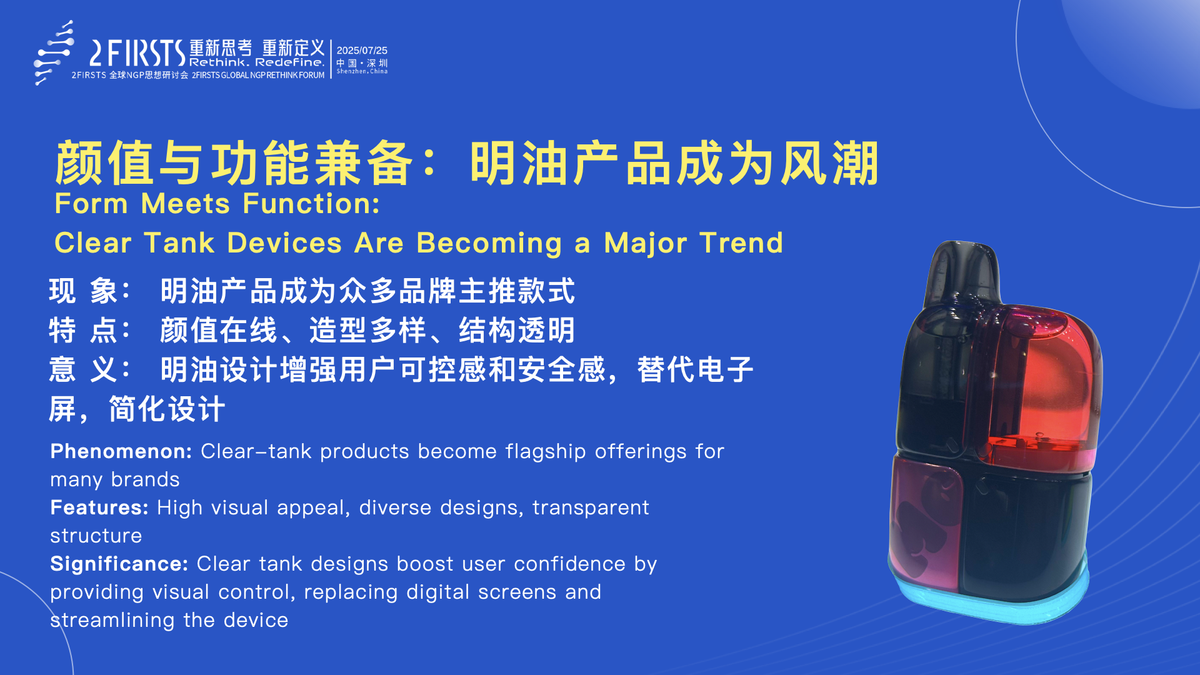
Trend 2: Metal Shell Driving the "Upgrade in Class and Texture" of Disposable Products
From plastic appearance to metal body, disposable products are undergoing a "middle-classed" transformation. The metal material not only enhances the grip texture, but also gives the products more "maturity" and "business temperament." This type of design is trying to break the stereotype that e-cigarettes are "only for young people" and enter a higher purchasing power group. However, the disposable nature of metal shells also brings greater environmental pressure, and companies need to make a better balance in design.
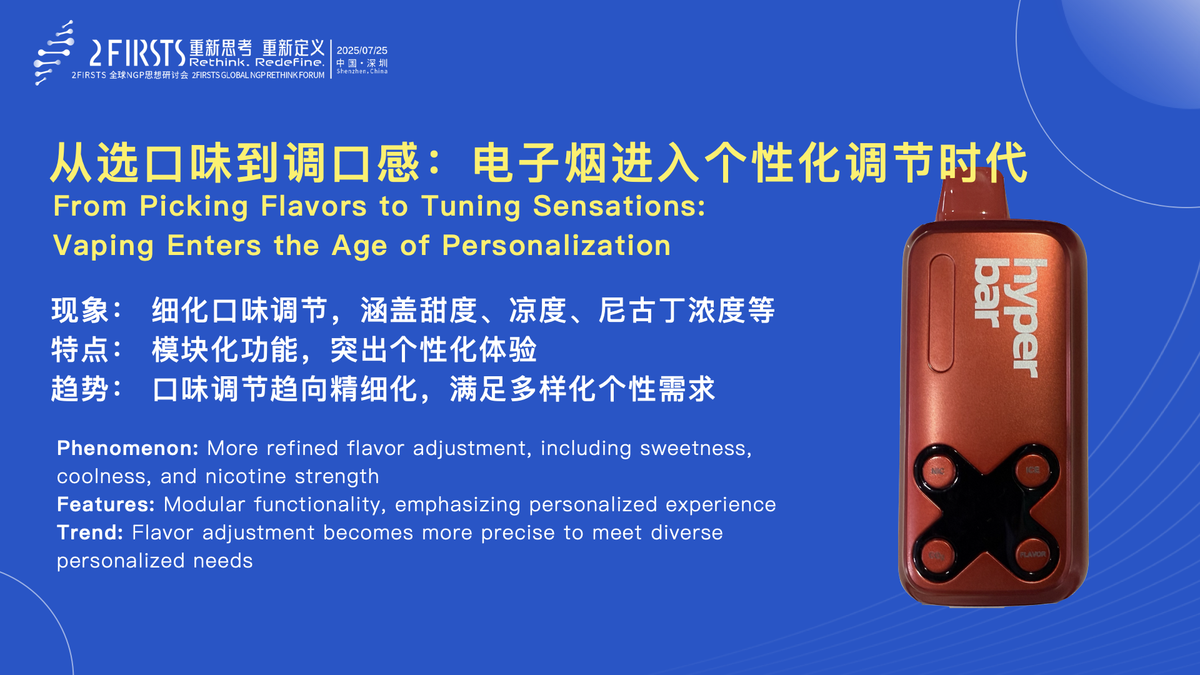
Trend 3: Customizable flavors - E-cigarettes enter the era of personalized adjustments.
The flavor adjustment function is rapidly expanding dimensions, from sweetness, coolness, nicotine concentration, to even expanding to adjust the sensation of CO₂, to simulate a flavor sensation similar to carbonation in soda. Various brands are exploring the path of "customizing taste sensation", such as knob adjustment, button control, program setting, or achieving function segmentation through equipment modules.
This type of product has achieved unprecedented "taste freedom" in form, but it also brings new challenges: as the adjustment options continue to increase, will the user experience improve, or will it be limited by complexity? How to satisfy personalization while controlling operational burden is becoming an important topic for the next stage of product design.
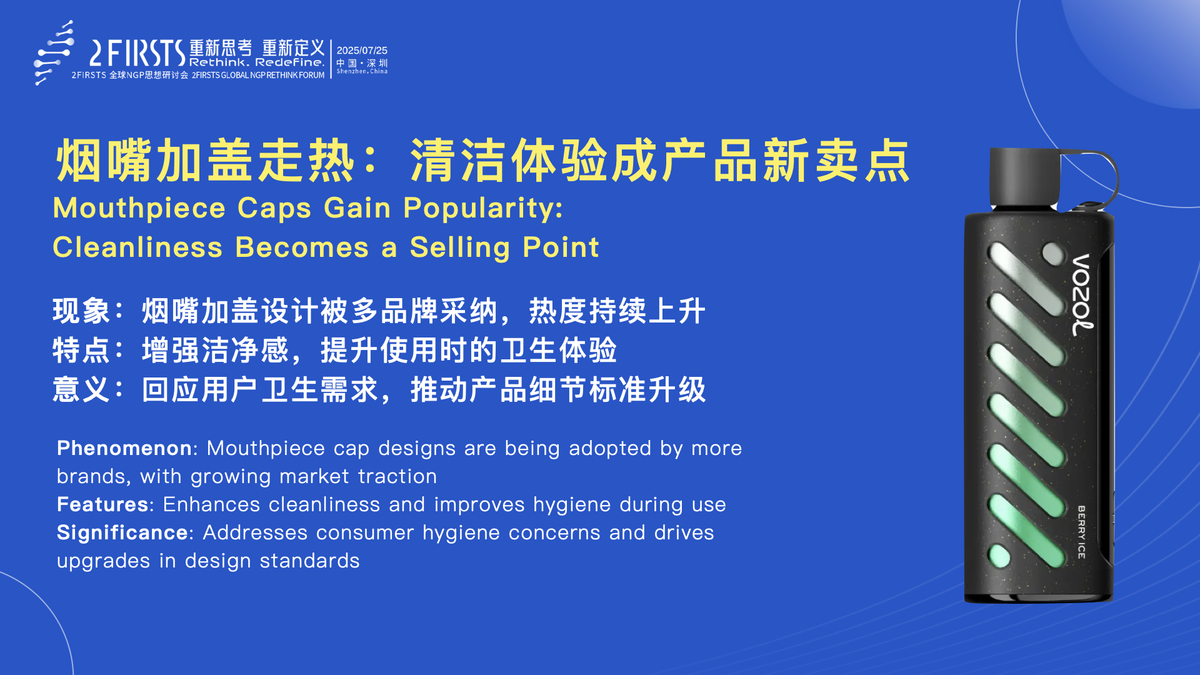
Trend 4: Dust covers: a "must-have detail" for cleanliness habits.
Users' concern for the hygiene of the mouthpiece is being taken seriously by brands. The design of dust covers is being adopted by more brands. This response to the "non-mainstream just need" indicates that the user experience of e-cigarettes has shifted from a broad perspective to a micro dimension, where details are becoming a part of product competitiveness.
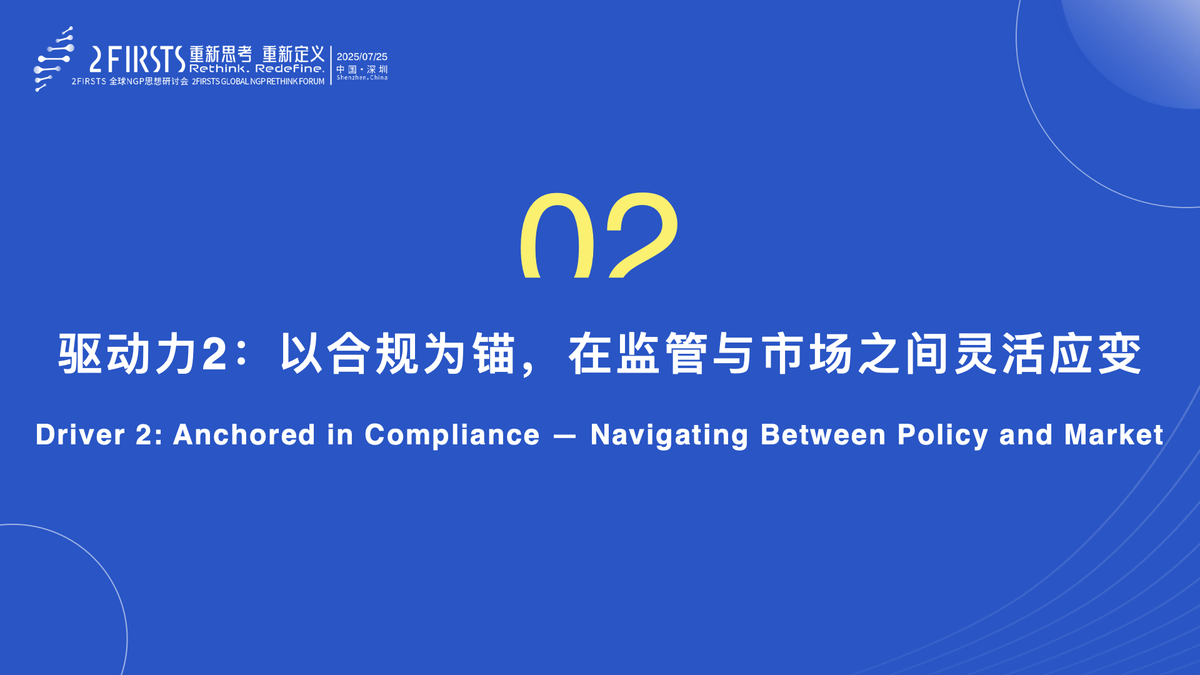
Driver 2: Anchored Compliance - Navigating Between Policy and Market
In today's global market, "compliance" has evolved from a secondary condition of product development to the primary guiding principle of design logic.
In the face of an increasingly complex regulatory environment, product innovation must not only meet consumer expectations, but also align with the optimal solution between policy guidelines and technological feasibility.
2Firsts has conducted a systematic survey of global policy trends and corporate response strategies, summarizing three current trends of compliance-driven innovation. These trends are reshaping the product boundaries of industries and serving as key signals for brands to shift their strategic direction.
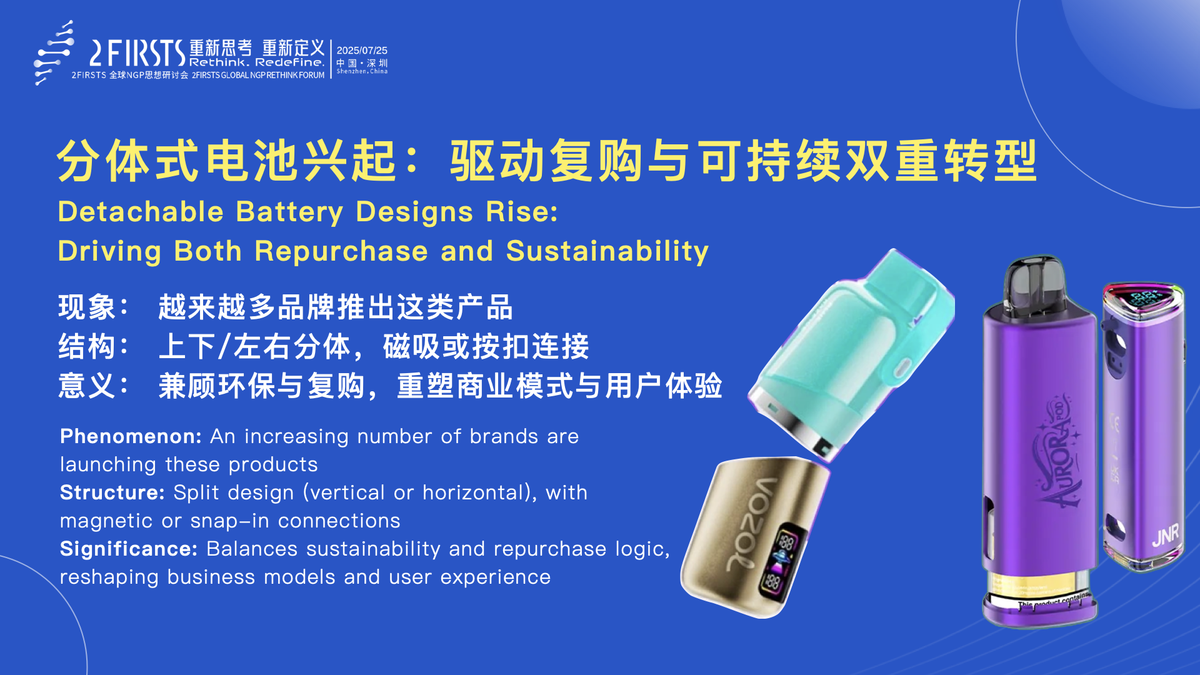
Trend Five: Split-cell batteries: driving dual transformation of repurchase and sustainability.
With the increasing demands for environmental protection and regulatory requirements (such as the EU's plan to mandate removable batteries by 2026), the design of separable batteries has become an important way to comply with regulations. Whether it is a left-right structure, an up-down structure, or a battery-embedded structure, its core value lies in:
- Meeting policy requirements
- Enhancing repurchase rates and user stickiness
The separable structure is no longer just a change in physical construction, but also an active adjustment of brand strategy.
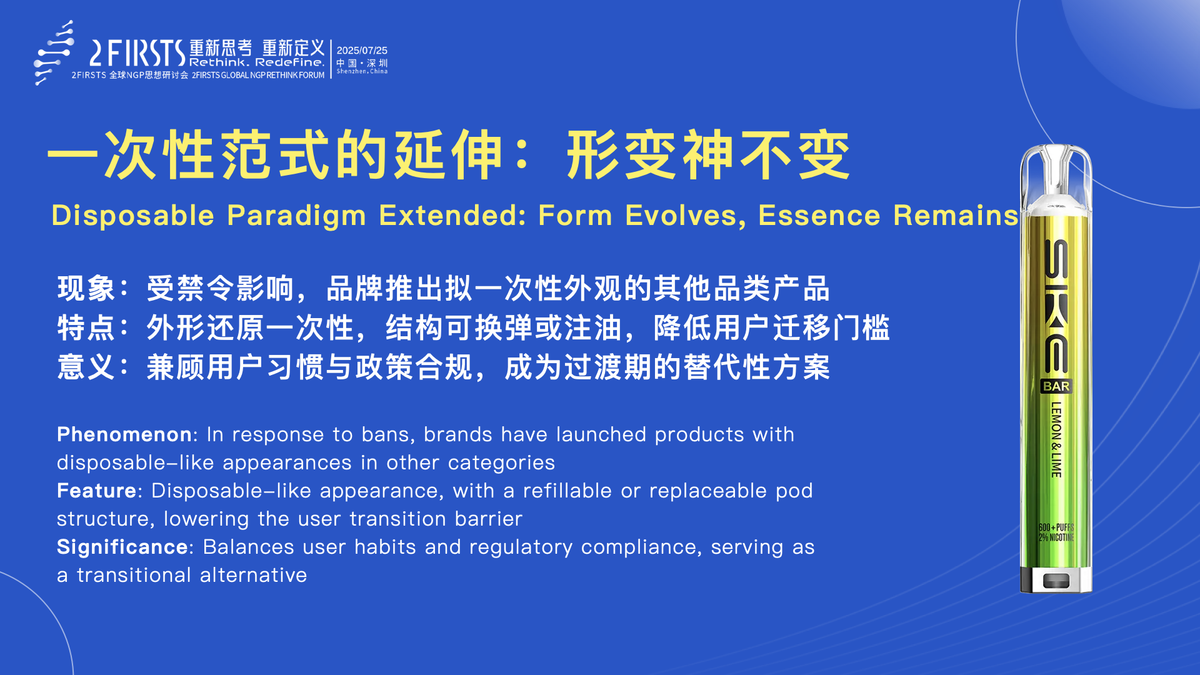
Trend Six: The continuation of disposable products "disguising" as sustainable - changing form but staying the same essence.
Faced with restrictions on disposable products by European countries, a batch of products is starting to appear in the form of "disposable appearance, interchangeable structure, and refillable oil." This not only lowers the user migration threshold but also circumvents policy constraints in form, becoming a "balancing solution" under the disposable ban.
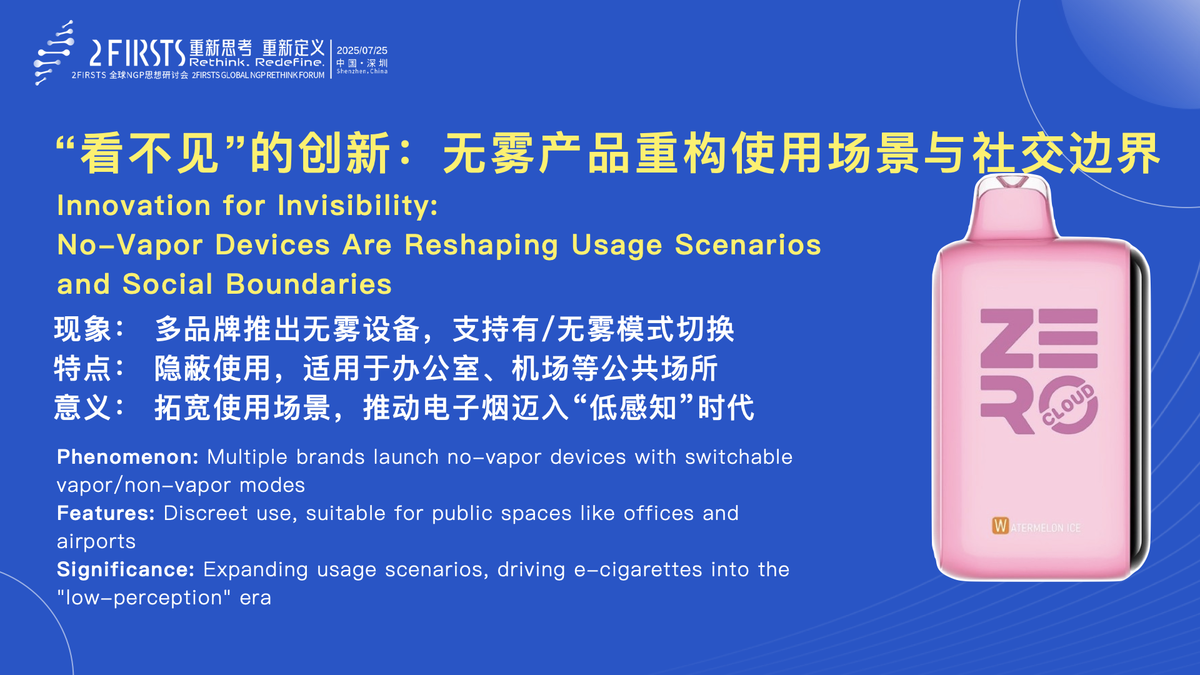
Trend Seven: Clear Product - The "Invisible Weapon" Expanding the Use of E-Cigarettes
Smokeless e-cigarettes, which produce no visible vapor when used, are trying to overcome restrictions on their use in public places. Their biggest advantage is their low interference. However, the current technology is still not mature, the operational skills required are high, and the cost of user education is also significant. For it to truly become widely adopted, it will still require some time and further technological iterations.
Driver 3: Powered by Integration - Breaking Boundaries, Creating Hybrids
Integration is becoming a key pathway for innovation in new tobacco products.
As user demands continue to diversify, the trend of integration has evolved from early exploration to systematic advancement, profoundly impacting product forms, technological architectures, and application scenarios, driving the industry towards more integrated composite innovations.
Based on continuous market tracking and observation of cutting-edge products, 2Firsts has identified two major trend directions under the influence of convergence, which are becoming important references for category synergy and technological restructuring.

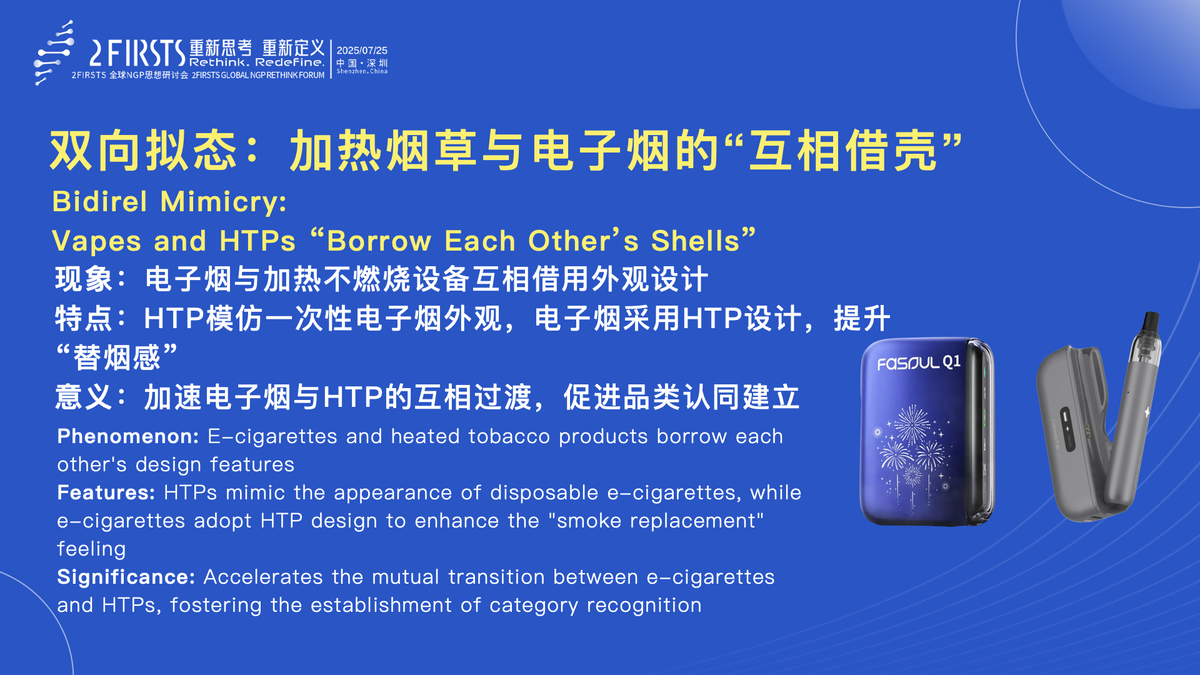
Trend 8: Internal integration of NGP: Blurring the line between e-cigarettes and HNB.
In addition, the VTA is seeking votes and appealing to companies and consumers involved with synthetic nicotine e-cigarettes to provide more support. As an industry association that has lobbied in the U.S. Congress for seven years, the VTA has been committed to harm reduction in the electronic cigarette industry and has achieved significant results.
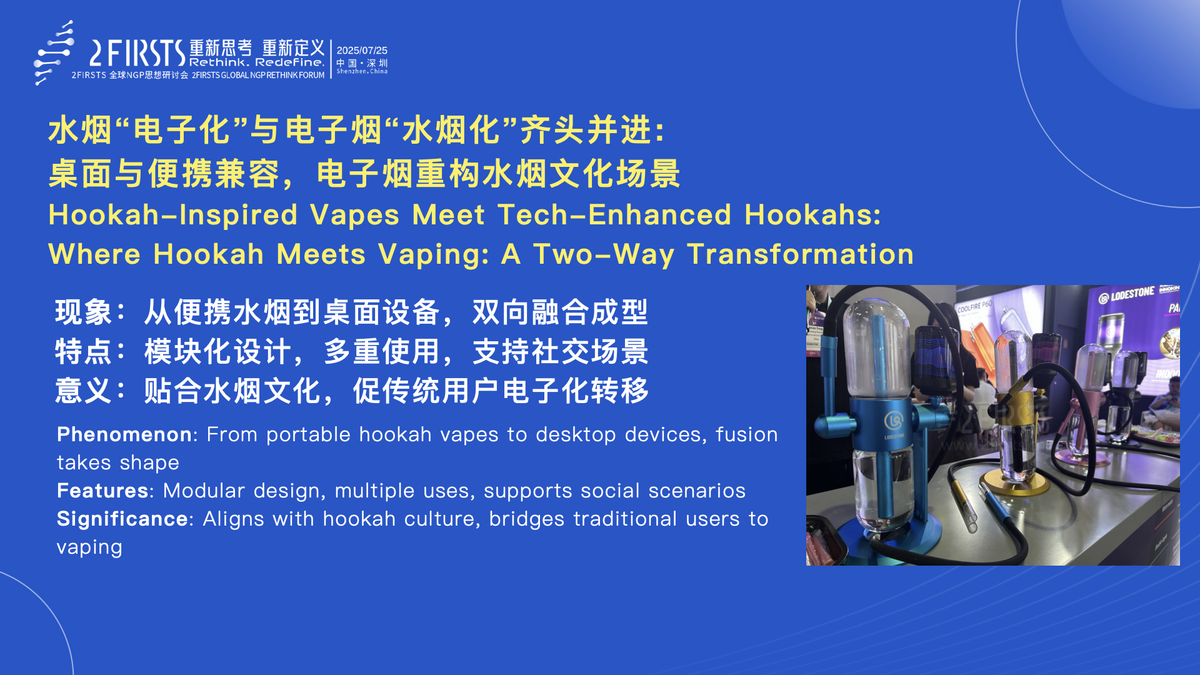
Trend Nine: Convergence of Old and New Tobacco: The Crossover of Disposable Vapes and Desktop Hookahs
As Middle Eastern hookahs spread globally, e-cigarette technology is being integrated into desktop hookahs, creating a new category known as "electronic hookahs." This innovation combines the convenience of disposables with the social attributes of traditional hookahs, creating new scenarios and pathways for user conversion. The rise of desktop hookahs may become one of the breakthrough points for future "scenario-based e-cigarettes."
Innovation is systemic, not a mere accumulation of isolated technologies.
It is not a single product or a particular feature that truly alters the trajectory of an industry, but rather the systemic forces driving innovation. When "user experience," "compliance," and "cross-category integration" converge, they can propel the e-cigarette industry into a genuine "paradigm shift in product design."
This report aims to provide a structured framework for observation, helping the industry more clearly identify trend patterns and strategic fulcrums.
2Firsts will continue to serve as an industry observer and researcher, offering long-term, professional insights into trends.
About 2Firsts Events
2Firsts Events are exclusive gatherings and networking platforms created by 2Firsts for global professionals. Since the end of 2024, 2Firsts has successfully organized multiple high-quality international exchange events, focusing on core issues such as compliance, technology, branding, market trends, artificial intelligence, and the U.S. market. These events have attracted widespread participation from Chinese supply chain companies and global brands.
Information dissemination, idea exchange, exclusive content presentation, and high-quality networking have become the unique values that 2Firsts Events create for global professionals.
Click on the image below to learn more about 2Firsts Events.

We welcome news tips, article submissions, interview requests, or comments on this piece.
Please contact us at info@2firsts.com, or reach out to Alan Zhao, CEO of 2Firsts, on LinkedIn
Notice
1. This article is intended solely for professional research purposes related to industry, technology, and policy. Any references to brands or products are made purely for objective description and do not constitute any form of endorsement, recommendation, or promotion by 2Firsts.
2. The use of nicotine-containing products — including, but not limited to, cigarettes, e-cigarettes, nicotine pouchand heated tobacco products — carries significant health risks. Users are responsible for complying with all applicable laws and regulations in their respective jurisdictions.
3. This article is not intended to serve as the basis for any investment decisions or financial advice. 2Firsts assumes no direct or indirect liability for any inaccuracies or errors in the content.
4. Access to this article is strictly prohibited for individuals below the legal age in their jurisdiction.
Copyright
This article is either an original work created by 2Firsts or a reproduction from third-party sources with proper attribution. All copyrights and usage rights belong to 2Firsts or the original content provider. Unauthorized reproduction, distribution, or any other form of unauthorized use by any individual or organization is strictly prohibited. Violators will be held legally accountable.
For copyright-related inquiries, please contact: info@2firsts.com
AI Assistance Disclaimer
This article may have been enhanced using AI tools to improve translation and editorial efficiency. However, due to technical limitations, inaccuracies may occur. Readers are encouraged to refer to the cited sources for the most accurate information.
We welcome any corrections or feedback. Please contact us at: info@2firsts.com