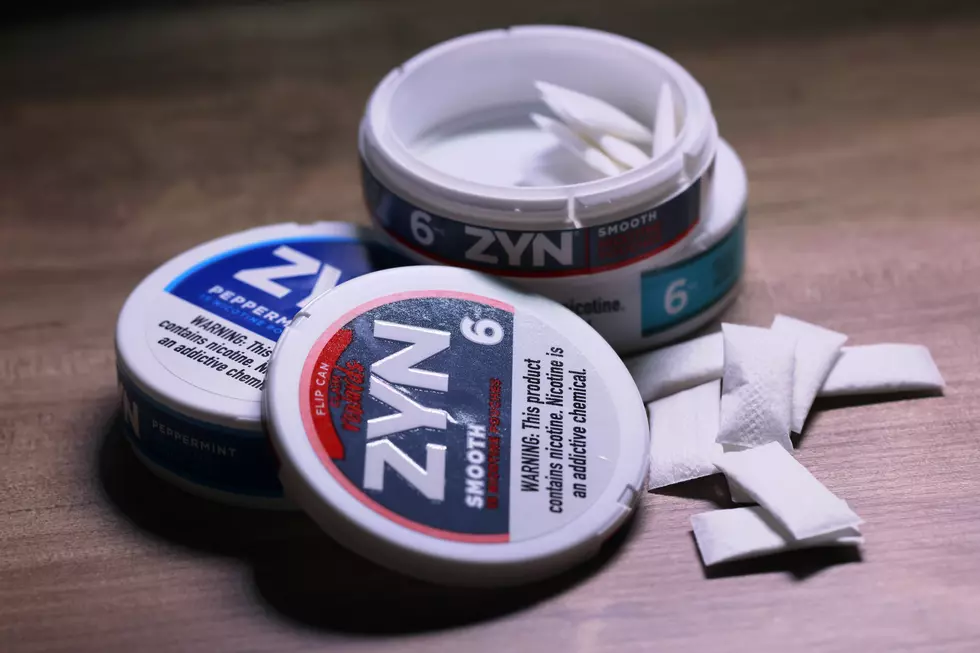
e-cigarette retailers ask for extension on flavored additives ban

Innovation
Jun.30.2022

Sellers of flavored e-cigarette additives have asked for extra time following an announcement that such items contravene a 2019 ban on flavored vaping products, and must be removed from the shelves by August.


The affected retailers have asked for a period of grace through to June next year before the ban, which the Ministry of Social Affairs and the Consumer Protection and Technical Regulatory Authority (TTJA) announced at the end of May.


Unsold inventory which would cost hundreds of thousands of euros has been cited as the main reason, though since the ban of flavored e-cigarette liquids per se has been banned for three years now, this request is unlikely to be met, ERR reports.


Flavored e-cigarette products had been banned in the first place as they were thought to appeal to schoolchildren; according to head of the alcohol and tobacco department at the National Institute for Health Development (TAI) Anneli Sammel, 36 percent of schoolchildren have tried e-cigarettes. Among schoolgirls alone, the figure is 24 percent, she added.


Meanwhile, Aive Telling of the social affairs ministry called the appearance on the market of flavored liquids which can be added to e-cigarette liquids a cunning means to circumvent the law, while further clarification on how to categorize the products has arisen since 2019.


"In 2019, we had talked about whether these constituted e-liquids or were flavorings or essences for seasoning, or for widespread use in food. markings on liquids, "Telling told ERR.


"In the meantime, a category has emerged that says it is for use in an e-cigarette. It has e-liquid markings from other countries on it," she added.


This means that in effect retailers of these products have been breaking the law for three years, though merchants themselves intepret the law diffently.


Diane Sirelpuu, the CEO of one firm, Nicorex Baltic, said that in 2019, just before the law came into force, that the company had received written answers from all the relevant agencies that while flavored e-liquids had indeed been banned, selling separate flavorings was still permissible.


"These seasonings have been bought according to demand in advance. They are in warehouses, shops and are ready-made in other countries," she said.


The 2019 ban followed one on most flavored types of regular cigarettes from three years earlier, while in 2020 the tax authority stated that ordering such products from countries where they are legally sold and importing them into Estonia was against the law. Menthol cigarettes, meanwhile, were banned for sale in Estonia i May 2020, on the back of an EU regulation.


Malaysia Police Seize RM12.7 Million in Illegal Vapes and Cigarettes as Probe Points to Sea Shipments From China
Police in Malaysia’s Selangor state seized illegal vape products and contraband cigarettes worth about RM12.7 million (approximately $3 million) in two enforcement operations. According to New Straits Times and The Star, the vape-related operation uncovered 131,036 boxes of vape products, 4,900 bottles of e-liquid and 25,510 vape devices, valued at about RM9.4 million. Police said preliminary investigations indicated that some illegal vape products entered Malaysia through sea shipments from China before moving through storage and distribution networks.
Aug.10
Vape Industry Group Loses Alabama Court Fight as State Tightens Rules on Imported Products
The Alabama Supreme Court affirmed a lower court’s refusal to issue a preliminary injunction blocking the state’s 2025 electronic nicotine delivery systems law, allowing rules requiring covered products to be U.S.-made or FDA-authorized to remain in effect.
Jul.10
UK Reform Party Proposes Cap of 1,000 Vape Shops Under Plan to Tighten Retail Controls
The UK Reform Party has proposed limiting the number of dedicated vape shops in the country to around 1,000 as part of a plan to tighten oversight of vape retail channels. The proposal was put forward by Reform UK deputy leader and MP Lee Anderson. The plan remains a political proposal and has not become UK government policy, with no detailed legislation, implementation timeline or allocation rules announced.
Aug.10
Tobacco Companies Are Redesigning Nicotine Products. BAT Wins Three Red Dot Awards
According to BAT and the Red Dot Design Award website, BAT’s glo Hilo Plus, Vuse Pro One Box and Vuse Ultra x McLaren F1 Team Limited Edition received Red Dot recognition in the Product Design 2026 competition.BAT said the awards reflect not only the design quality of the individual products but also the development of design as a core internal capability across industrial design, user experience and sustainability. Red Dot’s product pages describe glo Hilo Plus as a two-part tobacco heater with a pen and charging case, plus a touch-sensitive AMOLED display. Vuse Pro One Box is described as a rechargeable e-cigarette with replaceable pods, USB-C charging and a switchable VapourBoost mode. Vuse Ultra x McLaren F1 Team Limited Edition brings motorsport-inspired design elements into a compact e-cigarette device and includes exchangeable batteries.
Jul.17
JTI Makes Third Bet on South Korea as Ploom AURA Enters a Market Dominated by lil and IQOS
Japan Tobacco International is stepping up its heated tobacco push in South Korea with Ploom AURA. Since its official launch in April 2026, the device's limited First Edition and Glacier White version have sold out, while distribution has expanded across Seoul, Incheon, Gyeonggi Province and airport duty-free channels. The rollout marks JTI's third major attempt to build a stronger heated tobacco position in South Korea, following Ploom TECH in 2019 and Ploom X Advanced in 2024. At the group level, JT plans to invest about ¥800 billion, approximately $5 billion, in reduced-risk products from 2026 through 2028, with heated products and Ploom identified as its primary investment priority.
Aug.14
China’s HTP Exports Fell 14.3% in H1 2026 as Russia and Belarus Accounted for 76% Lead
In H1 2026, China’s HS 24041100 exports stood at $1.32 million, down 14.3% YoY, with volume falling 17.2% to 55.33 tons. Market distribution shifted drastically amid overall export drops. Exports to Russia and Belarus totaled $1 million, taking 76.0% of all shipments versus 29.5% in H1 2025. Belarus became the top destination with export value jumping 177.5%, while the Philippines, Singapore and Indonesia’s combined share slumped from 49.3% to 11.2%.Domestically, Yunnan led exporter registrations; Jiangsu and Shanghai were key suppliers, yet Anhui and Sichuan had no exports. Heavy concentration means order or declaration changes for Russia/Belarus greatly affect national aggregate data. The data shows customs entry points (not end markets), covering tobacco consumables only, excluding heating equipment and the complete HTP supply chain.
Aug.11