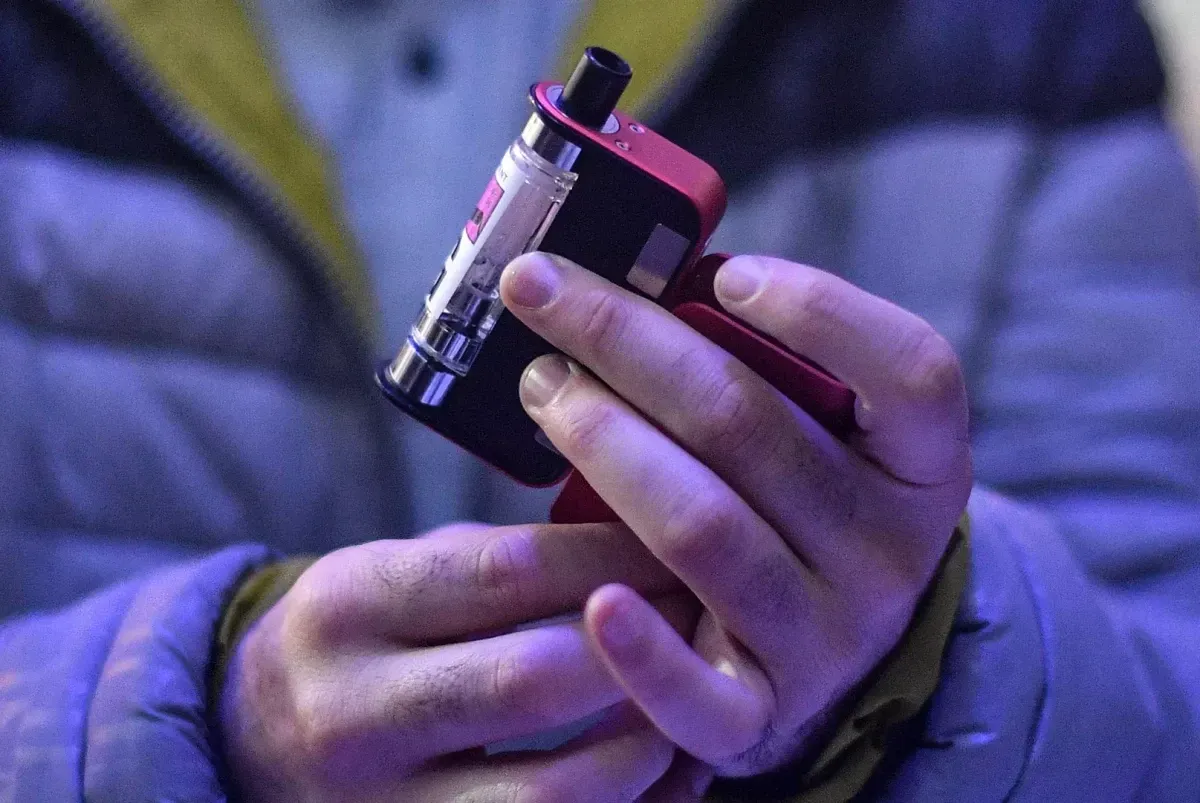
More than 100 cases have been registered since the implementation of the ban on e-cigarettes in Kazakhstan

Apr.17.2025
More than 100 cases have been registered since the implementation of the ban on e-cigarettes in Kazakhstan
Kazakhstan's e-cigarette ban in effect, with over 100 cases filed for illegal sales. Multi-department crackdown planned.

Key points:

The ban on e-cigarettes has taken effect: The ban on e-cigarettes in Kazakhstan has been implemented, with over 100 cases already registered.

Illegal sales continue: The market and Telegram still have sales activities, enforcement continues to advance.

Multiple departments collaborate to crack down: Criminal Investigation, Network Security and other departments participate in investigation and enforcement.

A meeting is scheduled to be held: The Ministry of the Interior plans to discuss strengthening oversight with Parliament.


According to BaigeNews.kz's report on April 17th, Deputy Minister of Internal Affairs of Kazakhstan, Sanzhar Adilov, stated that legislation banning the sale of e-cigarettes has come into effect. As of now, over 100 cases have been filed for prosecution.


Adilov pointed out that the illegal sale of e-cigarettes continues to exist in the market and on Telegram channels. The Ministry of Internal Affairs is actively collaborating with these platforms to crack down on these illegal activities. This initiative is not limited to the Ministry of Internal Affairs and involves other relevant departments as well. He called on the public to actively report such incidents and emphasized that each case will be thoroughly investigated.


The deputy minister also mentioned that despite the ban on e-cigarette sales, there are still some criminals selling them through illegal channels. Adilov stated that relevant departments have increased efforts, including preventive services, criminal police departments, and cybercrime investigation departments all participating to crack down on this illegal activity.


In order to address the circulation of e-cigarettes, the Ministry of Interior plans to collaborate with parliamentary representatives and will soon hold a working meeting to advance this work.


We welcome news tips, article submissions, interview requests, or comments on this piece.

Please contact us at info@2firsts.com, or reach out to Alan Zhao, CEO of 2Firsts, on LinkedIn


Notice

1.  This article is intended solely for professional research purposes related to industry, technology, and policy. Any references to brands or products are made purely for objective description and do not constitute any form of endorsement, recommendation, or promotion by 2Firsts.

2.  The use of nicotine-containing products — including, but not limited to, cigarettes, e-cigarettes, nicotine pouchand heated tobacco products — carries significant health risks. Users are responsible for complying with all applicable laws and regulations in their respective jurisdictions.

3.  This article is not intended to serve as the basis for any investment decisions or financial advice. 2Firsts assumes no direct or indirect liability for any inaccuracies or errors in the content.

4.  Access to this article is strictly prohibited for individuals below the legal age in their jurisdiction.


Copyright


This article is either an original work created by 2Firsts or a reproduction from third-party sources with proper attribution. All copyrights and usage rights belong to 2Firsts or the original content provider. Unauthorized reproduction, distribution, or any other form of unauthorized use by any individual or organization is strictly prohibited. Violators will be held legally accountable.

For copyright-related inquiries, please contact: info@2firsts.com


AI Assistance Disclaimer


This article may have been enhanced using AI tools to improve translation and editorial efficiency. However, due to technical limitations, inaccuracies may occur. Readers are encouraged to refer to the cited sources for the most accurate information.

We welcome any corrections or feedback. Please contact us at: info@2firsts.com

Research | Swedish Study Finds Oral Lesions in 79% of Examined Nicotine Pouch Users, With Distinct Tissue Responses
A new Swedish study found oral mucosal lesions in 79% of examined nicotine pouch users and 89% of tobacco-derived snus users, with different tissue-response patterns between the two categories. For manufacturers and regulators, the findings shift attention toward product formulation, flavouring, pouch materials and local oral exposure, not only whether a product contains tobacco. The study found no higher prevalence of caries or periodontal disease, but it could not establish causality, long-term outcomes or differences between individual products or designs.
Special Report
Jul.27
2Firsts Data | China’s Vape Exports Rise 3.1% in H1 2026 as 6-Methyl Nicotine-Related Products Surge 65.2%
China’s vape exports showed resilience in the first half of 2026 after a short-term shock from China’s export rebate adjustment. But customs data points to more than a simple recovery: the structure of growth is changing. Vaping devices and atomization hardware emerged as the strongest growth driver, while nicotine-containing vaping products remained broadly stable. Meanwhile, nicotine substitute-related products represented by 6-methyl nicotine expanded rapidly, becoming a new category to watch for both industry and regulators. After the U.S. market went through a cycle of shortages, replenishment and inventory rebuilding in 2025, China’s vape supply chain is entering a new phase of reallocation.
Special Report
Jul.20
Vape Vending Machine Concerns Rise in German-Speaking Europe as Schools and Age Checks Come Into Focus
Recent reports from Germany and Switzerland show growing concern over vape and tobacco vending machines near schools or in public settings, with parents, teachers and residents questioning youth access, age-verification controls and the sale of vapes alongside snacks and drinks.
Jul.06
Data|China’s January-May 2026 Device Exports Rise 13% While Nicotine Product Exports Decline 6.9%
According to China Customs export data analyzed by 2Firsts, China’s vape export mix continued to evolve during January-May 2026. Exports of electronic vaporisation devices (HS 85434000) increased 13.00% year on year, supported by growth in both shipment volume and average export prices. Meanwhile, exports of nicotine-containing non-combustible products (HS 24041200) declined 6.89%, with lower shipment volumes partly offset by higher average export prices.
Special Report
Jun.30
U.S. FDA: Youth E-Cigarette Prevention Campaign Prevented About 444,000 Initiations and Reduced Illegal Vape Sales
The U.S. Food and Drug Administration (FDA) said its youth e-cigarette prevention campaign, “The Real Cost,” prevented about 444,000 U.S. youth from starting e-cigarette use between 2023 and 2024 and blocked more than $42 million in unauthorized e-cigarette sales that would have been used by youth.
Market
Jun.25
WIRED Investigation: Chinese-Made Vapes Turn to 6-Methyl-Nicotine and Other Analogs, Challenging U.S. Regulation
U.S. technology and investigative publication WIRED has examined how nicotine analogs are emerging as a new challenge for the country’s vape regulatory framework. The article argues that after the U.S. expanded federal oversight of nicotine products in 2022, some manufacturers began using nicotine-like compounds such as 6-methyl-nicotine that may fall outside existing definitions. Researchers cited by WIRED said some nicotine analogs could be more potent than traditional nicotine, although human health impacts remain unclear. U.S. policymakers are considering broader definitions of nicotine to bring these compounds under federal oversight.
Jul.27