ELFBAR's New Disposable E-cigarette Prototype Featuring Corrugated Paper

Elfbar by 2FIRSTS, edited by Sophia
Apr.18.2024
ELFBAR's New Disposable E-cigarette Prototype Featuring Corrugated Paper
ELFBAR unveils new "corrugated paper e-cigarette" prototype, promoting recyclable industry; R3 disposable e-cigarette sample also introduced.

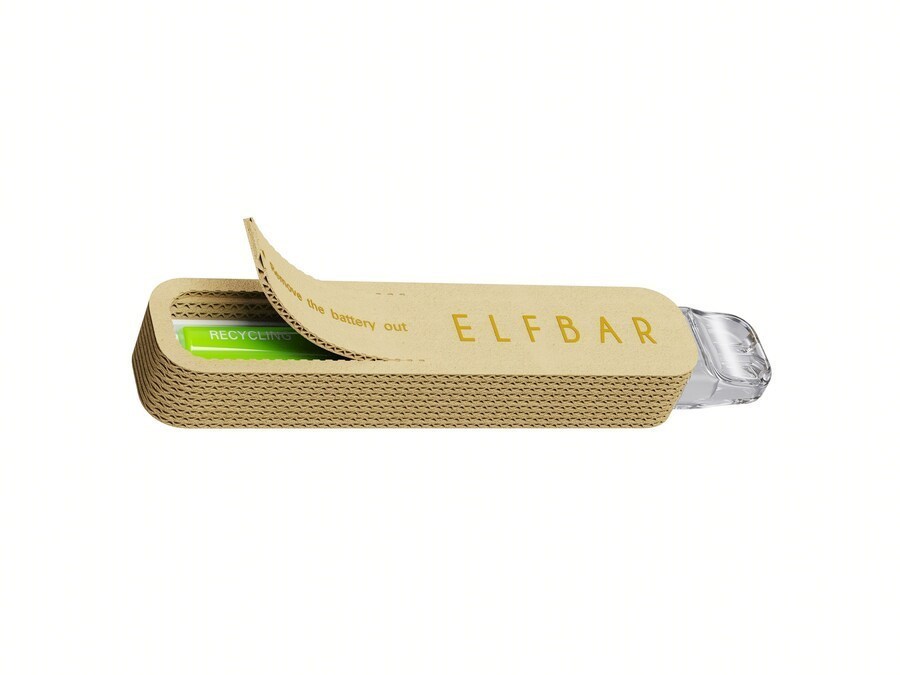
According to a report from prnewswire on April 16th, the e-cigarette brand ELFBAR recently unveiled its latest disposable concept e-cigarette prototype - the "corrugated paper e-cigarette," as part of its efforts to promote recycling in the e-cigarette industry.
ELFBAR's New Disposable E-cigarette Prototype Featuring Corrugated Paper
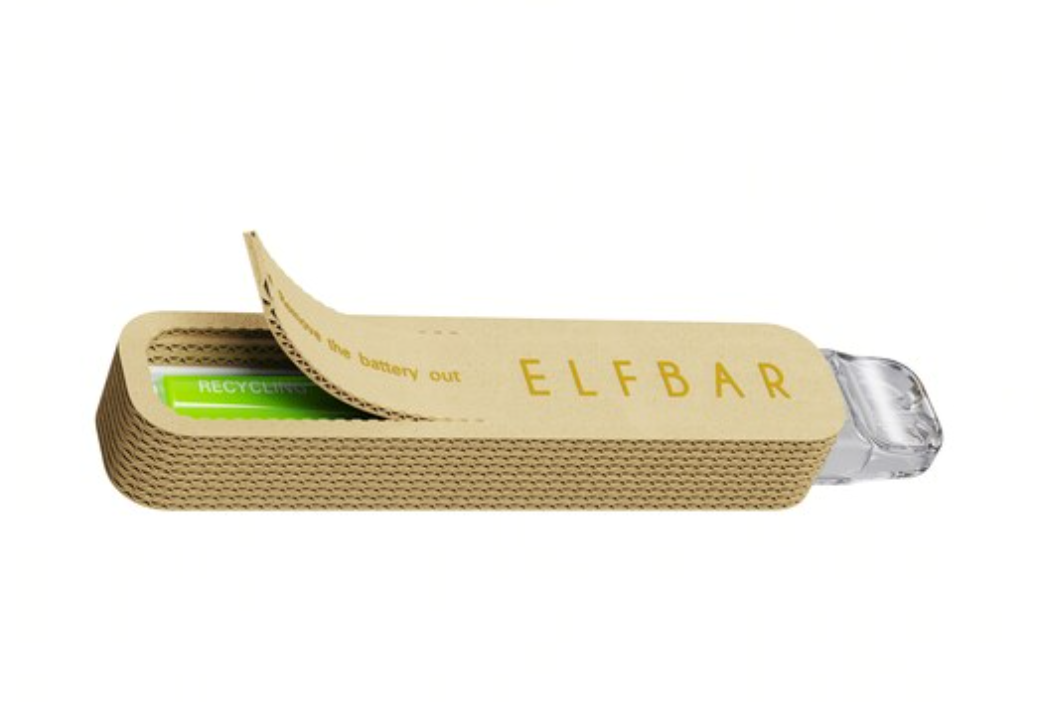
ELFBAR concept e-cigarette prototype - R3 | Image source: ELFBAR


Additionally, ELFBAR has launched a prototype of this concept e-cigarette called the R3 disposable e-cigarette. This new product uses a corrugated paper structure and is designed to be manually disassembled into five parts: lithium battery, outer shell, airflow sensor, battery casing, nozzle, and nicotine filter. The disassembly of all parts allows for the overall recycling rate of the product to be increased to 85%. The outer shell is made of degradable corrugated paper, inspired by cardboard furniture. Users can easily detach the outer shell along perforated lines, and after use, they can remove the battery from the base using a simple push-pull mechanism. This disassembly structure ensures ease of removal and greatly improves efficiency in recycling at waste management facilities.


We welcome news tips, article submissions, interview requests, or comments on this piece.

Please contact us at info@2firsts.com, or reach out to Alan Zhao, CEO of 2Firsts, on LinkedIn


Notice

1.  This article is intended solely for professional research purposes related to industry, technology, and policy. Any references to brands or products are made purely for objective description and do not constitute any form of endorsement, recommendation, or promotion by 2Firsts.

2.  The use of nicotine-containing products — including, but not limited to, cigarettes, e-cigarettes, nicotine pouchand heated tobacco products — carries significant health risks. Users are responsible for complying with all applicable laws and regulations in their respective jurisdictions.

3.  This article is not intended to serve as the basis for any investment decisions or financial advice. 2Firsts assumes no direct or indirect liability for any inaccuracies or errors in the content.

4.  Access to this article is strictly prohibited for individuals below the legal age in their jurisdiction.


Copyright


This article is either an original work created by 2Firsts or a reproduction from third-party sources with proper attribution. All copyrights and usage rights belong to 2Firsts or the original content provider. Unauthorized reproduction, distribution, or any other form of unauthorized use by any individual or organization is strictly prohibited. Violators will be held legally accountable.

For copyright-related inquiries, please contact: info@2firsts.com


AI Assistance Disclaimer


This article may have been enhanced using AI tools to improve translation and editorial efficiency. However, due to technical limitations, inaccuracies may occur. Readers are encouraged to refer to the cited sources for the most accurate information.

We welcome any corrections or feedback. Please contact us at: info@2firsts.com

Smoke-Free Business Hits 42% of Q2 Net Revenue as PMI’s First TNFD Report Covers Single-Use Electronics, Critical Raw Materials and IQOS Repairs
Philip Morris International has published its first report aligned with the Taskforce on Nature-related Financial Disclosures, bringing its electronics supply chain and the use and end-of-life stages of smoke-free devices and consumables into its nature-related assessment. PMI said its smoke-free business accounted for about 42% of total net revenues in the second quarter of 2026. The report says non-circular electronic products, particularly single-use items, can increase consumption of limited natural resources and also details an IQOS repair pilot. A 2040 circularity scenario tests assumptions including a 50% reduction in product waste-related costs, 10% raw-material savings and a 25% substitution rate for refurbished products versus new products.
Sep.23
Scottish Vape Display Rules Could Cost Businesses £61 Million, Affecting More Than 11,000 Retail Outlets
A Scottish government impact assessment estimates that proposed vape display and packaging rules could create up to £61 million ($82 million) in compliance costs for businesses, affecting more than 11,000 retail outlets. The estimated costs are mainly linked to inventory adjustments, retail storage changes and the resources required for businesses to understand and implement the new requirements. The measures form part of the UK’s broader efforts to tighten vape regulation, particularly around product displays, packaging and sales practices.
Aug.10
China’s HTP Exports Fell 14.3% in H1 2026 as Russia and Belarus Accounted for 76% Lead
In H1 2026, China’s HS 24041100 exports stood at $1.32 million, down 14.3% YoY, with volume falling 17.2% to 55.33 tons. Market distribution shifted drastically amid overall export drops. Exports to Russia and Belarus totaled $1 million, taking 76.0% of all shipments versus 29.5% in H1 2025. Belarus became the top destination with export value jumping 177.5%, while the Philippines, Singapore and Indonesia’s combined share slumped from 49.3% to 11.2%.Domestically, Yunnan led exporter registrations; Jiangsu and Shanghai were key suppliers, yet Anhui and Sichuan had no exports. Heavy concentration means order or declaration changes for Russia/Belarus greatly affect national aggregate data. The data shows customs entry points (not end markets), covering tobacco consumables only, excluding heating equipment and the complete HTP supply chain.
Aug.11
China STMA Deputy Administrator Meets KT&G COO as Heated Cigarette Rules Advance
Wang Gongcheng, deputy administrator of China’s State Tobacco Monopoly Administration, met KT&G Chief Operating Officer Lee Sang-hak in Shanghai on September 1, according to Oriental Tobacco News. The meeting comes as China seeks public comment on a draft mandatory national standard for heated cigarettes. The report did not disclose the subjects discussed or indicate whether heated tobacco products or market access were addressed.
News
Sep.02
From Border-Logistics Insiders to Retail Service Stations, Australia Mounts a Sweeping Crackdown on the Illicit Nicotine Trade as iGET Vapes Surface in A$80 Million Crime Networks
Australian authorities have disclosed two major enforcement actions that go beyond product seizures and retail closures to examine how illicit tobacco and vape networks operate. On Aug. 14, the Multi Agency Strike Team said seven people had been charged and two criminal networks were valued by authorities at a combined A$80 million, or about US$56.8 million. Investigators allege the groups used bonded warehouses, freight businesses and “trusted insiders” in legitimate industries to circumvent border controls. In a separate operation on Aug. 11, more than 100 service stations were targeted as authorities sought information on illicit tobacco importation, distribution networks and the movement of sales proceeds.
Aug.17
Italy and Greece Oppose Ireland’s Nicotine Product Bill, Raising EU Regulatory Concerns
Italy and Greece have opposed Ireland’s proposed nicotine product regulations, arguing that the measures could affect EU market coordination and the free movement of products. Ireland plans to introduce stricter rules covering nicotine products including vapes and nicotine pouches, with measures involving packaging, marketing and sales controls. The dispute highlights differences among EU member states between stronger public health protections and maintaining regulatory consistency within the bloc’s single market.
Jul.29