Today, the Special Committee on Beating Cancer (BECA) voted on the amendments and the draft of the Beating Cancer report. Naturally, the report authors say smoking is one of the main causes of cancer and thankfully, unlike the World Health Organization (WHO) they consider tobacco harm reduction as an effective tool to reduce smoking rates.
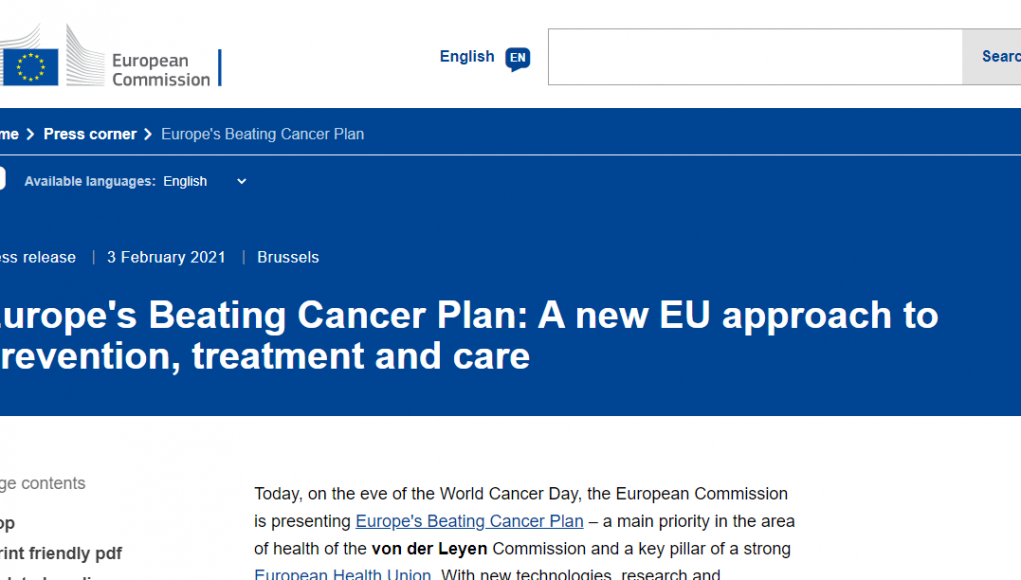
In a press release about the development, the Independent European Vape Alliance (IEVA) welcomed the recognition of vaping as a tool to quit smoking in the report. However, it finds it concerning that flavoured products are still considered a threat rather than an opportunity, and mentions a possible ban. “European Parliament reports like this are necessarily a compromise. IEVA notes that the variety of flavours is one of the most important reasons for smokers to switch to e-cigarettes and for vapers not to go back to smoking. A ban on flavours would eliminate one of the main advantages of the e-cigarette over the tobacco cigarette – an improved taste,” said IEVA President Dustin Dahlmann.
“We also see that the importance of the e-cigarette for quitting smoking is recognized and that the risks of vaping are planned to be assessed even more in relation to the risks of smoking in the future. This approach must be pursued, and not undermined by banning most products on the market today.”
Vape flavours should be incorporated in Europe’s Beating Cancer plan
Similarly, in its own release, the World Vapers’ Alliance (WVA) said that flavours should be incorporated in Europe’s Beating Cancer plan. Commenting on the result of the vote that was held today at the Special Committee on Beating Cancer, Michael Landl, Director of the World Vapers’ Alliance said:
“The Parliament acknowledged that vaping allows smokers to quit, and that is a significant step forward in our fight to save lives by reducing the harms caused by smoking. It’s a testament to the power of the voice of individual consumers coming together. However, risking vapers’ access to flavour choices means this positive step forward is overshadowed by uncertainty.
The Cancer Plan, explained Landl, throws the ball in the Commission’s court with regards to assessing the risks of flavours in order to ban them. “The Parliament acknowledged that vaping allows smokers to quit, and that is a significant step forward in our fight to save lives by reducing the harms caused by smoking. It’s a testament to the power of the voice of individual consumers coming together. However, risking vapers’ access to flavour choices means this positive step forward is overshadowed by uncertainty.”
“Experts as well as consumers have been clear about the consequences of banning flavours and ignoring harm reduction on public health. Time and again it has been proven that flavours are what keeps adults away from switching back to cigarettes and we need our policymakers to listen and legislate for this,” Landl added.
Most MEPs with some knowledge of vapes considered them safer than cigarettes
A recent survey conducted by ECigIntelligence and TobaccoIntelligence, the renowned independent data analysis resources for the tobacco and tobacco-alternatives industries, indicated that 70% of MEPs with some knowledge of e-cigarettes accurately considered them safer than cigarettes, in comparison to 41% of MEPs with no knowledge of the topic.
“When it comes to politicians’ perceptions of new nicotine products, accurate information appears to make all the difference,” said Tim Phillips, managing director ofECigIntelligence and TobaccoIntelligence. “The MEPs with knowledge of these products generally realise that they carry less risk than smoking – but those lacking knowledge often don’t understand that. The implications for policy across Europe are clear.”
The survey highlighted that the difference in MEPs’ attitudes was more pronounced in relation to the newer heated tobacco products (sometimes called “heat not burn”) and nicotine pouches. For heated tobacco, 74% of MEPs with some knowledge considered it safer, but only 32% of those lacking knowledge agreed, while for nicotine pouches, almost all MEPs with knowledge of the products, 94%, considered them less harmful than smoking, but 26% of those with no knowledge of them believed so.